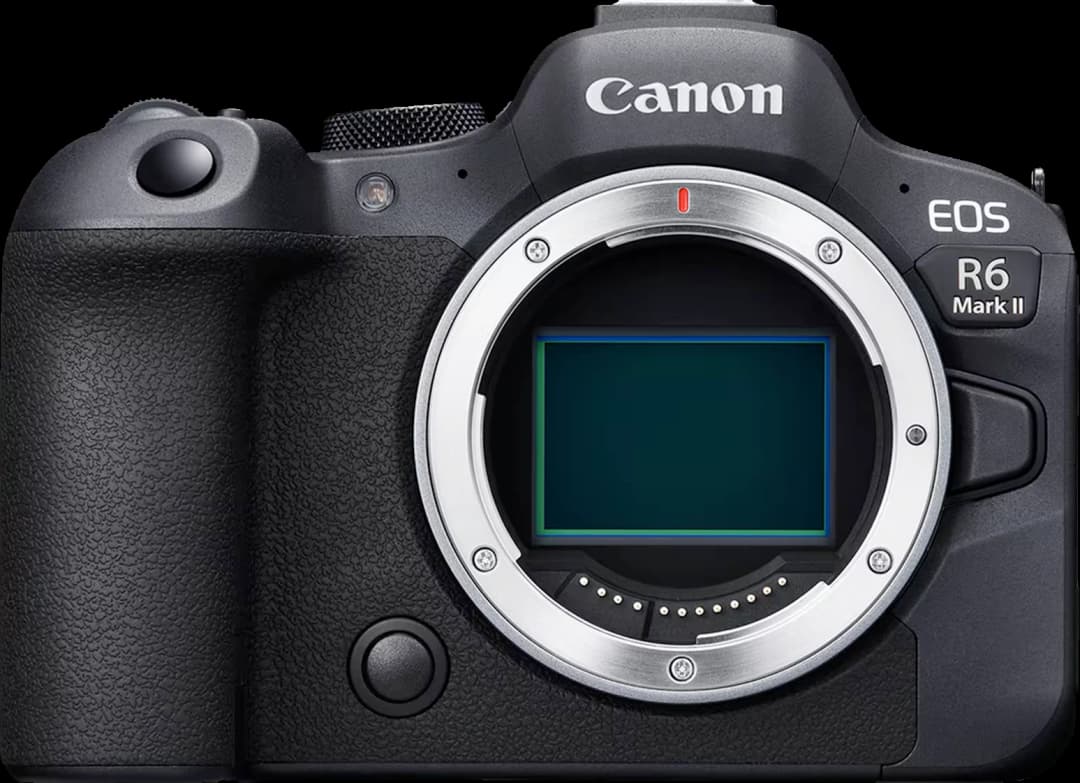
Canon
EOS R6 Mark II
2022
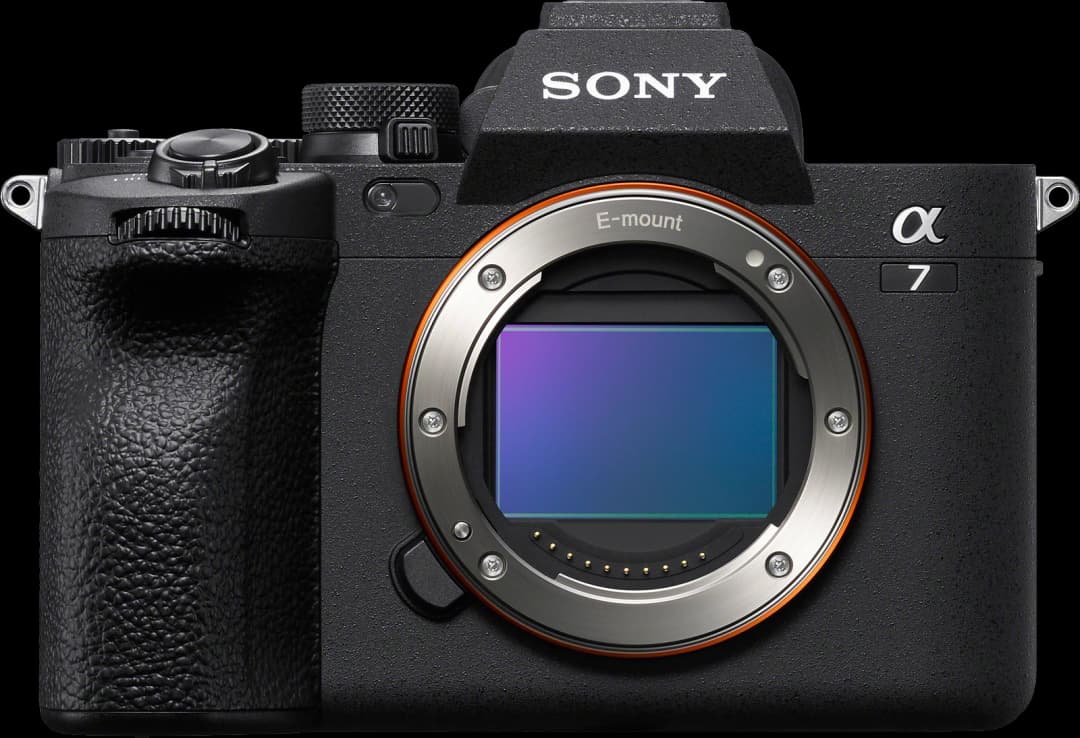
Sony
α7 IV
2021
Canon EOS R6 Mark II vs Sony α7 IV: speed against resolution, who comes out on top?
Visual summary
— Reads in 5 seconds
Canon
EOS R6 Mark II
Sony
α7 IV
Where to buy
— Live merchant price comparator
Sony α7 IV

SONY a7 IV Mirrorless Camera - Black, Body Only, Black
1 799 GBP · Sony UK


You'll find the best prices on the market here, updated daily — and by going through these partner links, you support Camera Duel without paying a cent more.
The arbitration in brief
Choose the R6 Mark II for speed and AF, the Sony α7 IV for resolution and post-processing latitude.
Two full-frame hybrids, two philosophies. The Canon EOS R6 Mark II was released in 2022 at 2 499 USD. The Sony α7 IV dates from 2021 and launched at 2 800 USD. In 2026, both are regularly available below their original prices on new and used markets, making this showdown even more relevant.
These two bodies target the same audience: the versatile photographer who wants a reliable tool for reportage, weddings, street and low light. Both are weather-sealed, have dual slots, IBIS and 4K video. On paper, they seem interchangeable. In detail, they diverge significantly.
The R6 Mark II bets on burst rate (40 fps electronic), AF density (4 897 points) and IBIS rated at 8 stops. The Sony α7 IV counters with 33 megapixels, a native ISO range up to 204 800 and dynamic range measured at 11.7 EV. These are two opposing visions of what a versatile hybrid should prioritise.
This comparison judges eight spec categories. It identifies the deal-breakers for each side. It concludes with a clear verdict based on stated dominant uses: low light, weddings, street.
Standout strengths
— Where each camera shines
Canon
EOS R6 Mark II
Top advantages
- 102 400Native ISO max2× vs Sony α7 IV
- 40 fpsElectronic burst4× vs Sony α7 IV
- 1053AF points+39 % vs Sony α7 IV
- 8 stopsIBIS rating+45 % vs Sony α7 IV
Sony
α7 IV
Top advantages
- 33 MPMegapixels+36 % vs Canon EOS R6 Mark II
- 828RAW buffer11× vs Canon EOS R6 Mark II
- 600 Mb/sMax bitrate1,8× vs Canon EOS R6 Mark II
- 11.7 EVDynamic range (EV)+2 % vs Canon EOS R6 Mark II
Video reviews
— Long-form reviews
Canon EOS R6 Mark II
Canon EOS R6 Mark II Final Review
DPReview TV · 9 min
Sony α7 IV
Sony a7 IV First Impressions Review
DPReview TV · 20 min
Detailed spec-by-spec
— Round by round, the eight categories
Sensor
Autofocus
Speed & burst
Video
Stabilisation
Build
Ergonomics & screen
Connectivity & battery
Detailed analysis analysis
— Strengths, trade-offs and ideal user
Canon EOS R6 Mark II: what it does well, what it concedes
The Canon EOS R6 Mark II is built around a full-frame CMOS sensor with 24 megapixels. This figure is lower than the Sony's 33 MP. In practice, it means less latitude for cropping and prints limited beyond A2 format without interpolation. For weddings or street reportage published online and on social media, it's not a hindrance. For selling large prints or high-res magazine press, it's a real compromise.
Where the R6 Mark II excels is in speed and autofocus. The electronic burst reaches 40 fps, versus a mechanical 10 fps on Sony (the α7 IV's electronic burst is not documented in verified data). The 4 897 AF points cover almost the entire sensor. DPReview and Imaging Resource confirm that Canon's Dual Pixel AF II system is among the most responsive in the segment. IBIS is rated at 8 stops compensated, versus 5.5 stops on Sony. On long handheld exposures in dim interiors, this gap translates to one or two extra usable shutter speeds.
Notable compromises:
- Micro HDMI instead of a full-size port, which weakens connectivity for intensive video use.
- 24 MP versus 33 MP: limited cropping and constrained large prints.
- Standard CMOS sensor (not BSI), which can affect readout in video and high speed.
The photo score of 8.5/10 calculated by camera-duel.com reflects this balance: a body tailored for responsiveness, not raw resolution.
For whom
The R6 Mark II suits the photographer who works fast in changing conditions. Weddings indoors, street reportage, events in low light: the 40 fps plus 4 897 AF points plus 8 stops IBIS combo meets these demands. This photographer mainly publishes online, on social media or up to A3 size max. They don't sell large prints. They value focusing reliability on moving subjects over raw resolution.
Sony α7 IV: what it does well, what it concedes
The Sony α7 IV features a 33-megapixel BSI-CMOS sensor. The BSI (back-illuminated) architecture improves per-pixel light collection and reduces readout noise. Measured dynamic range reaches 11.7 EV at base ISO, versus 11.5 EV for Canon. The gap is small in absolute terms, but the native ISO range extends to 204 800 without extended mode. Canon tops out at 102 400 native. In practice, this one-stop difference in max native ISO can make the difference on a very low-light reportage without flash.
The 33 MP resolution allows significant cropping and prints up to A1 size without visible interpolation. For a photographer delivering files to agencies or clients demanding sharpness, it's a concrete advantage. The dual slots accept both CFexpress Type A and SD UHS-II, offering more flexibility than Canon's dual SD UHS-II.
Real compromises:
- 759 AF points versus 4 897: sensor coverage is much lower, and reactivity on fast subjects is inferior per DPReview.
- 5.5 stops IBIS versus 8 stops: the gap is significant for handheld long exposures.
- Electronic burst not documented in verified data: confirmed max is 10 fps mechanical.
The video score of 8.5/10 (versus 8.2 for Canon) is due in part to the full-size HDMI port and codec handling, better suited to regular hybrid photo-video use.
For whom
The Sony α7 IV is for the photographer who prioritises resolution and post-processing latitude. Portrait, landscape, weddings with high-def file delivery, documentary reportage: the 33 MP and 11.7 EV dynamic range serve these uses. This photographer often works on tripod or with flash, downplaying the weaker IBIS. They also appreciate the Sony E-mount lens ecosystem, one of the densest on the market in 2026.
Our verdict
Which one to buy, and why
The showdown hinges on two opposing axes. The Canon EOS R6 Mark II dominates in speed, AF and stabilisation. The Sony α7 IV wins on resolution, dynamic range and native ISO range.
Deal-breakers to identify before buying:
- AF: if you shoot moving subjects (kids, moving bride/groom, amateur sports), Canon's 4 897 points versus Sony's 759 is a gap hard to ignore.
- Resolution: if you deliver files to agencies or print beyond A2, Sony's 33 MP are necessary. Canon's 24 MP fall short in that context.
- IBIS: 8 stops versus 5.5 stops, the gap equals one or two shutter speeds in tough conditions. Indoors without tripod, Canon is more reliable.
- HDMI: Canon's Micro HDMI is a deal-breaker for regular video with external monitor. Sony offers a full-size port.
On value in 2026, both bodies are below launch price. The R6 Mark II is regularly 1 800 to 2 000 USD new, the α7 IV 2 200 to 2 400 USD. On used market, the gap narrows further. Canon offers better speed-to-price ratio in this range.
Clear verdict: choose the Canon EOS R6 Mark II if your main use is weddings, reportage or any context where AF reactivity and burst rate matter most. Choose the Sony α7 IV if you need resolution for cropping, high-def delivery or post-processing latitude. I personally work in tough conditions (spray, Breton cold, low light) and Canon's 8 stops IBIS provides a measurable field advantage on handheld shots from 1/15 s to 1/4 s. On this criterion alone, Canon wins for outdoor work without tripod.
Frequently asked questions
Before you buy, the questions we get
Which to choose for shooting a wedding?
The Canon EOS R6 Mark II is better suited for weddings. The 4 897 AF points cover almost the entire sensor and reduce missed focus on moving subjects. 8 stops IBIS compensates for dim indoor shots without flash. The 40 fps electronic burst ensures you don't miss a key moment. The Sony α7 IV offers more resolution (33 MP), useful if the client orders large prints. But on overall reactivity in real wedding conditions, Canon takes the edge.
Is the resolution gap between 24 MP and 33 MP really visible in practice?
It depends on final use. Online and social media, the gap is invisible. For prints, 24 MP allow clean output up to about A2 (42 x 59 cm at 150 dpi). Sony's 33 MP handle A1 (59 x 84 cm) without interpolation. For cropping, 33 MP provide about 37% more pixels, a clear cropping margin. If you deliver to agencies or print large, the gap is real. Otherwise, negligible.
Does the Sony α7 IV catch up to Canon in low light thanks to higher native ISOs?
Partially. The Sony α7 IV has a max native ISO of 204 800, versus 102 400 for Canon. This one-stop native gap is real. However, base ISO dynamic range is 11.7 EV for Sony versus 11.5 EV for Canon, just 0.2 EV difference. In practice, both perform very similarly in low light at common ISOs (3 200 to 12 800). Sony's edge shows beyond 51 200 ISO, in extreme conditions few photographers hit regularly.
Which body will age better in two to three years?
The Sony α7 IV benefits from a particularly dense Sony E lens ecosystem in 2026, with regular firmware updates since its 2021 launch. Canon RF is well-stocked too, but native lenses average more expensive. Hardware-wise, Sony's 33 MP give more headroom against evolving needs (cropping, high-def delivery). Canon's R6 Mark II may feel resolution-limited if delivery standards rise. That said, its AF and burst remain competitive against current rivals.
Is Canon's Micro HDMI really a problem?
Yes, if you regularly use an external monitor. The Micro HDMI connector is mechanically fragile and cables less common than full HDMI. For pure photo use, it's irrelevant. For hybrid video with field monitor or external recorder, Sony α7 IV's full HDMI is more reliable and practical. It's a identified deal-breaker for videographers. For pure photographers, it doesn't factor in.