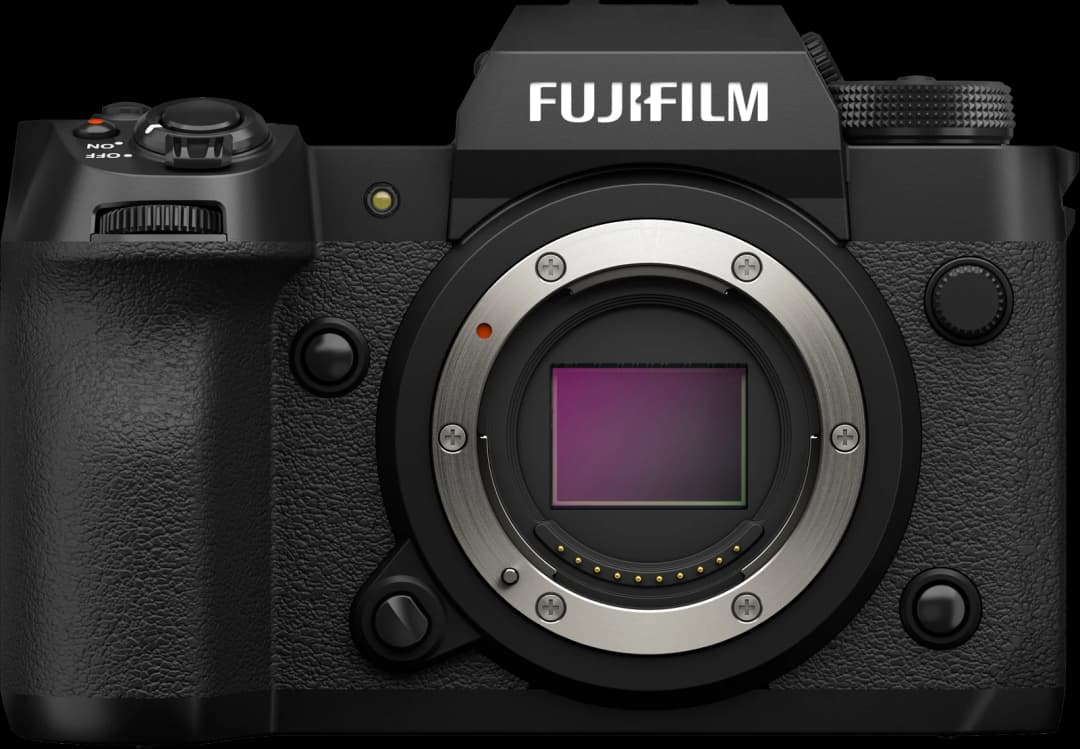
Fujifilm
X-H2
2022
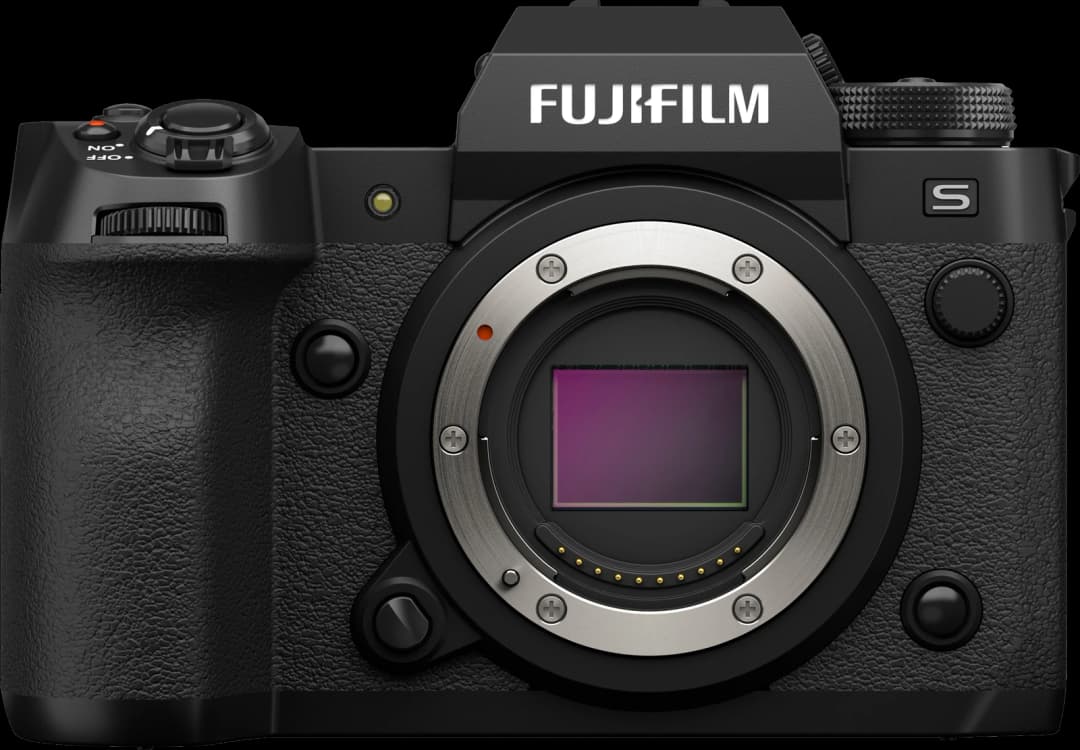
Fujifilm
X-H2S
2022
Fujifilm X-H2 vs X-H2S: resolution or buffer, which to choose in 2026?
Visual summary
— Reads in 5 seconds
Fujifilm
X-H2
Fujifilm
X-H2S
Where to buy
— Live merchant price comparator
Fujifilm X-H2
FUJIFILM X-H2 Body only
1 849 GBP · Clifton Cameras


You'll find the best prices on the market here, updated daily — and by going through these partner links, you support Camera Duel without paying a cent more.
The arbitration in brief
The X-H2 stands out for static photography and enriched video thanks to its 40,2 MP and active cooling; the X-H2S is only justified if you shoot sports or wildlife in sustained bursts.
Fujifilm released two APS-C hybrid bodies in 2022 under the same chassis, with the same weight of 660 g, the same dimensions of 136,3 × 92,9 × 84,6 mm and the same X mount. Yet, the X-H2 and X-H2S are not aimed at the same photographers. The first launched at 1 999 USD, the second at 2 499 USD, a 500 USD gap for bodies that are nearly identical in appearance.
The difference lies in the sensor. The X-H2 features a 40,2 MP X-Trans CMOS 5 HR, designed for maximum resolution. The X-H2S relies on a 26,2 MP X-Trans CMOS 5 HS, designed for readout speed. This design choice determines everything else: buffer, rolling shutter, thermal management, and even available Log profiles.
In 2026, both bodies are available on the used market at prices significantly lower than their launch price. This context makes the comparison even more relevant for a buyer looking to maximise their investment in the Fujifilm X ecosystem.
This comparison addresses four concrete questions: which of the two sensor architectures best serves your dominant use, which body holds up in long bursts, which offers the best everyday video tool, and does the initial price gap still justify itself today.
Standout strengths
— Where each camera shines
Fujifilm
X-H2
Top advantages
- 40.2 MPMegapixels1,5× vs Fujifilm X-H2S
- 125Native ISO min+28 % vs Fujifilm X-H2S
- OuiActive coolingAbsent sur Fujifilm X-H2S
- OuiDual Native ISOAbsent sur Fujifilm X-H2S
Fujifilm
X-H2S
Top advantages
- 40 fpsElectronic burst2× vs Fujifilm X-H2
- 7 msRolling shutter2,1× vs Fujifilm X-H2
- 1×4K crop+18 % vs Fujifilm X-H2
- 580 clichésBattery life (CIPA)+7 % vs Fujifilm X-H2
Detailed spec-by-spec
— Round by round, the eight categories
Sensor
Autofocus
Speed & burst
Video
Stabilisation
Build
Ergonomics & screen
Connectivity & battery
Detailed analysis analysis
— Strengths, trade-offs and ideal user
Fujifilm X-H2: what it does well, what it concedes
The X-H2 is built around its 40,2 MP sensor. This resolution allows prints up to around 100 × 67 cm at 300 dpi without interpolation, and offers significant cropping latitude in post-production. For portraits, landscapes or weddings in controlled light, it's a direct advantage. The measured dynamic range reaches 10,8 EV, versus 10 EV for the X-H2S. The gap is modest but real, and it benefits high-contrast scenes.
Native sensitivity starts at ISO 125, versus ISO 160 on the X-H2S. This lower base is useful in studio or bright outdoors to preserve maximum dynamic range. The viewfinder offers 1,2× magnification, significantly higher than the 0,8× of the X-H2S. In practice, viewing is more comfortable over long sessions.
The trade-offs are real. The RAW buffer tops out at 162 images in electronic burst, versus 1 000 on the X-H2S. For a sports or wildlife photographer chaining long sequences, this ceiling is a deal-breaker. Video rolling shutter reaches 15 ms, more than double the 7 ms of the X-H2S. 4K video applies a 1,18× crop, slightly reducing the angle of view.
The X-H2's video strengths partially offset these trade-offs:
- Integrated active cooling for long sessions without overheating.
- Native Dual ISO for better noise management in video.
- Max bitrate of 737 Mb/s versus 720 Mb/s on the X-H2S.
- F-Log and F-Log2 available, versus F-Log and HLG on the X-H2S.
The X-H2 is the body to choose if your dominant use is high-resolution stills or video in controlled conditions. Its CIPA battery life of 680 shots also exceeds the 580 of the X-H2S.
For whom
The X-H2 suits the photographer who mainly works in portraits, weddings or travel, and values resolution for large prints or aggressive cropping. It also fits the hybrid videographer shooting indoors or in stable conditions, who needs active cooling for long recordings. Its 1,2× magnification viewfinder makes it more pleasant for anyone spending long hours with eye to the finder. In 2026, it's the body to prioritise if buying used and your budget is tight.
Fujifilm X-H2S: what it does well, what it concedes
The X-H2S is a speed body. Its stacked X-Trans CMOS 5 HS sensor resolves 26,2 MP, 14 MP less than the X-H2. This resolution trade-off is the price for a radically different sensor readout speed. Rolling shutter drops to 7 ms, versus 15 ms on the X-H2. In video, fast-moving subjects or pans are far less distorted.
The RAW buffer reaches 1 000 images in electronic burst at 40 fps. This is the most decisive spec in this comparison. The X-H2 stops at 162 images, about 4 seconds of continuous burst. The X-H2S can chain over 25 seconds at the same rate. For sports, wildlife or action reportage, this gap fundamentally changes the workflow.
4K video records without crop on the X-H2S, with a 1× factor. The X-H2 applies a 1,18× crop, affecting the angle of view with wide-angle lenses. The X-H2S also offers false colour in its video scopes, absent on the X-H2.
The X-H2S's trade-offs are clear:
- Just 26,2 MP, limiting very large prints.
- No active cooling, unlike the X-H2.
- No native Dual ISO in video.
- CIPA battery life of 580 shots, versus 680 on the X-H2.
The X-H2S's OLED viewfinder offers superior colour rendition to the X-H2's standard EVF, but its 0,8× magnification is lower than the X-H2's 1,2×. The full-size HDMI output is a practical advantage in the field, where the X-H2's micro HDMI is more fragile and harder to secure.
For whom
The X-H2S is made for the photographer working on moving subjects: sports, wildlife, events reportage. The 1 000 RAW image buffer is its main argument. It also suits the videographer shooting outdoors with dynamic subjects, for whom 7 ms rolling shutter and crop-free 4K are priorities. In 2026, it's the body to choose if you regularly shoot long bursts and can't afford to miss a sequence due to buffer limits.
Our verdict
Which one to buy, and why
The X-H2 wins this comparison for most photographers. It takes four out of eight rounds (sensor, video, ergonomics, connectivity), versus just one for the X-H2S (speed). Its photo score of 7,4 beats the X-H2S's 7,0, and its video score of 9,0 tops the rival's 8,8. At equivalent launch prices, the choice would be even clearer. With a 500 USD initial gap, it is more so.
The only deal-breaker tipping towards the X-H2S is the buffer. 162 RAW images versus 1 000 is a 1-to-6 ratio. If you photograph sports or wildlife in long sequences, the X-H2 will hold you back. No sensor quality compensates for a burst that stops at the wrong moment. On this precise point, the X-H2S has no rival in the Fujifilm APS-C lineup.
For all other uses, the X-H2 prevails:
- 40,2 MP for large prints and post-cropping.
- Measured 10,8 EV dynamic range, versus 10 EV.
- Active cooling for long-duration video.
- Native Dual ISO and F-Log2 for a more complete colour pipeline.
- 1,2× magnification viewfinder for more comfortable viewing.
In 2026, both bodies are found on the used market at attractive prices. The X-H2 regularly trades around 1 200 to 1 400 USD in excellent condition, the X-H2S around 1 500 to 1 700 USD. The gap has narrowed, making the X-H2S slightly more defensible than at launch. But the logic remains: if your use isn't centred on long bursts, you're paying a premium for a spec you won't exploit.
My verdict is clear: choose the X-H2 for portraits, weddings, travel or hybrid video. Choose the X-H2S only if the 1 000 RAW image buffer meets a real, documented need in your practice.
Frequently asked questions
Before you buy, the questions we get
Which to choose for weddings?
The X-H2 is the best choice for weddings. Its 40,2 MP offers valuable cropping latitude on group shots or details. Its 10,8 EV dynamic range handles high-contrast scenes better, like a backlit ceremony. Its CIPA battery life of 680 shots exceeds the X-H2S's 580. The 162 RAW image buffer is sufficient for standard wedding sequences. Only a photographer chaining bursts over 4 seconds continuously should consider the X-H2S.
Is the X-H2's buffer sufficient for sports or wildlife?
No, not for intensive use. At 40 fps electronic, the X-H2 empties its 162 RAW image buffer in about 4 seconds. The X-H2S holds over 25 seconds at the same rate thanks to its 1 000 image buffer. For sports or wildlife where long sequences are common, the X-H2 imposes clearing pauses that can miss decisive moments. On this point, the X-H2S is the only reasonable choice in the current Fujifilm APS-C lineup.
Which is the best everyday video tool?
The X-H2 scores decisively thanks to its active cooling and native Dual ISO, absent on the X-H2S. For long indoor or stable-condition shoots, it's more thermally reliable. Its 9,0 video score versus 8,8 reflects this edge. However, the X-H2S offers 7 ms rolling shutter versus 15 ms, and crop-free 4K (1× versus 1,18×). For outdoor video with moving subjects, the X-H2S is better suited. For studio or controlled-environment video, the X-H2 wins.
Did the 500 USD launch gap justify itself?
Rarely. The X-H2S cost 2 499 USD versus 1 999 USD for the X-H2. To justify the gap, you had to fully exploit the 1 000 RAW image buffer and 7 ms rolling shutter. A portrait, travel or wedding photographer had no reason to pay that premium. In 2026, the used market gap has narrowed to about 200 to 300 USD depending on condition. The X-H2S becomes slightly more defensible at that price level, but only if the buffer is a real need.
Which body will age better in the Fujifilm X ecosystem?
Both bodies share the same X mount, chassis and CFexpress Type B / SD UHS-II slots. Their longevity in the ecosystem is identical mechanically and optically. The difference is in usage: the X-H2 ages better if resolution remains central to your practice, as 40,2 MP stays relevant longer than 26,2 MP for large prints. The X-H2S ages better if you keep shooting sports or wildlife, as its 1 000 image buffer remains a benchmark in the APS-C lineup.