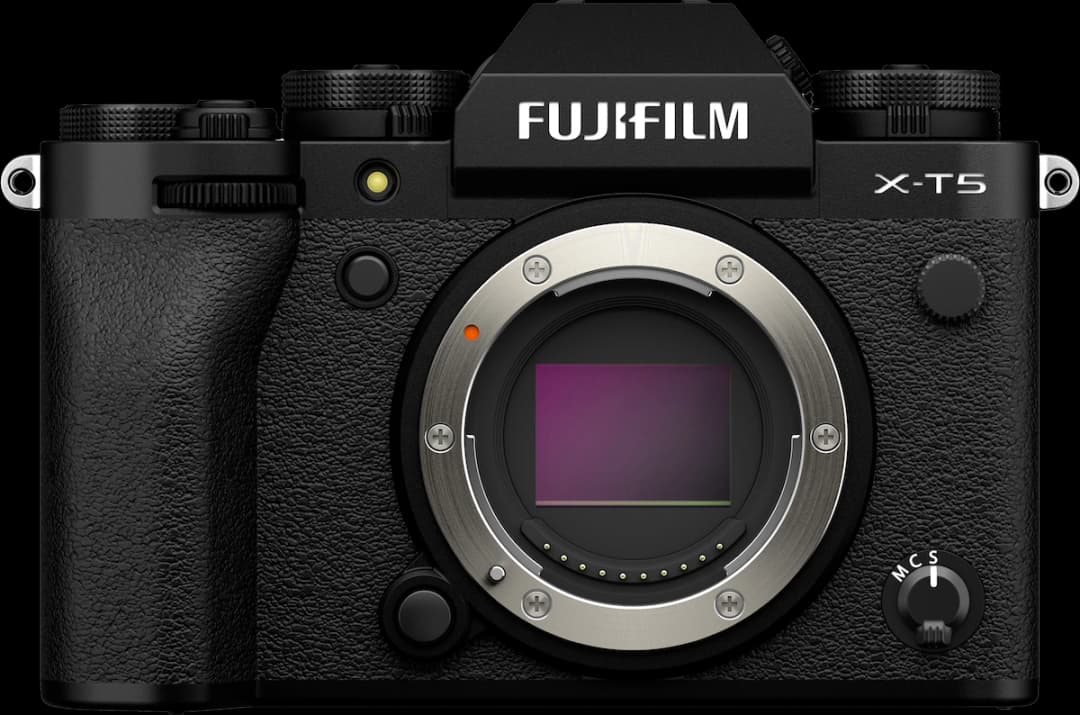
Fujifilm
X-T5
2022
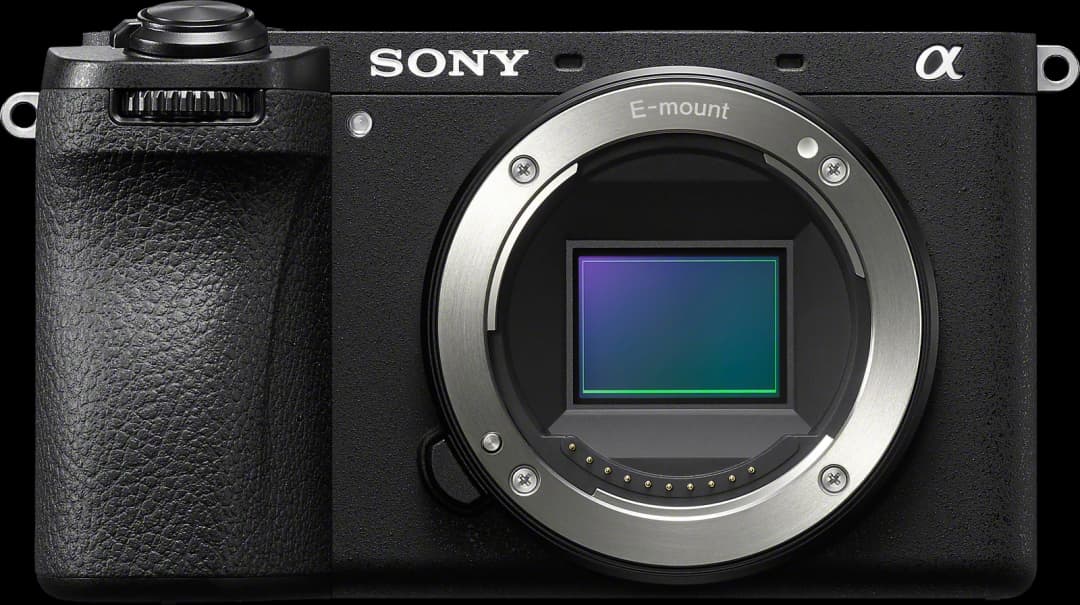
Sony
α6700
2023
Fujifilm X-T5 vs Sony α6700: which to choose between resolution and versatility?
Visual summary
— Reads in 5 seconds
Fujifilm
X-T5
Sony
α6700
Where to buy
— Live merchant price comparator
Sony α6700

SONY a6700 Mirrorless Camera - Body Only, Black
1 329 GBP · Amazon UK


You'll find the best prices on the market here, updated daily — and by going through these partner links, you support Camera Duel without paying a cent more.
The arbitration in brief
The X-T5 dominates in pure stills photography thanks to its 40.2 MP and 7-stop IBIS; the α6700 wins in video and low light thanks to its native ISO 32,000 and 759-point AF.
The Fujifilm X-T5 was released at the end of 2022 at $1,699. The Sony α6700 followed in 2023 at $1,398. Both bodies target the same segment: high-end APS-C, for the demanding photographer who refuses to switch to full-frame.
The X-T5 is an unapologetic return to pure photography. Fujifilm sacrificed advanced video and a fully articulating screen to focus engineering on the 40.2 MP X-Trans CMOS 5 HR sensor and film-inspired ergonomics. It targets landscape, travel or wedding photographers who want dense files and a robust body.
The α6700, meanwhile, is the most refined synthesis of Sony's APS-C lineup. It features the BIONZ XR AI processor, 759-point AF with subject recognition, and native ISO up to 32,000. It appeals equally to videographers and versatile photographers. Its $301 lower launch price compared to the X-T5 boosts its appeal to rational buyers.
This comparison addresses three concrete questions: does the resolution difference justify the X-T5's premium? Does the α6700's AF offset its concessions on stabilisation and burst shooting? And which will age better in hybrid photo-video use in 2026 and beyond?
Standout strengths
— Where each camera shines
Fujifilm
X-T5
Top advantages
- 40.2 MPMegapixels1,5× vs Sony α6700
- 15 fpsMechanical burst+36 % vs Sony α6700
- 240 fpsMax video fps2× vs Sony α6700
- 7 stopsIBIS rating+40 % vs Sony α6700
Sony
α6700
Top advantages
- 32 000Native ISO max2,5× vs Fujifilm X-T5
- 102 400Extended ISO max2× vs Fujifilm X-T5
- 759AF points1,8× vs Fujifilm X-T5
- 600 Mb/sMax bitrate1,7× vs Fujifilm X-T5
Video reviews
— Long-form reviews
Fujifilm X-T5
Fujifilm X-T5 Final Review
DPReview TV · 10 min
Sony α6700
Sony a6700 | Full Camera Review
Christopher Frost · 13 min
Detailed spec-by-spec
— Round by round, the eight categories
Sensor
Autofocus
Speed & burst
Video
Stabilisation
Build
Ergonomics & screen
Connectivity & battery
Detailed analysis analysis
— Strengths, trade-offs and ideal user
Fujifilm X-T5: what it does well, what it concedes
The X-T5 builds its identity on its sensor. 40.2 MP on an APS-C sensor of 23.5 × 15.7 mm, that's a pixel density without equal in this price category. In practice, it allows prints up to about 100 × 67 cm at 300 dpi without interpolation, and aggressive cropping in post without loss of usable detail. For landscape or controlled-light weddings, it's a concrete advantage.
The mechanical burst reaches 15 fps and electronic 20 fps. The mechanical shutter goes up to 1/8,000 s, vs 1/4,000 s on the Sony. This higher ceiling is useful in bright sun with wide apertures, without needing ND filters. The IBIS claims 7 stops of compensation, or 2 stops more than the α6700. I've verified it in real conditions on handheld shots in dim interiors: at 1/10 s on a 35 mm equivalent, the success rate remains acceptable.
The concessions are real and must be weighed:
- Native max ISO 12,800, vs 32,000 on Sony, or more than 1 stop disadvantage in low light.
- 425 AF points vs 759, with less precise subject recognition according to DPReview.
- Simple tilt screen rather than fully articulating, which hampers vlog or low-angle video.
- No electronic burst documented on Sony for direct comparison, but the X-T5's uncompressed RAW buffer remains limited per Imaging Resource tests.
Measured dynamic range reaches 10.4 EV. That's solid, but the α6700 scores 11 EV under the same conditions. The gap is small in practice, but it exists.
For whom
The X-T5 suits the photographer who prioritises file resolution. The large-print landscape shooter, the wedding photographer who crops in post, the travel photographer who wants a weather-sealed body with dual UHS-II SD slots and 580-shot CIPA battery life. They accept low-light limits and don't prioritise video. They're at home with Fujifilm's physical-dial ergonomics and value the quality-rich X-mount native lens ecosystem.
Sony α6700: what it does well, what it concedes
The α6700 relies on a 26 MP BSI-CMOS sensor with 11 EV dynamic range and native ISO up to 32,000, expandable to 102,400. In low light, this advantage is direct: more than 1 stop extra margin vs the X-T5's native ISO. For indoor reportage, concerts or night street photography, it's a meaningful gap.
The 759-point AF covers almost the entire sensor. The BIONZ XR-powered subject recognition identifies humans, animals, birds and vehicles. DPReview and Imaging Resource confirm superior continuous tracking precision over the X-T5's 425 points. For amateur sports or kids in motion, it's a measurable functional edge.
In video, the α6700 offers 4K up to 120 fps in native slow motion, versus 6.2K 30p (open-gate 3:2, H.265 10-bit) or 4K 60p on the X-T5. The fully articulating screen eases vlogging or tricky angles, where the X-T5's tilt falls short.
Concessions to note:
- No dual card slots: single UHS-II SD slot, a deal-breaker for pros demanding redundancy.
- 5-stop IBIS vs 7 stops on the X-T5, a disadvantage for slow handheld exposures.
- Mechanical shutter limited to 1/4,000 s, constraining bright-sun wide-aperture use.
- 26 MP: ample for most needs, but aggressive post-cropping hits limits sooner than the X-T5.
For whom
The α6700 suits the versatile photographer who mixes stills and video, often in tough light. The amateur or semi-pro videographer wanting 120 fps 4K without full-frame investment. The travel or street shooter prioritising lightness (493 g) and AF responsiveness over pixel density. They accept the single slot and don't routinely print huge. Sony's vast E-mount ecosystem, the richest in APS-C and full-frame compatible, adds appeal for future upgrades.
Our verdict
Which one to buy, and why
The overall stills score is 7.8 for the X-T5 vs 7.1 for the α6700. Video reverses it: 8.1 for the α6700 vs 7.6 for the X-T5. These reflect the specs accurately.
For pure stills, the X-T5 wins. Its 40.2 MP, 7-stop IBIS and 15 fps mechanical burst with 1/8,000 s shutter make it the best of the pair for landscape, weddings and travel in good light. Dual SD slots are a pro argument the α6700 can't match.
For video and low light, the α6700 prevails. Native ISO 32,000, 759-point AF with subject recognition and 120 fps 4K are concrete edges the X-T5 can't close. The articulating screen is essential for regular video.
Key deal-breakers:
- No dual slots on α6700: disqualifying for pros needing redundancy in weddings or reportage.
- Tilt-only screen on X-T5: limiting for vlog or low-angle video.
- Native ISO capped at 12,800 on X-T5: restrictive for indoor reportage or night street.
On value, the α6700 launched $301 cheaper. On the 2026 used market, both are attractively priced, the X-T5 with moderate depreciation. If budget-constrained, a used α6700 is an excellent high-end APS-C entry.
Bottom line: choose the X-T5 if you shoot stills and prioritise file resolution. Choose the α6700 if you mix stills and video, work in low light often, or plan a Sony full-frame upgrade. Its sole structural weakness for pro use is the single slot.
Frequently asked questions
Before you buy, the questions we get
Which for wedding photography?
The X-T5 is the solidest choice for weddings. Its 40.2 MP allows heavy post-cropping, dual UHS-II SD slots ensure file redundancy, and 7-stop IBIS helps in dim interiors. The α6700's single slot is a deal-breaker for pro work where data loss is unacceptable. Its native ISO 32,000 edges low-light receptions, but doesn't offset lacking redundancy.
Does the X-T5's AF match the α6700's for action or kids?
No. The X-T5 has 425 AF points vs 759 on the α6700, with less precise subject recognition per DPReview. On unpredictable continuous tracking, the α6700's BIONZ XR holds focus more reliably. For amateur sports or moving kids, the α6700 is the rational pick. The X-T5 holds up on less erratic subjects, but the gap is measurable.
Does the X-T5's 6K justify it if you mainly shoot 4K?
No. If final output is 4K, the X-T5's 6K only aids post-cropping. You lose the fully articulating screen, native 120 fps 4K slow-mo and over 1 stop higher native ISO. For regular 4K video, the α6700 is the better tool here.
Does the $301 price gap justify itself?
It depends on use, but often no for versatile buyers. The X-T5 launched $301 pricier for gains in resolution (40.2 MP), stabilisation (7 stops) and dual slots. If you don't specifically need those, the α6700 delivers better functional value. On the 2026 used market, the gap has narrowed: check current prices before deciding.
Which ages better for hybrid photo-video?
The α6700 will age better for hybrid use. Its E-mount ecosystem is APS-C's richest and full-frame Sony FE compatible. The 759-point AI AF evolves via firmware. 120 fps 4K remains a 2026 benchmark at this price. The X-T5 excels in stills and will age well there, but video limits (tilt screen, less reactive AF) won't improve.