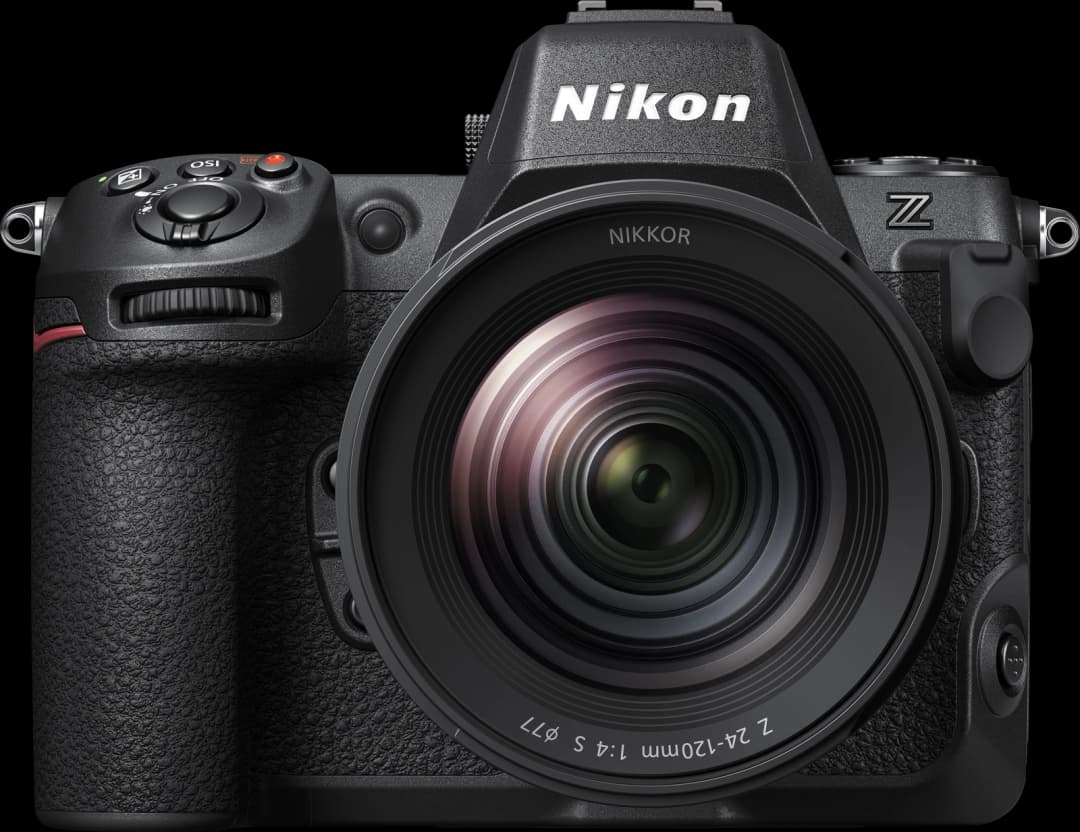
Nikon
Z8
2023
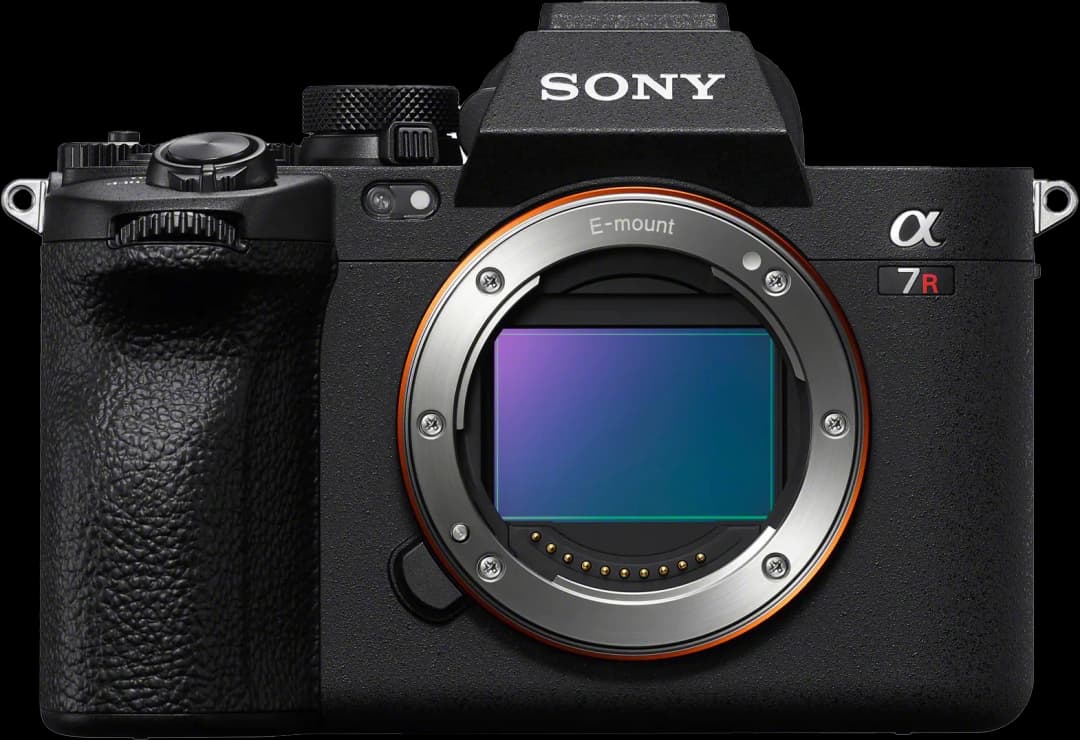
Sony
α7R V
2022
Nikon Z8 vs Sony α7R V: which one deserves your money in 2026?
Visual summary
— Reads in 5 seconds
Nikon
Z8
Sony
α7R V
Where to buy
— Live merchant price comparator

You'll find the best prices on the market here, updated daily — and by going through these partner links, you support Camera Duel without paying a cent more.
The arbitration in brief
The Sony α7R V dominates in pure image quality and ergonomics; the Nikon Z8 takes the lead as soon as speed and 8K video come into play.
The Nikon Z8 was released in 2023 at 4 000 USD. The Sony α7R V dates from 2022 and launched at 3 900 USD. In 2026, both bodies are available on the used market at much more accessible prices, making the choice even more strategic.
These two full-frame hybrids target the same demanding photographer: the one who refuses to choose between resolution, speed, and video versatility. Yet, their architectures differ profoundly. The Z8 features a stacked (Stacked CMOS) sensor that enables an electronic burst at 30 fps and an electronic shutter at 1/32 000 s. The α7R V relies on a 60-megapixel BSI-CMOS sensor, 8-stop IBIS, and a 9.44-million-dot viewfinder.
The camera-duel.com algorithm gives the photo advantage to the Sony (8.9 vs 8.2) and a perfect tie in video (8.5 each). Across the eight compared spec categories, the Sony wins five rounds, the Nikon wins one, and two end in a tie.
This comparison arbitrates three concrete questions. Which sensor architecture best serves your dominant practice? Does the Z8's speed gap justify its concessions in ergonomics and battery life? And which side does the value-for-money tilt towards in 2026?
Standout strengths
— Where each camera shines
Nikon
Z8
Top advantages
- 120 fpsElectronic burst12× vs Sony α7R V
- 1000RAW buffer14,7× vs Sony α7R V
- 5780 Mb/sMax bitrate9,6× vs Sony α7R V
- 64Native ISO min1,6× vs Sony α7R V
Sony
α7R V
Top advantages
- 61 MPMegapixels+33 % vs Nikon Z8
- 693AF points+41 % vs Nikon Z8
- 60 fpsMax video fps2× vs Nikon Z8
- 32 000Native ISO max+25 % vs Nikon Z8
Video reviews
— Long-form reviews
Nikon Z8
Nikon Z8 | Full Camera Review
Christopher Frost · 13 min
Sony α7R V
Sony a7R V Final Review
DPReview TV · 10 min
Detailed spec-by-spec
— Round by round, the eight categories
Sensor
Autofocus
Speed & burst
Video
Stabilisation
Build
Ergonomics & screen
Connectivity & battery
Detailed analysis analysis
— Strengths, trade-offs and ideal user
Nikon Z8: what it does well, what it concedes
The Nikon Z8 is based on a 46-megapixel stacked sensor. This Stacked CMOS architecture allows very fast sensor readout, resulting in an electronic burst at 30 fps and a maximum electronic shutter speed of 1/32 000 s. In practice, you can freeze a subject in full sunlight without an ND filter, and cover a sports field with a burst rate that few full-frame bodies match. The mechanical burst reaches 20 fps, double that of the Sony on this criterion.
The measured dynamic range is 11.3 EV. That's solid for landscape and natural-light portrait work, but the Sony pulls ahead by 0.4 EV according to cross-referenced DXOMark data. The native ISO tops out at 102 400; the minimum native ISO is 32, which is atypical and warrants checking for your low-light needs. IBIS compensates 8 stops, on par with the rival. This is not a differentiating criterion between the two bodies.
The trade-offs are real:
- 910 g on the scale, vs 723 g for the Sony.
- 3.69-million-dot viewfinder with 0.8× magnification, significantly behind.
- CIPA battery life of 340 shots, vs 530 for the Sony.
- USB 3.2 Gen 1 at 5 Gbit/s, where the Sony offers Gen 2 at 10 Gbit/s.
8K video is on board, with output up to 120 fps and H.264 and H.265 codecs. The Z8 is the body in this duel that offers the most headroom for a hybrid videographer wanting to stay on the Nikon Z mount, whose lens ecosystem has thickened since 2023.
For whom
The Z8 suits the photographer covering moving subjects: amateur sports, wildlife, event reportage. The 30 fps electronic burst and 1/32 000 s shutter are concrete assets in these fields. It also fits the hybrid videographer wanting 8K without switching to a dedicated body. However, if your dominant practice is posed landscape, studio portrait, or weddings in tricky light, the trade-offs in IBIS, viewfinder, and battery life weigh heavier. The 910 g weight (body only) is a factor to consider for long field days.
Sony α7R V: what it does well, what it concedes
The Sony α7R V packs 61 megapixels on a BSI-CMOS sensor. That's 14 megapixels more than the Z8, translating to superior cropping latitude and large prints without compromise. The measured dynamic range hits 11.7 EV, or 0.4 EV above the Nikon. In low-contrast landscapes or portraits with mixed lighting, this gap shows up in the highlights recovered in post-processing.
The 8-stop IBIS is one of the body's strongest concrete points. On the road or handheld landscape work, this compensation lets you drop to very slow shutter speeds without a tripod. The 9.44-million-dot viewfinder with 0.9× magnification is the best in this duel, and one of the best on the full-frame market in 2026. Autofocus relies on 693 AF points, vs 493 for the Z8.
The Sony's trade-offs are also documented:
- Mechanical burst limited to 10 fps, with no verified data on electronic burst in the specs.
- Mechanical shutter capped at 1/8 000 s, four times slower than the Z8.
- No verified data on electronic burst: this point can't be arbitrated without a confirmed figure.
The 530-shot CIPA battery life is significantly better, and USB 3.2 Gen 2 at 10 Gbit/s speeds up transfer of voluminous 61 MP RAW files. The slots take CFexpress Type A and SD UHS-II, a flexible combo.
For whom
The α7R V is built for the photographer prioritising image quality over throughput. Landscapers, portraitists, wedding photographers in tricky light: these three profiles directly benefit from the 61 MP, 8 stops of IBIS, and 11.7 EV dynamic range. The 9.44-million-dot viewfinder is a strong argument for precise composition and assisted manual focus. The 723 g weight and compact dimensions (131 × 97 × 82 mm) also make it a coherent choice for travel with a light bag. The extensive Sony E ecosystem, rich in native and adapted lenses, bolsters long-term relevance.
Our verdict
Which one to buy, and why
The Sony α7R V wins this duel on the majority of criteria that matter for a hybrid photographer in 2026. It dominates on the sensor (61 MP, 11.7 EV, native ISO at 50), ergonomics (9.44 M-dot viewfinder, 723 g weight), and battery life (530 shots). IBIS sits at parity, 8 stops on both bodies. The camera-duel.com photo score confirms this gap: 8.9 vs 8.2.
The Nikon Z8 doesn't lose on everything. It wins the speed round with a clear lead:
- Electronic burst at 30 fps vs unavailable data for the Sony.
- Mechanical burst at 20 fps vs 10 fps.
- Electronic shutter at 1/32 000 s vs mechanical 1/8 000 s.
If your dominant practice involves fast-moving subjects, the Z8 is the only rational choice in this duel. For any other use, the Sony prevails.
Deal-breakers to identify before buying: the Z8's 340-shot battery life is a real brake for long days without recharging. The 910 g weight literally weighs on multi-day trips. Conversely, the Sony's 1/8 000 s mechanical ceiling is a deal-breaker for sports in full sun without an ND filter.
In 2026, both bodies are available on the used market at prices below launch. The Sony, released in 2022, is at attractive rates. The newer Z8 (2023) remains slightly pricier used. For a tight budget focused on image quality, a used α7R V offers the best value-performance in this duel. My clear verdict: choose the Sony α7R V unless you're shooting high-cadence sports or wildlife, in which case the Z8 is the only body in this comparison that meets the need.
Frequently asked questions
Before you buy, the questions we get
Which one for weddings?
The Sony α7R V is the most coherent choice for weddings. The 8-stop IBIS allows handheld shooting in very low reception light. The 61 MP provide cropping latitude useful for decisive moments. The 530-shot battery life minimises interruptions for battery swaps. The Z8 isn't disqualified, but its 340-shot CIPA rating and 910 g weight make it less suited to a 12-hour day.
Does the Z8 catch up to the Sony in AF for sports?
On AF point count, the Sony leads with 693 points vs 493 for the Z8. But AF alone doesn't settle sports: burst rate is key. The Z8 fires at 30 fps electronic and 20 fps mechanical, vs 10 fps mechanical for the Sony (electronic data unavailable). For high-burst sports, the Z8 is the only rational choice in this duel, despite a less dense AF array.
Did the 100 USD launch gap justify the Z8?
At near-identical launch prices (4 000 USD vs 3 900 USD), the gap was symbolic. In 2026, the question changes: the Sony, released a year earlier, is more accessible used. The Z8 offers more speed and built-in 8K. The Sony delivers more megapixels, more battery life, and a better viewfinder. IBIS is identical at 8 stops on both bodies. For photo-dominant use, the Sony provides more value per dollar spent.
Should you go for 8K if you mainly shoot 4K?
Both bodies offer 8K, so the question doesn't split this duel. In practice, shooting 8K for 4K delivery gives comfortable cropping margin and superior downscale resolution. But 8K files are huge, and the Z8's USB transfer (Gen 1, 5 Gbit/s) is slower than the Sony's (Gen 2, 10 Gbit/s). If you work in 8K regularly, the Sony's USB is a concrete daily advantage.
Which body will age better by 2028?
The Sony α7R V benefits from the E-mount ecosystem, the most extensive on the full-frame market for native and adapted lenses. The Z8 relies on the Nikon Z mount, whose catalogue has thickened since 2023 but remains narrower. On firmware, Sony has historically supported its bodies with significant AF updates. The newer Z8 has firmware headroom ahead. Both are weather-sealed and built to last. The Sony ecosystem gives a slight long-term edge.