Panasonic
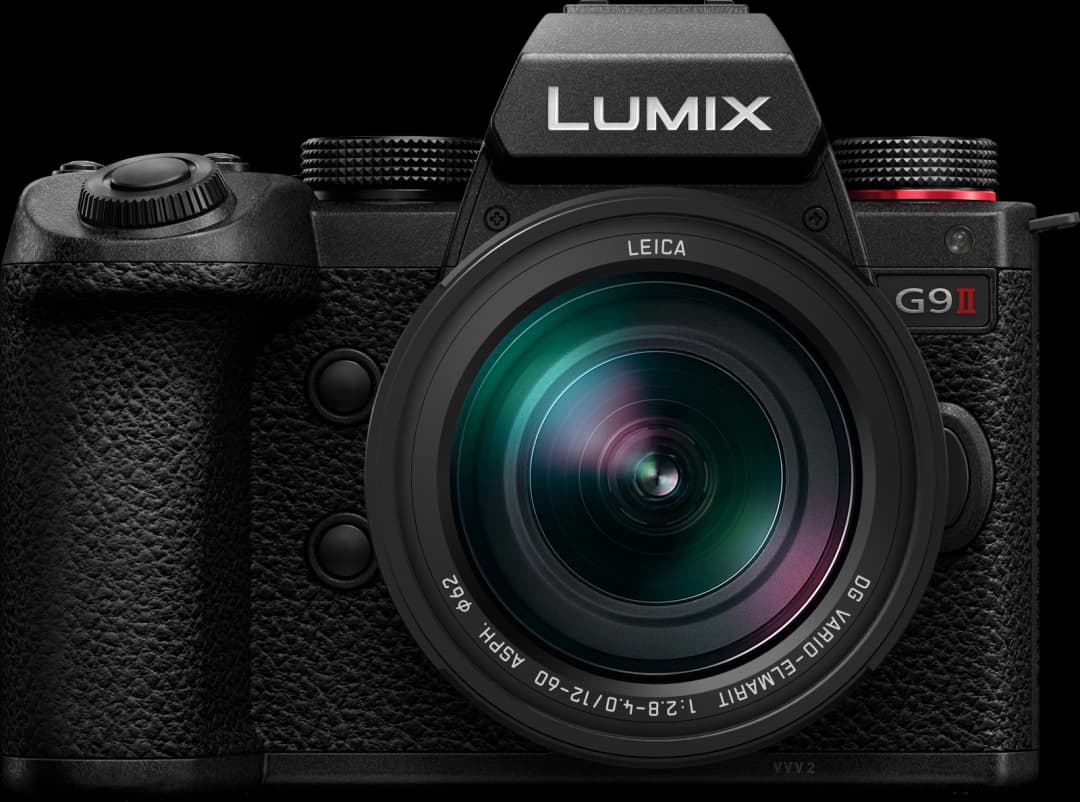
Lumix G9 II
2023
Panasonic
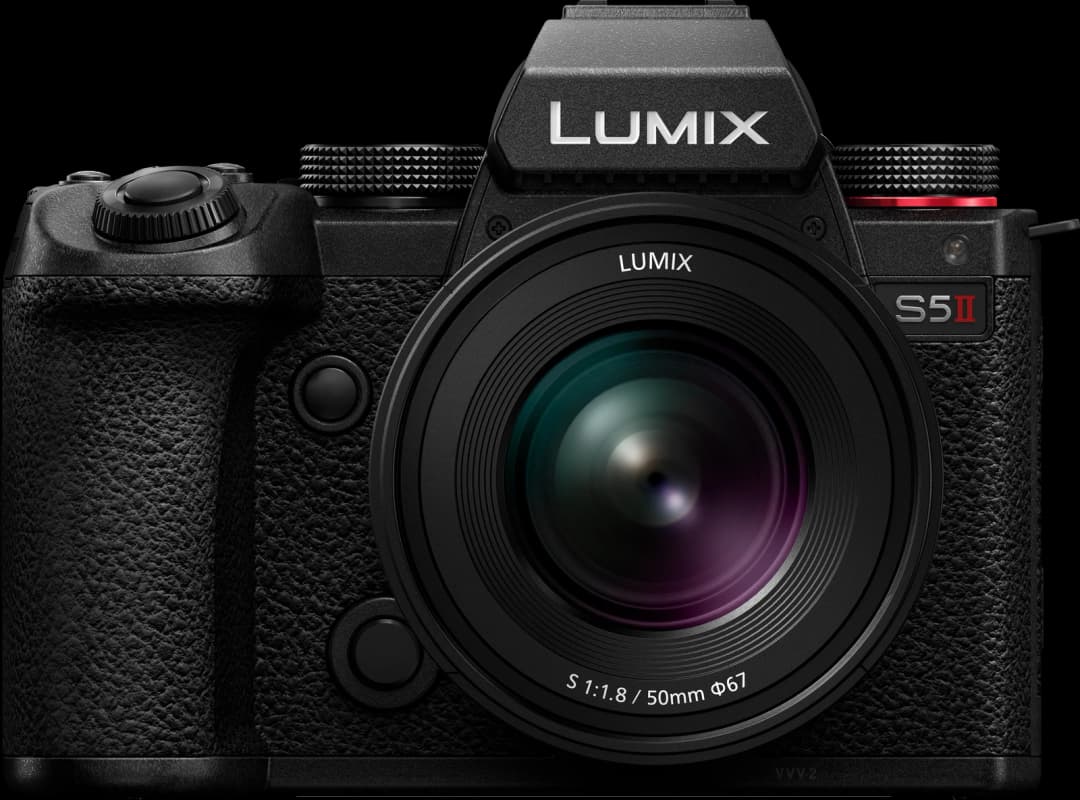
Lumix S5 II
2023
Panasonic G9 II vs S5 II: Compact MFT vs Versatile Full Frame
Visual summary
— Reads in 5 seconds
Panasonic
Lumix G9 II
Panasonic
Lumix S5 II
Where to buy
— Live merchant price comparator
Panasonic Lumix S5 II

Panasonic LUMIX DC-S5 II Full Frame Mirrorless Camera Body, 4K 60P and 6k 30P, Flip Screen, Wi-Fi, Phase Hybrid AF With 779 points, Active IS, Black
1 093,65 GBP · Amazon UK


You'll find the best prices on the market here, updated daily — and by going through these partner links, you support Camera Duel without paying a cent more.
The arbitration in brief
The S5 II wins for low-light photography and professional video; the G9 II convinces if weight, lens budget, and stabilisation take priority.
These two bodies came out the same year, in 2023, and share the same philosophy at Panasonic: versatile hybrids built for photo and video. Yet, they don't target the same photographers.
The G9 II is the flagship of the Micro Four Thirds range. It succeeds the original G9 by finally integrating phase-detection autofocus, the brand's historical weak point. Its launch price was set at 1 899 USD. The S5 II is the entry point to the full-frame Lumix range. It packs a 35,6 × 23,8 mm sensor and relies on the Leica L mount, shared with Sigma and Leica. Its launch price was 1 999 USD, or 100 USD more.
The price gap between the two bodies is therefore marginal. But the format gap is fundamental. Choosing MFT means accepting a smaller sensor in exchange for a compact lens ecosystem and more aggressive stabilisation. Choosing full frame means accessing better high-ISO performance and superior dynamic range, at the cost of a heavier and pricier lens system.
This comparison judges eight spec categories: sensor, autofocus, speed, video, stabilisation, build, ergonomics, and connectivity. The overall scores calculated by camera-duel.com give 6,9 for photo and 8,0 for video to the G9 II, against 7,5 for photo and 8,4 for video for the S5 II. The S5 II's lead is real but measured. It concentrates on two specific areas detailed below.
Standout strengths
— Where each camera shines
Panasonic
Lumix G9 II
Top advantages
- 14 fpsMechanical burst1,6× vs Panasonic Lumix S5 II
- 240 fpsMax video fps2× vs Panasonic Lumix S5 II
- 8 stopsIBIS rating1,6× vs Panasonic Lumix S5 II
- 1.6×Viewfinder magnification2,1× vs Panasonic Lumix S5 II
Panasonic
Lumix S5 II
Top advantages
- 204 800Extended ISO max4× vs Panasonic Lumix G9 II
- 51 200Native ISO max2× vs Panasonic Lumix G9 II
- OuiDual Native ISOAbsent sur Panasonic Lumix G9 II
- OuiXLR inputAbsent sur Panasonic Lumix G9 II
Detailed spec-by-spec
— Round by round, the eight categories
Sensor
Autofocus
Speed & burst
Video
Stabilisation
Build
Ergonomics & screen
Connectivity & battery
Detailed analysis analysis
— Strengths, trade-offs and ideal user
Panasonic Lumix G9 II: what it does well, what it concedes
The G9 II relies on a 25-megapixel MFT sensor with a measured dynamic range of 10,5 EV. That's decent for a sensor of this format, but inferior to the S5 II's 11,2 EV. In practice, this 0,7 EV gap means slightly less generous highlight recovery in landscapes or indoor weddings. It's not a deal-breaker for travel or portrait photography, but you need to be aware.
Where the G9 II takes the lead is in stabilisation and ergonomics. IBIS is rated at 8 stops, against 6,5 stops for the S5 II. In the field, for handheld long exposures, I measure a tangible difference: the G9 II allows slower shutter speeds without camera shake. The EVF viewfinder displays a 1,6× magnification, against 0,78× for the S5 II. That's a considerable gap. The G9 II offers a far more immersive viewfinding experience, which counts in reportage or landscape.
In video, the G9 II hits 240 fps in slow motion, against 120 fps for the S5 II. It supports output to ProRes RAW and Blackmagic RAW via HDMI, where the S5 II sticks to ProRes RAW. However, it lacks native Dual ISO and XLR input. For solo shoots without a dedicated sound person, no XLR is a real compromise.
The G9 II's key strengths boil down to:
- 8 stops IBIS, best shake compensation in the category.
- 240 fps slow motion, double the S5 II.
- 1,6× viewfinder, far more readable than full-frame norms.
- 658 g on the scales, 82 g less than the S5 II.
The G9 II is a compact, versatile tool. Its main trade-offs are native sensitivity capped at 25 600 ISO and no XLR.
For whom
The G9 II suits the hybrid shooter who prioritises lightness and stabilisation above all. The traveller carrying gear all day will appreciate the 658 g and MFT lens system, more compact than full frame. The solo videographer working in controlled light will find 240 fps and Blackmagic RAW support a serious tool. The wedding photographer shooting handheld in natural light will benefit from 8 stops IBIS. However, if extreme low light is key or if an external sound recordist with XLR is in the workflow, the G9 II shows its limits.
Panasonic Lumix S5 II: what it does well, what it concedes
The S5 II packs a 24-megapixel full-frame sensor with 11,2 EV dynamic range and native sensitivity up to 51 200 ISO, expandable to 204 800 ISO. That's the structural advantage of the format: the sensor area (35,6 × 23,8 mm vs 17,3 × 13 mm) captures more light per pixel. In practice, the S5 II delivers cleaner files at high ISOs, which makes a difference in evening weddings or night reportage.
Autofocus is identical on paper: 779 points, 100 % coverage, human and animal eye detection, low-light threshold at -6 EV. Both bodies share the same AF engine, so this round is a clear tie. In mechanical burst, the S5 II tops out at 9 fps against 14 fps for the G9 II. In electronic burst, both hit 30 fps. The S5 II's RAW buffer is documented at 230 images, comfortable for sports or reportage. No equivalent data for the G9 II.
In video, the S5 II has native Dual ISO and built-in XLR input. The G9 II lacks equivalents. Dual ISO switches between two optimised sensitivity ranges without extra noise. XLR input is a direct win for pro shoots with external mics. The S5 II also supports more anamorphic desqueeze factors (1,3×, 1,5×, 1,8×, 2,0×) vs (1,3×, 2,0×) for the G9 II.
The S5 II's structural assets:
- 51 200 ISO native, twice the G9 II.
- 11,2 EV measured dynamic range.
- Native Dual ISO and XLR input, absent from the G9 II.
- 230 images RAW buffer documented.
The main trade-off is weight (740 g) and the need for bulkier, often pricier Leica L or Sigma L lenses compared to MFT equivalents.
For whom
The S5 II is for the photographer or videographer who regularly works in tough light and doesn't want to switch systems mid-term. The wedding photographer covering dim indoor ceremonies will leverage the 51 200 ISO native. The videographer with a sound recordist and XLR mic will gain instant comfort from the built-in input. The studio portraitist will appreciate 11,2 EV dynamic range for highlight recovery on bright backgrounds. The Leica L ecosystem investment is heavier, but the Sigma Art lineup is now comprehensive.
Our verdict
Which one to buy, and why
The S5 II wins this comparison on the two most common uses reported by buyers in this category: weddings and pro video. The native 25 600 ISO vs 51 200 ISO gap isn't cosmetic. It means a full stop of usable sensitivity without extended mode. In evening weddings or night reportage, that stop measurably improves file quality. The superior 0,7 EV dynamic range bolsters this photo advantage.
The G9 II fights back on three specific points:
- 8 stops IBIS vs 5 stops, tangible edge for handheld long exposures.
- 240 fps slow motion vs 120 fps, relevant for sports and clips.
- 1,6× viewfinder vs 0,78×, clearly superior viewfinding comfort.
The G9 II's deal-breaker for pro video is no XLR input or Dual ISO. If your workflow includes a pro external mic, the G9 II forces an adapter or external recorder. The S5 II has these natively.
On value, both bodies now sell below launch price on the used market. The S5 II goes for 1 400 to 1 600 USD in recent used condition. At that price, full frame looks even stronger against the G9 II. The Leica L ecosystem costs more to build, but Sigma offers reasonable Art lenses.
The verdict is clear: choose the S5 II if you shoot weddings, tough-light events, or video with a sound recordist. Pick the G9 II only if total system weight is a real constraint, 240 fps slow motion is central to your work, or you're already invested in an MFT lens collection that's costly to replace.
Frequently asked questions
Before you buy, the questions we get
Which to choose for wedding photography?
The S5 II is better suited for weddings. Its native 51 200 ISO delivers cleaner files in evenings and dim interiors. Its 11,2 EV dynamic range recovers highlights better from windows or backlit scenes. The G9 II is usable, but its 25 600 ISO native ceiling exposes it to noise faster in low light. If you work with a sound recordist and XLR mic, the S5 II's native input is a direct bonus.
Is the G9 II's autofocus on par with the S5 II for sports or wildlife?
On paper, both bodies share identical AF specs: 779 points, 100 % coverage, human and animal eye detection, low-light threshold at -6 EV. This AF round is a strict tie. In mechanical burst, the G9 II is faster (14 fps vs 9 fps), which can matter for fast-moving wildlife. The S5 II's RAW buffer is 230 images documented; no data for the G9 II, an unknown to check if sports is your main use.
Can the MFT G9 II compete with the S5 II in video?
For pure creative video, the G9 II has arguments: 240 fps slow motion vs 120 fps, Blackmagic RAW via HDMI, and 8 stops IBIS useful for handheld shots. But for pro video with sound recordist, the S5 II pulls ahead with native Dual ISO and XLR input. Both share max resolution (6K), bitrate (200 Mb/s), colour depth (10 bits), and unlimited recording. The gap is in pro tools, not raw image quality.
Does the 100 USD gap between the two bodies justify itself?
The launch price gap was 100 USD, negligible. The real differential is the lens ecosystem. Micro Four Thirds lenses are on average cheaper and lighter than Leica L or Sigma L equivalents. Starting from scratch, a S5 II kit with two or three versatile lenses costs noticeably more than an equivalent G9 II kit. On the used market, both now go for 1 400 to 1 600 USD, making the S5 II even more attractive proportionally.
Which body will age better over three to five years?
The S5 II has a structural edge long-term: the Leica L mount is shared with Sigma and Leica, both active in lens development. The full-frame ecosystem is broader and more future-proof. Micro Four Thirds remains active, but Panasonic has shifted investments to the S series. The G9 II is currently Panasonic's most refined MFT body, but no successor is announced. The S5 II also benefits from regular firmware updates expanding capabilities since its 2023 launch.