Panasonic
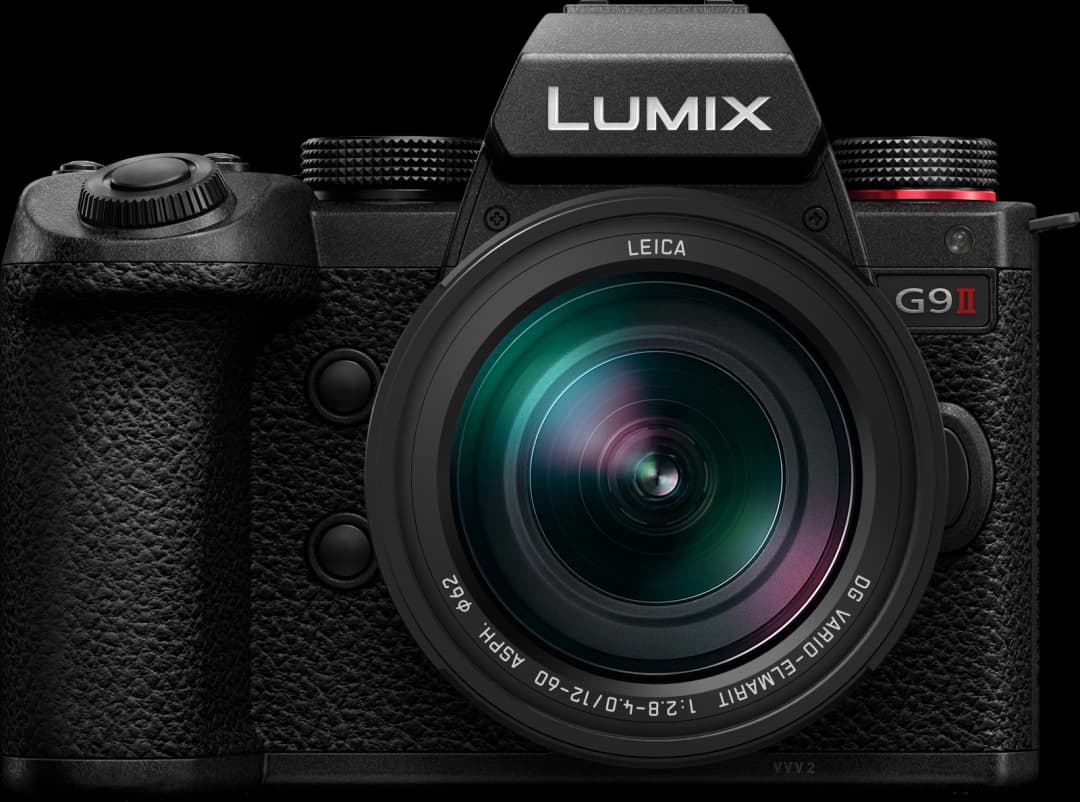
Lumix G9 II
2023
Panasonic
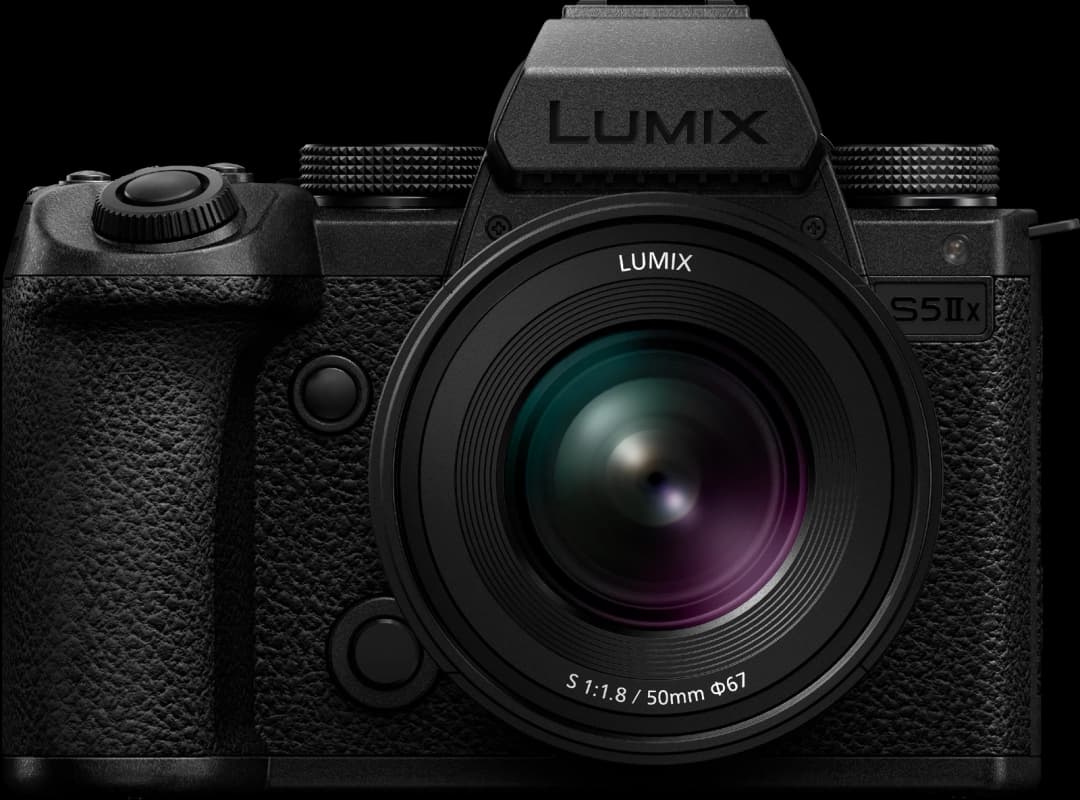
Lumix S5 IIX
2023
Panasonic G9 II vs S5 IIX: Versatile MFT or Pro Full Frame Video?
Visual summary
— Reads in 5 seconds
Panasonic
Lumix G9 II
Panasonic
Lumix S5 IIX
The arbitration in brief
The G9 II wins on speed and ergonomics; the S5 IIX excels in professional video and low light. Choose the S5 IIX if video is your priority, the G9 II if you're looking for a compact, responsive photo-video hybrid.
Panasonic released these two bodies in the same year, 2023, with positionings that overlap without coinciding. The G9 II is the direct heir to a line focused on sports and reportage photography in Micro Four Thirds mount. The S5 IIX is an enhanced variant of the S5 II, designed for demanding videographers in L mount. Their respective launch prices, 1 899 USD for the G9 II and 2 199 USD for the S5 IIX, represent a 300 USD gap that deserves justification spec by spec.
On paper, both bodies share identical dimensions (134 × 102 × 90 mm), the same number of AF points (779), the same screen resolution (1,84 M dots) and dual SD slots. This common base makes the comparison more subtle than it appears. The differences focus on sensor format (MFT vs Full Frame), burst rate, native ISO range, and advanced video functions.
This comparison targets hybrid photographers and videographers hesitating between a compact versatile tool and a more powerful video platform. It decides on four concrete axes: handling difficult light, capture speed, professional video capabilities, and everyday ergonomics. The overall scores calculated by camera-duel.com already point the way: 6,9 in photo and 8,0 in video for the G9 II, versus 7,3 in photo and 8,7 in video for the S5 IIX. The gap is clear in video. It's less so in photo.
Standout strengths
— Where each camera shines
Panasonic
Lumix G9 II
Top advantages
- 14 fpsMechanical burst1,6× vs Panasonic Lumix S5 IIX
- 240 fpsMax video fps2× vs Panasonic Lumix S5 IIX
- 8 stopsIBIS rating1,6× vs Panasonic Lumix S5 IIX
- 1.6×Viewfinder magnification2,1× vs Panasonic Lumix S5 IIX
Panasonic
Lumix S5 IIX
Top advantages
- 204 800Extended ISO max4× vs Panasonic Lumix G9 II
- 51 200Native ISO max2× vs Panasonic Lumix G9 II
- 800 Mb/sMax bitrate4× vs Panasonic Lumix G9 II
- OuiDual Native ISOAbsent sur Panasonic Lumix G9 II
Detailed spec-by-spec
— Round by round, the eight categories
Sensor
Autofocus
Speed & burst
Video
Stabilisation
Build
Ergonomics & screen
Connectivity & battery
Detailed analysis analysis
— Strengths, trade-offs and ideal user
Panasonic Lumix G9 II: what it does well, what it concedes
The G9 II features a 25-megapixel MFT sensor with dynamic range measured at 10,5 EV. For landscapes or controlled-light reportage, this dynamic range is sufficient. It becomes a real compromise against Full Frame as soon as the scene mixes highlights and deep shadows. Native ISO tops out at 25 600, with extension to 51 200. In practice, the MFT sensor shows a loss of noise control beyond 6 400 ISO according to Photons to Photos measurements, penalising it for events in low ambient light.
Where the G9 II pulls ahead is on speed. Electronic burst reaches 30 fps, versus 9 fps for the S5 IIX. Mechanical burst holds at 14 fps. These figures position the G9 II as a credible tool for sports or wildlife in MFT mount. IBIS compensates 8 stops, or 2,5 stops more than the S5 IIX. For handheld photo in long exposure or difficult light, this advantage is tangible and measurable. The EVF viewfinder displays 3,69 M dots with 1,6× magnification, making it one of the best in its class.
In video, the G9 II reaches 240 fps in slow motion, versus 120 fps for the S5 IIX. It records in 10 bits, supports unlimited recording, and offers ProRes RAW and Blackmagic RAW output via HDMI. The compromises are real: no V-Log (HLG only internally), no XLR input, no Dual ISO, no genlock. For professional video on set or in sound-heavy events, these absences are deal-breakers.
Key strengths summarised:
- 30 fps electronic burst, 14 fps mechanical.
- 8 stops IBIS, best in class.
- 240 fps video slow motion.
- 3,69 M dots viewfinder with 1,6× magnification.
- Contained weight at 658 g.
For whom
The G9 II suits the hybrid photographer who prioritises responsiveness above all. It targets those covering outdoor weddings, amateur or semi-pro sports reportage, or travel photography in varied conditions. The 8 stops IBIS is a strong argument for anyone often working without a tripod. The 658 g weight and compact dimensions make for long field days. In video, it meets the needs of a content creator or event videographer who doesn't need XLR input or V-Log. It doesn't suit a professional videographer working with a sound engineer or delivering V-Log files for grading.
Panasonic Lumix S5 IIX: what it does well, what it concedes
The S5 IIX is built around a 24-megapixel Full Frame sensor with 11,2 EV dynamic range, or 0,7 EV more than the G9 II. Native ISO reaches 51 200, with extension to 204 800. These figures translate to real latitude in low light: where the G9 II starts showing noise at 6 400 ISO, the S5 IIX remains usable much higher according to DXOMark measurements. For indoor weddings, night reportage or ambient-light portraits, this edge is decisive.
The S5 IIX burst tops out at 9 fps, mechanical or electronic. That's a clear compromise against the G9 II. In contrast, the announced 300-image RAW buffer is a spec the G9 II doesn't detail in verified official specs. IBIS compensates 5,5 stops, functional but inferior to the G9 II's 8 stops. The SD cards without UHS-II spec on both slots are a point of caution for high video bitrates.
It's in video that the S5 IIX justifies its premium. It includes internal V-Log, built-in XLR input, native Dual ISO, and genlock for multi-camera sync. These four features are absent from the G9 II. Anamorphic support is more complete: 1,3×, 1,5×, 1,8× and 2,0× versus 1,3× and 2,0× on the G9 II. The 8,7 out of 10 video score from camera-duel.com reflects this functional richness.
Key strengths summarised:
- Native ISO up to 51 200, extended to 204 800.
- 11,2 EV measured dynamic range.
- Internal V-Log, Dual ISO, XLR, genlock: complete pro video suite.
- Announced 300-image RAW buffer.
- Anamorphic support 1,3×, 1,5×, 1,8×, 2,0×.
For whom
The S5 IIX targets the hybrid videographer working in professional conditions. It suits wedding cameramen delivering in V-Log for grading, documentarians recording sound direct to XLR, or videographers syncing multiple cameras via genlock. In photo, it meets the needs of portraitists or wedding photographers in low ambient light who value ISO latitude. It doesn't suit those seeking high burst rates for sports or wildlife, nor those aiming to minimise kit weight.
Our verdict
Which one to buy, and why
The duel plays out on two clearly separated axes. In speed and ergonomics, the G9 II dominates: 30 fps electronic, 8 stops IBIS, 1,6× magnification viewfinder, and 658 g weight. In low-light image quality and pro video functions, the S5 IIX wins hands down: native ISO to 51 200, 11,2 EV dynamic range, internal V-Log, XLR, Dual ISO, genlock.
The deal-breakers are unambiguous:
- No internal V-Log on G9 II: a killer for any professional grading workflow.
- No XLR input on G9 II: major constraint for on-set or event sound recording.
- Burst capped at 9 fps on S5 IIX: insufficient for fast sports or wildlife.
- 5 stops IBIS on S5 IIX: real compromise for handheld photo in difficult light.
On value for money, the 300 USD gap between the bodies is only justified if you leverage the S5 IIX's advanced video functions. If your use is mostly photo or you don't deliver in V-Log, that gap doesn't pay off. The G9 II, available used around 1 200 to 1 400 USD in 2026, offers solid value for a versatile hybrid. The S5 IIX is also found used around 1 600 to 1 800 USD, narrowing the gap and boosting its appeal for videographers.
The verdict is clear. If professional video is your main activity, choose the S5 IIX: the V-Log, XLR, Dual ISO and genlock suite is coherent and unmatched in the G9 II. If you're a hybrid photographer with secondary video needs, or covering fast-moving subjects, the G9 II is the rational choice. Its superior IBIS, 30 fps rate and exceptional viewfinder make it more complete for photography in the broad sense.
Frequently asked questions
Before you buy, the questions we get
Which to choose for wedding photography?
Both bodies are weather-sealed, dual-slot, and have human-eye AF. For a wedding photographer mainly doing stills, the G9 II wins thanks to 8 stops IBIS (versus 5 stops) and 30 fps burst. For a wedding videographer delivering in V-Log and recording sound in XLR, the S5 IIX is the only coherent choice. If you do both, the S5 IIX offers a more professional video workflow, but it costs 300 USD more at launch, or around 200 to 400 USD more used.
Is the lack of V-Log on the G9 II really a blocker?
Yes, if you work with a colourist or deliver files to a client demanding a standardised log profile. The G9 II only offers HLG internally. HLG provides decent exposure latitude but isn't designed for professional grading pipelines. The S5 IIX includes V-Log, Panasonic's reference log profile, compatible with manufacturer LUTs and pro post-production workflows. For a solo content creator editing their own videos, HLG may suffice. For productions with outsourced post, the lack of V-Log on the G9 II is a real deal-breaker.
Does the G9 II's MFT sensor really penalise in low light?
Yes, measurably so. The G9 II's MFT sensor tops out at 25 600 native ISO, versus 51 200 native ISO for the S5 IIX's Full Frame. The Full Frame sensor's physical area (35,6 × 23,8 mm vs 17,3 × 13 mm) captures around four times more light at equivalent aperture. In practice, the G9 II remains usable up to about 6 400 ISO per Photons to Photos measurements. The S5 IIX holds up much higher. For indoor weddings or night reportage, this gap is tangible. The G9 II's superior IBIS (8 stops vs 5 stops) partially compensates for static photo, but not moving subjects.
Does the 300 USD gap between the bodies justify itself?
Only if you leverage the S5 IIX's advanced video functions. Internal V-Log, XLR input, Dual ISO and genlock are absent from the G9 II. If they match your workflow, the 300 USD launch gap is justified. If not, you're paying for unused specs. Used in 2026, the gap narrows to 200 to 400 USD depending on markets. In that case, the S5 IIX becomes even more appealing for anyone eyeing a shift to pro video.
Which body will age better in coming years?
The S5 IIX has a structural edge: L mount is shared with Leica and Sigma, ensuring a broader, more future-proof lens ecosystem than Micro Four Thirds mount. The G9 II remains compatible with the vast existing MFT lineup, but Panasonic's MFT mount evolution is less certain beyond 2026. The S5 IIX's Full Frame sensor also offers better obsolescence resistance in image quality terms. For long-term investment, the S5 IIX is the sturdier platform.