Panasonic
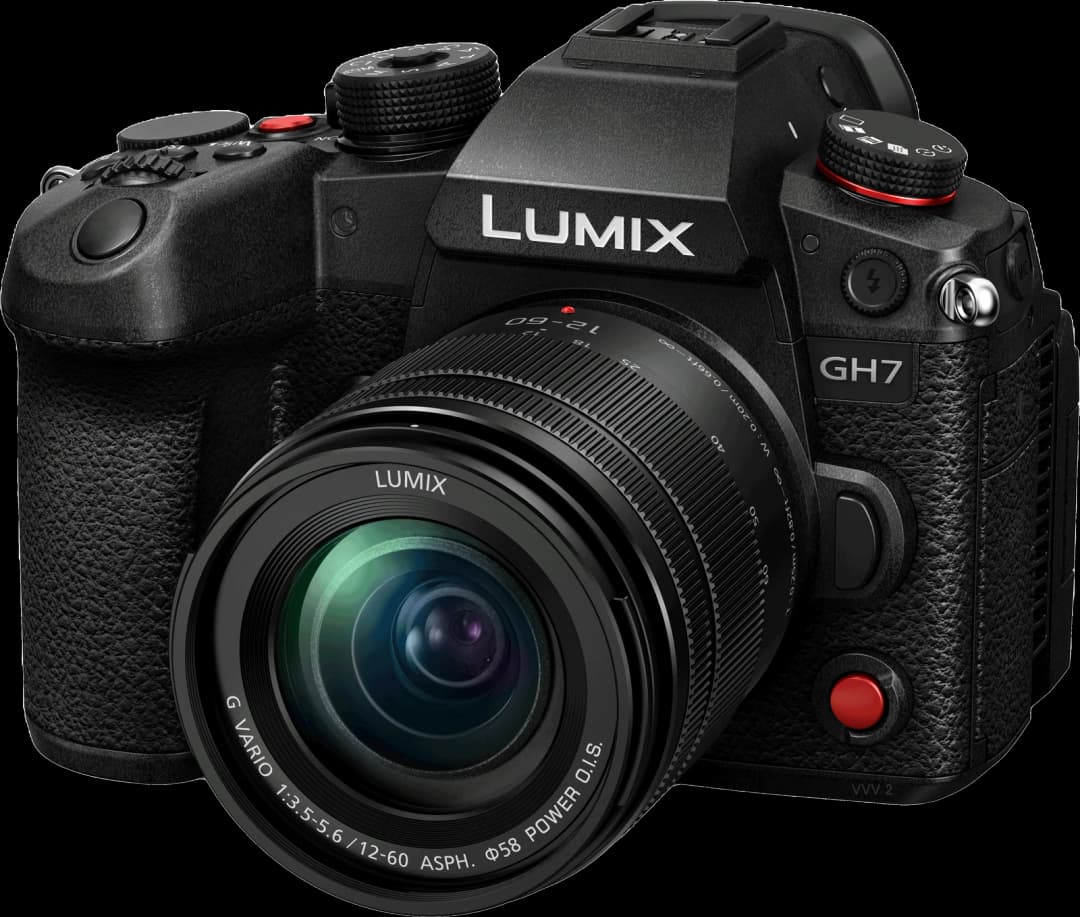
Lumix GH7
2024
Panasonic
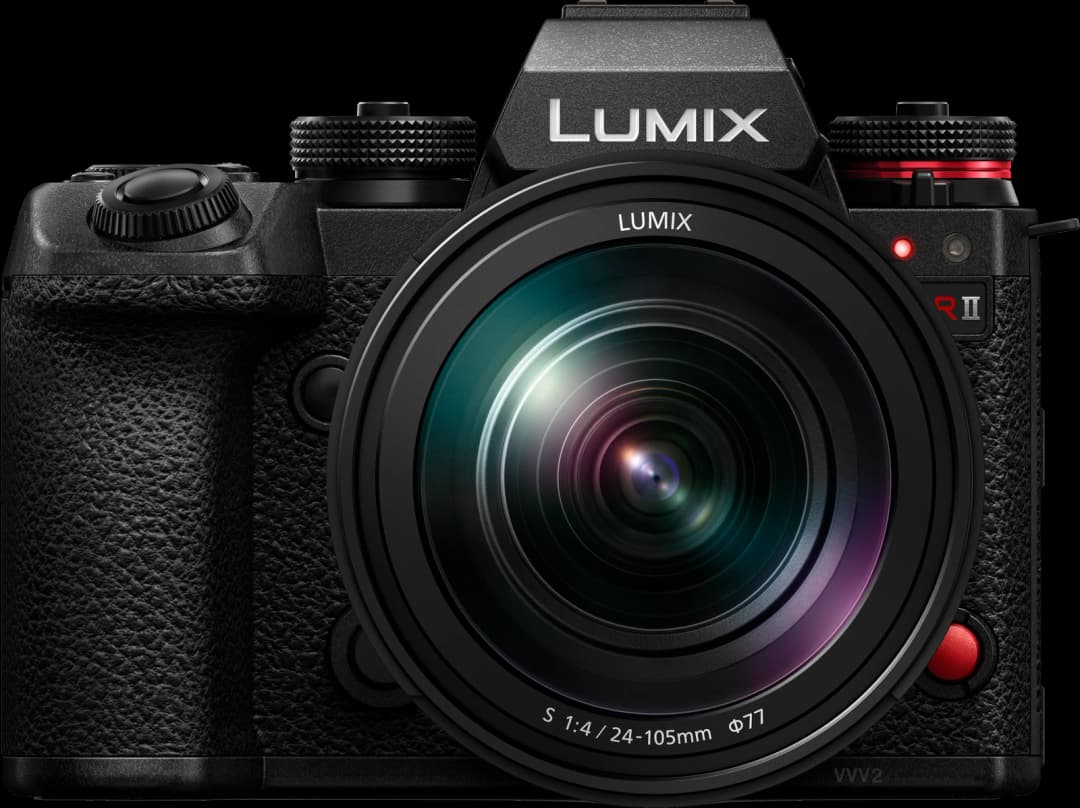
Lumix S1R II
2024
Panasonic Lumix GH7 vs S1R II: which to choose between versatile video and full-frame photo?
Visual summary
— Reads in 5 seconds
Panasonic
Lumix GH7
Panasonic
Lumix S1R II
The arbitration in brief
The GH7 dominates in versatile hybrid video thanks to its internal ProRes RAW codecs and 75 fps; the S1R II crushes the competition in full-frame photography with its 44 MP and native ISO of 51 200.
Two Panasonic bodies, two philosophies. The Lumix GH7 and Lumix S1R II both launched in 2024, but they target different photographers. The GH7 is the direct heir to a video-first lineage in Micro Four Thirds, launched at 2 199 USD. The S1R II is a high-resolution full-frame hybrid, priced at 3 200 USD, a 1 001 USD gap at launch.
This isn't a duel between direct competitors. It's a choice between two deliberate trade-offs. The GH7 bets on video versatility, burst rate, and the compact MFT ecosystem. The S1R II bets on resolution, dynamic range, sensitivity, and full-frame depth of field.
Both bodies share common foundations: weather-sealing, dual card slots, IBIS, unlimited recording, human and animal eye AF, USB 3.2 Gen 2. The choice isn't made on these points. It's made elsewhere.
This comparison settles four concrete questions. Which holds up better in low light? Which is the best video tool in 2026? Which will age better in its lens ecosystem? And does the 1 001 USD price gap justify itself based on your primary use? Here are the answers, backed by figures.
Standout strengths
— Where each camera shines
Panasonic
Lumix GH7
Top advantages
- 14 fpsMechanical burst1,6× vs Panasonic Lumix S1R II
- 300 fpsMax video fps2,5× vs Panasonic Lumix S1R II
- 75 fpsElectronic burst1,9× vs Panasonic Lumix S1R II
- 1×4K crop1,5× vs Panasonic Lumix S1R II
Panasonic
Lumix S1R II
Top advantages
- 204 800Extended ISO max8× vs Panasonic Lumix GH7
- 51 200Native ISO max4× vs Panasonic Lumix GH7
- 44 MPMegapixels1,7× vs Panasonic Lumix GH7
- -6 EVAF low light (EV)+2 vs Panasonic Lumix GH7
Detailed spec-by-spec
— Round by round, the eight categories
Sensor
Autofocus
Speed & burst
Video
Stabilisation
Build
Ergonomics & screen
Connectivity & battery
Detailed analysis analysis
— Strengths, trade-offs and ideal user
Panasonic Lumix GH7: what it does well, what it concedes
The GH7 is first and foremost a video machine. Its most differentiating spec is internal ProRes RAW recording in 5.8K, without cropping in 4K (crop factor 1×). In practice, you get a RAW file straight to CFexpress Type B card, without an external recorder. This capability is absent from the S1R II, which relies on an external feed for RAW. For a solo or lightweight team videographer, it's a direct operational advantage.
Electronic burst reaches 75 fps with a 160 RAW image buffer. Measured rolling shutter is 5,7 ms, which remains contained for an MFT sensor in electronic mode. Electronic shutter speed goes up to 1/32 000 s, useful in bright sun with a fast lens. In pure speed terms, the GH7 has no equivalent in this comparison.
The trade-offs are real. The 17,3 × 13 mm MFT sensor imposes a physical limit: measured dynamic range is 10,2 EV, versus 11,1 EV for the S1R II. Native ISO tops out at 12 800, with extension to 25 600 only. In low light, AF holds to -4 EV, two stops less than the S1R II.
Key strengths in summary:
- 75 fps electronic burst with 160 RAW image buffer.
- Internal ProRes RAW HQ, no 4K crop.
- Rolling shutter 5,7 ms and shutter 1/32 000 s.
- 360 shots CIPA battery life, slightly better.
The GH7 is a formidable tool in its domain. But that domain has walls.
For whom
The GH7 suits the hybrid videographer working solo or in a lightweight team. It targets documentary filmmakers, wedding videographers wanting ProRes RAW without an external recorder, or news photographers needing 75 fps to catch every decisive moment. It also fits photographers already in the Micro Four Thirds ecosystem with compatible lenses. However, if your primary use is low-light photo, high-resolution portrait, or high-contrast landscape, the GH7's MFT sensor will hit its limits before the S1R II.
Panasonic Lumix S1R II: what it does well, what it concedes
The S1R II is built on a 44 MP BSI-CMOS full-frame sensor measuring 35,8 × 23,9 mm. Resolution alone isn't the argument: it's what it enables that counts. For large prints, you can output up to 120 cm wide at 300 dpi without interpolation. In cropping, you retain a usable image even after a 50% frame cut. For portrait and landscape, it's a margin of manoeuvre the GH7 can't match.
Measured dynamic range hits 11,1 EV at base ISO, versus 10,2 EV for the GH7. The one-stop gap is noticeable in recovering highlights on a contrasty sky. Native ISO reaches 51 200, with extension to 204 800. Low-light AF holds to -6 EV, two stops better than the GH7. For a dark-room wedding or indoor reportage, those two stops mean the difference between reliable focus and approximate focus.
The S1R II's trade-offs are targeted. Electronic burst tops out at 40 fps, versus 75 fps for the GH7. RAW buffer isn't documented in available sources. 4K video applies a 1,5× crop, narrowing the field of view of your lenses in video. The S1R II doesn't record internal RAW: it relies on HDMI output to an external recorder.
Key strengths in summary:
- 44 MP and 11,1 EV dynamic range for high-res landscape and portrait.
- Native ISO 51 200, extension 204 800 for low light.
- Low-light AF to -6 EV, two stops better than the GH7.
- 8 stops IBIS, slightly better than the GH7.
The Leica L ecosystem has fewer lenses than MFT, but available ones (Sigma Art, Lumix S, Leica SL) are top-tier.
For whom
The S1R II targets photographers whose primary use is stills. High-res portrait, high-contrast landscape, tricky-light wedding: these three use cases directly benefit from the 44 MP, 11,1 EV dynamic range, and -6 EV AF. It also suits videographers who accept 4K cropping in exchange for superior 8K image quality and full-frame depth of field. However, if you need internal RAW, 75 fps, or 1× 4K crop, the S1R II isn't the right tool.
Our verdict
Which one to buy, and why
The GH7 and S1R II aren't fighting on the same turf. Choosing between them means identifying your primary use, then checking if the other side's deal-breakers affect you.
If your primary use is professional video, the GH7 wins. It records internal ProRes RAW HQ, no 4K crop, with 5,7 ms rolling shutter and 75 fps burst. The S1R II can't record internal RAW and applies a 1,5× crop in 4K. These are concrete deal-breakers for videographers without an external recorder. The 1 001 USD gap also favours the GH7 here.
If your primary use is photo, the S1R II wins hands down. The 44 MP, 11,1 EV dynamic range, native ISO 51 200, and -6 EV AF form a coherent package the GH7's MFT sensor can't physically match. The camera-duel.com algorithm photo score confirms it: 8,8 vs 7,1.
Deal-breakers to remember:
- GH7: native ISO limited to 12 800 and low-light AF only to -4 EV.
- S1R II: no internal RAW, 1,5× 4K crop, undocumented RAW buffer.
- S1R II: Leica L ecosystem more limited than MFT in affordable lens volume.
On value for money, the GH7 at 2 199 USD is hard to beat for hybrid videographers. The S1R II at 3 200 USD only justifies itself if high-res photo and low light are your real priorities. On the used market, both 2024 bodies hold close to new prices in 2026: watch for deals from 1 700 USD on the GH7 and 2 500 USD on the S1R II.
My clear verdict: if you're still hesitating between the two, video plays a role in your work. In that case, go for the GH7. The S1R II is a photo body with serious video capabilities. The GH7 is a video body with honest photo capabilities. The distinction is structural, not cosmetic.
Frequently asked questions
Before you buy, the questions we get
Which to choose for weddings?
The S1R II is better suited for wedding photography. Its AF holds to -6 EV, two stops better than the GH7, which makes the difference in a dark reception hall. Its 44 MP allows cropping in post without quality loss. For wedding videographers wanting ProRes RAW without an external recorder, the GH7 takes the edge. If you do both, the GH7 is more versatile over a full day, with 360 shots CIPA rating versus 350 for the S1R II.
Does the GH7's AF catch up to the S1R II's in sports or wildlife?
On AF point density, both bodies are equal: 779 points and 100 % coverage. But the S1R II holds AF to -6 EV versus -4 EV for the GH7. In broad daylight, the gap is negligible. In low light (forest, indoors, twilight), the S1R II is more reliable. On pure burst rate, the GH7 dominates with 75 fps versus 40 fps. For daytime sports needing max burst, the GH7 is more effective. For wildlife in tough light, the S1R II is safer.
Should I give in to the 8K hype if I mainly shoot 4K?
No, if you deliver in 4K. The S1R II records 8K, but with a 1,5× crop in 4K. In practice, a 24 mm lens acts like 36 mm in 4K video on the S1R II. The GH7 records 4K uncropped (1×) and goes to 5,8K internal RAW. If your final deliverable is 4K, the GH7 offers more lens flexibility and a more complete codec (internal ProRes RAW HQ). The S1R II's 8K resolution only matters if you deliver 8K or use oversampling as a selling point.
Does the 1 001 USD gap between the two bodies justify itself?
Yes, if your primary use is high-res photo or low light. The S1R II's 44 MP, 11,1 EV dynamic range, and native ISO 51 200 are physical advantages money really buys. No, if your primary use is video. The GH7 at 2 199 USD offers video features the 3 200 USD S1R II lacks (internal ProRes RAW, 75 fps, 5,7 ms rolling shutter, 1× 4K crop). In that case, the 1 001 USD gap works against it.
Which body will age better in its lens ecosystem?
The GH7's Micro Four Thirds has a broader, more affordable lens catalogue, with decades of compatible objectives. The S1R II's Leica L ecosystem is newer and pricier, but Sigma Art L-series and Lumix S lenses are top-tier. In 2026, both mounts are active and supported by their makers. Obsolescence risk is low short-term. If lens budget is a constraint, GH7 MFT gives more choices for less. If optical quality trumps budget, Leica L is no barrier.