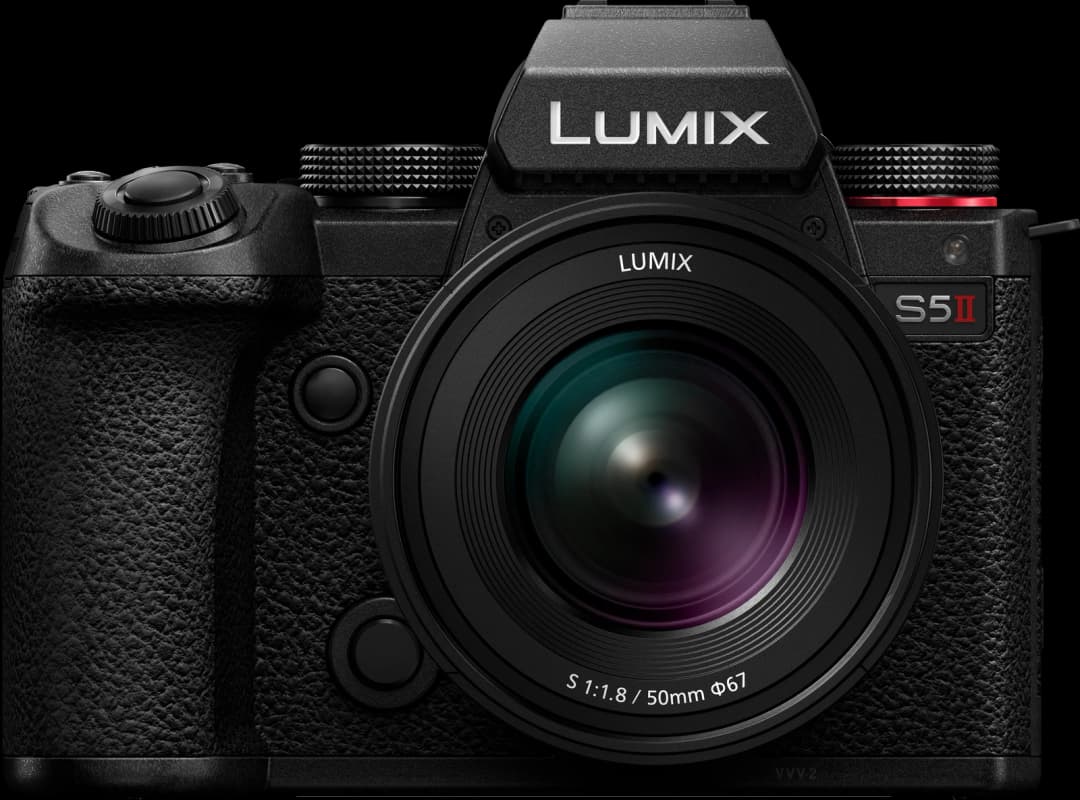
Panasonic
Lumix S5 II
2023
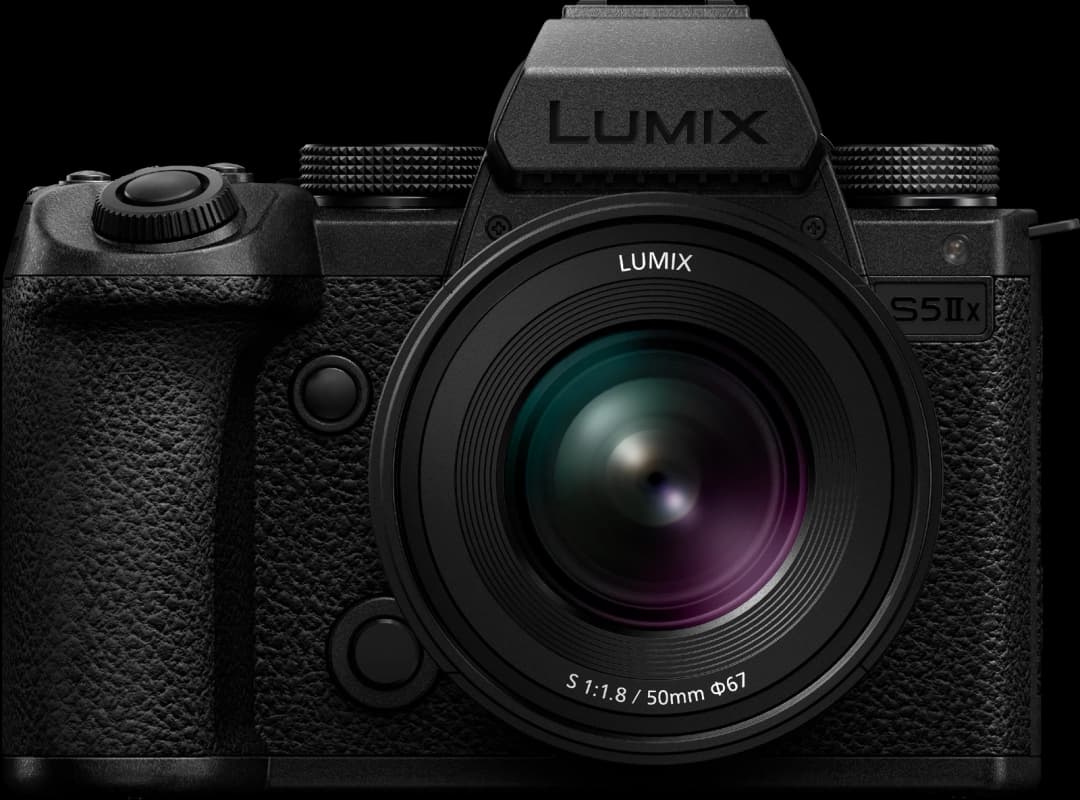
Panasonic
Lumix S5 IIX
2023
Panasonic Lumix S5 II vs S5 IIX: which justifies the extra $200?
Visual summary
— Reads in 5 seconds
Panasonic
Lumix S5 II
Panasonic
Lumix S5 IIX
Where to buy
— Live merchant price comparator
Panasonic Lumix S5 II

Panasonic LUMIX DC-S5 II Full Frame Mirrorless Camera Body, 4K 60P and 6k 30P, Flip Screen, Wi-Fi, Phase Hybrid AF With 779 points, Active IS, Black
1 093,65 GBP · Amazon UK


You'll find the best prices on the market here, updated daily — and by going through these partner links, you support Camera Duel without paying a cent more.
The arbitration in brief
The S5 II is the best buy for versatile hybrid photography; the S5 IIX is only justified if you produce professional video with Genlock sync or Blackmagic RAW recording.
Panasonic launched both bodies in 2023, a few months apart. The Lumix S5 II is positioned at $1,999, the S5 IIX at $2,199. A $200 difference for two cameras that share the same full-frame 24-megapixel sensor, the same 779-point autofocus with 100% sensor coverage, the same weather-sealing, the same dual SD slots and the same 740-gram weight.
On paper, the difference seems marginal. In practice, it boils down to two specific areas: electronic burst shooting and advanced video features. The S5 II reaches 30 fps electronically; the S5 IIX tops out at 9 fps. In return, the S5 IIX adds Genlock, Time Code and Blackmagic RAW compatibility via external output, which the S5 II lacks.
Both bodies target hybrid photographers and videographers seeking a versatile full-frame camera in the Leica L ecosystem. They suit weddings, portraits and documentary or corporate video. Neither is designed for high-level sports or standalone cinema production.
This comparison answers a simple question: do the S5 IIX's additions justify $200 more, or does the S5 II cover 90% of uses at a better price? You'll find a clear, data-driven answer here.
Standout strengths
— Where each camera shines
Panasonic
Lumix S5 II
Top advantages
No dominant strength identified.
Panasonic
Lumix S5 IIX
Top advantages
- 800 Mb/sMax bitrate4× vs Panasonic Lumix S5 II
- 300RAW buffer+30 % vs Panasonic Lumix S5 II
- OuiGenlock + Time CodeAbsent sur Panasonic Lumix S5 II
Detailed spec-by-spec
— Round by round, the eight categories
Sensor
Autofocus
Speed & burst
Video
Stabilisation
Build
Ergonomics & screen
Connectivity & battery
Detailed analysis analysis
— Strengths, trade-offs and ideal user
Panasonic Lumix S5 II: what it does well, what it concedes
The Lumix S5 II is built around a full-frame CMOS 24-megapixel sensor, with dynamic range measured at 11.2 EV. Native sensitivity reaches 51,200 ISO, and the extended range hits 204,800 ISO. These figures are identical on both bodies: the sensor isn't a differentiator here.
Where the S5 II pulls ahead decisively is electronic burst shooting. 30 fps in silent mode, versus 9 fps on the S5 IIX. For a wedding photographer capturing a fleeting glance during vows, or a news shooter covering a dynamic event, this speed boosts hit rates. The RAW buffer handles 230 images continuously, about 7.7 seconds at full speed. That's enough for nearly all wedding or moving portrait sequences.
The S5 II's IBIS compensates for 6.5 stops of shake. That's 1 stop more than the S5 IIX. In practice, this means a usable slower shutter speed in low light, which matters indoors without flash. The EVF displays 3.68 million dots at 0.78× magnification. The S5 IIX's EVF resolution data in our dataset is incomplete (uninterpretable "4" value), so direct comparison isn't possible. The S5 II wins this round by default.
The S5 II's trade-offs are clear:
- No native Genlock or Time Code, ruling out synced multicam shoots.
- No Blackmagic RAW via external output, only ProRes RAW.
- RAW buffer limited to 230 images versus 300 on the S5 IIX.
For photo-dominant use with video as a side gig, these rarely hurt.
For whom
The S5 II suits the hybrid photographer mainly shooting weddings, portraits or events, with video as secondary. It also fits the solo indie videographer without multicam sync needs. The 30 fps burst and 6.5-stop IBIS make it reliable in tough light. Its launch price of $1,999 positions it as the rational choice in this pair, especially on the used market where it's now under $1,500.
Panasonic Lumix S5 IIX: what it does well, what it concedes
The Lumix S5 IIX shares the S5 II's sensor, autofocus, weather-sealing and ergonomics entirely. The 24 megapixels, 779 AF points, 100% sensor coverage, native 51,200 ISO sensitivity and 11.2 EV dynamic range are strictly identical. Buyers hoping for an upgraded sensor will be disappointed: that's not this model's point.
The S5 IIX stands out on two precise video points. It includes Genlock and Time Code, absent from the S5 II. These enable syncing multiple cameras to a common reference signal, essential for professional multicam shoots. It also adds Blackmagic RAW compatibility for external recording, alongside the ProRes RAW already on the S5 II. For DaVinci Resolve ecosystem shooters, that's a solid argument.
The RAW buffer reaches 300 images versus 230 on the S5 II. At 9 fps mechanical burst, that's 33 seconds of continuous shooting. But electronic burst is capped at 9 fps on the S5 IIX, versus 30 fps on the S5 II. This is deliberate: the S5 IIX prioritises video, not sports.
The S5 IIX's trade-offs are equally clear:
- Electronic burst limited to 9 fps, one-third of the S5 II.
- IBIS at 5.5 stops versus 6.5 stops, a 1-stop regression.
- SD slots without confirmed UHS-II spec, versus UHS-II on the S5 II, potentially limiting sustained burst speeds.
Its 8.7/10 video score per the camera-duel.com algorithm reflects these pro additions. But they only benefit a very specific use case.
For whom
The S5 IIX targets pro or semi-pro videographers integrating multicam workflows. Genlock and Time Code are its killer features. It also suits colourists or editors in DaVinci Resolve wanting direct Blackmagic RAW. However, if your work is mostly photographic or solo shoots without sync constraints, the S5 IIX doesn't justify its $200 premium over the S5 II.
Our verdict
Which one to buy, and why
These two bodies are nearly identical on sensor, autofocus, build and ergonomics. The duel hinges on advanced video features. Sensor, autofocus, IBIS and burst are strictly identical on both bodies.
The S5 II wins on photo. Its 30 fps electronic burst is three times the S5 IIX's. IBIS is identical on both bodies, at 5 stops (up to 6.5 stops with Dual IS 2 and a compatible lens). For wedding, news or moving portrait shooters, these are tangible, measurable edges. The S5 IIX's photo deal-breaker is simple: 9 fps electronically can't leverage silent shutter reactivity.
The S5 IIX wins on pro video, but in a narrow scope:
- Native Genlock and Time Code, essential for synced multicam.
- Blackmagic RAW via external output, alongside ProRes RAW.
- 300-image RAW buffer, 70 more than the S5 II.
These three additions suit one profile: team-based videographers with compatible external recorders in the DaVinci Resolve ecosystem. If you don't tick all three, you're paying $200 for unused features.
On the 2026 used market, the S5 II regularly goes for $1,300–1,500. The S5 IIX sits at $1,500–1,700. The gap holds, confirming the market coherently values the S5 IIX's pro video functions.
My verdict: choose the S5 II in most cases. It's more versatile, faster in burst, better stabilised and cheaper. The S5 IIX only makes sense if Genlock or Blackmagic RAW are non-negotiable in your video workflow.
Frequently asked questions
Before you buy, the questions we get
Which to choose for wedding photography?
The S5 II is the logical choice for weddings. Its 30 fps electronic burst captures micro-expressions during vows or dances. IBIS is shared by both bodies, at 5 stops (up to 6.5 stops with Dual IS 2). No edge on that front. The S5 IIX shares the same burst (9 fps mechanical, 30 fps electronic) and the same IBIS (5 stops) as the S5 II. For wedding photographers, these regressions hurt. The S5 II also launched $200 cheaper.
Does the $200 gap between the two bodies justify itself?
Only if you need Genlock, Time Code or external Blackmagic RAW output. These three features are missing from the S5 II but present on the S5 IIX. Outside that precise pro video niche, the S5 IIX adds nothing for stills: sensor, autofocus, burst and IBIS are strictly identical to the S5 II, at a higher price. Value tilts clearly to the S5 II for standard hybrid use.
Is the S5 IIX really better for video?
It's better for professional multicam production video. Genlock and Time Code sync multiple bodies to a common reference signal, vital for structured shoots. Blackmagic RAW compatibility streamlines DaVinci Resolve workflows. Otherwise, both are identical: same 6K resolution, 10-bit, V-Log, unlimited recording, 200 Mb/s. The S5 IIX's 8.7/10 video score vs the S5 II's 8.4 reflects these additions, not overall superiority.
What's the real difference in card slots between the two bodies?
The S5 II has two UHS-II SD slots. The S5 IIX has two SD slots, but UHS-II isn't confirmed in available data. In practice, UHS-II doubles theoretical speed over UHS-I (up to 312 MB/s vs 104 MB/s). For clearing RAW buffers fast or high-bitrate video, the S5 II has the edge. It's not a deal-breaker, but an unexpected S5 II advantage.
Which body will age better in a few years?
Both share the Leica L mount, ensuring access to the same growing lens ecosystem. Hardware durability is identical: same weather-sealing, dual slots, USB 3.2 Gen 2 at 10 Gbit/s. The S5 IIX ages better if pro video standards (Genlock, Blackmagic RAW) stay relevant in your workflow. The S5 II ages better if your needs shift to more dynamic photo, thanks to 30 fps burst. Neither offers internal RAW recording, a shared limit against rivals.