Sony
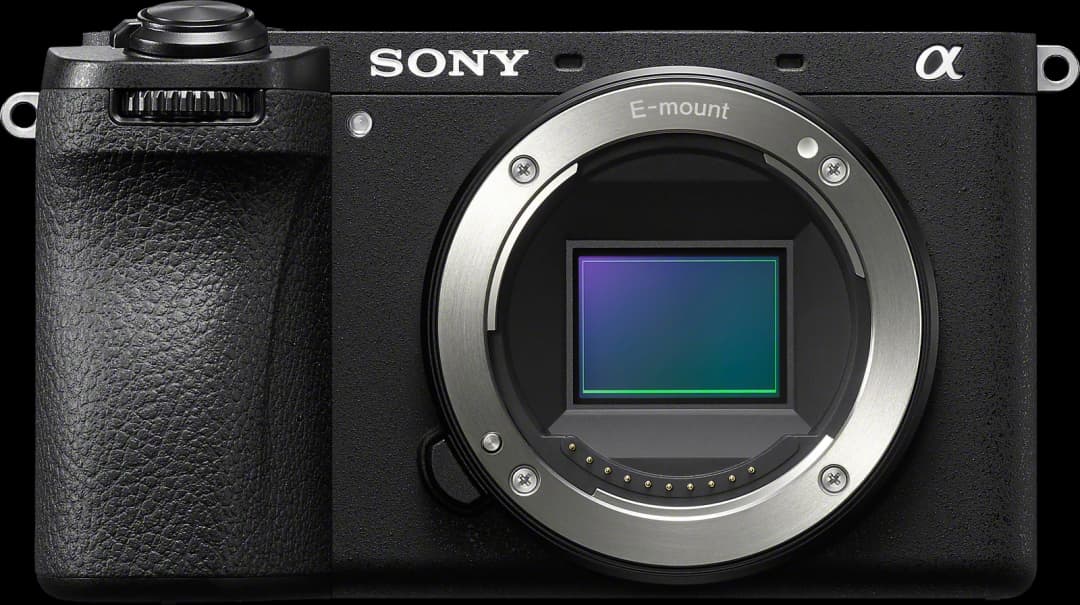
α6700
2023
Sony
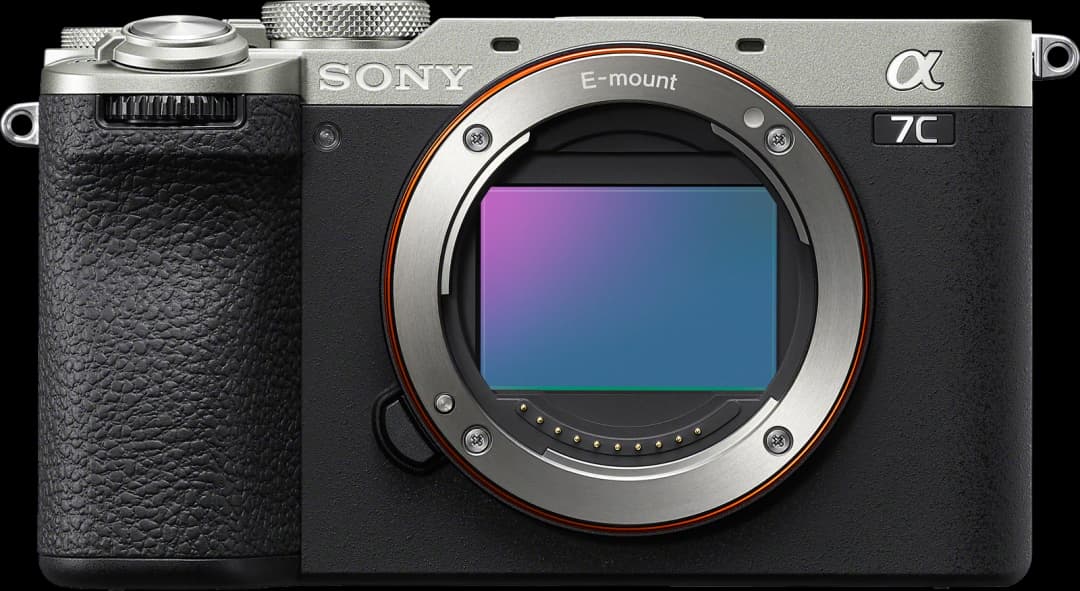
α7C II
2023
Sony α6700 vs Sony α7C II: Versatile APS-C or Compact Full Frame, Which Deserves Your Budget?
Visual summary
— Reads in 5 seconds
Sony
α6700
Sony
α7C II
Where to buy
— Live merchant price comparator
Sony α6700

SONY a6700 Mirrorless Camera - Body Only, Black
1 329 GBP · Amazon UK


You'll find the best prices on the market here, updated daily — and by going through these partner links, you support Camera Duel without paying a cent more.
The arbitration in brief
The α6700 is the rational choice for video and mobility; the α7C II takes precedence as soon as low light and stabilisation outweigh price.
Sony launched these two bodies in 2023, just a few months apart. Both share the E mount, the same 2,36 M points viewfinder, the same vari-angle touchscreen and identical weather sealing. On paper, the family is close. In practice, the $802 launch price gap (1 398 USD vs 2 200 USD) reflects a very real philosophical difference.
The α6700 is the most refined APS-C body Sony has produced to date. It inherits the BIONZ XR processor and subject recognition AI from the α7 IV and α7R V, in a 493 g chassis. It targets travel photographers, mobile videographers and creators who want a compact tool without sacrificing performance.
The α7C II is a different proposition. Its 33 MP Full Frame sensor with 11.7 EV dynamic range and 7-stop IBIS position it as a versatile hybrid built for portrait, demanding travel and video in tough light. Its size remains surprisingly close to the α6700, which blurs the comparison at first glance.
This comparison arbitrates four concrete questions: does the Full Frame sensor justify the price gap? Is the α6700's video lead decisive? Which body holds up better in the dark? And which will age better in Sony's expanding E ecosystem?
Standout strengths
— Where each camera shines
Sony
α6700
Top advantages
- 120 fpsMax video fps2× vs Sony α7C II
- 59RAW buffer+34 % vs Sony α7C II
- 11 fpsMechanical burst+10 % vs Sony α7C II
- 11 fpsElectronic burst+10 % vs Sony α7C II
Sony
α7C II
Top advantages
- 204 800Extended ISO max2× vs Sony α6700
- 51 200Native ISO max1,6× vs Sony α6700
- 33 MPMegapixels+27 % vs Sony α6700
- 7 stopsIBIS rating+40 % vs Sony α6700
Video reviews
— Long-form reviews
Sony α6700
Sony a6700 | Full Camera Review
Christopher Frost · 13 min
Sony α7C II
—
Detailed spec-by-spec
— Round by round, the eight categories
Sensor
Autofocus
Speed & burst
Video
Stabilisation
Build
Ergonomics & screen
Connectivity & battery
Detailed analysis analysis
— Strengths, trade-offs and ideal user
Sony α6700: what it does well, what it concedes
The α6700 features a BSI-CMOS APS-C sensor with 26 MP and 11 EV dynamic range measured at ISO 100. That's enough for A2 prints and aggressive cropping in post-production. Pixel density on a 23 x 15.5 mm sensor also provides a 1.5x effective focal length multiplier, useful for wildlife or sports with affordable lenses.
On speed, the α6700 pulls ahead:
- 11 fps mechanical and electronic burst vs 10 fps on the α7C II.
- 59-image RAW buffer vs 44 for its rival.
- Native 4K at 120 fps, no crop, vs a 60 fps maximum on the α7C II.
This burst-buffer-high-frame-rate video combo is the α6700's real selling point. 4K/120p enables x5 slow motion in editing without interpolation. It's a spec the α7C II can't match, justifying the APS-C body on its own for slow-motion videographers.
The trade-offs are real. IBIS is rated at 5 stops vs 7 on the α7C II. In practice, this gap shows up handheld below 1/15 s. Native ISO tops out at 32 000 (expandable to 102 400), a full stop below the α7C II. Low-light AF reaches -3 EV vs -4 EV. None of these are deal-breakers for daytime or controlled light use, but they weigh in when conditions degrade.
Another point to watch: the single UHS-II SD card slot. It's a deal-breaker for pros demanding redundancy in weddings or events. The α7C II shares this flaw, so it's not a differentiator between the two, but keep it in mind.
For whom
The α6700 suits the travel photographer wanting a lightweight (493 g) body capable of handling photo and video without major compromises. It also fits the independent videographer leveraging 4K/120 fps for slow motion, or the content creator shooting on the move with a controlled budget. For stills, it satisfies the natural-light portraitist and street photographer who prioritises discretion over low-light performance. It's not built for pro event work needing dual slots, nor for very dark environments where the α7C II gains the edge.
Sony α7C II: what it does well, what it concedes
The α7C II is built around a BSI-CMOS Full Frame sensor with 33 MP and 11.7 EV dynamic range measured at ISO 100. The 0.7 EV dynamic range edge over the α6700 may seem marginal, but it translates to slightly better highlight recovery in RAW. The sensor's surface (35.6 x 23.8 mm) produces more pronounced bokeh at equivalent focal length and aperture, a concrete advantage in portraiture.
The α7C II's strengths focus on three specs:
- Max native ISO 51 200 vs 32 000 on the α6700, a full extra stop before extended range.
- 7-stop IBIS vs 5 stops, a measurable gap handheld below 1/15 s.
- Low-light AF at -4 EV vs -3 EV, useful in unelectrified interiors.
These three advantages converge on one use: photography in deficient light. For night travel, dim wedding venues or ambient portraits, the α7C II provides a safety margin the α6700 can't match.
The trade-offs are real too. Burst tops out at 10 fps with a 44-image RAW buffer, vs 11 fps and 59 images on the α6700. Video is capped at 60 fps in 4K, ruling out native x5 slow motion. Weight at 514 g is slightly higher, and the body is slimmer (63.4 mm deep vs 75.1 mm), which can make handling less natural with big lenses.
Sony's Full Frame E lens ecosystem is mature and dense. That's a structural long-term advantage, even if native E APS-C lenses cover everyday needs.
For whom
The α7C II targets the photographer who prioritises low-light image quality above all. It suits the natural- or ambient-light portraitist, the solo wedding photographer without card redundancy (the single slot remains a shared limit), and the traveller shooting at night or under artificial light. The 7-stop IBIS also makes it solid for handheld long exposures. For video, it meets standard needs up to 4K/60 fps, but it's not the right choice if high-frame-rate slow motion is central to your workflow.
Our verdict
Which one to buy, and why
The showdown boils down to two direct questions. Do you shoot a lot in low light or dim interiors? Do you do slow-motion video? Your answers decide it.
For video and mobility, the α6700 is the better buy. Its native uncropped 4K/120 fps is a spec the α7C II lacks. The 59-image RAW buffer and 11 fps burst also make it the more responsive of the two. At a 1 398 USD launch price, it offers unbeatable performance-per-dollar in Sony's lineup. In 2026, it's often available used around 900 to 1 000 USD, boosting its appeal further.
For tough-light photography, the α7C II wins out. Native ISO 51 200, 7-stop IBIS and -4 EV AF form a coherent trio for ambient portraits, night travel and dim weddings. The 11.7 EV dynamic range adds RAW margin too. These justify the price gap if your work centres on those conditions.
Shared deal-breakers for both bodies deserve a reminder:
- Single card slot: neither suits pros demanding redundancy.
- Micro HDMI Type D: fragile connector, protect it for heavy video use.
- No internal RAW: both share this cinema video limit.
Long-term, both share the E mount and will benefit from the same firmware updates and lens catalogue. The α7C II has a slight structural edge thanks to its Full Frame sensor, which holds resale value better and unlocks G Master lenses at full resolution.
My personal take, based on field use in travel and tough conditions: if you're still hesitating, buy the α6700 and invest the $802 difference in a lens. A 16mm f/1.4 or 70-350mm G will deliver more than Full Frame in most situations. The α7C II only becomes the best choice if you regularly shoot below EV 3 and the 7-stop IBIS meets a proven need in your practice.
Frequently asked questions
Before you buy, the questions we get
Which to choose for weddings?
The α7C II is better suited to weddings. Its 7-stop IBIS and native ISO 51 200 allow work in dim venues without extended range. Its -4 EV AF is more reliable under candlelight or dim projectors. That said, both share a single card slot, a deal-breaker for pro wedding photographers demanding real-time redundancy. If you're a pro, neither replaces a dual-slot body like the α7 IV or α7R V.
Does the $802 gap between them justify itself?
Only if your work exploits Full Frame specifics. The α7C II brings 7 EV IBIS vs 5, native ISO 51 200 vs 32 000, and 0.7 EV extra dynamic range. If you mainly shoot natural or controlled light, these stay theoretical. In that case, the 1 398 USD α6700 offers better video (4K/120 fps) and a larger buffer (59 images). The price difference easily covers an extra lens or spare battery.
Is the α6700's 4K/120 fps really useful in practice?
Yes, if you edit slow motion. Native uncropped 4K/120 fps enables x5 slow-mo at 24 fps in post, without framing loss or software interpolation. The α7C II maxes at 60 fps in 4K for x2.5 slow-mo. For videographers regularly adding slowed clips, it's a decisive α6700 edge. For hybrid photographers shooting video occasionally, the difference is negligible.
Which body will age better in the Sony E ecosystem?
The α7C II will hold resale value better. Full Frame is the E ecosystem reference, with G Master lenses optimised for that surface. The α6700 is Sony's best APS-C body yet, but the native APS-C lens lineup remains less stocked with high-end glass. On firmware, both have seen regular updates since their 2023 launch. No direct successor is announced as of this article's publication.
Is the α6700 sufficient for pro portraiture?
Yes, in controlled light. Its 26 MP and 11 EV dynamic range suffice for large prints and advanced retouching. In natural light or studio with flash, the gap to the α7C II is minimal. The α7C II edges ahead in ambient or low natural light, thanks to native ISO 51 200 and 7-stop IBIS. Bokeh is also more pronounced on Full Frame at equivalent apertures, a subjective but real factor for some portraitists.