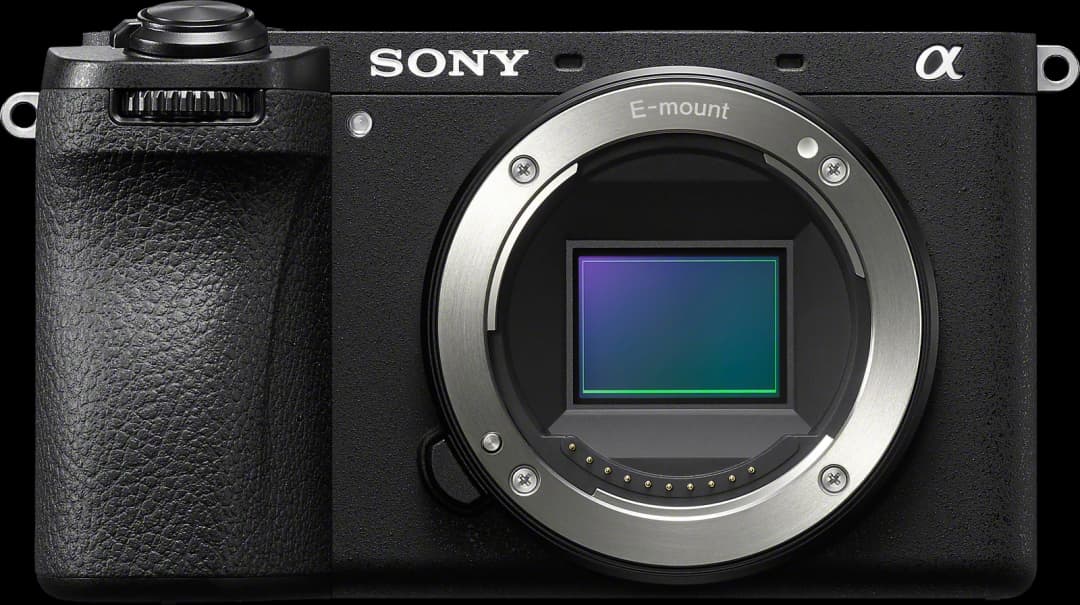
Sony
α6700
2023
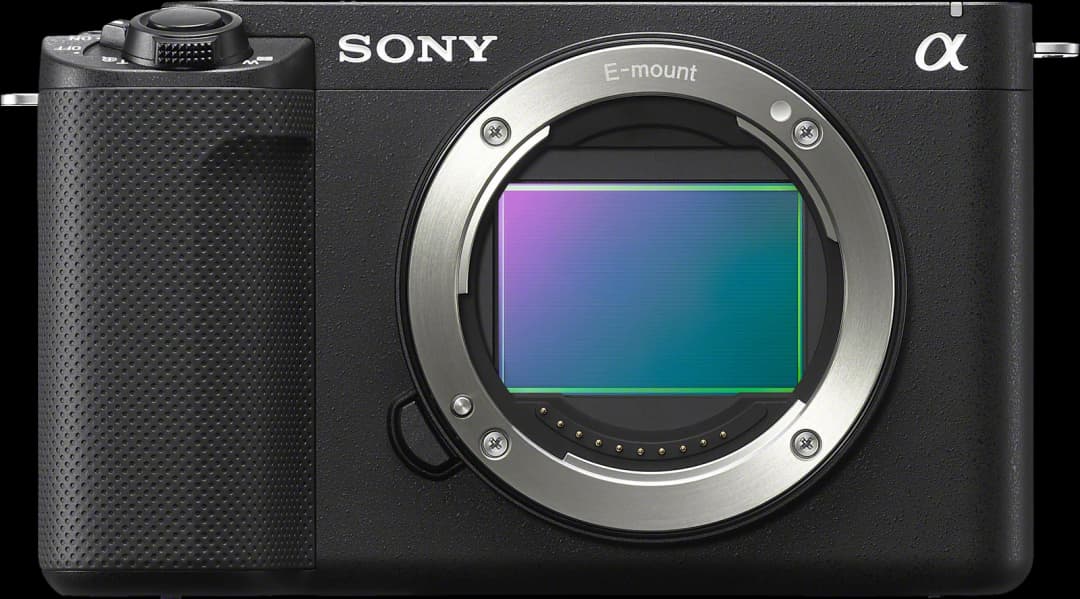
Sony
ZV-E1
2023
Sony α6700 vs Sony ZV-E1: which to choose between APS-C versatility and full-frame low-light performance?
Visual summary
— Reads in 5 seconds
Sony
α6700
Sony
ZV-E1
Where to buy
— Live merchant price comparator
Sony α6700

SONY a6700 Mirrorless Camera - Body Only, Black
1 329 GBP · Amazon UK


Sony ZV-E1

SONY ZV-E1 Mirrorless Vlogging Camera - Body Only, Black
1 331 GBP · Wowcher

You'll find the best prices on the market here, updated daily — and by going through these partner links, you support Camera Duel without paying a cent more.
The arbitration in brief
The ZV-E1 dominates in low light thanks to its full-frame sensor and native ISO up to 102 400, but the α6700 offers more photo versatility with its viewfinder, 26 MP and 11 fps burst for 800 USD less.
Sony launched these two bodies in 2023, the same year, with radically different positionings despite spec sheets that look similar on the surface. The α6700 is Sony's APS-C flagship: a versatile hybrid at 1 398 USD that succeeds the α6600 with significant advances in autofocus and video. The ZV-E1 follows a different logic: a compact full-frame body without a viewfinder, designed for content creators and videographers who want the image quality of a large sensor in a lightweight chassis, at 2 200 USD.
The price gap is 802 USD. It's not insignificant. It shapes the entire decision. On one side, a complete APS-C with EVF, mechanical burst and 26 megapixels. On the other, a full-frame without viewfinder, with 12 megapixels but native ISO up to 102 400 in everyday use.
Both share the Sony E mount, the same 5-stop IBIS, the same CIPA-rated 570 shots battery life, the same single UHS-II SD slot and the same weather sealing. On paper, they seem close. In practice, their compromises diverge sharply depending on whether you shoot in bright light or darkness, need a viewfinder or not, and value resolution or sensitivity.
This comparison judges these two bodies on stated uses: travel, video, portrait, low light. It identifies the deal-breakers for each side and answers the concrete question: which to buy in 2026, new or used?
Standout strengths
— Where each camera shines
Sony
α6700
Top advantages
- 26 MPMegapixels2,1× vs Sony ZV-E1
- 11 fpsElectronic burst+10 % vs Sony ZV-E1
- 11 fpsMechanical burstAbsent sur Sony ZV-E1
- 11 EVDynamic range (EV)Absent sur Sony ZV-E1
Sony
ZV-E1
Top advantages
- 102 400Native ISO max3,2× vs Sony α6700
- 409 600Extended ISO max4× vs Sony α6700
- 1000RAW buffer16,9× vs Sony α6700
- 80Native ISO min+25 % vs Sony α6700
Video reviews
— Long-form reviews
Sony α6700
Sony a6700 | Full Camera Review
Christopher Frost · 13 min
Sony ZV-E1
—
Detailed spec-by-spec
— Round by round, the eight categories
Sensor
Autofocus
Speed & burst
Video
Stabilisation
Build
Ergonomics & screen
Connectivity & battery
Detailed analysis analysis
— Strengths, trade-offs and ideal user
Sony α6700: what it does well, what it concedes
The α6700 features a BSI-CMOS APS-C sensor with 26 megapixels, and measured dynamic range of 11 EV. For travel and portrait, this resolution allows substantial cropping in post-production and prints up to large formats without visible loss. The 11 EV dynamic range is solid for an APS-C: it allows decent recovery of highlights in RAW, even if it lags behind the best full-frame sensors.
On speed, the α6700 offers 11 fps mechanical and electronic burst, with a RAW buffer of 59 images. That's enough for dynamic portraits or urban travel. It's not a pure sports body, but the burst holds up for short sequences. Autofocus covers 94 % of the sensor with 759 points, detects human and animal eyes, and works down to -3 EV in low light. This -3 EV limit is a notable gap versus the ZV-E1: in a dimly lit room or outdoors at night, the α6700's AF may lose lock where its rival holds on.
The α6700 has a 2.3-million-dot EVF with 1.07x magnification. It's a tangible advantage for composing in bright sunlight or for photographers used to eye-level framing. It shoots 4K at 120 fps with 10-bit recording, S-Log3 and unlimited recording. The strengths and concessions sum up like this:
- 26 MP for cropping and large prints.
- 11 fps mechanical burst, 59 RAW image buffer.
- 2.3 M-dot EVF, absent on the ZV-E1.
- Low-light AF limited to -3 EV versus -6 EV on the ZV-E1.
- Max native ISO only 32 000, versus 102 400 on the ZV-E1.
The mechanical shutter tops out at 1/4000 s, which can limit use in bright light with wide apertures. An ND filter becomes necessary sooner than with the ZV-E1 and its 1/8000 s.
For whom
The α6700 suits the travel photographer who alternates photo and video, needs a viewfinder for outdoor work, and values resolution for cropping. It also fits the portraitist shooting in controlled light or outdoors by day. Budget is a factor: at 1 398 USD launch price, it leaves room to invest in Sony E lenses, which form a rich ecosystem. It's not the right choice for someone who mainly shoots in dark interiors, concerts or evenings without flash.
Sony ZV-E1: what it does well, what it concedes
The ZV-E1 is built around a BSI-CMOS full-frame sensor with 12 megapixels, native ISO up to 102 400 in everyday use and 409 600 extended. That's the figure that defines this body. In practice, a native ISO of 102 400 means the sensor generates less structural noise at high sensitivity than an APS-C pushed into extended mode. For video in dim interiors, stage portraits or night reportage, this advantage is measurable and visible.
The ZV-E1's autofocus works down to -6 EV, that's 3 EV better than the α6700. It's the difference between AF that locks in a near-black room and AF that hunts. The RAW buffer reaches 1 000 images, which is exceptional: in practice, this body never saturates in burst for standard photo use. Electronic burst tops out at 10 fps, slightly behind the α6700's 11 fps, but the difference is negligible in real use.
The ZV-E1 has no viewfinder. That's a deal-breaker for photographers used to eye-level framing or working in bright sun. The 1.036-million-dot vari-angle screen is the only composition tool. For video, it supports anamorphic de-squeeze up to 2.0x versus 1.3x on the α6700, and its vectorscope is missing on the rival. The key points:
- Max native ISO 102 400, extended to 409 600.
- Low-light AF at -6 EV, that's 3 EV extra margin.
- 1 000 image RAW buffer, practically unlimited.
- No viewfinder: deal-breaker for bright outdoor photo.
- Only 12 MP: limited cropping, constrained large prints.
The ZV-E1's dynamic range is not specified in verified data available. It would be inaccurate to cite a figure. DXOMark has not published a full measurement for this model at the time of writing.
For whom
The ZV-E1 is made for the videographer or content creator who often works in poor light, without flash or artificial lighting. It also suits the travel photographer who prioritises low-light image quality over raw resolution. The lack of viewfinder makes it ill-suited for street photography in bright sun or intense outdoor portraits. At 2 200 USD, it targets a buyer who knows exactly why they need a compact full-frame, not someone seeking a generalist hybrid.
Our verdict
Which one to buy, and why
The 802 USD gap between the two bodies is the first filter. If your budget is tight or you don't yet know precisely which direction you're heading, the α6700 is the rational choice. It covers more situations, has a viewfinder, offers 26 MP for cropping, and its APS-C lens ecosystem is accessible. The ZV-E1 demands strong conviction for a specific use to justify its price.
If you regularly shoot and film in low light, the ZV-E1 wins. Its native ISO up to 102 400 and AF at -6 EV are not marketing claims: they concretely change what you can capture without auxiliary lighting. The α6700 at -3 EV and 32 000 native ISO shows its limits in those conditions. On this ground, full-frame wins hands down.
The deal-breakers are clear:
- No viewfinder on the ZV-E1: disqualifying for bright outdoor photo or any photographer who frames at eye level.
- 12 MP on the ZV-E1: insufficient if you crop in post or aim for large prints.
- Native ISO 32 000 on the α6700: insufficient for dark interiors without flash.
- Single slot on both bodies: neither suits professional use where redundancy is mandatory.
On the 2026 used market, the α6700 trades around 900 to 1 000 USD, further boosting its value. Used ZV-E1 rarely dips below 1 500 USD; the gap remains significant.
My clear verdict: choose the α6700 if you do photo and video in varied conditions, with a controlled budget. Choose the ZV-E1 only if low light is your dominant use and the lack of viewfinder poses no issue. That case is real, but niche. For most versatile travel photographers and videographers, the α6700 is the better buy.
Frequently asked questions
Before you buy, the questions we get
Does the 802 USD gap between the two bodies justify itself?
Only in one specific case: if you regularly work in low light without auxiliary lighting. The ZV-E1's native ISO reaches 102 400 versus 32 000 on the α6700, and its AF holds to -6 EV versus -3 EV. Outside that use, the α6700 covers just as many situations for 802 USD less. On the 2026 used market, the gap remains around 500 to 600 USD, which doesn't fundamentally change the analysis.
Which to choose for filming weddings or evening events?
The ZV-E1 is better suited. Dim indoor weddings, low-light parties and flash-free ceremonies are exactly the situations where its native ISO up to 102 400 and AF at -6 EV make the difference. The α6700 can manage with auxiliary lighting, but it shows structural noise sooner at high ISO. If you film without lighting control, the ZV-E1 is the right tool. Note that neither has dual card slots, a serious concession for pro use.
Is the ZV-E1's lack of viewfinder really a problem for photo?
Yes, in several concrete situations. In bright sun, the vari-angle screen becomes hard to read despite its brightness. Framing stability is less precise without eye-level support. For street, sports or outdoor portrait photographers, the lack of EVF is a real handicap. The α6700 offers a 2.3-million-dot EVF with 1.07x magnification, which is functional. If you shoot photo as much as video, this point alone may tip the scales to the α6700.
Are the ZV-E1's 12 MP sufficient in 2026?
For video and screen display, yes without reservation. For social media photos or prints up to A3, 12 MP suffice. However, if you crop in post-production, sell stock images or aim for prints over 60 cm wide, 12 MP become limiting. The α6700 and its 26 MP offer far superior cropping margin. It's a key criterion for photographers working RAW with heavy post-processing.
Which body will age better in the years ahead?
The α6700 is better positioned long-term for versatile use. Its 26 MP and EVF give it a solid base to evolve with your needs. The ZV-E1 is highly specialised: excellent in its niche, but limited to 12 MP and no viewfinder, two points that may become frustrating if your uses shift toward more photo. Both share the Sony E mount, ensuring long-term lens compatibility. No edge there.