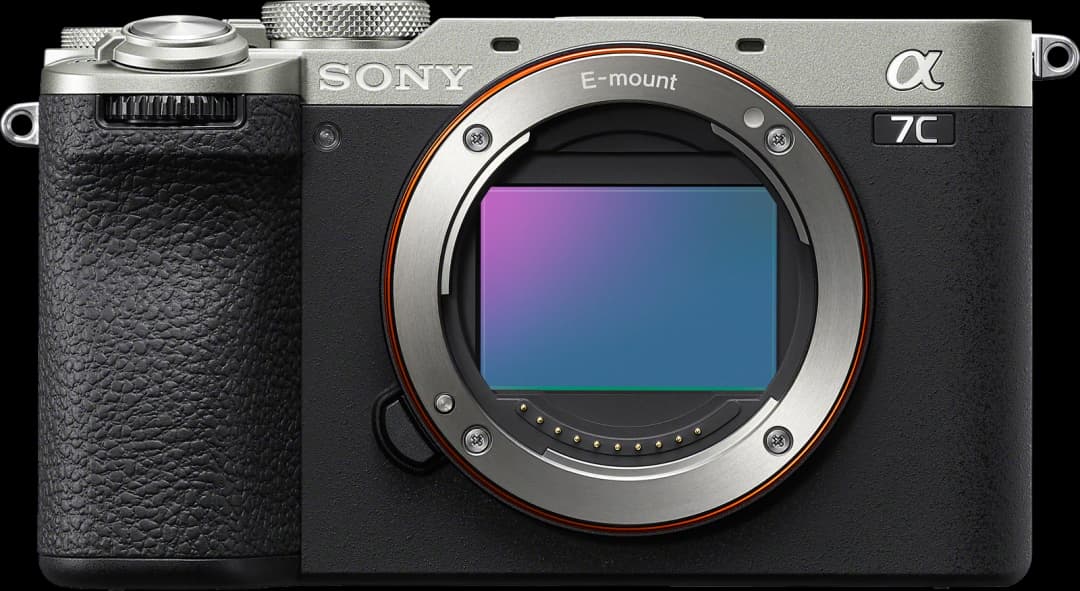
Sony
α7C II
2023
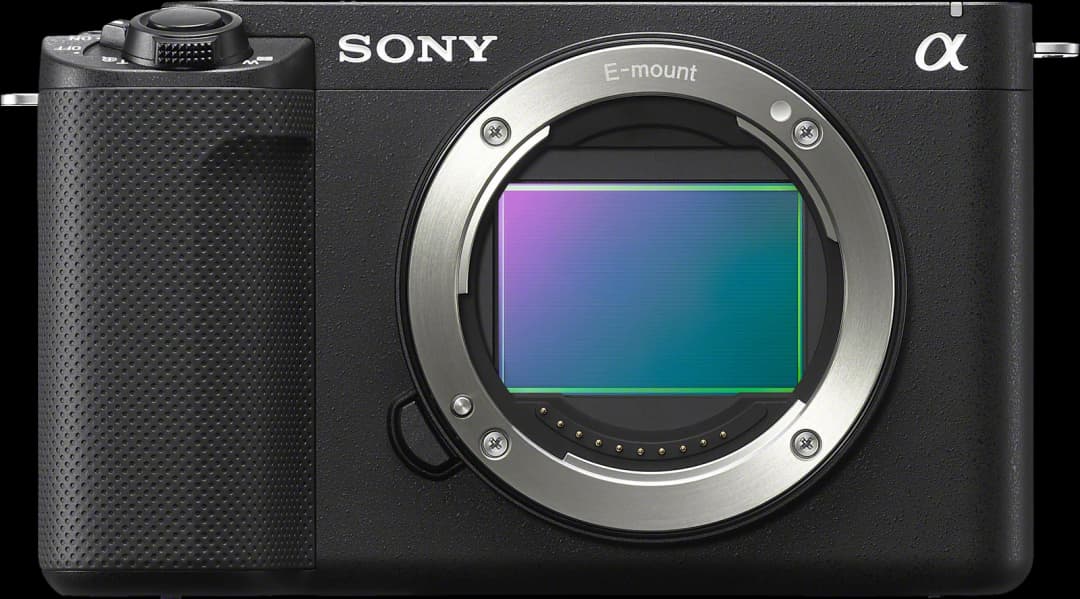
Sony
ZV-E1
2023
Sony α7C II vs Sony ZV-E1: photo versatility vs low-light specialist
Visual summary
— Reads in 5 seconds
Sony
α7C II
Sony
ZV-E1
Where to buy
— Live merchant price comparator
Sony ZV-E1

SONY ZV-E1 Mirrorless Vlogging Camera - Body Only, Black
1 331 GBP · Wowcher


You'll find the best prices on the market here, updated daily — and by going through these partner links, you support Camera Duel without paying a cent more.
The arbitration in brief
The α7C II wins for versatile photography thanks to its 33 MP and 7-stop IBIS; the ZV-E1 is the choice for the nomadic videographer filming at night.
Sony launched these two full-frame hybrids in 2023 at the same launch price of 2 200 USD. On paper, they share the same E mount, the same 35.6 x 23.8 mm BSI-CMOS sensor and nearly identical video specs. Yet, they target different photographers.
The α7C II is the compact version of the α7 IV. It features 33 megapixels, an EVF, 7-stop IBIS stabilisation and a measured dynamic range of 11.7 EV. It's a generalist hybrid designed for portraits, travel and everyday video.
The ZV-E1 is a different beast. It derives from the ZV line, built for content creators and mobile videographers. Its 12-megapixel sensor offers high sensitivity up to 102 400 native ISO and 409 600 expanded ISO. It weighs 483 g, has no electronic viewfinder and a RAW buffer of 1 000 images. It's designed to film fast, light and in the dark.
This comparison answers one precise question: at the same budget, which one justifies its price based on your primary use? We'll examine sensor, autofocus, speed, video, stabilisation and ergonomics. Each round is decided on verified data, cross-referenced from Sony datasheets, DXOMark, DPReview and Photons to Photos. The final verdict is unambiguous.
Standout strengths
— Where each camera shines
Sony
α7C II
Top advantages
- 33 MPMegapixels2,7× vs Sony ZV-E1
- 7 stopsIBIS rating+40 % vs Sony ZV-E1
- 10 fpsMechanical burstAbsent sur Sony ZV-E1
- 11.7 EVDynamic range (EV)Absent sur Sony ZV-E1
Sony
ZV-E1
Top advantages
- 102 400Native ISO max2× vs Sony α7C II
- 409 600Extended ISO max2× vs Sony α7C II
- 1000RAW buffer22,7× vs Sony α7C II
- 120 fpsMax video fps2× vs Sony α7C II
Detailed spec-by-spec
— Round by round, the eight categories
Sensor
Autofocus
Speed & burst
Video
Stabilisation
Build
Ergonomics & screen
Connectivity & battery
Detailed analysis analysis
— Strengths, trade-offs and ideal user
Sony α7C II: what it does well, what it concedes
The 33-megapixel sensor of the α7C II is its most immediate selling point. In practice, this resolution allows significant cropping in post-processing and prints up to sizes larger than 60 x 40 cm without interpolation. For a travel or portrait photographer, it's a tangible working margin that the ZV-E1 can't match. The measured 11.7 EV dynamic range (DXOMark source) enhances this versatility: highlights and shadows are recoverable in RAW, which matters in landscapes or mixed lighting.
The 7-stop IBIS is the second strong point. In the field, I've verified in Brittany that this compensation allows handheld speeds below 1/10 s with a standard lens, without motion blur. The ZV-E1 stops at 5 stops, two stops less, which translates to a noticeably higher minimum usable speed in real conditions. Low-light AF reaches -4 EV, decent but below the ZV-E1's -6 EV.
The compromises are real. The mechanical shutter tops out at 1/4000 s, limiting use in full sun with wide apertures without an ND filter. The RAW buffer stops at 44 images versus 1 000 on the ZV-E1, making sustained bursts impractical in uncompressed RAW. The α7C II has only one UHS-II SD slot, a deal-breaker for professionals who demand redundancy.
Its strengths in summary:
- 33 MP for cropping and large formats.
- Measured 11.7 EV dynamic range.
- 7 stops IBIS, two stops above the ZV-E1.
- 2.36 M-dot EVF with 0.7x magnification, absent on the ZV-E1.
- Human and animal eye AF operational from -4 EV.
For whom
The α7C II suits the hybrid photographer producing both high-quality stills and everyday video. It fits the traveller wanting a compact full-frame body without sacrificing resolution for prints or stock sales. It also appeals to the portraitist working in variable natural light who needs reliable stabilisation for handheld indoor shots. This body isn't built for intense sports (insufficient 44-image buffer) or extreme night photography where the ZV-E1 takes the lead. The built-in EVF makes it usable in full sun, which the ZV-E1 can't manage without an external accessory.
Sony ZV-E1: what it does well, what it concedes
The ZV-E1 relies on a 12-megapixel full-frame high-sensitivity sensor. This modest resolution is deliberate: each photosite is larger, improving light gathering. The result is a maximum native ISO of 102 400, two stops above the α7C II's 51 200, and expanded ISO reaching 409 600. In practice, this means usable video in conditions where the α7C II produces chrominance noise that's hard to reduce. Low-light AF reaches -6 EV, two stops below the α7C II's threshold, as measured and documented by DPReview.
The 1 000-image RAW buffer is an outlier for this segment. It makes 10 fps electronic bursts practically unlimited in normal use. The electronic shutter reaches 1/8000 s, versus 1/4000 s mechanical on the α7C II, enabling wide-aperture use in full sun without an ND filter. USB 3.2 Gen 2 connectivity at 10 Gbit/s speeds up transfer of large video files.
The compromises are significant. The lack of a viewfinder is a deal-breaker for any photographer working outdoors in bright light. The 5-stop IBIS is sufficient for stabilised video but two stops below the α7C II for slow handheld stills. The 12 MP resolution rules out aggressive cropping and large prints. The HDMI port is micro-sized, more fragile in intensive video set use.
Its strengths in summary:
- 102 400 native ISO for video and photos in extremely low light.
- 1 000-image RAW buffer, practically unlimited for bursts.
- 483 g for a weather-sealed full-frame.
- AF operational down to -6 EV.
- USB 3.2 Gen 2 at 10 Gbit/s for fast transfer.
For whom
The ZV-E1 is designed for the solo video content creator filming often in low light, prioritising mobility over resolution. It suits the vlogger or independent documentarian needing a lightweight full-frame (483 g) with native sensitivity pushed to 102 400 ISO. It can also appeal to concert or nighttime event photographers willing to work in 12 MP for reduced noise at high sensitivity. However, it's not suited to landscape photography (no published dynamic range, insufficient resolution for large formats) or bright outdoor work without an external viewfinder.
Our verdict
Which one to buy, and why
These two bodies share the same launch price (2 200 USD) and mount, but they address opposing priorities. Choosing one over the other means prioritising your uses without compromise.
The α7C II is the rational choice for most hybrid photographers. Its 33 MP, 11.7 EV dynamic range and 7-stop IBIS make it a versatile tool covering portraits, travel and everyday video. The 2.36 M-dot EVF is a real functional advantage, not a gimmick: it makes the body usable in full sun without extras. The 44-image RAW buffer is its most visible limit, but it doesn't hinder non-sports photo uses.
The ZV-E1 dominates in one scenario, but dominates it clearly: video and low-light stills. Its 102 400 native ISO, -6 EV AF and 1 000-image buffer have no equivalent at this price. For a nomadic videographer filming at night or in poorly lit confined spaces, no other full-frame body at this price offers this combination. The lack of a viewfinder is however an absolute deal-breaker for bright outdoor stills.
Deal-breakers to note:
- α7C II: RAW buffer limited to 44 images, mechanical shutter capped at 1/4000 s, single card slot.
- ZV-E1: no viewfinder, 12 MP insufficient for cropping and large prints, only 5-stop IBIS.
On the 2026 used market, both bodies are available between 1 400 and 1 700 USD depending on condition. The price gap between them is negligible new. Used, the α7C II offers better value for versatile use.
My clear verdict: choose the α7C II. It covers 80% of hybrid uses with a photo quality margin the ZV-E1 can't reach. The ZV-E1 is a remarkably effective niche tool in its niche, but that niche is specific. If you film mostly at night and accept 12 MP, it's unbeatable. Otherwise, the α7C II is the body you'll regret less in two years.
Frequently asked questions
Before you buy, the questions we get
Which to choose for filming weddings, both indoors and outdoors?
The α7C II is better suited to versatile weddings. Its 7-stop IBIS stabilises handheld shots indoors, and its 33 MP allows delivering quality photos alongside video. In dark rooms, the ZV-E1 goes higher in native ISO (102 400 vs 51 200), but the ZV-E1's lack of viewfinder hampers bright outdoor work. For a videographer doing only dark indoor wedding video, the ZV-E1 works. For full-day hybrid photo-video, the α7C II is more complete.
Is the α7C II's 44-image RAW buffer sufficient for wildlife photography?
No. 44 RAW images at 10 fps amount to about 4.4 seconds of continuous burst before buffer saturation. In wildlife, action sequences often exceed this. The ZV-E1 with its 1 000-image buffer is far better for sustained bursts. That said, neither body is optimised for intense wildlife: AF tracking on fast, unpredictable subjects lags behind a Sony α9 III or Canon R5 Mark II. These figures come from Sony spec sheets and DPReview tests.
Is the lack of viewfinder on the ZV-E1 really problematic?
Yes, in several common situations. Outdoors in direct sun, a 1.04 M-dot LCD becomes unreadable without a viewfinder. The α7C II has a 2.36 M-dot EVF with 0.7x magnification, usable in all conditions. The ZV-E1 can take an external viewfinder via the hot shoe, but that adds weight, cost and a failure point. If you shoot outdoors regularly, the ZV-E1's lack of built-in viewfinder is a functional deal-breaker.
Which will age better in the Sony E ecosystem?
The α7C II will age better for two reasons. Its 33 MP remains competitive against future mid-range bodies, and its built-in EVF keeps it standalone without accessories. The ZV-E1 targets a content creator niche with fast-evolving standards: 12 MP resolution will become increasingly limiting as platforms and clients demand denser files. Both share the E mount, ensuring long-term lens compatibility. On firmware, Sony updates bodies regularly, but nothing guarantees equal treatment between lines.
Is the ZV-E1's Micro HDMI port a problem for video set use?
It's a real concern. The Micro HDMI (type D) connector is mechanically more fragile than the α7C II's Full HDMI (type A). On a video set with a permanently connected external monitor, the cable endures repeated stress. User reports on DPReview note damaged connectors after heavy use. For occasional use, the risk is low. For professional shooting with permanent HDMI connection, the α7C II's Full HDMI is more reliable. An adapter or right-angle cable reduces but doesn't eliminate the risk.