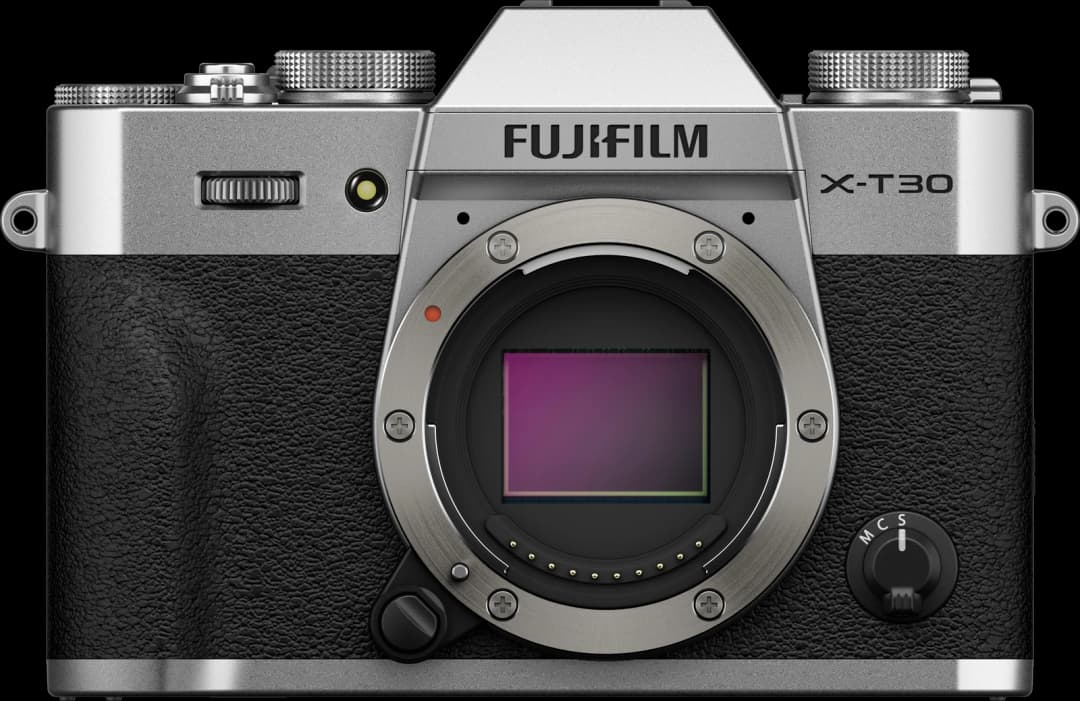
Fujifilm
X-T30 III
2024
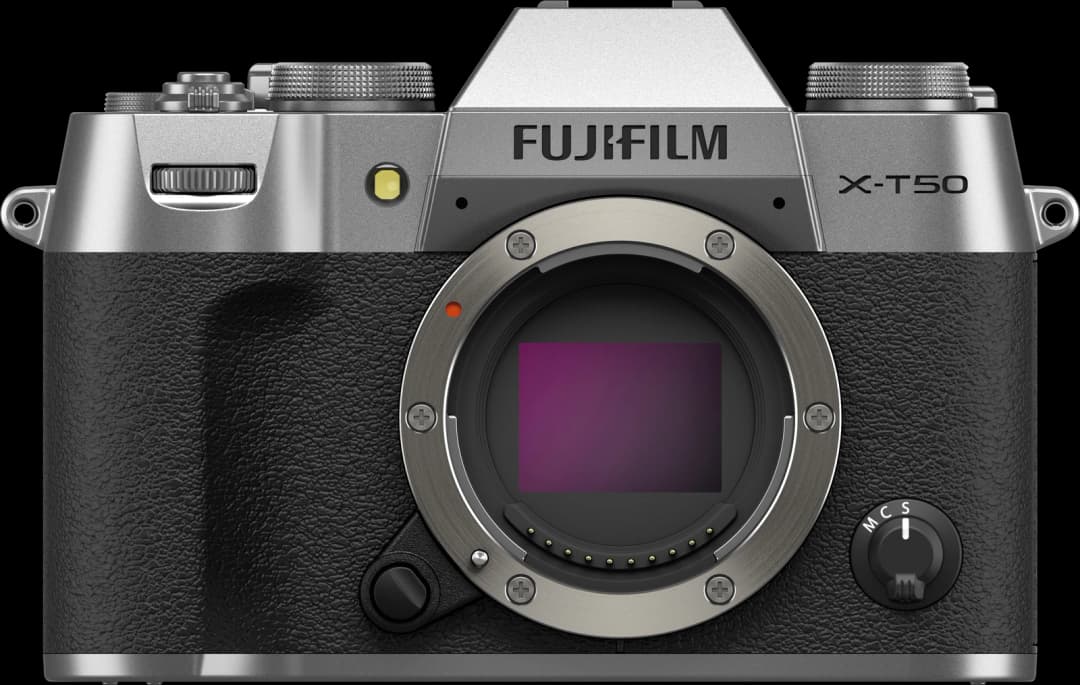
Fujifilm
X-T50
2024
Fujifilm X-T30 III vs X-T50: which justifies the $400 price gap?
Visual summary
— Reads in 5 seconds
Fujifilm
X-T30 III
Fujifilm
X-T50
Where to buy
— Live merchant price comparator
Fujifilm X-T30 III

Fujifilm X-T30 III Body black
764,99 GBP · PcNova.co.uk


Fujifilm X-T50
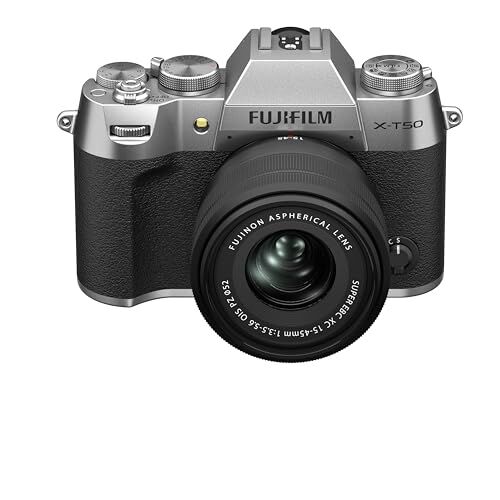
FUJIFILM X-T50 Mirrorless Camera with FUJINON XC 15-45 mm f/3.5-5.6 OIS PZ Lens - Silver, Silver/Grey
1 282,62 GBP · PcNova.co.uk

You'll find the best prices on the market here, updated daily — and by going through these partner links, you support Camera Duel without paying a cent more.
The arbitration in brief
The X-T50 prevails for travel and portrait thanks to its 40 MP, 7-stop IBIS and 79 RAW image buffer; the X-T30 III remains relevant only if weight and budget take priority.
Fujifilm released these two bodies the same year, in 2024, on the same X-mount. On paper, the duel looks tight: same AF resolution at 425 points, same 100 % coverage, same 2,36 M-point EVF. In practice, the two cameras target different photographers.
The X-T30 III is positioned as the entry-level body in the T series. It reuses the X-Trans CMOS 4 sensor at 26,1 MP, already featured in previous generations, housed in a compact 378 g body sold for $1 000 at launch. It's a transition body, designed for photographers entering the Fujifilm ecosystem without spending more than a thousand dollars.
The X-T50 steps up a notch. It packs the X-Trans CMOS 5 HR sensor at 40,2 MP, the same as the X-H2. It adds 7-stop IBIS, a 79-image RAW buffer and unlimited video recording. Its launch price is $1 399, or $399 more.
This comparison settles a real buying decision. The two bodies share the same mount, same lenses, same basic ergonomics. What sets them apart is the sensor generation, stabilisation, video capacity and buffer. These four points precisely determine which fits your practice.
Fujifilm's target uses are identical for both models: street, portrait, travel. That's where the choice gets demanding. At a $400 gap, every X-T50 advantage must justify itself concretely.
Standout strengths
— Where each camera shines
Fujifilm
X-T30 III
Top advantages
- 30 fpsElectronic burst1,5× vs Fujifilm X-T50
- 378 gWeight+16 % vs Fujifilm X-T50
- 14.1 EVDynamic range (EV)Absent sur Fujifilm X-T50
- 30 minRecording limitAbsent sur Fujifilm X-T50
Fujifilm
X-T50
Top advantages
- 40.2 MPMegapixels1,5× vs Fujifilm X-T30 III
- 79RAW buffer2,4× vs Fujifilm X-T30 III
- 360 Mb/sMax bitrate1,8× vs Fujifilm X-T30 III
- 125Native ISO min+28 % vs Fujifilm X-T30 III
Detailed spec-by-spec
— Round by round, the eight categories
Sensor
Autofocus
Speed & burst
Video
Stabilisation
Build
Ergonomics & screen
Connectivity & battery
Detailed analysis analysis
— Strengths, trade-offs and ideal user
Fujifilm X-T30 III: what it does well, what it concedes
The X-T30 III relies on the X-Trans CMOS 4 sensor at 26,1 MP. This sensor delivers a dynamic range measured at 14,1 EV at base ISO, a figure absent from the X-T50's official specs to date. For landscape and high-contrast light photography, this measurement is a concrete advantage: it allows significant recovery in highlights and shadows in post-processing.
The electronic burst reaches 30 fps, versus 20 fps on the X-T50. That's an advantage on paper. In practice, it's limited by a RAW buffer of just 33 images. At 30 fps, the buffer empties in just over a second. For sports or intense wildlife, this constraint is a deal-breaker. For street or short portrait bursts, it's acceptable.
The body weighs 378 g for dimensions of 118,4 x 82,8 x 46,8 mm. That's 60 g less than the X-T50. On a day of walking or long-haul trip, this difference is felt. CIPA battery life is 315 shots, slightly better than the X-T50's 305.
The compromises are real:
- No IBIS: in low light or at long focal lengths, the photographer relies entirely on lens optical stabilisation.
- 33-image RAW buffer: the 30 fps burst is theoretical beyond one second.
- SD UHS-I only: transfer speeds are capped, slowing buffer clearing and computer transfers.
- Video recording limited to 30 minutes: a deal-breaker for any extended video use.
The X-T30 III is an honest body in its segment. But its limits are structural, not temporary.
For whom
The X-T30 III suits the photographer entering the Fujifilm ecosystem on a tight budget. They shoot mainly street or lightweight travel, in good light or with stabilised lenses. They rarely fire more than ten consecutive burst shots. They don't use video beyond short clips. They prioritise compactness and low weight (378 g) on a day of walking. They accept no IBIS because they work at fast enough shutter speeds or short focal lengths.
Fujifilm X-T50: what it does well, what it concedes
The X-T50 packs the X-Trans CMOS 5 HR sensor at 40,2 MP. It's the same slab as the X-H2, a body sold for significantly more. At 40,2 MP, the RAW file offers cropping latitude and large-print potential that the X-T30 III's 26,1 MP can't match. Native base ISO drops to 125 versus 160 on the X-T30 III, a marginal but real edge in studio or bright sun with insufficient ND.
IBIS compensates 7 stops of camera shake. In practice, this allows handheld shooting at very slow speeds with moderate focal lengths. For travel indoors, museums, dark alleys, it's a daily advantage. The X-T30 III has no sensor stabilisation: it relies entirely on the lens.
The RAW buffer reaches 79 images, more than double the X-T30 III. At 20 fps electronic, that's nearly four seconds of continuous burst. Electronic shutter speed hits 1/180 000 s, versus 1/32 000 s on the X-T30 III. For wide-open shooting in bright sun without ND, this gap is decisive.
For video, the X-T50 records without time limit, at 360 Mb/s, with built-in proxy recording. The X-T30 III caps at 30 minutes and 200 Mb/s, without proxy.
The X-T50's compromises:
- 438 g for 123,8 x 84 x 48,8 mm: heavier and bulkier than the X-T30 III.
- No weather sealing: like the X-T30 III, it's vulnerable to rain and spray.
- Single SD UHS-II slot: no redundancy, single point of failure.
- Dynamic range unpublished by Fujifilm to date: can't directly compare to the X-T30 III's measured 14,1 EV.
For whom
The X-T50 targets the photographer who wants Fujifilm's best APS-C sensor in a compact body, without paying X-H2 prices. They shoot travel, portrait, street in tricky light. They leverage IBIS (7 stops) for handheld work where the X-T30 III would struggle. They crop aggressively or print large. They use video regularly and need unlimited recording. They accept paying $399 more for these advantages.
Our verdict
Which one to buy, and why
The X-T50 wins this comparison on the criteria that matter for Fujifilm's stated uses: portrait, travel and street.
The decisive gaps are:
- 7-stop IBIS on the X-T50, versus no sensor stabilisation on the X-T30 III.
- 79-image RAW buffer versus 33 images: the X-T50's burst holds up over time.
- 40,2 MP versus 26,1 MP: a concrete edge for cropping and large prints.
- Unlimited video recording versus 30 minutes: a deal-breaker for any videographer.
The X-T30 III's only structural advantages are weight (378 g versus 438 g) and price ($1 000 versus $1 399). The measured 14,1 EV dynamic range is also in its favour, but the equivalent for the X-T50 isn't available yet: too early to make it definitive.
The X-T30 III's 30 fps electronic burst looks advantageous on paper. In practice, it's not: the 33-image buffer empties in just over a second at that rate. The X-T50 at 20 fps with 79 images is far more usable for longer sequences.
On the used market, the X-T30 III is appearing under $800. At that price, the gap to a used X-T50 (around $1 100 to $1 200) narrows, but the compromises remain: no IBIS, limited buffer, capped video.
My verdict is clear: choose the X-T50. For $399 more at launch, you get a next-generation sensor, stabilisation that transforms daily shooting and a buffer that doesn't hinder reactivity. The X-T30 III only makes sense at a significantly lower used price, for a photographer who never shoots video, works only in favourable light and prioritises the 60 g difference daily.
Frequently asked questions
Before you buy, the questions we get
Which to choose for wedding photography?
The X-T50, no hesitation. The 7-stop IBIS is decisive in dim interiors (church, reception hall). The 79-image RAW buffer allows long sequences without interruption. Unlimited video recording covers the ceremony without constraints. The X-T30 III, without IBIS and with a 33-image buffer, imposes real operational limits in these conditions. Note that neither is weather-sealed: plan protection for outdoor ceremonies in uncertain weather.
Does the $399 gap between the two bodies really justify itself?
Yes, if you use IBIS, video or the buffer. The X-T50's 7-stop IBIS partly offsets the cost of stabilised lenses, a net saving in the ecosystem. The 79 RAW image buffer versus 33 is a daily win for bursts. Unlimited 360 Mb/s video with proxy recording makes the X-T50 a true hybrid. If you never touch video, work in good light and do short bursts, the gap is less justified. In that specific case, a used X-T30 III under $800 deserves consideration.
Is the X-T30 III sufficient for YouTube video or social media?
For short clips in controlled light, yes. It records in 6.2K, 10 bits, with F-Log2 and output up to 200 Mb/s. The 30-minute clip limit is a real hindrance for interviews or long vlogs. Without IBIS, handheld shots need lens stabilisation or a gimbal. The X-T50 removes both constraints: unlimited recording, 360 Mb/s, 7-stop IBIS. For regular video use, even amateur, the X-T50 is the logical choice.
Which body will age better in the Fujifilm ecosystem?
The X-T50. It packs the X-Trans CMOS 5 HR sensor, Fujifilm's current APS-C generation in 2026. The X-T30 III uses the older X-Trans CMOS 4. Fujifilm's firmware updates have historically favoured newer bodies. The X-T50 is also closer to the X-H2 in software platform, promising better longevity for AF and video features. The X-T30 III remains functional, but starts with a sensor already outpaced by the next generation.
Is the X-T30 III's 30 fps burst really usable for sports or wildlife?
No, not sustained. At 30 fps, the 33 RAW image buffer empties in just over a second. Beyond that, the body slows until fully cleared. The X-T50 at 20 fps with 79 RAW images holds nearly four seconds of continuous burst, far more operational. For serious sports or wildlife, neither is ideal: a dedicated body with deeper buffer and more aggressive AF would be better. Between the two, the X-T50 is clearly superior.