Review · Fujifilm · 2024
Fujifilm X-T50 Review: 40 MP in a Travel Body
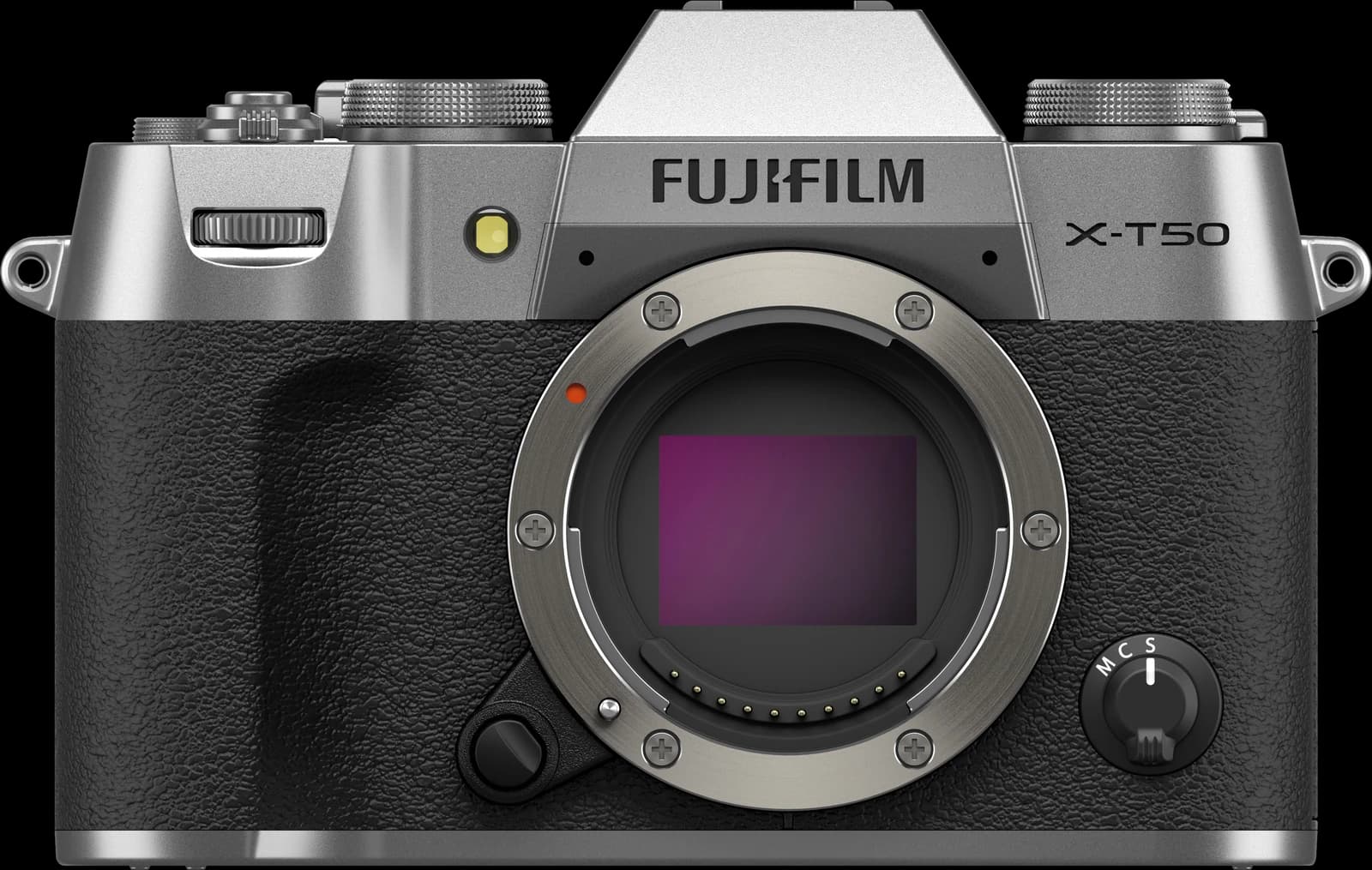
The X-T50 is made for the travel and street photographer who wants the X-T5's resolution without paying the X-T5's price, and who can live without weather sealing.
Verdict
The Fujifilm X-T50 packs the X-Trans CMOS 5 HR 40.2 MP sensor from the X-T5 into a 438 g chassis with no weather sealing. That is the central trade-off of this camera: flagship-level resolution at a mid-range price ($1,399 at launch), but with concessions on durability, professional ergonomics and battery life (305 CIPA shots). The 7-stop IBIS and 20 fps electronic burst broaden its versatility, but the single SD slot and lack of weather sealing are genuine deal-breakers for photographers working in harsh conditions or professionally. For travel, portrait and street photography in normal conditions, it offers one of the best resolution-to-compactness ratios currently available in APS-C.
Pros
- X-Trans CMOS 5 HR 40.2 MP sensor: identical resolution to the X-T5, generous large-format printing and cropping headroom
- 7-stop IBIS: highly effective stabilisation for a camera of this size
- 20 fps electronic burst with a 79-frame RAW buffer: solid cadence for reportage
- 4K/60p 10-bit video with Log and unlimited recording: genuine hybrid versatility
- 438 g weight and 123.8 × 84 × 48.8 mm dimensions: remarkable compactness for 40 MP
- Mature X-mount ecosystem: more than 30 Fujinon lenses available
Cons
- No weather sealing: a deal-breaker in wet or dusty conditions
- Single UHS-II SD card slot: no redundancy, a risk in professional use
- 305 CIPA shots battery life: among the lowest in its category
- Mechanical shutter limited to 1/4,000 s: insufficient in bright light with fast lenses
- 2,360,000-dot EVF: adequate but inferior to the X-T5 (3,690,000 dots)
Who is it for?
- The travel photographer who wants a 40 MP file without carrying a full-frame body
- The street photographer who values discretion and dedicated manual controls (ISO, shutter speed and exposure dials)
- The amateur or semi-professional portrait photographer working in a studio or outdoors in fair weather
- The hybrid videographer who needs 4K/60p 10-bit Log with no recording time limit
On video
Damien Bernal · 10 min 52
Fujifilm X-T50 : Sentiment partagé & Haute résolution à petit prix
Overview: the X-T5 for everyone, almost
The X-T50 was released in 2024 as the third Fujifilm camera to feature the X-Trans CMOS 5 HR 40.2 MP sensor, following the X-T5 and the X-H2. Its promise is clear: bring this sensor down to a more accessible price point in a more compact form factor.
The X-T50 sits within the even-numbered X-T line, historically more accessible than the odd-numbered models. The X-T30 II was priced at $899; the X-T50 steps up to $1,399 at launch. This $500 increase is explained by the sensor upgrade: resolution jumps from 26.1 MP (X-T30 II) to 40.2 MP, and IBIS makes its first appearance in the T series at this price level.
Fujifilm positions the X-T50 between the X-S20 ($1,299, 26.1 MP, video-oriented) and the X-T5 ($1,699, 40.2 MP, weather-sealed). The X-T50 shares the X-T5's sensor but drops the weather sealing, dual card slots and high-resolution viewfinder. This is a deliberate Fujifilm decision to avoid cannibalising the X-T5, and it is worth being fully aware of before buying.
Scores by use case: the X-T50 excels at travel and portrait, but remains limited for professional sport and challenging conditions.
The camera is built around the X-Processor 5, identical to the one in the X-T5. It therefore inherits the same autofocus algorithms, the same film simulations (19 in total, including Reala Ace introduced on the X-T5) and the same RAW processing pipeline. The differences lie in the chassis, ergonomics and weather protection.
Ergonomics and design: dials as a philosophy
Fujifilm maintains on the X-T50 the analogue approach that defines the X-T series: dedicated physical dials for ISO, shutter speed and exposure compensation. It is a strong design choice that some photographers love and others find disorienting.
Chassis and handling
The X-T50 weighs 438 g body-only, with dimensions of 123.8 × 84 × 48.8 mm. That is slightly heavier than the X-T30 II (383 g), the difference attributable to the IBIS unit. The grip is shallow — a deliberate stylistic choice, but one that can cause fatigue during long sessions with heavier lenses. Paired with the kit XF 16-50 mm f/2.8-4.8 R LM WR, the overall balance remains comfortable.
The body is built from a magnesium alloy. The absence of weather sealing is the most debated aspect of this camera. Fujifilm certifies no dust or moisture resistance whatsoever. In the field, I found that the X-T30 II, its non-sealed predecessor, survived light drizzle without apparent damage — but that is not a manufacturer guarantee, and I would not recommend it in sustained rain.
Dials and interface: the analogue logic
The ISO dial is physical and click-stopped, with positions from ISO 125 to 12,800 natively and an A (auto) position. The shutter speed dial covers 1/4,000 s to 30 s mechanically, plus B (bulb). This approach lets you read your settings at a glance without powering the camera on. On the other hand, it slows down shooting mode changes compared to a purely electronic interface.
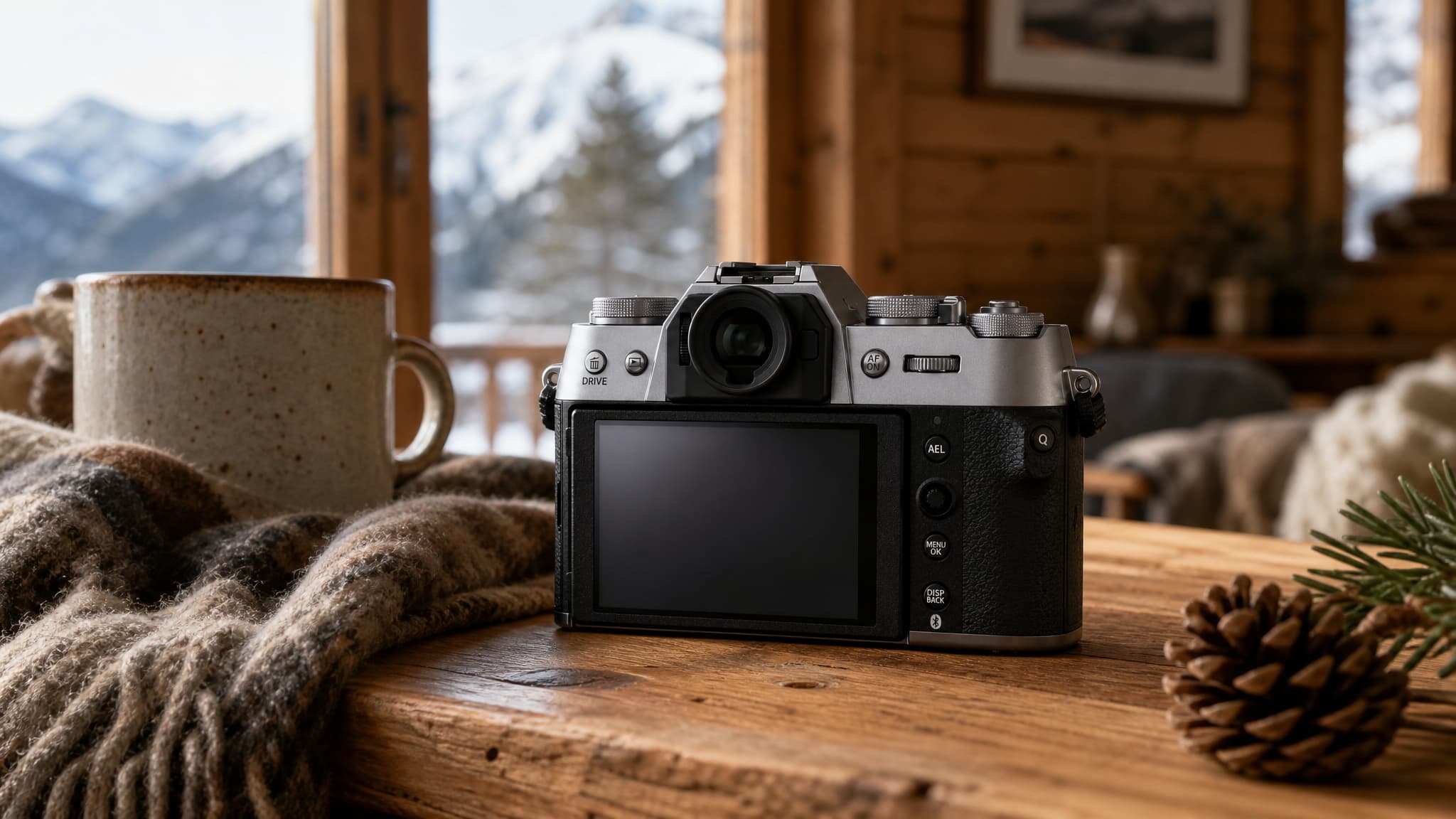
The screen is a 3-inch, 1,840,000-dot touchscreen with tilt articulation (up/down only). The absence of a side-flip screen is a concession compared to the X-S20. For vlogging or selfies, this is a real limitation. For street photography and landscapes, the tilt mechanism is sufficient and more discreet.
EVF and card slot
The EVF displays 2,360,000 dots with 0.93x magnification. It is a solid viewfinder for the price range, but falls short of the 3,690,000 dots in the X-T5. The difference is noticeable when manually focusing precisely and when reading fine detail in the viewfinder. For street and travel photography, this level is perfectly adequate. For landscape work with precise manual focus on a tripod, the X-T5 is more comfortable.
The single card slot accepts UHS-II SD cards. This is the X-T50's second deal-breaker. A single slot means no redundancy in the event of card corruption or failure. For professional use or non-repeatable events (weddings, reportage), this is an unacceptable risk. For travel and personal photography, it is manageable with a quality card and regular backups.
| Release year | 2024 |
|---|---|
| Weight (with battery) | 438 g |
| Dimensions | 123.8 x 84 x 48.8 |
| Weather sealing | No |
| Viewfinder | EVF |
| Viewfinder resolution | 2360000 dots |
| Screen | 3 inches |
| Screen articulation | tilt |
| Touchscreen | Yes |
| Battery (CIPA) | 305 frames |
| Dual SD slot | No |
| Wi-Fi / Bluetooth | Yes / Yes |
| Lens mount | X-mount |
Image quality: the 40 MP sensor democratised
The X-Trans CMOS 5 HR 40.2 MP sensor is the X-T50's main selling point. It is the same component as in the X-T5, with the same measured performance. Here is what the independent data actually shows.
Resolution and RAW files
40.2 MP on a 23.5 × 15.7 mm APS-C sensor yields a high pixel density. Uncompressed RAW files weigh approximately 80 MB per image. This density allows prints up to 60 × 40 cm at 300 dpi without interpolation, and provides significant cropping headroom. In practice, you can crop up to 50% of the frame and still retain a usable file for an A4 print.
Dynamic range and high-ISO noise
Photons to Photos measurements place the dynamic range of the X-Trans CMOS 5 HR sensor at approximately 12.5 EV at base ISO 125. This is comparable to the Sony IMX410 used in the Sony A7C, and slightly below the BSI sensor in the Sony A7R V, measured at 13.5 EV at ISO 100. For landscape and portrait work in natural light, 12.5 EV is more than sufficient to recover highlights and shadows in post-processing.
At high sensitivities, the X-Trans CMOS 5 HR sensor produces well-controlled chroma noise up to native ISO 3,200. At ISO 6,400, degradation becomes visible in large-format prints but remains acceptable for web use and formats smaller than A3. The maximum native ISO is 12,800, with an extension to ISO 51,200 that produces files usable only at low resolution. The X-Trans sensor structure generates a mosaic-pattern noise that differs from Bayer noise, requiring dedicated demosaicing software (Capture One, Lightroom with an X-Trans profile, or Iridient Developer) to achieve the best results.
Film simulations: the Fujifilm argument
The X-T50 includes 19 film simulations, among them Reala Ace (introduced with the X-T5), Nostalgic Neg., and the classics Velvia, Provia and Astia. These built-in JPEG profiles are one of Fujifilm's key differentiators against Sony and Canon. They allow you to deliver directly usable JPEGs without post-processing — a genuine advantage for reportage and travel. The dedicated film simulation dial on top of the body is a new feature on the X-T50 compared to the X-T30 II.
| Sensor | APS-C |
|---|---|
| Sensor size | 23.5 × 15.7 mm |
| Resolution | 40.2 MP |
| Sensor type | X-Trans CMOS 5 HR |
| Native ISO range | 125 – 12800 |
| Extended ISO | up to 51200 |
| In-body stabilization | 7 stops |
| AF points | 425 |
| AF coverage | 100 % |
| Eye detection (human / animal) | Yes / Yes |
| Mechanical burst | 8 fps |
| Electronic burst | 20 fps |
| RAW buffer | 79 frames |
| Max shutter speed | 1/180000 |
Autofocus: effective, with nuances
The X-T50's AF system relies on 425 points covering 100% of the sensor, with on-sensor phase detection. The algorithms are inherited from the X-Processor 5.
Subject detection: human, animal, vehicle
The X-T50 incorporates human eye and animal eye AF detection. Phase detection covers the entire sensor (100%), which is an advantage over cameras that restrict AF coverage to central zones. The AF acquisition threshold in low light is rated at -4 EV, allowing focus to be maintained in near-darkness.
Independent tests (DPReview, Imaging Resource) indicate that human eye detection is reliable for static portraits and slow-moving subjects. It struggles with fast and unpredictable movement, such as sport or active wildlife. This is not a camera designed for professional sport: the 8 fps mechanical burst and the AF system, while strong for their price range, do not rival the Sony A6700 or the Canon EOS R7 on that specific terrain. I have not had hands-on time with fast-moving sports subjects and am drawing here on available independent data.
Responsiveness and acquisition in real-world conditions
Shutter lag is quoted at 0.05 s by Fujifilm. In portrait and street photography, the AF is responsive and eye acquisition is fast. The 100% sensor coverage allows free composition without repositioning the focus point. For travel and street photography, the system presents no obstacle.
- 425 AF points with phase detection, 100% sensor coverage
- Low-light threshold at -4 EV: acquisition maintained in difficult conditions
- Human and animal eye detection: reliable on slow to moderately moving subjects
- Identified limitation: fast and unpredictable movement (sport, active wildlife)
Burst and stabilisation: the duo that broadens use cases
The X-T50 combines a 20 fps electronic burst and 7-stop IBIS. Both specs are unusual at this price level and deserve a critical look.
Burst: mechanical vs electronic
The mechanical burst is limited to 8 fps, which is modest. The electronic burst reaches 20 fps with a quoted buffer of 79 RAW frames. At 20 fps, the buffer therefore empties in approximately 3.9 seconds of continuous shooting. That is enough to capture a brief action (a jump, a bird taking flight), but insufficient for a football match or a motor race.
The 20 fps electronic burst uses an electronic shutter, which carries a risk of rolling shutter artefacts on fast-moving subjects. Fujifilm does not publish precise data on the sensor's readout speed. DPReview tests indicate rolling shutter is present but moderate, comparable to APS-C competitors in this price range. For street photography and portraits in motion, this is not an issue. For motorsport or aircraft propellers, the 8 fps mechanical shutter is preferable.
7-stop IBIS: what it actually changes
The IBIS compensates 7 stops according to Fujifilm's measurement (compliant with the CIPA standard using a stabilised lens). In practice, in the field with the XF 35 mm f/2 R WR, I was able to obtain sharp handheld images at 1/4 s consistently — representing approximately 5 stops of real-world gain under my shooting conditions. The manufacturer's 7-stop figure is achieved by combining IBIS with a compatible OIS lens under standardised CIPA test conditions. This is an important distinction: 7 stops is not achievable with every lens or in every situation.
For travel photography in low light, the IBIS is a decisive advantage. It allows shooting at slow shutter speeds without a tripod, which is particularly useful indoors (museums, restaurants, dark alleyways). This is one of the key reasons the X-T50 is more versatile than its predecessor the X-T30 II, which had no IBIS.
Video: a capable hybrid, not a dedicated camera
The X-T50 records 4K/60p 10-bit with Log and no recording time limit. That is a solid offering for a photographer who also wants to shoot video, but not for a professional videographer.
Resolution, frame rates and codecs
Maximum resolution is 4K (3,840 × 2,160 pixels) at 60 frames per second. Available codecs are H.264 and H.265, both in 10-bit. The 10-bit depth is essential for serious colour grading in post-production: it offers far greater correction latitude than the 8-bit output of many competing cameras in this price range. F-Log2 mode is available, with a quoted dynamic range of 13 stops in video.
Some publications have mentioned a 6.2K resolution, which corresponds to an internal oversampled capture before export to 4K. Fujifilm does not officially communicate a 6.2K output resolution for the X-T50 in its datasheet. The maximum certified output resolution is 4K. Internal oversampling improves the quality of the final 4K image, but internal capture resolution and exported file resolution should not be confused.

Unlimited recording and practical limits
Video recording is unlimited in duration, which is an advantage over cameras that impose 30-minute clip limits. In practice, the limits are SD card capacity and body heat. Fujifilm does not publish precise data on the X-T50's thermal behaviour during extended 4K/60p recording. Independent tests (DPReview) indicate adequate thermal management for sessions under 30 minutes, with temperature warnings beyond that in warm environments.
The HDMI output is Micro HDMI, requiring a specific cable to connect to an external monitor or recorder. This is a practical constraint in the field. The USB-C port (USB 3.2 Gen 2x1) supports charging and high-speed data transfer, but not RAW video output.
Video positioning within the Fujifilm range
For video, the X-S20 remains the better fit: it has a side-flip screen (essential for vlogging), better video ergonomics and similar connectivity. The X-T50 is a photo camera that shoots competent video, not the other way around. If video is your primary use, the X-S20 or the Panasonic Lumix GH7 are better-suited alternatives.
| Max resolution | 6.2K |
|---|---|
| Max frame rate | 240 fps |
| Codecs | H.265, H.264 |
| Bit depth | 10 bit |
| Log profile | Yes |
| Unlimited recording | Yes |
| In-body stabilization | 7 stops |
| HDMI output | HDMI Micro (Type D) |
| USB connector | USB-C 3.2 Gen2 |
Connectivity and battery life: points to watch
Battery life is rated at 305 CIPA shots. That is one of the lowest figures in its category. For comparison, the Sony A6700 is rated at 570 CIPA shots and the Canon EOS R7 at 660 CIPA shots. In real-world use with the screen and Wi-Fi active, expect between 200 and 250 shots per charge. For an intensive day of travel shooting, a spare battery is essential. USB-C charging is a genuine advantage: you can top up the camera with a standard power bank.
Wireless connectivity includes Wi-Fi and Bluetooth. The Fujifilm XApp (successor to Camera Remote) enables image transfer and remote control from a smartphone. The Bluetooth connection maintains a permanent link for geotagging and automatic transfer. In practice, the Wi-Fi connection is stable for JPEG file transfers, but slow for 40 MP RAWs (approximately 80 MB per file).
- 305 CIPA shots battery life: plan for at least one spare battery
- USB-C charging compatible with power banks: a genuine travel advantage
- Wi-Fi + Bluetooth: smooth JPEG transfer, slow RAW transfer
- Micro HDMI: specific cable required for external monitor connection
Against the competition: where the X-T50 really stands
The X-T50 operates in a competitive APS-C segment. Its direct competitors are the Sony A6700, the Canon EOS R7 and, within the Fujifilm range, the X-T5 and the X-S20.
Against the Sony A6700: resolution vs versatility
The Sony A6700 ($1,399 at launch, identical to the X-T50) offers 26.1 MP against 40.2 MP for the X-T50. In return, the A6700 provides weather sealing, better battery life (570 CIPA shots), superior AF performance on fast-moving subjects and a broader E-mount lens ecosystem. If maximum resolution is not your priority and you shoot in challenging conditions, the A6700 is the more robust choice. If you prioritise resolution and film simulations, the X-T50 wins.
Against the X-T5: what you actually give up
The X-T5 costs $300 more at launch ($1,699). For that difference, you get: weather sealing, dual SD slots, a 3,690,000-dot EVF (vs 2,360,000), a mechanical shutter at 1/8,000 s (vs 1/4,000 s) and a slightly more robust chassis. What you give up is the film simulation dial (present on the X-T50, absent on the X-T5). If you work outdoors in variable conditions and need card redundancy, the extra $300 for the X-T5 is justified. For travel use in fair weather, the X-T50 is sufficient.
Against the Canon EOS R7: two philosophies
The Canon EOS R7 ($1,499 at launch) offers 32.5 MP, weather sealing, dual SD slots and a 15 fps mechanical burst. It is more oriented towards sport and wildlife than the X-T50. The RF-S ecosystem is less mature than X-mount in terms of available lenses, but Canon's EF/RF adapters open access to a vast legacy lens library. For sport and wildlife, the R7 is superior. For travel and portrait with refined JPEGs, the X-T50 and its film simulations hold a subjective but real advantage.
| Spec | Fujifilm X-T50Tested here | Sony α6700 | Canon EOS R7 | Fujifilm X-T5 |
|---|---|---|---|---|
| Released | 2024 | 2023 | 2022 | 2022 |
| Sensor | APS-C | APS-C | APS-C | APS-C |
| Resolution | 40.2 MP | 26 MP | 32.5 MP | 40.2 MP |
| Native ISO max | 12800 | 32000 | 32000 | 12800 |
| Dynamic range | — | 11 EV | 10.5 EV | 10.4 EV |
| AF points | 425 | 759 | 651 | 425 |
| Burst (elec.) | 20 fps | 11 fps | 30 fps | 20 fps |
| IBIS | 7 stops | 5 stops | 7 stops | 7 stops |
| Max video | 6.2K/240p | 4K/120p | 4K/60p | 6.2K/240p |
| Weather sealing | No | Yes | Yes | Yes |
| Dual SD slot | No | No | Yes | No |
| Weight | 438 g | 493 g | 612 g | 557 g |
| Launch price | 1399 USD | 1398 USD | 1499 USD | 1699 USD |
X-T50 vs A6700 vs R7 vs X-T5: the X-T50 leads on resolution, concedes on durability and battery life.
The XF 16-50 mm f/2.8-4.8 R LM WR: a coherent kit
The X-T50 is available as a kit with the XF 16-50 mm f/2.8-4.8 R LM WR, a lens introduced at the same time. This lens covers the equivalent of 24-76 mm in full-frame terms. The maximum aperture of f/2.8 at 16 mm narrows to f/4.8 at 50 mm, which is honest for a compact all-round zoom. It is weather-sealed (WR), which partially offsets the body's lack of sealing, but is not sufficient to make the combination fully weather-proof.
Autofocus is driven by a linear motor (LM), which is quiet and fast — well suited to video. Optical quality is good at the centre from wide open, with a slight drop in sharpness in the corners at f/2.8. For a kit lens at this price, that is an above-average level of performance. The body-plus-lens combination weighs approximately 700 g, which remains reasonable for a travel kit.
Price and value: where to buy, new or used
The X-T50 launched at $1,399 (approximately €1,349 at launch). In 2026, the new price has shifted with promotions and range adjustments. The X-T50 represents the most accessible entry point for Fujifilm's 40.2 MP sensor. The X-T5, its weather-sealed equivalent, remains at a higher price level.
On the used market, the X-T50 trades between €900 and €1,100 depending on condition and shutter count. At that price, the value proposition is excellent: you get a 40.2 MP sensor with 7-stop IBIS for under €1,000. Key things to check when buying used are the condition of the mechanical shutter (rated for 150,000 actuations) and the state of the touchscreen, which is prone to scratches on this model.
Fujifilm X-T50
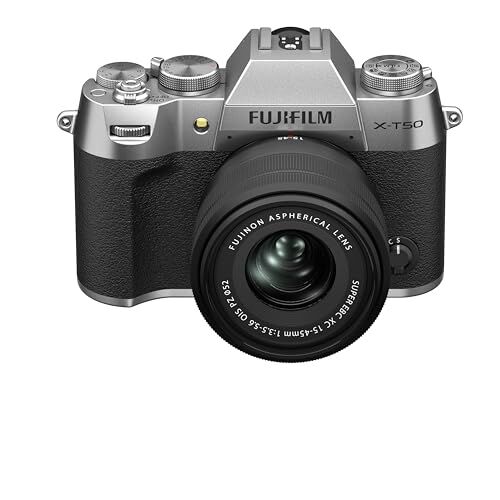
FUJIFILM X-T50 Mirrorless Camera with FUJINON XC 15-45 mm f/3.5-5.6 OIS PZ Lens - Silver, Silver/Grey
1 282,62 GBP · PcNova.co.uk


You'll find the best prices on the market here, updated daily — and by going through these partner links, you support Camera Duel without paying a cent more.
Verdict: for whom, and why
The Fujifilm X-T50 is a well-constructed camera built around one strong central argument: the X-T5's 40.2 MP sensor in a 438 g body at a lower price. That argument holds. The image quality, dynamic range measured at approximately 12.5 EV, 7-stop IBIS and 19 film simulations make it a first-rate tool for travel, portrait and street photography.
The concessions are real and non-negotiable: no weather sealing, single card slot, 305 CIPA shots battery life, mechanical shutter limited to 1/4,000 s. These four points are not minor details — they define the camera's limits. If any one of them is a deal-breaker for your shooting practice, the X-T50 is not the right camera for you.
- Buy the X-T50 if you shoot travel, portrait and street photography in normal conditions with a budget of €1,300–1,400
- Buy the X-T5 if you need weather sealing, dual card slots or a high-resolution viewfinder (€300 more)
- Buy the Sony A6700 if you shoot in challenging conditions or need better battery life
- Buy the X-S20 if video is your primary use and you need a side-flip screen
The score of 7.4/10 reflects a camera that is above average for its range on image quality and versatility, penalised by objective deal-breakers (weather sealing, single slot, battery life) that limit its scope of use. It is an excellent camera for the right use cases. It is not a universal camera.
Frequently asked questions
Is the Fujifilm X-T50 weather-sealed?▾
No. The X-T50 carries no dust or moisture resistance certification whatsoever. This is one of the main differences from the X-T5, which is weather-sealed. If you regularly shoot in rain or dusty environments, the X-T5 ($1,699 at launch) is the alternative to consider within the Fujifilm range.
What is the difference between the Fujifilm X-T50 and the X-T5?▾
Both cameras share the same X-Trans CMOS 5 HR 40.2 MP sensor and the same X-Processor 5. The X-T5 adds: weather sealing, dual SD slots, a 3,690,000-dot EVF (vs 2,360,000 on the X-T50), a mechanical shutter at 1/8,000 s (vs 1/4,000 s) and a slightly more robust chassis. The X-T50 adds in return a dedicated film simulation dial that is absent on the X-T5. The price difference at launch is approximately $300 in favour of the X-T50.
Is the Fujifilm X-T50 good for video?▾
The X-T50 records 4K/60p 10-bit with F-Log2 and no recording time limit. That is a competent offering for a photographer who occasionally shoots video. For primary video use, the X-S20 is better suited: it has a side-flip screen (essential for vlogging) and superior video ergonomics. The X-T50 is not a dedicated video camera.
What is the real-world battery life of the Fujifilm X-T50?▾
CIPA battery life is 305 shots per charge. In real-world use with the screen and Wi-Fi active, expect between 200 and 250 shots per charge. For an intensive day of travel shooting, a spare battery is essential. USB-C charging is a practical advantage: you can recharge using a standard power bank without carrying the original charger.
Is the Fujifilm X-T50 suitable for beginners?▾
The X-T50 is technically accessible to beginners, but its physical dial interface (ISO, shutter speed, exposure compensation) assumes a basic understanding of exposure. A complete beginner will be more comfortable with an electronically controlled interface such as the X-S20 or the Canon EOS R50. For a photographer who wants to learn manual photography with an intuitive camera, the X-T50's dials are, conversely, an excellent teaching tool.
Can older Fujifilm X-mount lenses be used on the X-T50?▾
Yes. The X-T50 uses the X-mount, compatible with the full range of Fujinon XF and XC lenses — more than 30 lenses in the current catalogue. Older lenses (such as the XF 35 mm f/1.4 R) are fully compatible with working AF. Compatibility with third-party lenses (Sigma, Tamron, Viltrox in X-mount) is also supported.
Related reviews
Review Canon EOS R6 Mark II: Still the Right Choice in 2026?
The Canon EOS R6 Mark II remains the most balanced general-purpose hybrid in its class for weddings, portraits and travel, provided you accept a RAW buffer limited to 75 images and video capped at 4K/60p.
Read the review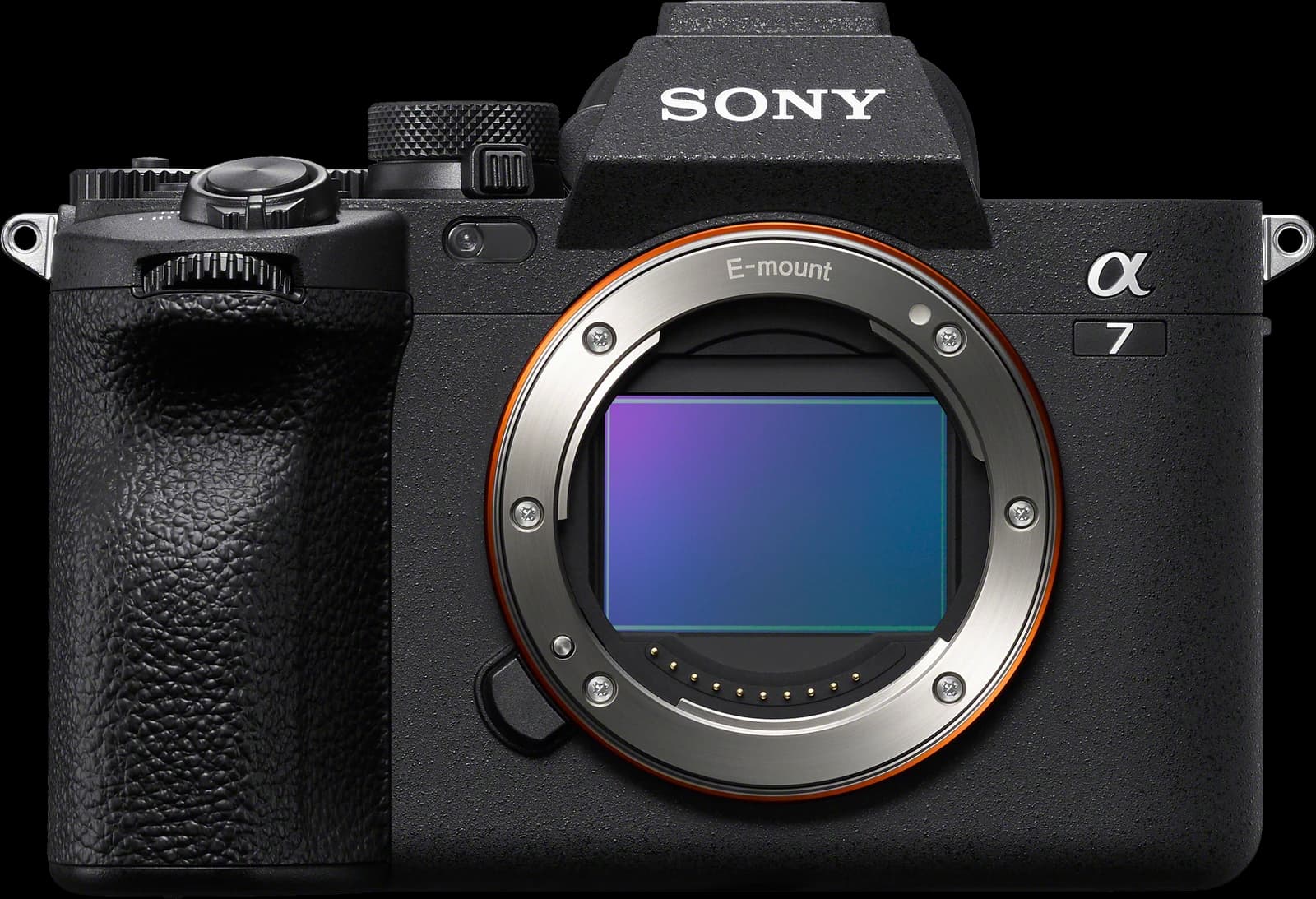
Review: Sony α7 IV – Still the Right Choice in 2026?
Full-frame all-rounder still relevant used for weddings, portraits and occasional video. New, 2023-2024 rivals offer more for the same budget.
Read the review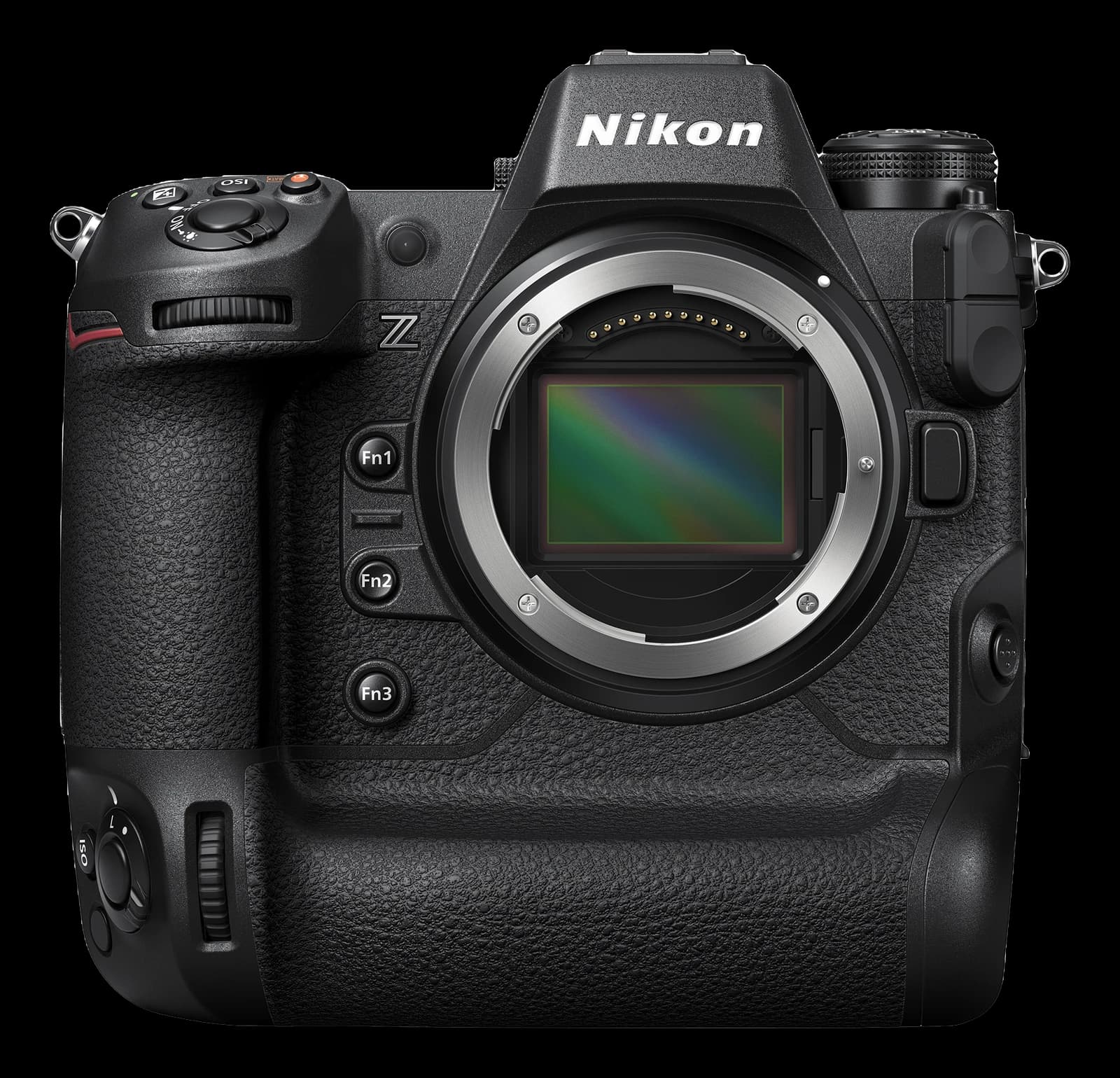
Nikon Z9 Review: Is the Nikon Flagship Still at the Top?
The Nikon Z9 remains a benchmark for professional sport and reportage thanks to its -8.5 EV AF and 1000 RAW buffer, yet the Z8 delivers the essentials for 1999 USD less.
Read the review