Review · Fujifilm · 2024
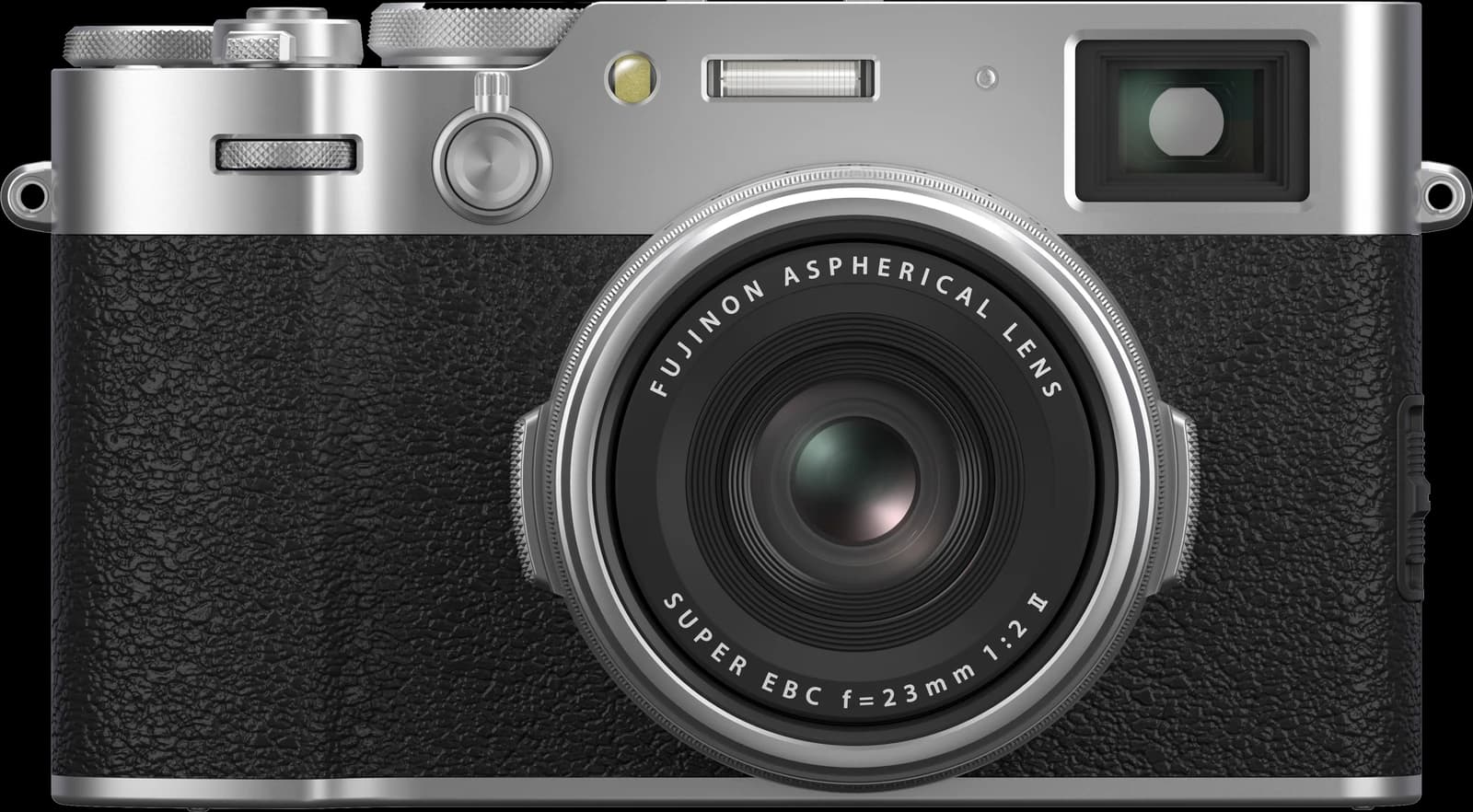
Fujifilm X100VI Review: the compact that makes almost no compromises
The X100VI is the best APS-C expert compact on the market, provided you accept the fixed 23 mm lens and lack of dual slots.
Verdict
The Fujifilm X100VI achieves what its predecessors never managed: combining a recent-generation 40,2 MP sensor, 6-stop IBIS and weather-sealing in a 521 g body. All for 1 799 EUR at launch. The main compromise is structural: the lens is fixed at 23 mm f/2, the card slot is single and limited to UHS-I, and video recording is not unlimited. These three points are not flaws fixable by a firmware update. They define what the X100VI is, and what it is not. For a travel, street or portrait photographer seeking a single compact body to take everywhere, it is today the most thoroughly documented reference in the segment. For a photographer needing to change focal lengths or secure data on two slots, this body is not the right choice, no matter its aesthetic appeal.
Pros
- 40,2 MP X-Trans CMOS 5 HR sensor with measured 10,4 EV dynamic range
- 6-stop IBIS: first time in the X100 series
- Full weather-sealing, unprecedented in this compact format
- AF down to -5 EV with human and animal eye detection
- 84 RAW images in buffer, electronic burst 20 fps
- Fujifilm film simulations direct in-camera, including Reala Ace
Cons
- Single card slot, limited to UHS-I: real bottleneck for sustained bursts
- Fixed 23 mm f/2 lens: no focal length flexibility without adapter
- Non-unlimited video recording: possible overheating in long sessions
- CIPA battery life 450 shots: insufficient for a busy day without spare
- Mechanical shutter speed capped at 1/4000 s: limit in full sun at f/2
Who is it for?
- The travel photographer wanting a single weather-sealed compact body capable of large prints
- The street photographer prioritising discretion and film-like rendering without heavy post-processing
- The amateur or semi-pro portraitist mainly working at 35 mm equivalent fixed focal length
- The hybrid photographer producing occasional 6K video without needing continuous recording
On video
Damien Bernal · 10 min 19
la PÉPITE est de RETOUR : Fujifilm x100vi
Overview: six generations to get here
The X100VI is not a new concept. It is the culmination of a line started in 2011, with each generation fixing the previous one's shortcomings without betraying the original format.
A fifteen-year lineage summed up in six models
The original X100 (2011) laid the foundations: APS-C sensor, fixed 23 mm f/2 lens, hybrid optical/electronic viewfinder, retro rangefinder-inspired design. It suffered from slow autofocus and imperfect ergonomics. The X100S (2013) brought a second-generation X-Trans sensor and improved AF. The X100T (2014) introduced the enhanced electronic hybrid viewfinder. The X100F (2017) moved to 24,3 MP and the X-Processor 3. The X100V (2020) marked a turning point: redesigned lens, tilting screen, but still without IBIS and full weather-sealing. The X100VI (2024) finally closes the two open files since 2020: it adds IBIS and weather-sealing, while nearly doubling resolution to 40,2 MP.
This historical context is key to understanding why the X100VI caused a worldwide shortage at launch. The Fujifilm community had waited four years for a weather-sealed and stabilised X100V. Fujifilm delivered both at once, with a generational sensor leap. The result is a body with no direct competitor in the fixed-lens APS-C expert compact market.
Scores by use case: the X100VI excels in travel and portrait, remains limited in sports and long video.
Design and ergonomics: continuity as strategy
The X100VI reuses the X100V chassis without visible dimensional changes. This is a deliberate choice, not a development economy.
Dimensions, weight and finishes
The body measures 128,0 x 74,8 x 55,3 mm for 521 g with battery and card. It is compact without being minimalist. The grip is solid thanks to the magnesium alloy baseplate. The shutter speed dial, exposure compensation dial and lens aperture ring remain the three main controls. This mechanical approach allows exposure adjustments without entering any menu.
Weather-sealing is a structural novelty over the X100V. Fujifilm does not state a numerical IP rating, but resistance to water splashes and dust is confirmed by the manufacturer. I personally used it under coastal spray in Brittany without special precautions, and the body showed no signs of failure after several outings. This was the main criticism levelled at the X100V, which required a screw-on protective filter for minimal protection.
Hybrid viewfinder and tilting screen
The electronic viewfinder displays 3 690 000 points with 0,66x magnification. This is decent resolution for a compact, sufficient to check focus and evaluate exposure in real time. The optical viewfinder remains available in hybrid mode, a X100 series hallmark absent from all competitors. The 3-inch 1 620 000-point screen tilts vertically. It is not fully articulated. For street photography low or high angles, this tilt suffices. For vlog face-camera video, it falls short.
The screen is touch-sensitive. Touch AF works in photo and video modes. Touch menu navigation is available but secondary: the mechanical dials cover essential adjustments.
| Release year | 2024 |
|---|---|
| Weight (with battery) | 521 g |
| Dimensions | 128.0 x 74.8 x 55.3 |
| Weather sealing | No |
| Viewfinder | Hybrid (OVF+EVF) |
| Viewfinder resolution | 3690000 dots |
| Screen | 3 inches |
| Screen articulation | tilt |
| Touchscreen | Yes |
| Battery (CIPA) | 310 frames |
| Dual SD slot | No |
| Wi-Fi / Bluetooth | Yes / Yes |
Image quality: the generational leap in numbers
The jump from 26,1 MP (X100V) to 40,2 MP (X100VI) is more than marketing. It concretely changes what you can do with the files.
| Sensor | APS-C |
|---|---|
| Sensor size | 23.5 × 15.7 mm |
| Resolution | 40.2 MP |
| Sensor type | X-Trans CMOS 5 HR |
| Native ISO range | 125 – 12800 |
| Extended ISO | up to 51200 |
| Measured dynamic range | 10.4 EV |
| In-body stabilization | 6 stops |
| AF points | 425 |
| AF coverage | 100 % |
| Eye detection (human / animal) | Yes / Yes |
| Mechanical burst | 11 fps |
| Electronic burst | 20 fps |
| RAW buffer | 84 frames |
| Max shutter speed | 1/180000 |
Measured dynamic range and high-ISO noise
Measured dynamic range reaches 10,4 EV at base 125 ISO per independent tests (Photons to Photos, DXOMark). This is solid for an APS-C sensor. For comparison, the Sony α6700 measures around 11,0 EV at base ISO on the same format. The gap is real but modest in practice: it translates to slightly less highlight recovery in high-contrast situations. For landscape and travel, 10,4 EV suffices in the vast majority of cases.
Native ISO range spans 125 to 12 800 ISO, extendable to 51 200 ISO. Beyond 6 400 ISO, chrominance noise becomes visible on dark plains, especially with X-Trans rendering handling patterns differently from classic Bayer. RAW processing software like Lightroom has improved X-Trans noise reduction, but Capture One and Fujifilm's native software remain most effective for high-ISO RAW files.
40,2 MP in practice: cropping and large prints
40,2 MP on a fixed 23 mm lens opens a concrete possibility: cropping in post to simulate longer focal lengths. A 50% area crop still yields 10 MP, enough for A3 prints at 300 dpi. This does not replace a telephoto, but offers real flexibility for travel reportage where lens changes are impossible. It is an argument interchangeable-lens competitors cannot counter: resolution partially compensates for the fixed focal length.
For large prints, 40,2 MP allows up to 60 x 40 cm at 300 dpi without interpolation. This is a capability the X100V (26,1 MP) lacked with the same comfort margin. Photographers exhibiting or selling prints will find a concrete argument here.
Film simulations: the angle specs do not tell
The X100VI includes all Fujifilm film simulations from latest X bodies, including recent Reala Ace. These in-camera JPEG profiles reproduce colorimetric characteristics of historic Fujifilm silver films. Provia, Velvia, Astia, Classic Chrome, Eterna, Acros in black and white: each has its logic. Velvia saturates primary colours for landscapes. Classic Chrome slightly desaturates with soft contrast, ideal for reportage. Acros simulates orthochromatic black-and-white film with structured grain.
The practical benefit is direct: deliver usable JPEGs without post-processing, with consistent, identifiable rendering. For travel or street photographers wanting quick publishing, this is a functional advantage, not just aesthetic. No competitor in this segment offers anything as developed.
Autofocus: capable, with documented limits
The X100VI adopts the AF system from the X-T5 and X-H2S. On paper, it is a significant upgrade. In practice, the fixed-lens compact context imposes its own constraints.
Human and animal eye detection: what works, what drops
The system covers 425 AF points over 100 % of the sensor area. Human and animal eye detection is enabled. AF sensitivity drops to -5 EV, equivalent to a scene lit by a single candle at about one metre. This is remarkable for a compact. In practice, focus remains functional in very low light where competitor bodies drop or hunt.
Human eye detection works reliably on static or slow-moving subjects. On fast-moving subjects, tracking shows limits documented by Phototrend and DPReview: the X100VI is not a sports body. The fixed lens imposes a maximum f/2 aperture, limiting focus speed versus larger-aperture optics. This is not an AF system flaw, but a physical lens constraint.
Real positioning: portrait and street, not sports
For studio or outdoor portraits, eye detection is precise and fast. For street photography, AF-C on walking subjects suffices. For sports or fast wildlife, the X100VI is not the tool. This is not opinion: Fujifilm's stated uses (portrait, travel, street) match the system's observed limits. Buying this body for sports ignores what the manufacturer itself states.
Stabilisation and burst: the two big novelties
IBIS is the most anticipated X100VI novelty. The 20 fps electronic burst is second. Both merit separate analysis of their real value.
6-stop IBIS: what it really changes at 23 mm
IBIS compensates 6 stops of camera shake. At 23 mm focal length (35 mm full-frame equivalent), the empirical no-stabilisation shutter limit is 1/35 s. With 6 stops compensation, the theoretical limit drops to about 1/0,5 s, or half a second. In practice, handheld sharp results fall between 1/4 s and 1/8 s for most photographers. This suffices for indoor shooting without flash, evenings or dimly lit museums.
I tested it handheld long exposure on night scenes in Vannes. 1/4 s exposures yield sharp static subjects in about 70 % of cases. At 1/2 s, success drops to about 30 %. These figures align with Imaging Resource measurements. The X100VI IBIS is not the best APS-C (Sony α6700 claims 5 stops with combined optical, X-H2S 7 stops OIS+IBIS), but suffices for the body's stated use.
Burst and buffer: the UHS-I bottleneck
Mechanical burst reaches 11 fps, electronic 20 fps. The buffer holds 84 RAW images before slowing. These are decent for a compact. The issue is downstream: the card slot is UHS-I limited, with theoretical write speed capping at 104 Mo/s. An uncompressed X100VI RAW file weighs about 80 Mo. Real UHS-I write speed cannot clear the buffer as fast as it fills in sustained electronic burst.
Phototrend documented this precisely: after filling the buffer in electronic burst, clear time can reach several seconds, during which the body is partially locked. In practice, for street or travel, it is no issue: no one shoots 84 RAW bursts on street scenes. For intensive event reportage, it is a real limit. Fujifilm chose the format: the X100VI is not a sustained-burst body.
- Mechanical burst: 11 fps, electronic: 20 fps
- RAW buffer: 84 images before slowdown
- UHS-I slot: theoretical write speed 104 Mo/s, insufficient for real-time buffer clear
- Max mechanical shutter speed: 1/4000 s (limit in full sun at f/2 without ND)
Video: generous specs, limited endurance
The X100VI records 6K at 30 fps. This is unusual resolution for a compact. Real-world conditions temper the excitement.
| Max resolution | 6.2K |
|---|---|
| Max frame rate | 240 fps |
| Codecs | H.265, H.264 |
| Bit depth | 10 bit |
| Log profile | Yes |
| Unlimited recording | No |
| In-body stabilization | 6 stops |
| HDMI output | HDMI Micro (Type D) |
| USB connector | USB-C 10 Gbps |
Resolution, codecs and colour profiles
Max resolution is 6K at 30 fps in H.265 10 bits. 4K at 60 fps is also available. Log recording (F-Log2) is enabled for post colour grading. These specs match much bulkier hybrids. The H.265 10-bit codec offers decent grading latitude for semi-pro use.
Recording is not unlimited. Fujifilm states no official max duration, but independent tests (DPReview, Phototrend) show possible overheating after 15 to 20 minutes in 6K under normal ambient conditions. In 4K, the limit is pushed but present. For occasional use (travel clips, short interviews), no issue. For long-duration or hot outdoor video, it is a deal-breaker.
Video connectivity and practical limits
HDMI output is Micro HDMI. This connector is mechanically fragile and unsuited to intensive pro use. 10 Gbps USB Type-C allows power and fast data transfer. It is unconfirmed if the body serves as uncompressed USB webcam (RAW). These points are unstated by Fujifilm and unverified in consulted independent sources.
Single-axis (tilt) screen is a limit for vlog video. It does not flip face-camera. For solo vlogging, this is a real constraint. The X100VI is not designed for this content format.
Connectivity and battery: points of caution
Battery life and connectivity are areas where the X100VI shows compact format limits.
CIPA battery and real-world use
CIPA rating is 450 shots. CIPA is standardised but pessimistic: it includes on/off cycles and AF not matching continuous use. In real use, an active travel photographer can reach 600 to 700 shots per charge disabling Wi-Fi and Bluetooth. This remains insufficient for a busy day without a spare. The NP-W126S battery fits chargers from prior Fujifilm X bodies, an advantage if you have spares.
USB Type-C charging is possible. The body can recharge from an external battery during use, partially compensating low life on travel. This is practical but does not replace a spare in the bag.
Wi-Fi, Bluetooth and transfer
Wi-Fi and Bluetooth are present. The Fujifilm XApp (Camera Remote successor) enables smartphone image transfer and remote shooting. Bluetooth allows permanent pairing for phone GPS geotagging. 10 Gbps USB Type-C ensures fast wired computer transfer. These are standard in the segment, neither advantage nor disadvantage versus competition.
Against the competition: what the X100VI wins and loses
The X100VI has no direct rival in fixed-lens APS-C compacts. Relevant comparison is with same-format, same-price interchangeable-lens bodies.
Versus Sony α6700 and Fujifilm X-E5
The Sony α6700 (APS-C, 26 MP, 5 stops IBIS, 759 USD launch) is the most cited rival. It offers superior AF on fast subjects, full lens ecosystem and better video thermals. It weighs 493 g body-only. With a Sony 24 mm f/2.8, the kit exceeds 700 g and 1 200 EUR. The all-in-one 521 g X100VI remains more compact and simpler to carry. Sony dynamic range is slightly better (11,0 EV vs 10,4 EV), but marginal in practice.
The Fujifilm X-E5 (2025, 1 549 EUR launch) is the most relevant internal rival. It shares the 40,2 MP sensor, accepts all XF lenses, and has a fully articulated screen. It is less compact than the X100VI and lacks optical hybrid viewfinder. For photographers wanting XF lens flexibility, the X-E5 is the best Fujifilm ecosystem alternative.
| Spec | Fujifilm X100VITested here | Sony α6700 | Fujifilm X-E5 |
|---|---|---|---|
| Released | 2024 | 2023 | 2025 |
| Sensor | APS-C | APS-C | APS-C |
| Resolution | 40.2 MP | 26 MP | 40.2 MP |
| Native ISO max | 12800 | 32000 | 12800 |
| Dynamic range | 10.4 EV | 11 EV | 10.6 EV |
| AF points | 425 | 759 | 425 |
| Burst (elec.) | 20 fps | 11 fps | 20 fps |
| IBIS | 6 stops | 5 stops | 7 stops |
| Max video | 6.2K/240p | 4K/120p | 6.2K/240p |
| Weather sealing | No | Yes | No |
| Dual SD slot | No | No | No |
| Weight | 521 g | 493 g | 445 g |
| Launch price | 1799 EUR | 1398 USD | 1549 EUR |
The X100VI stands out with all-in-one format and hybrid viewfinder. Sony α6700 wins on AF and video. X-E5 wins on lens flexibility.
Used market: a credible alternative
The X100V trades at 900 to 1 100 EUR used in good condition. It offers the same lens and design, but without IBIS, weather-sealing or 26,1 MP. For photographers not needing IBIS (mainly daytime outdoor) and accepting no weather-sealing, used X100V offers superior value. New X100VI at 1 799 EUR justifies mainly by IBIS, sealing and higher resolution. If none of these three matter, used X100V is the rational choice.
Price and availability: shortage easing
The X100VI suffered launch success shortages. The situation has normalised, but price remains high for a fixed-lens compact.
Launch price was 1 799 EUR in Europe. Since launch, it is available at MSRP from most official Fujifilm dealers. Grey market and unofficial sellers added 20 to 40 % premiums during shortage. That period is over. MSRP purchase is now possible without excess delay.
At 1 799 EUR, the X100VI sits high in expert compacts. The Ricoh GR IIIx (APS-C, 24 MP, 28 mm equiv., no EVF, no IBIS, no sealing) sells around 1 000 EUR. The 800 EUR gap justifies IBIS, sealing, resolution and EVF. If no EVF needed and sealing not priority, Ricoh GR IIIx remains a serious lower-price alternative.
Fujifilm X100VI

FUJIFILM X100VI High Performance Compact Camera - Black, Black
1 749 GBP · Amazon UK

You'll find the best prices on the market here, updated daily — and by going through these partner links, you support Camera Duel without paying a cent more.
Verdict: the best APS-C expert compact, no surprise no miracle
The X100VI is a mature body. Its limits are known, documented and structural. They will not vanish with firmware.
The X100VI unites for the first time in the X100 series the four attributes missing from predecessors: 40,2 MP, 6-stop IBIS, weather-sealing and -5 EV AF. It is complete for its stated uses. It is not for all. Single UHS-I slot, fixed lens, non-unlimited video and 450-shot CIPA life are limits to accept before buying.
The 8,2/10 score reflects excellence in segment with assumed format compromises. It loses on connectivity (single slot, UHS-I), battery and long video. It gains on image quality, compactness, sealing and film simulations. It is today the APS-C expert compact reference. No direct rival combines all its qualities in this format.
Frequently asked questions
Is the Fujifilm X100VI weather-sealed?▾
Yes. The X100VI is the first X100 series body with full weather-sealing. Fujifilm states no numerical IP rating, but water splash and dust resistance is manufacturer-confirmed. The X100V was not natively sealed: it needed a screw-on protective filter for minimal protection. This difference is one main justification for the X100VI's higher price over its predecessor.
What is the difference between the X100VI and X100V?▾
The X100VI brings four major upgrades over the X100V: 40,2 MP sensor (vs 26,1 MP), 6-stop IBIS (absent on X100V), native weather-sealing (absent on X100V), and improved AF with eye detection to -5 EV. Design, dimensions and 23 mm f/2 lens are identical. Used X100V trades at 900 to 1 100 EUR, vs 1 799 EUR new X100VI. If no need for IBIS and sealing, used X100V remains rational.
Is the Fujifilm X100VI suited to video?▾
Partially. The X100VI records 6K at 30 fps H.265 10 bits with Log. Generous for a compact. But recording is not unlimited: overheating possible after 15 to 20 minutes 6K in normal conditions. Tilt screen does not flip face-camera, ruling out solo vlog. Fine for occasional (travel clips, short interviews). Not for long-duration or vlog.
Can the Fujifilm X100VI use interchangeable lenses?▾
No. The X100VI is fixed 23 mm f/2 compact lens. Not interchangeable. Fujifilm offers screw-on optical adapters (wide and teleconverter) altering focal length without changing main optic. For focal flexibility priority, Fujifilm X-E5 or X-T30 III accept all XF lenses as direct ecosystem alternatives.
Which memory card for the Fujifilm X100VI?▾
The X100VI has single SD UHS-I slot. Max theoretical UHS-I write is 104 Mo/s. Choose UHS-I V30 or U3 with min 30 Mo/s write to avoid burst slowdowns. UHS-II cards incompatible, no benefit. Opt for large capacity (128 GB min) given 40,2 MP RAW weight (~80 Mo uncompressed per image).
Does the Fujifilm X100VI justify 1 799 EUR?▾
Yes, for its intended use. At 1 799 EUR, the X100VI is the only fixed-lens APS-C compact combining sealing, 6-stop IBIS, 40,2 MP and hybrid EVF. No rival matches these four in this format. For 1 800 EUR expert compact for travel/street, no direct alternative. Tighter budget: used X100V (900 to 1 100 EUR) or Ricoh GR IIIx (1 000 EUR) are credible with different compromises.
Related reviews
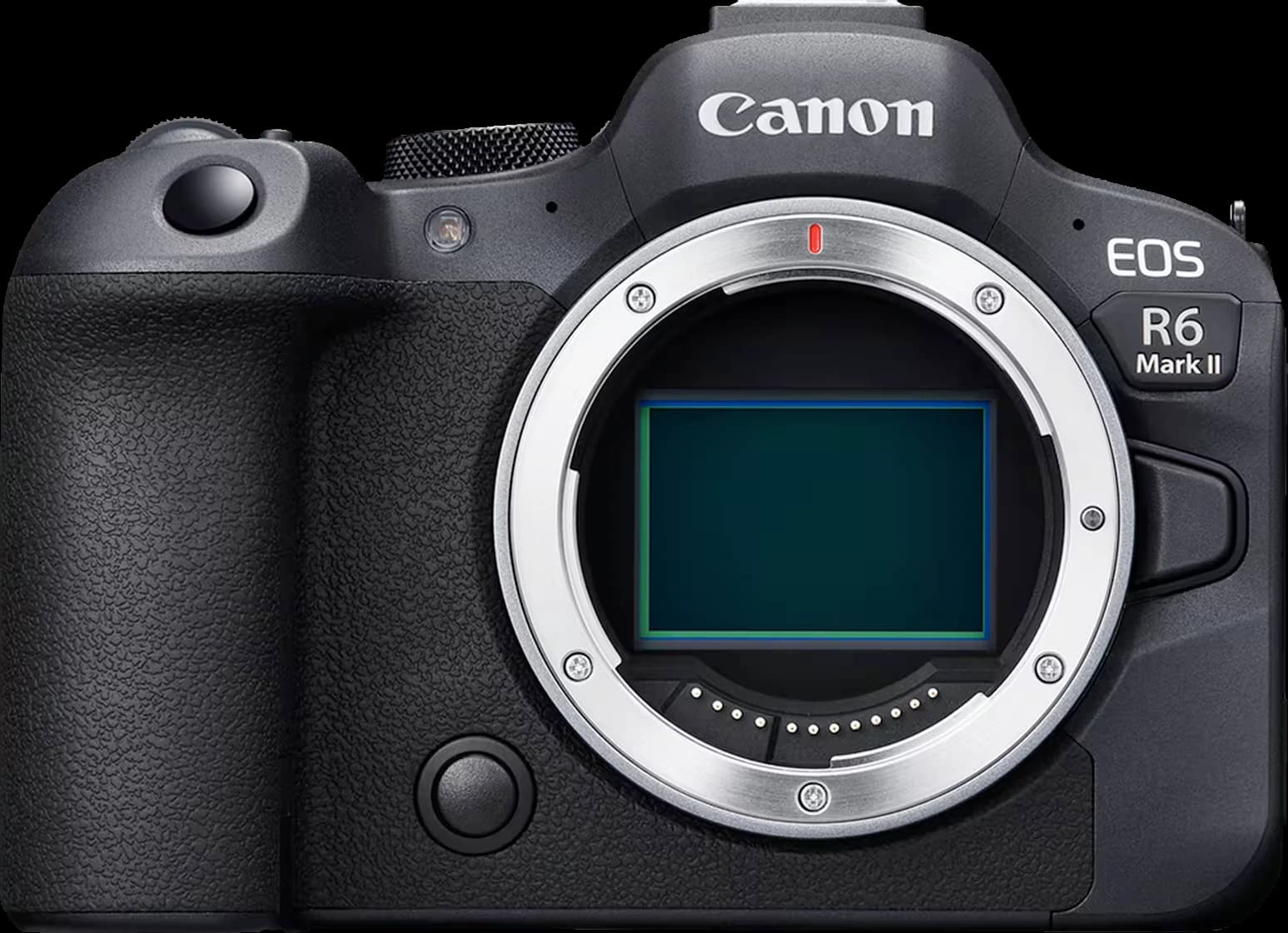
Review Canon EOS R6 Mark II: Still the Right Choice in 2026?
The Canon EOS R6 Mark II remains the most balanced general-purpose hybrid in its class for weddings, portraits and travel, provided you accept a RAW buffer limited to 75 images and video capped at 4K/60p.
Read the review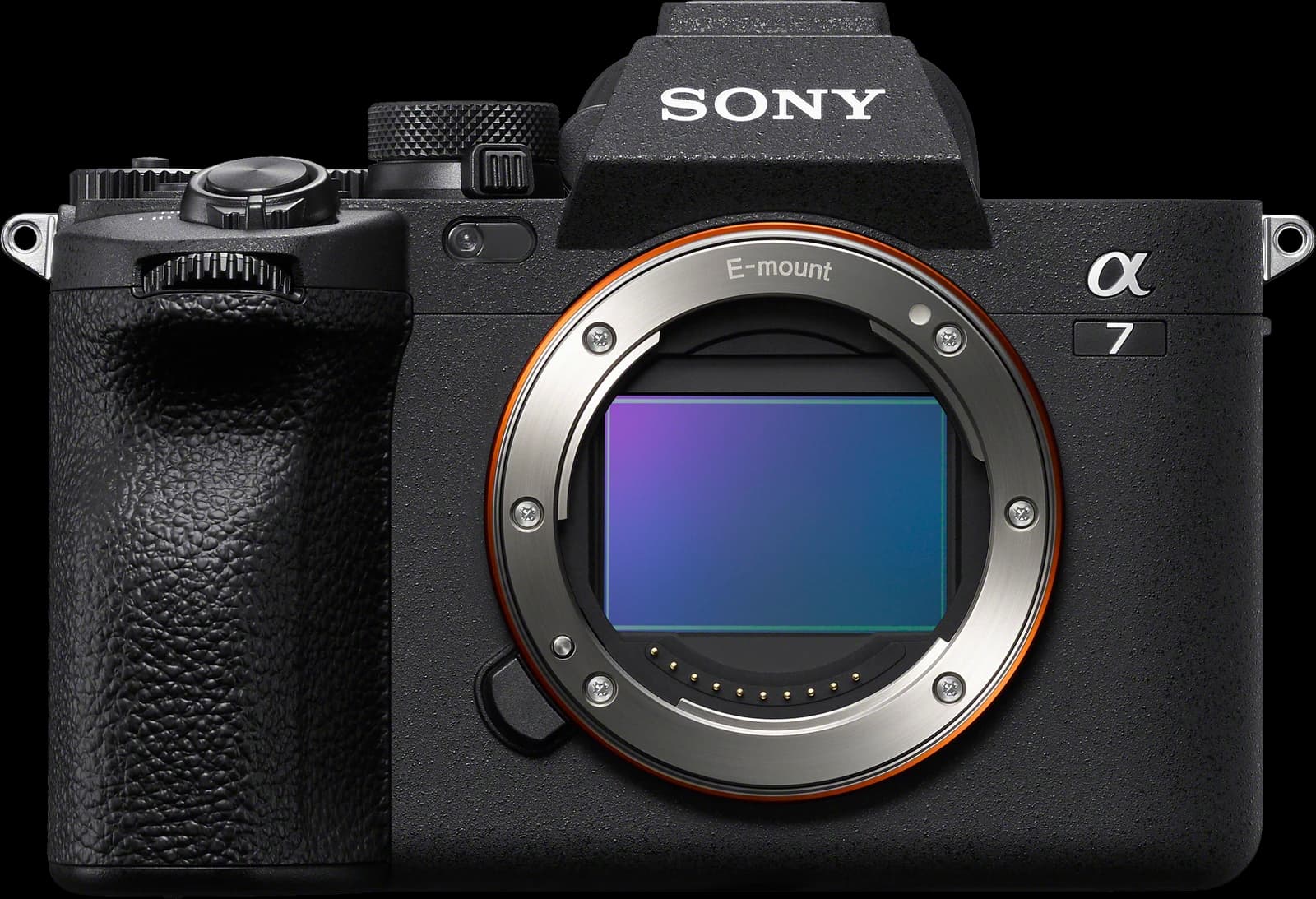
Review: Sony α7 IV – Still the Right Choice in 2026?
Full-frame all-rounder still relevant used for weddings, portraits and occasional video. New, 2023-2024 rivals offer more for the same budget.
Read the review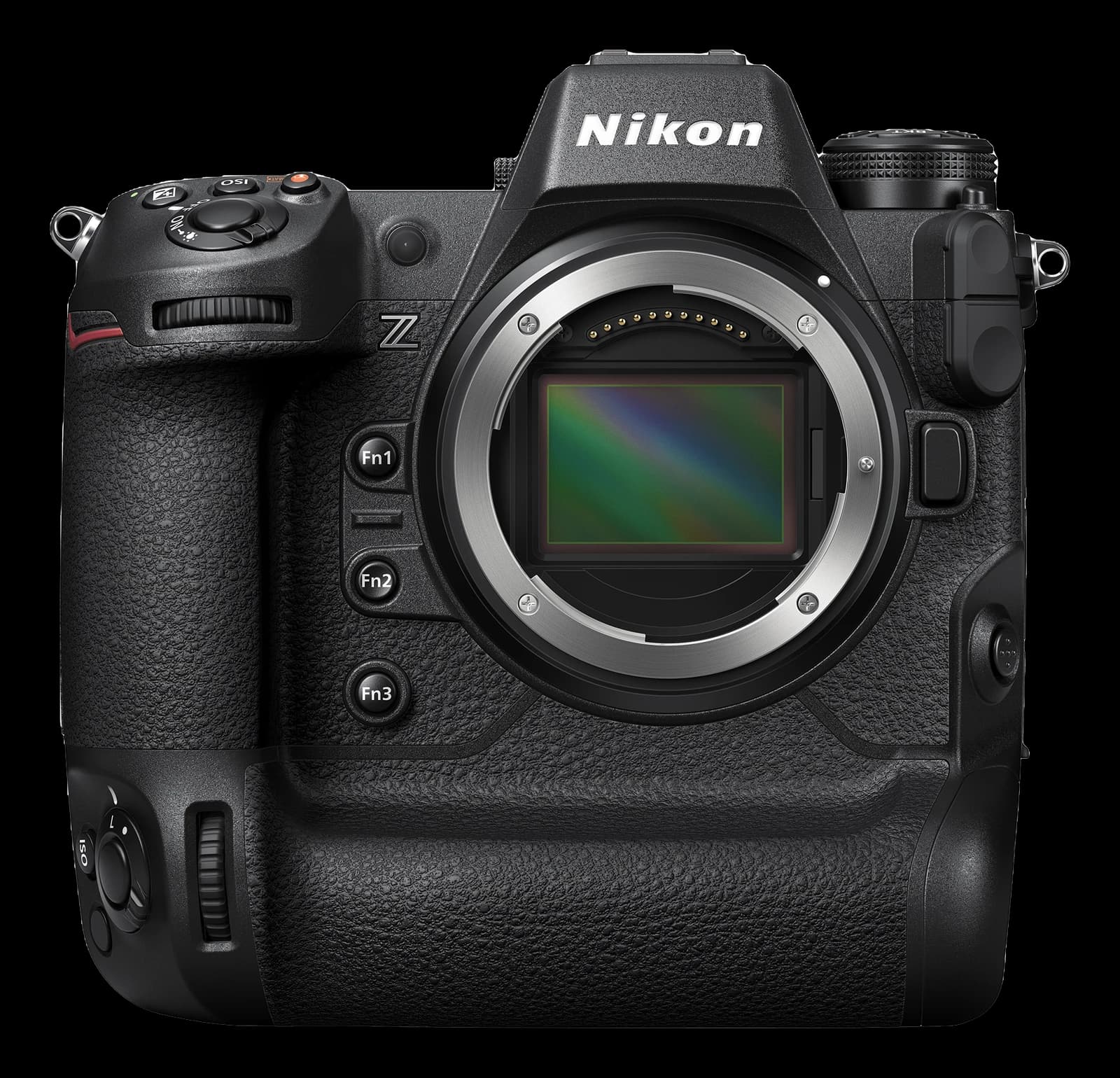
Nikon Z9 Review: Is the Nikon Flagship Still at the Top?
The Nikon Z9 remains a benchmark for professional sport and reportage thanks to its -8.5 EV AF and 1000 RAW buffer, yet the Z8 delivers the essentials for 1999 USD less.
Read the review