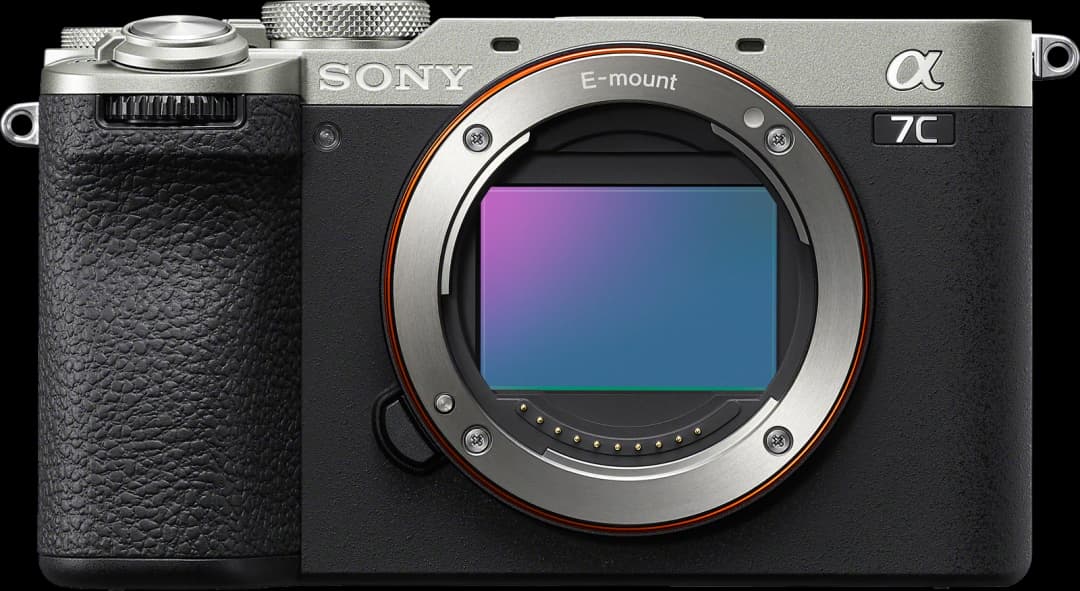
Sony
α7C II
2023
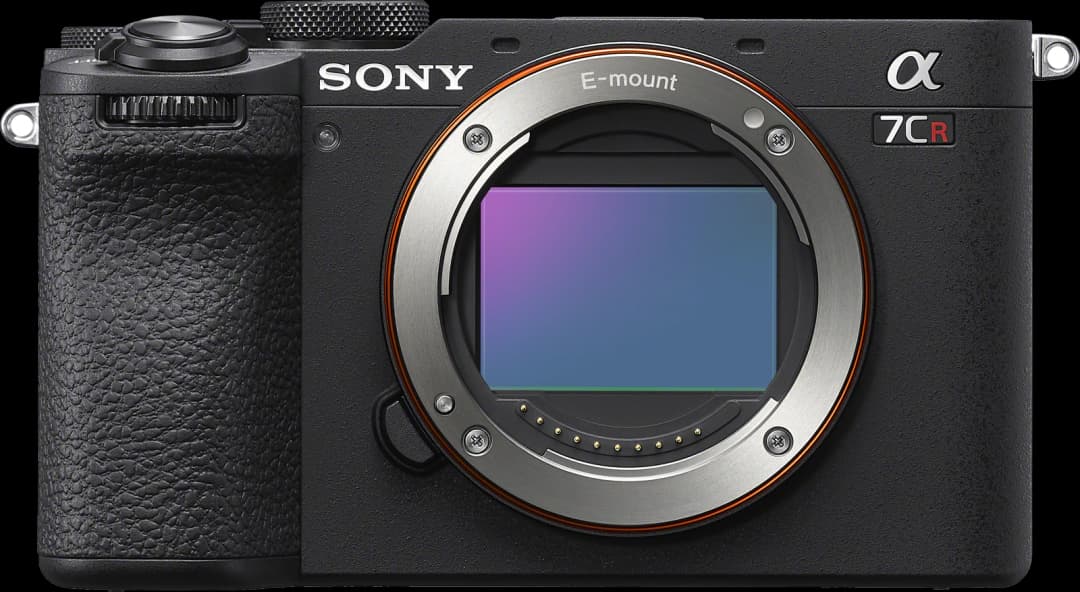
Sony
α7CR
2023
Sony α7C II vs Sony α7CR: Versatile 33 MP or Specialised 61 MP?
Visual summary
— Reads in 5 seconds
Sony
α7C II
Sony
α7CR
Where to buy
— Live merchant price comparator
Sony α7CR

Sony Unisex a7CR Mirrorless Camera Body in Silver in Black - P-9df78474-0a4f-481a-8e9d-890cccf69e90
2 599 GBP · Sony UK
You'll find the best prices on the market here, updated daily — and by going through these partner links, you support Camera Duel without paying a cent more.
The arbitration in brief
Choose the α7C II for video and everyday versatility, the α7CR if large-format prints and RAW dynamic range are your absolute priorities.
Sony released these two bodies in 2023 as a clear bifurcation within the α7C lineup. The α7C II is the direct successor to the original α7C: it offers 33 MP, integrates the BIONZ XR processor, and inherits the AI-based AF from the α7 IV series. The α7CR, on the other hand, is not a successor but a high-resolution derivative: it packs the 61 MP sensor from the α7R V into the same compact chassis as the α7C II.
The two bodies share an identical size (124 × 71 × 63 mm, 514 g vs 515 g), the same Sony E mount, the same weather sealing, and the same 7-stop IBIS. On paper, they seem almost interchangeable. In practice, their sensors steer them towards very different uses.
The α7C II launched at 2 200 USD. The α7CR starts at 3 000 USD (or 3 700 EUR). The 800 USD gap is substantial for two bodies from the same family.
This comparison settles a concrete buying decision: does the α7CR's extra resolution justify its price and concessions in burst speed and native sensitivity? Or does the α7C II offer better balance for a hybrid photographer who shoots both travel and video? You'll find a clear answer here, spec by spec, use by use.
Standout strengths
— Where each camera shines
Sony
α7C II
Top advantages
- 204 800Extended ISO max2× vs Sony α7CR
- 51 200Native ISO max1,6× vs Sony α7CR
- 10 fpsMechanical burst+25 % vs Sony α7CR
- 10 fpsElectronic burst+25 % vs Sony α7CR
Sony
α7CR
Top advantages
- 61 MPMegapixels1,8× vs Sony α7C II
- 76RAW buffer1,7× vs Sony α7C II
- 14.4 EVDynamic range (EV)+23 % vs Sony α7C II
Detailed spec-by-spec
— Round by round, the eight categories
Sensor
Autofocus
Speed & burst
Video
Stabilisation
Build
Ergonomics & screen
Connectivity & battery
Detailed analysis analysis
— Strengths, trade-offs and ideal user
Sony α7C II: what it does well, what it concedes
The α7C II is built around a BSI-CMOS 33 MP sensor with native sensitivity up to ISO 51 200 and expansion to ISO 204 800. DXOMark measures these values at 11.7 EV dynamic range at base ISO 100. For a photographer who often works in constrained light—indoors, evenings, or overcast Breton skies—this sensor offers significantly more headroom for pushing ISO than the α7CR. The gap between native ISO 51 200 and ISO 32 000 is not trivial: it equates to about two-thirds of a stop margin before switching to extended mode with the resulting signal degradation.
On speed, the α7C II manages 10 fps in mechanical and electronic burst. The RAW buffer stops at 44 images, sufficient for dynamic portraits or reportage but limited for prolonged sports. AF covers 94 % of the sensor with 759 points, vs 693 points and 93 % for the α7CR. The difference is small, but the edge is real.
The α7C II's strengths boil down to this:
- Native ISO 51 200, or +0.67 EV extra margin over the α7CR.
- 10 fps mechanical and electronic, vs 8 fps for the α7CR.
- 759 AF points with 94 % sensor coverage.
- Full HDMI output, a real advantage for video monitoring on set.
In video, the α7C II scores another point: it offers built-in waveform and vectorscope, where the α7CR sticks to histogram and zebras. For solo shooting without an external monitor, that's a direct operational win. Recording is unlimited on both bodies, 4K is oversampled from the full sensor, and both support S-Log3 and 10-bit H.265. The α7C II's main concession remains the lack of dual card slots: just one SD UHS-II slot, no redundancy. For professional use where data loss is unacceptable, that's a deal-breaker not to downplay.
For whom
The α7C II suits the hybrid photographer who alternates photo and video without specialising in either. Typical profile: traveller documenting trips in photo and video, portrait photographer in studio or natural light, independent videographer who edits solo and values built-in monitoring tools. They accept 33 MP as sufficient resolution for prints up to 60 × 90 cm without aggressive cropping. They shoot often in tough light and prefer high native sensitivity over maximum resolution. Budget around 2 200 USD, valuing versatility-to-price ratio.
Sony α7CR: what it does well, what it concedes
The α7CR packs the BSI-CMOS 61 MP sensor from the α7R V into a chassis almost identical to the α7C II. That's its core value proposition: high-end resolution in a compact format. DXOMark measures its dynamic range at 14.4 EV at base ISO 100, vs 11.7 EV for the α7C II. This 2.7 EV gap is considerable. It translates to markedly superior detail recovery in highlights and shadows in post-production—a decisive edge for high-contrast landscapes or mixed-light portraits.
The pixel density's downside is immediate: native sensitivity tops out at ISO 32 000, vs ISO 51 200 for the α7C II. In low light, the α7CR produces more noise at equivalent sensitivity. Burst is capped at 8 fps mechanical and electronic. However, the RAW buffer reaches 76 images vs 44 for the α7C II, partially offsetting the slower rate for long sequences.
The α7CR's strengths boil down to this:
- 61 MP for prints up to 100 × 150 cm without interpolation.
- 14.4 EV measured dynamic range, or +2.7 EV over the α7C II.
- 76 RAW buffer images, vs 44 for the α7C II.
- Massive cropping possible in post: a 30 MP crop remains usable.
Two concessions deserve clear mention. First, the α7CR has a Micro HDMI port where the α7C II offers Full HDMI. For a videographer regularly connecting an external monitor, Micro HDMI cables are fragile and adapters add failure points. Second, video monitoring tools are less complete: no waveform or vectorscope. The α7CR is a photo body that does video, not the other way around. Its video score of 7.5 vs 7.7 for the α7C II reflects this balance.
For whom
The α7CR targets the specialist photographer who prioritises resolution and RAW dynamic range. Typical profile: landscape photographer printing large or selling stock, portraitist delivering files with high retouch potential, travel photographer cropping aggressively to make up for lacking telephoto. They accept 8 fps and lower native sensitivity for maximum image quality in good or controlled light. Budget over 3 000 USD, viewing resolution as an investment, not a luxury.
Our verdict
Which one to buy, and why
The choice between these two bodies comes down to one precise question: do you mainly shoot in controlled natural light with a need for large-format prints, or do you alternate varied conditions with significant video work?
If you shoot landscapes, studio portraits, or architecture, the α7CR wins. 14.4 EV measured dynamic range vs 11.7 EV shows up in post-production, not just datasheets. The 61 MP allows cropping to 30 MP while keeping a usable image for printing. The 76 RAW image buffer offsets the 8 fps rate. For these uses, the 800 USD gap is justified.
If you alternate photo and video, work in tough light, or want an all-terrain versatile body, the α7C II is the better choice. It offers:
- Native ISO 51 200 for low light, vs ISO 32 000 for the α7CR.
- 10 fps mechanical and electronic burst, vs 8 fps.
- Full HDMI and built-in waveform, two real advantages for shooting video.
- 2 200 USD at launch, or 800 USD less.
Two deal-breakers to note before buying. The α7CR's Micro HDMI is a hard concession for regular video use: cables are fragile, connectors wear out. If you connect an external monitor several times a week, that alone can decide it. The lack of dual slots on both bodies is a shared limit: neither suits professional use where redundancy is mandatory.
On the 2026 used market, both bodies have depreciated since launch. The α7C II is often found between 1 500 and 1 700 USD in excellent condition. The α7CR rarely dips below 2 200 USD used, narrowing but not erasing the gap. My verdict is clear: buy the α7C II unless you specifically need 61 MP. Its versatility, native sensitivity, and video tools make it the best body for most people. The α7CR is excellent, but specialised. Buy it only if resolution and RAW dynamic range are non-negotiable in your daily work.
Frequently asked questions
Before you buy, the questions we get
Which to choose for wedding photography?
The α7C II is better suited for weddings. Indoor ceremonies and evening receptions demand reliable high ISO: native ISO 51 200 vs ISO 32 000 for the α7CR. The 10 fps vs 8 fps burst also gives more margin on decisive moments. The α7CR can work for a wedding photographer using only natural light or flash, but its lower native ISO ceiling is a real concession in tough conditions. The lack of dual slots on both bodies remains a concern for pro use.
Does the 800 USD gap between the two bodies justify itself?
It depends on your use, but the answer is clear: no, unless you specifically need high resolution or maximum RAW dynamic range. The α7CR offers 61 MP vs 33 MP and 14.4 EV dynamic range vs 11.7 EV. These are measurable advantages. But the α7C II is superior in native sensitivity, burst, and video. For a versatile photographer, paying 800 USD more for features you won't use daily isn't rational. On the 2026 used market, the gap narrows, but the α7C II remains the better value of the two.
Is the α7CR really usable for video despite its Micro HDMI port?
Technically, yes. The α7CR records oversampled 4K, 10-bit, with S-Log3 and unlimited recording. Video specs are solid. But the Micro HDMI port is a real operational constraint: connectors are fragile, quality cables less common, and adapters add failure points in the field. The α7C II offers more robust Full HDMI plus built-in waveform and vectorscope. For regular video with external monitor, the α7C II is clearly preferable.
Which body will age better in the Sony lineup?
Both bodies launched in 2023 and share the same Sony software platform. Sony firmware updates have historically improved AF and added video features to this generation. The α7C II has a more central position in the lineup: direct successor to the original α7C, targeting the widest audience. The α7CR is a specialised derivative with a narrower market. In terms of support and perceived longevity, the α7C II likely has a broader user base, favouring community resources and third-party accessories. No data suggests a direct successor is imminent for either.
Are the α7CR's 61 MP useful if I don't print large?
Less than it seems. If your output is mainly digital (web, social, 4K screens), 33 MP is plenty. The 61 MP bring two concrete benefits even without large prints: post-production cropping latitude and 14.4 EV measured RAW dynamic range. Cropping helps if you often use primes and lack distance. Dynamic range aids any photographer recovering highlights or shadows in post. If these don't match your work, the α7C II's 33 MP suffice and you save 800 USD.