SigmaSony E
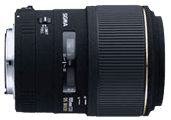
105mmf/2.8.
- Macro 1.00×
Optical
9,7
—
Filter 360+ lenses by mount, focal range, aperture and use case. Select up to 4 models to compare side by side.
Before comparing optical figures, three filters eliminate the vast majority of poor purchases. Answering these three questions in order reduces the catalogue to around ten relevant candidates.
The mount is the physical and electronic constraint that connects the lens to the body. A Sony FE lens does not mount natively on a Canon RF body. This criterion alone eliminates 80 % of the catalogue. Identify your mount on the lens mount or in the manufacturer documentation.
The main current mounts are Sony E (FE for full frame), Canon RF, Nikon Z, Fujifilm X, Micro 4/3. If you own an older Canon EF or Nikon F DSLR, adapters exist: Canon's EF to RF adapter maintains all AF and IS functions.
Nikon's FTZ adapter preserves AF on AF-S and AF-P lenses, but not on older screw-drive AF-D lenses. Used native-mount lenses often remain more attractive than a new lens with an adapter.
Focal length and aperture follow directly from the use.
Video adds a criterion: focal breathing, the change in field of view during focusing, must be minimal. Macro requires a reproduction ratio of 1:1 minimum. Defining a primary use before any other criterion avoids buying a lens that is mediocre in every domain.
The sweet spot for most amateur photographers lies between 500 € and 1 500 €. Below 500 €, optical compromises are real but acceptable for learning. Above 2 500 €, gains are measurable but marginal for non-professional use. Weight is an underestimated criterion.
A 3 kg telephoto on a tripod in the studio poses no problem. Carried at arm's length during an eight-hour travel reportage, it determines how many photos are actually taken.
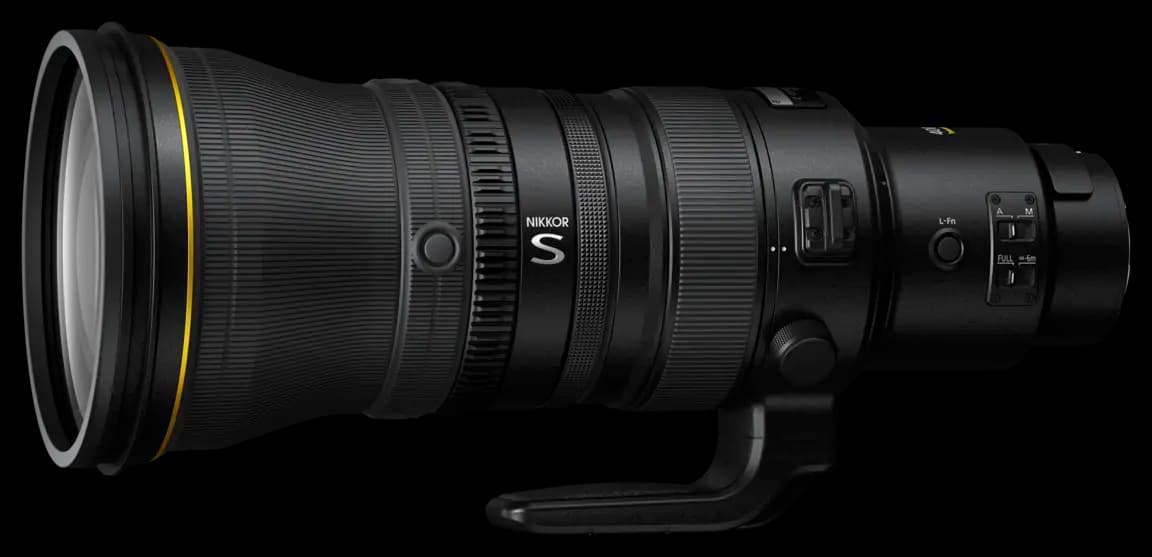
The Nikon NIKKOR Z 400mm f/2.8 TC VR S weighs 3 435 g: relevant for an accredited sports photographer, prohibitive for occasional use. Assess the weight carried daily before validating a purchase.
Each family meets different optical and usage constraints. Knowing their strengths and limits prevents buying a zoom when a prime suffices, or a prime when versatility is essential. Here are the four families to know.
A prime lens has only one focal length. This mechanical constraint simplifies the optical design: fewer elements, fewer compromises. Result: generally superior image quality at an equivalent focal length on a zoom, and a larger maximum aperture.
A 50 mm f/1.4 prime transmits twice as much light as a 24-70 mm f/2.8 zoom at the same focal length. Primes are the preferred choice for portraiture, low-light reportage and street photography. Their limit is obvious: frame with your feet.
On a fast-moving subject or in a constrained space, the absence of zoom becomes a real hindrance. Lightweight primes, such as a 35 mm or 50 mm f/1.8, remain the lenses most carried daily by experienced photographers.
The standard zoom covers the 24-70 mm range on full frame, equivalent to 16-50 mm on APS-C. It meets the majority of situations: environmental portraiture, interior architecture, event reportage, family.
A constant f/2.8 zoom across the range, such as the Nikon NIKKOR Z 24-70mm f/2.8 S II (optical score 8.7), offers real versatility without sacrificing brightness.
Variable-aperture zooms (f/3.5-5.6) are lighter and less expensive, but the aperture closes as you zoom: at 70 mm you lose one to two stops compared with the short end. This behaviour is a deal-breaker indoors without flash.
The trans-standard zoom covers 18-135 mm or 18-300 mm: practical for travel, but optical compromises at the extremes are measurable.
Telephoto lenses cover focal lengths above 135 mm. They mainly serve sport, wildlife, aviation and stage photography. The long focal length compresses perspective and isolates the subject against a blurred background even at f/5.6.
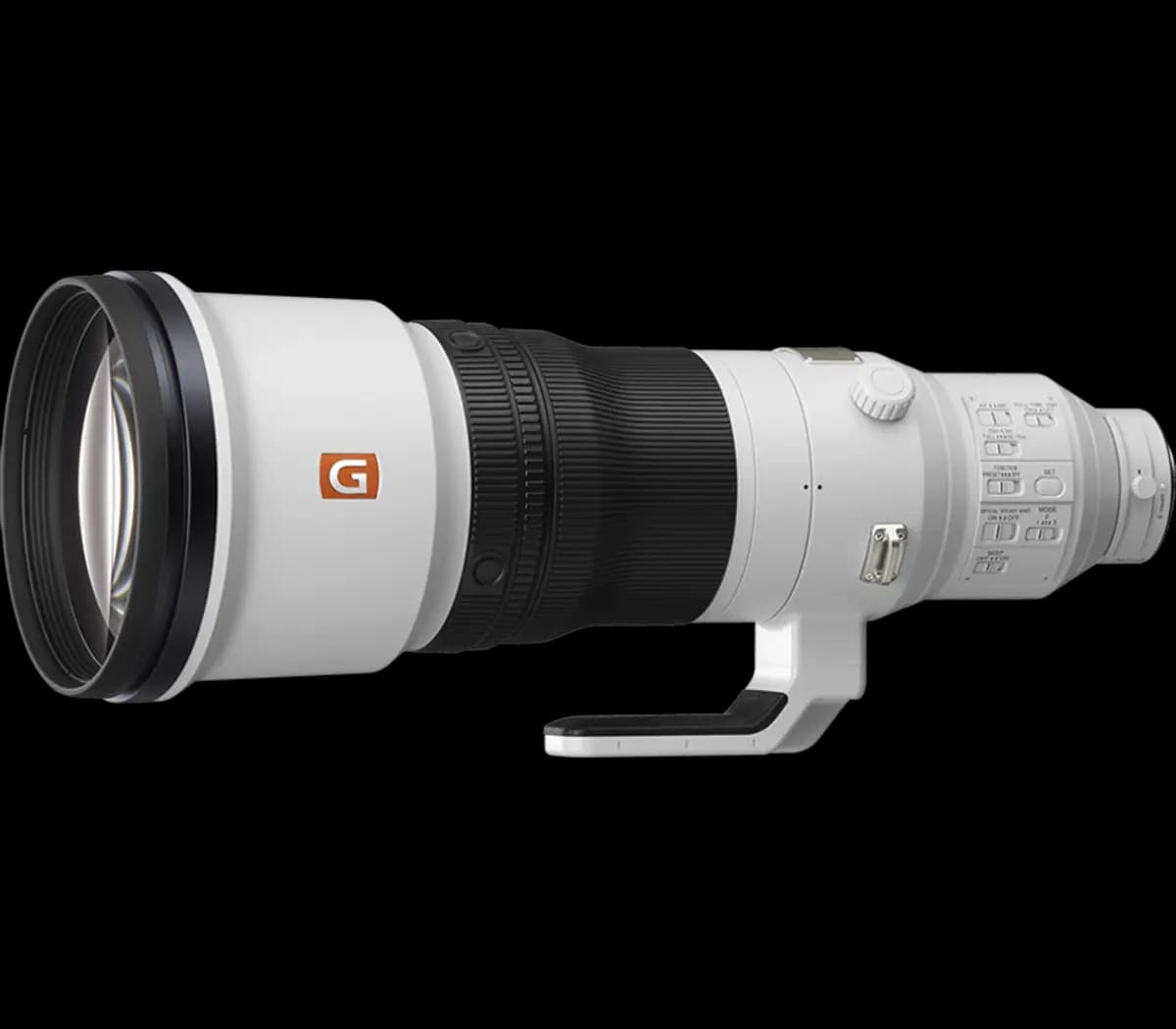
Super-telephotos beyond 400 mm are reserved for very specific uses: birds in flight, motor sport, wildlife at long distance. Their weight often exceeds 2 kg and their price regularly exceeds 10 000 €.
A true macro lens displays a reproduction ratio of 1:1: the subject is reproduced at life size on the sensor.
They serve architecture, interiors and landscape. Barrel distortion is their main drawback, often corrected in post-processing. The fisheye produces intentional spherical distortion over 180° of field: creative and niche use.
Tilt-shift allows control of the plane of focus and perspective without digital cropping: indispensable in professional architectural photography, anecdotal elsewhere. These specialised lenses are purchased only after identifying a precise and recurring need.
Specification sheets list dozens of figures. Five of them have a direct impact on your images. The others are often marketing arguments without measurable photographic translation. Here is how to read a specification sheet without drowning.
Expressed in f/stop: f/1.2, f/1.4, f/1.8, f/2.8. Each stop represents a factor of 2 in transmitted light.
An f/1.4 transmits twice as much light as an f/2. It allows a shutter speed twice as fast at the same ISO, or an ISO twice as low at the same shutter speed. It also produces more pronounced bokeh at an equivalent focus distance.
f/1.8 is the sweet spot for the majority of portrait and reportage uses. Below f/1.4, depth of field becomes so shallow that an approximate focus misses the subject's eye. Beyond f/4, brightness becomes a hindrance indoors.
The focal length engraved on the lens is the actual focal length. On an APS-C sensor, multiply by the crop factor: 1.5x for Nikon and Sony, 1.6x for Canon, 2x for Micro 4/3.
A 50 mm on APS-C Fujifilm (1.5x factor) equates to 75 mm in full frame: angle of view close to a short portrait. A 45 mm f/1.2 on Micro 4/3 (2x factor) equates to 90 mm in full frame with depth of field equivalent to f/2.4.
Always reason in full-frame equivalent to compare lenses across systems. An 85 mm f/1.8 on Sony FE full frame is not interchangeable with an 85 mm f/1.8 on Fujifilm X APS-C.
OIS (Optical Image Stabilization) is integrated in the lens. IBIS (In-Body Image Stabilization) is in the body. Combined OIS + IBIS stabilisation can reach 7 to 8 stops of compensation depending on the manufacturer.
Without stabilisation, the empirical rule sets the minimum shutter speed at 1/focal length second: 1/85 s for an 85 mm. With 5 stops of OIS, you can theoretically descend to 1/3 s handheld. In practice, 3 stops are reliable on a static subject.
OIS is indispensable on telephotos beyond 200 mm. On short focal lengths below 35 mm, the body's IBIS is generally sufficient. Do not pay the OIS premium on a 35 mm if your body has IBIS.
STM (Canon): stepping motor, silent, continuous. USM (Canon): ultrasonic, fast. VXD (Tamron): linear, very fast and silent. XD Linear (Sigma): linear. SWM (Nikon): ultrasonic.
A noisy AF motor is a deal-breaker in video: the built-in microphone picks up focus noise. A slow motor misses fast-moving subjects.
Focal breathing, often linked to AF design, is measurable in video: a visible field change during focusing ruins a take.
Prefer a linear or ultrasonic motor for video and sport. Canon's STM is acceptable in video. Avoid screw-drive motors on older adapted DSLR lenses: they are slow and noisy.
Expressed in grams in manufacturer sheets. Filter diameter determines accessory cost.
A 1 500 g lens carried during an eight-hour trek represents real muscular fatigue. Weight determines the number of photos taken and regularity of use. A light lens used every day produces more images than a heavy lens taken out twice a year.
Weight is the most underestimated criterion by buyers. Always compare the weight of the lens with that of the body. A body + lens combination exceeding 2 kg requires specific motivation to take out daily.
Each use calls for a different focal length-aperture combination. The recommendations below are drawn from the optical scores in the Camera Duel database, cross-referenced with the practical constraints of each discipline.
| Use case | Recommended | Alternative | Why |
|---|---|---|---|
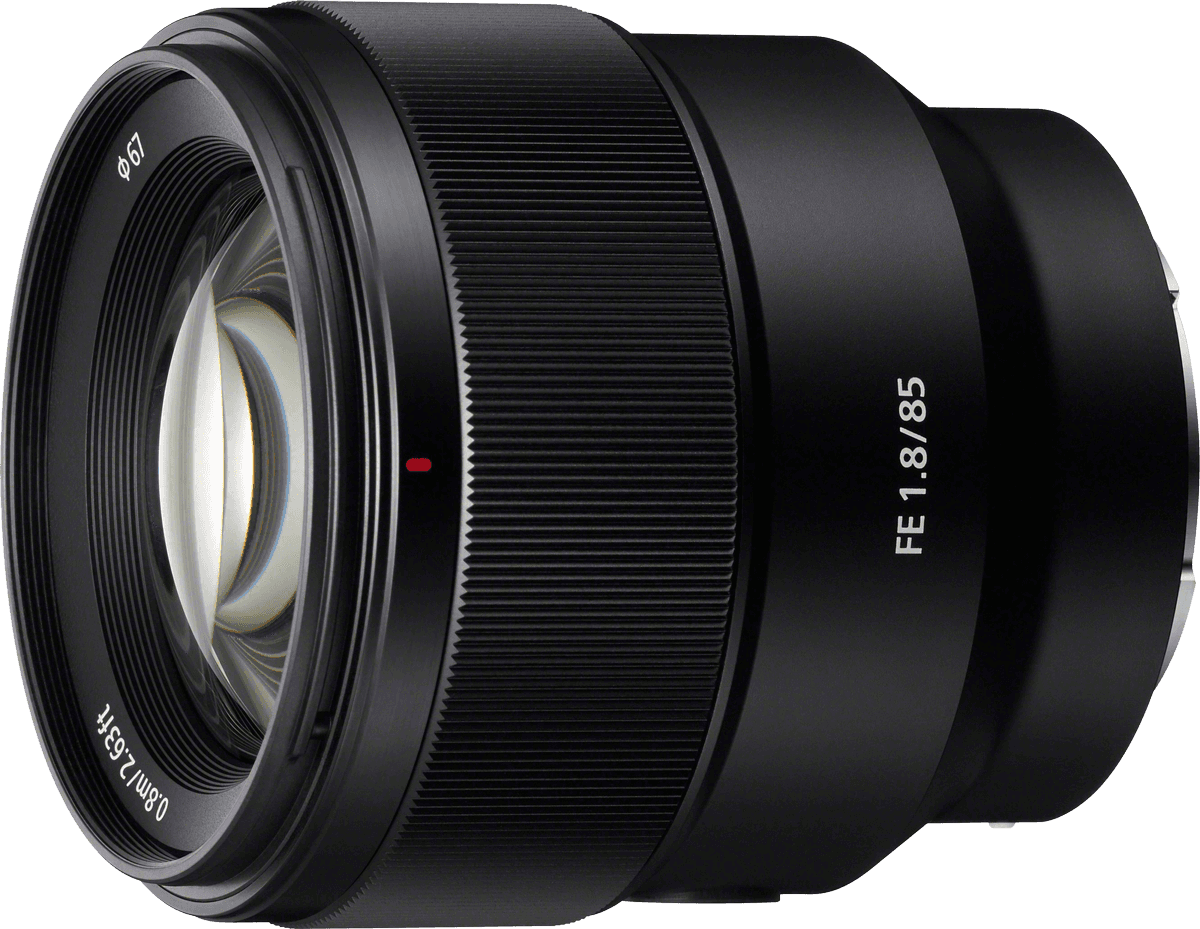
| Portrait | Nikon Nikkor Z 85mm F 1 2 S | Canon RF 85mm F1 2L USM | The Nikon NIKKOR Z 85mm f/1.2 S (optical score 8.7, 3 099 €) combines the classic portrait focal length with an f/1.2 aperture that produces immediate subject-background separation. Focusing is fast and silent. The Canon RF 85mm F1.2L USM (score 8.7, 3 299 €) offers comparable performance on RF mount. For a tighter budget, the Sony FE 85mm f/1.8 (score 9.4) remains an optical reference at contained price. |
| Landscape | Fujifilm XF 18mm F 1 4 R LM WR | Sigma 35mm F1 2 DG DN ART 019 | The Fujifilm XF 18mm F1.4 R LM WR (optical score 8.7, 999 €) equates to 27 mm in full frame on Fujifilm APS-C sensor. It covers a wide angle of view suited to landscape with an f/1.4 aperture useful at sunrise and sunset. The Sigma 35mm F1.2 DG DN Art 019 (score 8.6) offers a more versatile alternative on Sony E or L mount with a slightly tighter angle. |
| Sport | Nikon Nikkor Z 70 200mm F 2 8 VR S II | Sigma 70 200mm F 2 8 DG DN OS Sports | The Nikon NIKKOR Z 70-200mm f/2.8 VR S II (optical score 8.7, 3 099 €) covers the focal range essential for sport with a constant f/2.8 aperture. VR stabilisation combined with Z-body IBIS allows high shutter speeds even in artificial light. The Sigma 70-200mm F2.8 DG DN OS Sports (score 8.7, 1 599 €) offers close performance at a significantly lower price on Sony E or L mount. |
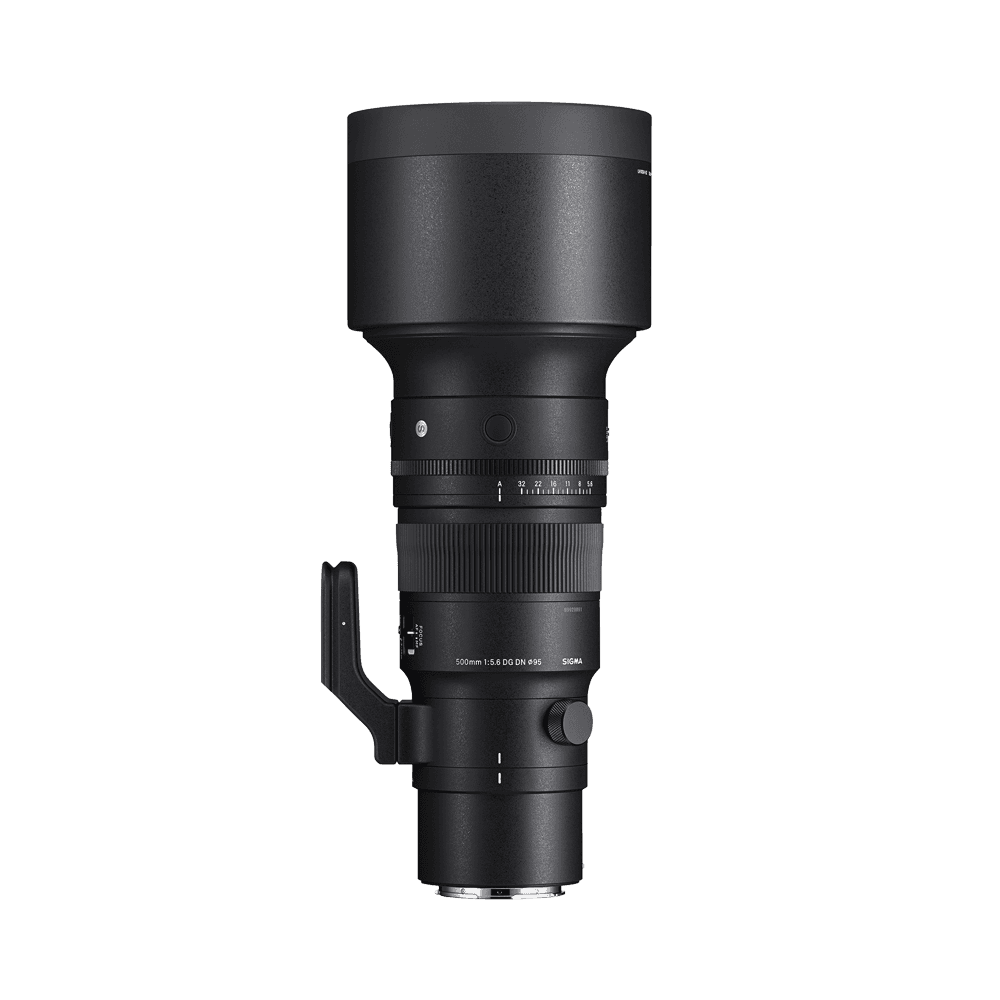
| Wildlife | Nikon Nikkor Z 400mm F 2 8 TC VR S | Sigma 500mm F 5 6 DG DN OS Sports | The Nikon NIKKOR Z 400mm f/2.8 TC VR S (optical score 9.4, 13 999 €) integrates a 1.4x internal teleconverter bringing the focal length to 560 mm f/4. It is the most complete solution for professional wildlife. For an accessible budget, the Sigma 500mm F5.6 DG DN OS Sports (score 9.2, 3 499 €) offers remarkable optical quality with a contained weight of 1 565 g, i.e. half the weight of f/4 super-telephotos. |
| Travel | Fujifilm XF 23mm F 2 8 R WR | Panasonic Lumix G 42 5MM F 1 7 | The Fujifilm XF 23mm F2.8 R WR (optical score 7.0, 499 €) equates to 35 mm in full frame on Fujifilm APS-C. Compact, weather-sealed, it slips into any bag. The Panasonic Lumix G 42.5mm f/1.7 (score 8.6) on Micro 4/3 equates to 85 mm in full frame: ideal for travel portraits with minimal weight. Both Fujifilm X and Micro 4/3 systems are best suited to travel thanks to their overall compactness. |
| Macro | Tamron SP AF 90mm F 2 8 DI Macro 1 1 | Sigma 105mm F2 8 DG DN Macro ART 020 | The Tamron SP AF 90mm f/2.8 Di Macro 1:1 (optical score 8.7) is a historical reference for affordable macro with a 1:1 reproduction ratio and comfortable working distance at 90 mm. The Sigma 105mm F2.8 DG DN MACRO Art 020 (score 9.7) is the current reference on Sony E and L mounts: it displays the highest optical score in the Camera Duel catalogue with exceptional measured sharpness. |
| Video | Nikon Nikkor Z 24 70mm F 2 8 S II | Sigma 70 200mm F 2 8 DG DN OS Sports | The Nikon NIKKOR Z 24-70mm f/2.8 S II (optical score 8.7, 2 699 €) covers the most useful range in narrative video with minimal focal breathing and a silent AF motor. The constant f/2.8 aperture maintains exposure during zooms within a take. The Sigma 70-200mm F2.8 DG DN OS Sports (1 599 €) completes the kit for tight shots and remote interviews. |
| Street | Sigma 40mm F1 4 DG HSM ART 018 | Voigtlander 35mm F 2 APO Lanthar II Asph Z | The Sigma 40mm F1.4 DG HSM Art 018 (optical score 9.0) offers a slightly wider angle of view than the classic 50 mm, suited to street photography on full frame. The f/1.4 aperture allows a high shutter speed in nocturnal urban light. The Voigtländer APO-Lanthar 35mm f/2 ASPH. II Z-mount (score 8.7, 1 199 €) is more compact and offers very high measured optical quality for a manual lens. |
Budget determines acceptable compromises. Here are four brackets with concrete recommendations from the Camera Duel catalogue, without lenses outside the bracket.
In this bracket, prefer a prime over a zoom: optical quality is systematically superior at equal budget.
Allow 30 to 60 € for a compatible lens hood (often sold separately). A protective UV filter costs 20 to 50 € depending on diameter. A soft protective pouch adds 15 to 30 €. Total accessories: 65 to 140 € to include in the budget.
Between 500 € and 1 000 €, optical quality progresses significantly. The Voigtländer APO-Lanthar 35mm f/2 ASPH. M-mount (optical score 8.7, 999 €) is a measured optical reference for Leica M and compatible bodies.
In this bracket, third-party Tamron and Sigma lenses often offer better value than equivalent manufacturer references.
A quality circular polarising filter costs 50 to 120 € depending on diameter. A photo bag suited to the new lens represents 80 to 200 €. Allow 30 to 80 € for an original lens hood if not supplied.
Between 1 000 € and 2 500 €, lenses reach measured performance close to high-end manufacturer references. The Zeiss E 85mm f/1.8 (optical score 9.0, 1 008 €) displays measured optical quality among the best in the catalogue on Sony E mount. The Voigtländer APO-Lanthar 35mm f/2 ASPH.
II Z-mount (score 8.7, 1 199 €) is the manual reference on Nikon Z.
In this bracket, certified used equipment allows access to lenses normally above 2 500 €.
Photo equipment insurance costs 80 to 200 € per year and becomes relevant from 1 500 € of investment. A compatible teleconverter adds 300 to 500 € if you wish to extend focal range. Allow for a variable ND filter at 80 to 150 € if using the lens for video.
Beyond 2 500 €, lenses reach the physical limits of current optical design.
In this bracket, used purchases are risky without warranty: prefer authorised dealers.
A tripod and head suited to a super-telephoto cost 400 to 1 500 €. A professional carbon monopod adds 200 to 600 €. Equipment insurance becomes mandatory: count 300 to 600 € per year for a set at 10 000 € and above.
Each mount has its own ecosystem, strengths and gaps. The recommendations below identify the first lens to acquire by mount, with a note on adapter compatibility. The native ecosystem remains always preferable to adaptation.
The Sony E mount is the widest on the current full-frame market with an internal diameter of 46 mm and a flange focal distance of 18 mm. This space allows optical designs with large apertures impossible on older DSLR mounts.
The E mount also accepts A-mount lenses via the LA-EA5 adapter with fully functional AF.
The native Sony E ecosystem is rich enough not to require adapters. The LA-EA5 adapter allows use of older Sony A-mount lenses with active AF. Third-party adapters for Canon EF or Nikon F lenses work in manual focus only.
The Canon RF mount displays an internal diameter of 54 mm and a flange focal distance of 20 mm, the same dimensions as the Sony E mount. Canon has built a fast RF ecosystem with lenses integrating unprecedented functions such as the DS (Defocus Smoothing) filter on the Canon RF 85mm f/1.2 L USM DS (score 8.7, 3 699 €).
For RF APS-C bodies, RF-S lenses complete the offer at accessible prices. Compatibility with EF lenses via the EF-EOS R adapter is total: AF, IS and all electronic functions are preserved.
Canon's EF-EOS R adapter is compatible with all EF and EF-S lenses. All AF, IS and electronic communication functions are maintained. The used EF catalogue is vast and accessible: an EF 85mm f/1.4L IS USM can be found between 1 200 € and 1 600 € in certified used condition.
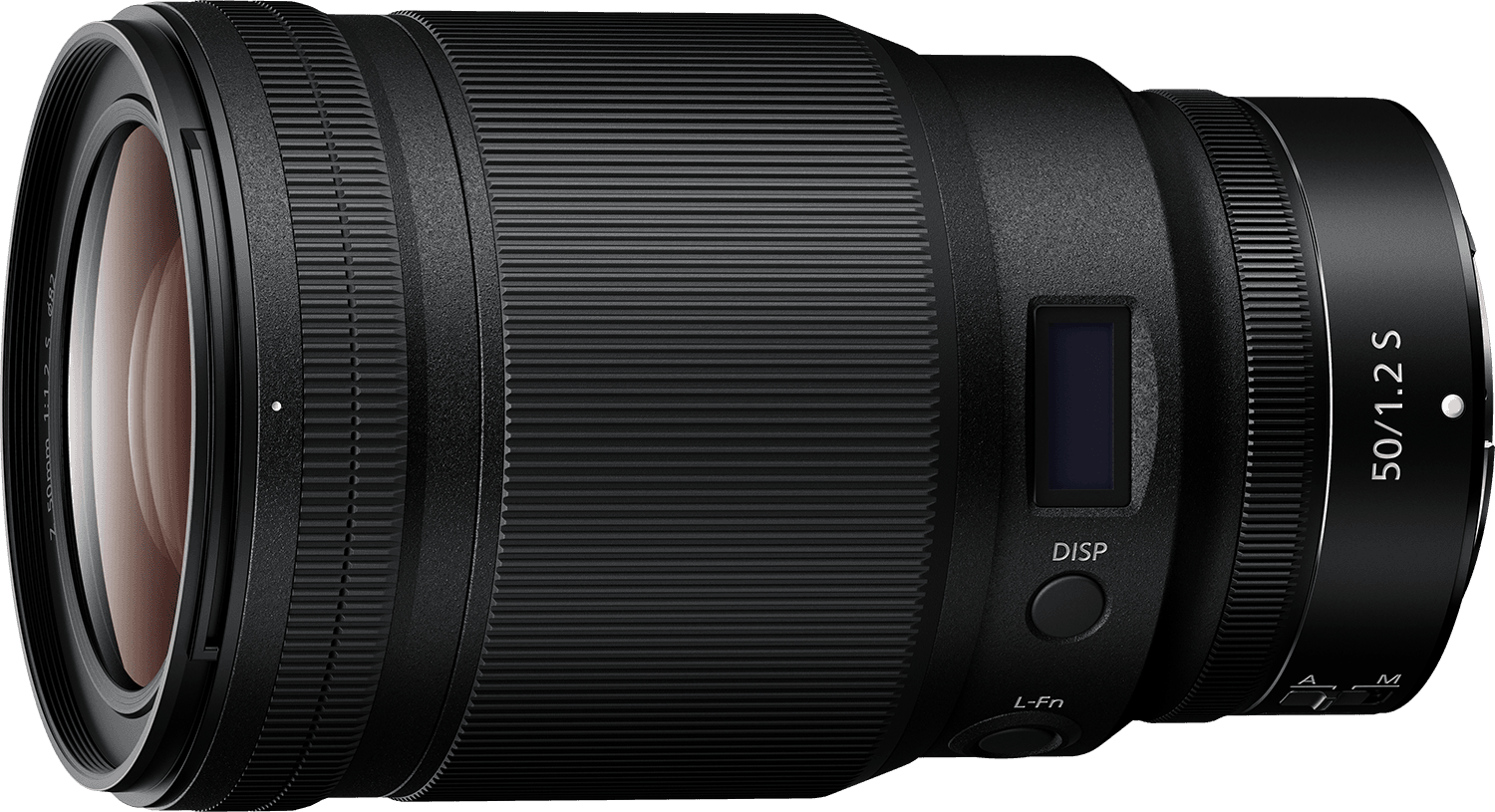
The Nikon Z mount has the largest internal diameter on the full-frame market: 55 mm for a flange focal distance of 16 mm. This space has allowed Nikon to design lenses with very large apertures such as the NIKKOR Z 58mm f/0.95 S Noct (score 8.2, 8 999 €) and the NIKKOR Z 50mm f/1.2 S (score 9.2, 2 599 €).
The Z ecosystem has expanded considerably since 2018 and now covers all common uses. The NIKKOR Z 35mm f/1.2 S (score 8.7, 2 799 €) completes the range of bright primes.
Nikon's FTZ II adapter maintains AF on all AF-S and AF-P Nikkor lenses. Screw-drive AF-D lenses do not benefit from AF: they work only in manual focus. The used F catalogue is one of the richest on the DSLR market, with quality lenses available at contained prices.
The XC range offers lighter and less expensive alternatives for tighter budgets.
Fujifilm M-mount and Leica R adapters allow use of vintage manual lenses. Third-party adapters for Canon EF lenses work without AF. The native XF ecosystem is complete enough not to require adaptation for everyday use.
The Micro 4/3 mount is shared between OM System (ex-Olympus) and Panasonic Lumix.
Cross-compatibility between OM System and Panasonic lenses is total, with some AF limitations on Panasonic DFD lenses on OM bodies.
Four Thirds lenses (older Olympus DSLR mount) are compatible via the MMF-3 adapter, but AF is slow on recent bodies. Adapters for M42 or Leica R lenses allow manual use of vintage lenses. The native Micro 4/3 ecosystem counts more than 100 lenses between OM System, Panasonic and third parties.
The kit lens supplied with a body, whether an 18-55 mm f/3.5-5.6, a 16-50 mm f/3.5-5.6 or a 24-105 mm f/4-7.1, is designed to minimise bundle cost, not to maximise optical quality. These lenses systematically use a variable aperture: at the long end, the aperture closes to f/5.6 or f/7.1.
Indoors without flash at 55 mm, you rise to ISO 3200 minimum to maintain a shutter speed of 1/60 s. Optical quality at the extremes of the focal range is generally mediocre.
Corner sharpness drops, distortion is corrected by the body, and chromatic aberrations are visible on high-contrast edges. That said, the kit lens is not useless in all contexts.
It remains a valid learning tool to understand the impact of focal length and aperture before investing. Verdict: replace the kit lens as soon as you have identified your main use. A native 50 mm f/1.8 at 200-300 € immediately transforms image quality in natural light.
Buying three lenses over three years is more effective than buying one mediocre versatile zoom at once. Each purchase must address a concrete limit encountered with the previous lens. Here are three typical trajectories according to photographic profile, with lenses from the Camera Duel catalogue.
The portrait photographer needs a wide aperture, fast and silent AF, and a focal length between 50 mm and 135 mm in full-frame equivalent.
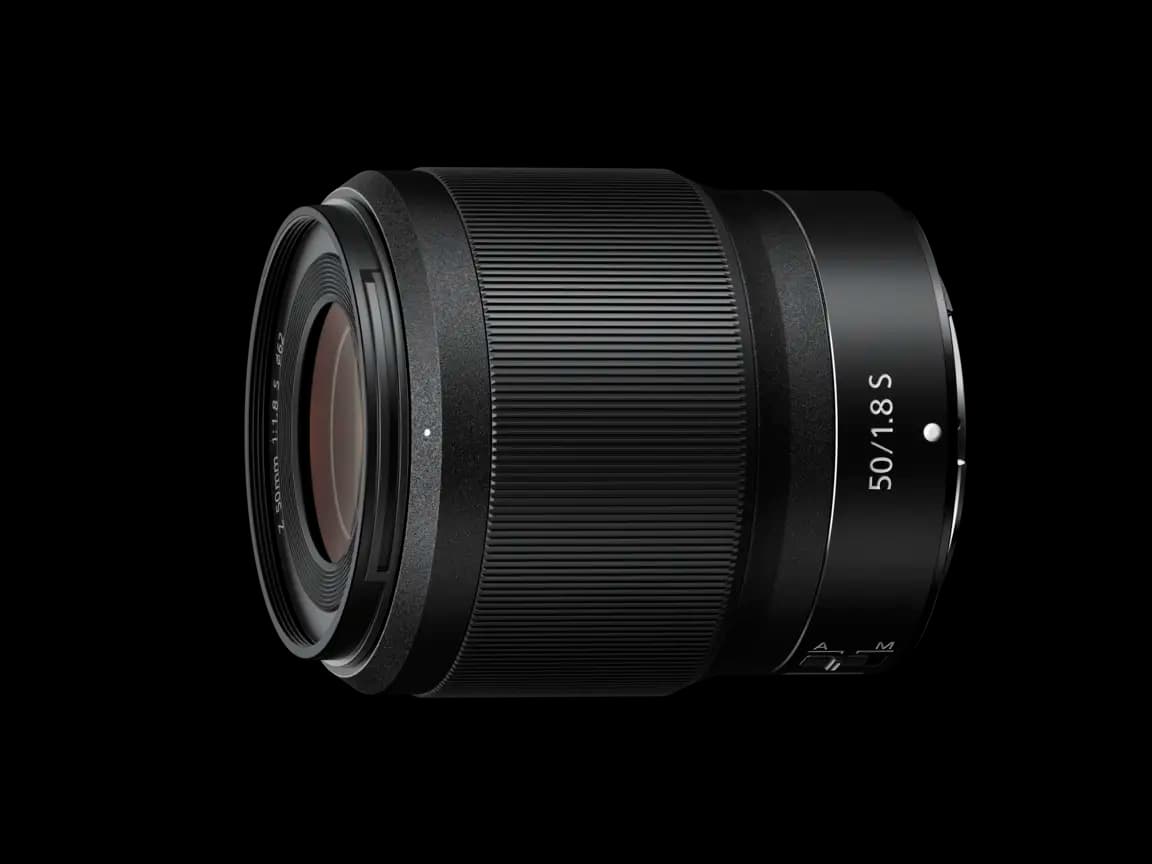
The first lens is the Nikon Nikkor Z 50mm f/1.8 S (optical score 9.2): versatile focal length, f/1.8 aperture, measured optical quality among the best in the Z system. It covers full-length and half-body portraits.
RF mount only.
The landscape photographer needs a high-quality wide-angle, sufficient aperture for long exposures, and robust construction for outdoor conditions.
The first lens is the Fujifilm XF 18mm F1.4 R LM WR (optical score 8.7, 999 €): equivalent to 27 mm in full frame, weather-sealed, bright. It covers wide landscapes and architectural interiors.
The versatile travel-family photographer needs a compact lens covering the maximum number of situations without constantly changing optics.
The first lens is the Fujifilm XF 23mm F2.8 R WR (optical score 7.0, 499 €): compact, weather-sealed, equivalent to 35 mm in full frame. It covers street, travel and family scenes indoors.
The second lens is the Panasonic Lumix G 42.5mm f/1.7 (score 8.6) on Micro 4/3: equivalent to 85 mm in full frame, it isolates subjects in portrait and children's sport. The Micro 4/3 system remains more compact than full frame.
The third lens, the Sigma 70-200mm F2.8 DG DN OS Sports (score 8.7, 1 599 €), addresses the versatile photographer who wants to cover school sports events or performances at distance, without investing in a professional super-telephoto.
Third-party lenses long suffered from a second-choice reputation. This is no longer the case since 2018. Sigma and Tamron produce lenses whose measured optical scores regularly exceed manufacturer references at equivalent price.
Tamron offers the 90mm F/2.8 Di III MACRO VXD (score 8.3, 849 €) as a credible alternative to the Sony FE 90mm f/2.8 Macro G OSS (score 9.0) with a price difference of 600 €. The limits of third-party lenses remain AF in extreme conditions (tracking fast subjects in low light) and compatibility with body firmware updates, sometimes delayed by several weeks.
Simple rule: if the third-party optical score is equal or superior to the manufacturer's and the price is at least 20 % lower, choose the third-party lens. The two-year manufacturer warranty applies identically. Check AF compatibility with your specific body before purchase.
The Camera Duel selector at the top of this page centralises 360+ lenses filterable in real time.
You can filter by mount (Sony E, Canon RF, Nikon Z, Fujifilm X, Micro 4/3 and more), by focal length range (from 8 mm to 600 mm), by maximum aperture (from f/0.95 to f/8), by budget (from 299 € to 17 499 €) and by type (prime, zoom, macro, specialised).
Each lens displays its optical score out of 10 points, calculated from measurements published by independent laboratories. Select up to 4 lenses simultaneously to compare them side by side on all their parameters: optical score, aperture, weight, price, stabilisation, AF motorisation.
This direct comparison avoids navigating between ten different tabs to arbitrate between two candidates. The selector is updated with each addition of new lenses to the database.
The answer depends on your mount and main use. If you mainly photograph people, a native 50 mm f/1.8 at your mount is the most rational first purchase: versatile focal length, bright aperture, contained price. On Sony E, the Nikon Nikkor Z 50mm f/1.8 S (score 9.2) is a reference.
If you mainly photograph landscapes, a wide-angle between 18 mm and 35 mm is more suitable. If you have not yet defined a use, keep the kit lens long enough to understand which focal lengths you use most, then buy a prime in that range.
A prime is recommended for the first purchase complementary to the kit. At equal budget, a prime offers a larger aperture and superior measured optical quality to a zoom. A 50 mm f/1.8 at 300-500 € produces images in natural light that a variable-aperture kit zoom cannot match.
The zoom is relevant if you photograph varied subjects in changing conditions and cannot move to frame. A wedding or sports photographer needs a zoom. A portrait or street photographer generally does not.
A lens at 500-800 € in prime focal length produces results that the majority of photographers will not distinguish from a lens at 2 000 € under normal shooting conditions.
Beyond 2 500 €, gains are real but marginal for non-professional use.
The angle of view is identical to that of a 75 mm or 80 mm on full frame. Depth of field, however, remains that of a 50 mm f/1.8: it is not equivalent to a 75 mm f/1.8 full frame.
To obtain the same depth of field as a 75 mm f/1.8 full frame, you would need a 50 mm f/1.2 on APS-C. On Micro 4/3 (2x factor), a 25 mm f/1.8 equates to 50 mm in full frame.
On published optical measurements, yes.
The limits remain firmware compatibility (updates sometimes delayed), AF in extreme conditions on certain bodies, and slightly lower resale value. For everyday use, Sigma Art and Tamron Di III lenses are fully justified alternatives.
Not systematically.
Do not pay the OIS premium on a 35 mm or 50 mm if your body has IBIS: the investment is rarely justified in practice.
Used is risky without precautions, and safe with the right checks. Lenses are mechanically robust: a lens without impact or mould often works as well as new. Check the condition of the diaphragm blades (oil traces), the front element (scratches, mould visible in grazing light), AF and IS operation.
Buy preferably from an authorised dealer offering a 6 to 12 month warranty. Platforms such as MPB, KEH, Phox offer rated lenses with standardised descriptions.
Used allows access to lenses normally outside budget: a Canon EF 85mm f/1.4L IS USM can be found between 1 200 € and 1 500 € used against 1 800 € new.
If you want a single lens covering everything, a trans-standard zoom such as the Tamron 18-300mm F/3.5-6.3 Di III-A VC VXD (749 €) is practical but with optical compromises at the extremes. Two light lenses are often better than one heavy versatile zoom.
The optical difference between an f/1.4 and an f/1.8 is real but often overestimated. One additional stop of light (f/1.4 vs f/1.8) represents 70 % more light, i.e. a 1.7 times faster shutter speed or a 1.7 times lower ISO.
Depth of field at f/1.4 is shallower than at f/1.8, which can be an advantage in portraiture or a disadvantage if focus is not perfect. The Sigma 50mm F1.4 DG DN Art (score 8.2, 999 €) optically exceeds many manufacturer 50 mm f/1.8 lenses.
The decision depends on your use: if you often photograph in very low light or if extreme bokeh is your goal, the f/1.4 is justified. Otherwise, the f/1.8 offers better value.
Four accessories are useful from day one. A lens hood suited to the focal length: it reduces parasitic reflections and protects the front element from impacts. It is often sold separately, count 20 to 60 €.
A protective UV filter: it protects the front element from scratches and dust, 20 to 80 € depending on diameter and brand. A microfibre cloth: essential for cleaning the lens without scratching it, 5 to 15 €.
A pouch or rigid case: protects the lens in the bag, 15 to 50 €. If you use the lens for video, add a variable ND filter (80 to 200 €) to control exposure at wide aperture in bright sunlight.
The optical score displayed on Camera Duel is a mark out of 10 points calculated from measurements published by independent sources. We cross-reference four main sources for each lens.
DXOMark publishes measurements of resolution (P-Mpix), light transmission (real T-stop vs announced f-stop), distortion and vignetting on a calibrated sensor. These measurements are reproducible and comparable between lenses of different mounts.
OpticalLimits publishes MTF resolution tests (MTF50 in lp/mm) on several bodies, at several apertures and on several areas of the field (centre, edge, corner). These measurements allow evaluation of field homogeneity and behaviour at full aperture.
Lensfun is an open-source database of geometric and chromatic correction profiles used by Darktable and RawTherapee. It provides information on real distortion and measured lateral chromatic aberrations.
Manufacturer datasheets provide the declared data: focal length, aperture, number of elements, minimum focus distance, reproduction ratio, weight, dimensions, stabilisation compatibility.
Our optical score weights these sources according to their reliability and availability for each lens. A lens without DXOMark measurement receives a score calculated only on available sources, with an explicit mention of the missing source.
The Camera Duel database is updated with each major lens launch and each publication of new measurements by our sources. The update frequency is approximately twice per month. Each score is versioned: you can consult the history of changes on each lens's page. Our objective is total transparency of the scoring method, without commercial agreement with any manufacturer or distributor.