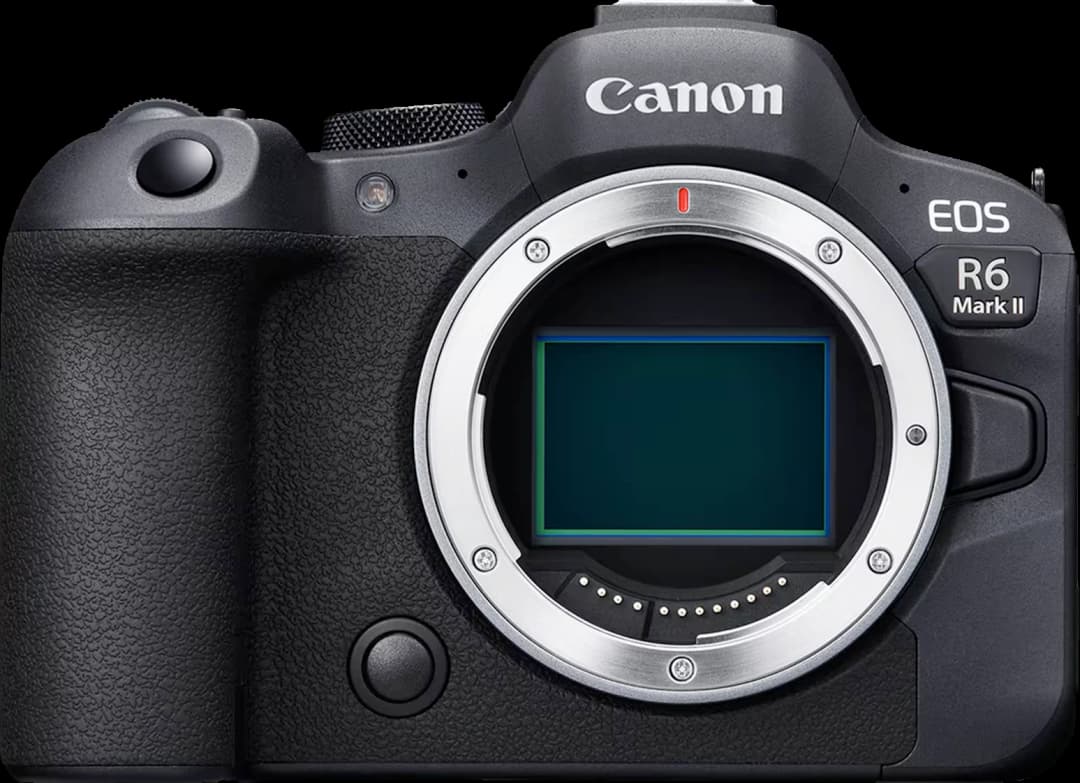
Canon
EOS R6 Mark II
2022
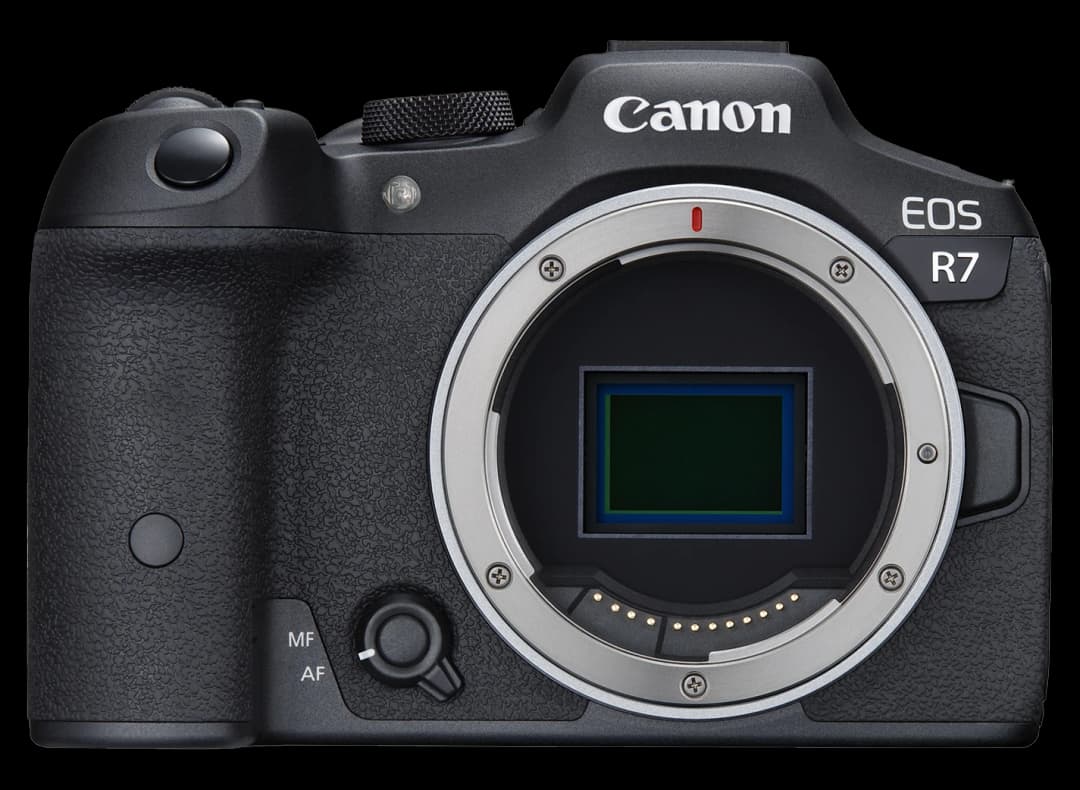
Canon
EOS R7
2022
Canon EOS R6 Mark II vs Canon EOS R7: Which to Choose Between Full-Frame and APS-C?
Visual summary
— Reads in 5 seconds
Canon
EOS R6 Mark II
Canon
EOS R7
Where to buy
— Live merchant price comparator
Canon EOS R6 Mark II

CANON EOS R6 Mark II Mirrorless Camera - Body Only, Black
1 474 GBP · Pro-Camera


Canon EOS R7

CANON EOS R7 Mirrorless Camera - Body Only, Black
1 349 GBP · amazon.co.uk

You'll find the best prices on the market here, updated daily — and by going through these partner links, you support Camera Duel without paying a cent more.
The arbitration in brief
The R6 Mark II dominates in low light, burst shooting and video; the R7 is the answer if budget and resolution take priority. Choose the R6 Mark II in the majority of cases.
Canon released these two bodies the same year, in 2022. Same RF mount, same weather-sealing, same dual SD UHS-II slots. On paper they share the DNA of Canon’s hybrid range. In practice they target very different photographers.
The R6 Mark II sits as the versatile high-end hybrid in the R line. Its 24,2 MP full-frame sensor, 8-stop IBIS and 40 fps electronic burst make it a tool built for reportage, weddings and low light. Its launch price was 2 499 USD.
The R7 occupies the expert APS-C segment. With 32,5 MP on a 22,2 × 14,8 mm sensor it offers higher pixel density and a 1,6× crop factor useful for wildlife or long-reach sports. Its launch price was 1 499 USD, i.e. 1 000 USD less.
This price gap is the first filter in the comparison. It is not enough to decide: a cheaper body that meets 90 % of your needs is a better purchase than an under-used premium body. Conversely, skimping on the sensor when low light is your daily environment is a mistake that costs dearly in post-processing.
We will arbitrate on the eight spec categories that really matter: sensor, autofocus, speed, video, stabilisation, build, ergonomics and connectivity. The goal is to give you a clear answer according to your dominant use.
Standout strengths
— Where each camera shines
Canon
EOS R6 Mark II
Top advantages
- 102 400Native ISO max3,2× vs Canon EOS R7
- 204 801Extended ISO max4× vs Canon EOS R7
- 1053AF points1,6× vs Canon EOS R7
- 40 fpsElectronic burst+33 % vs Canon EOS R7
Canon
EOS R7
Top advantages
- 32.5 MPMegapixels+34 % vs Canon EOS R6 Mark II
- 15 fpsMechanical burst+25 % vs Canon EOS R6 Mark II
- 1.15×Viewfinder magnification1,5× vs Canon EOS R6 Mark II
- 612 gWeight+9 % vs Canon EOS R6 Mark II
Video reviews
— Long-form reviews
Canon EOS R6 Mark II
Canon EOS R6 Mark II Final Review
DPReview TV · 9 min
Canon EOS R7
—
Detailed spec-by-spec
— Round by round, the eight categories
Sensor
Autofocus
Speed & burst
Video
Stabilisation
Build
Ergonomics & screen
Connectivity & battery
Detailed analysis analysis
— Strengths, trade-offs and ideal user
Canon EOS R6 Mark II: what it does well, what it concedes
The R6 Mark II is built around a 36 × 24 mm full-frame sensor of 24,2 MP. Resolution is not its main selling point. What matters here is light-gathering surface and dynamic range measured at 11,5 EV. Against 10,5 EV on the R7, this one-stop advantage translates into more forgiving highlight and shadow recovery in post-processing, especially in landscapes or mixed-light weddings. Native ISO reaches 102 400, versus 32 000 on the R7. In practice this means you can work at ISO 6 400 or 12 800 without visible noise compromise, where the R7 begins to show its limits.
On autofocus the R6 Mark II lines up 1 053 AF points against 651 on the R7, with a low-light detection limit of -6,5 EV versus -5 EV. This 1,5 EV gap is significant indoors or at evening events. Electronic burst reaches 40 fps with a RAW buffer of 75 images, against 30 fps and 51 images on the R7. For sport or weddings this combination offers a markedly larger safety margin.
The compromises are real. The R6 Mark II weighs 670 g versus 612 g for the R7. It costs 1 000 USD more at launch. And its 24,2 MP limit aggressive cropping in post. On video it takes the lead with ProRes RAW support over HDMI, built-in proxy recording and a rolling shutter measured at 14 ms — data not available for the R7 in the cross-checked sources.
R6 Mark II strengths:
- 11,5 EV dynamic range versus 10,5 EV on the R7.
- Native ISO up to 102 400, more than three times that of the R7.
- Electronic burst at 40 fps with 75 RAW buffer.
- Low-light AF at -6,5 EV, the best of the two.
- 8-stop IBIS versus 7 stops.
For whom
The R6 Mark II suits the photographer who regularly works in difficult light: indoor weddings, evening reportage, studio portraits with reduced lighting. It also suits the sports or wildlife photographer who needs sustained burst and a deep buffer. On assignment I have used it personally in salt-spray and cold conditions in Brittany: the weather-sealing delivers and the 8-stop IBIS effectively compensates for long handheld exposures. This is the body to choose if low light is your daily environment and you are prepared to invest 2 499 USD at launch, or less on the used market.
Canon EOS R7: what it does well, what it concedes
The R7 carries an APS-C sensor of 22,2 × 14,8 mm with 32,5 MP. That is 8,3 MP more than the R6 Mark II. In practice this opens two concrete advantages: large-format printing at substantial sizes without loss of definition, and comfortable cropping in post-processing. The APS-C 1,6× crop factor virtually extends all your RF focal lengths, a real asset for wildlife or long-distance sport.
Mechanical burst reaches 15 fps, against 12 fps on the R6 Mark II. This is the only speed area where the R7 takes the lead. Electronically it is limited to 30 fps with a 51-image RAW buffer, i.e. 10 fps and 24 images fewer than the R6 Mark II. For intensive sport with long sequences this buffer difference can cause a decisive moment to be missed.
The R7 viewfinder shows a magnification of 1,15× versus 0,76× on the R6 Mark II. This is a notable ergonomic advantage for photographers who shoot to the eye and prefer a larger viewfinder image. In return its resolution is 2,36 M dots against 3,69 M dots on the R6 Mark II: the viewfinder image is less sharp. The R7 weighs 612 g and its CIPA battery life reaches 770 shots, slightly above the 760 of the R6 Mark II.
R7 concessions not to underestimate:
- Native ISO capped at 32 000, more than three times less than the R6 Mark II.
- Dynamic range at 10,5 EV, one stop below the R6 Mark II.
- Low-light AF limited to -5 EV versus -6,5 EV.
- Electronic burst at 30 fps with only 51 RAW images.
- No ProRes RAW or proxy recording according to available data.
For whom
The R7 suits the photographer seeking high resolution for large-format printing or intensive cropping without exceeding a 1 499 USD launch budget. It is relevant for wildlife or long-reach sport where the 1,6× crop factor compensates for the lack of full-frame. On light travel its 612 g weight and 770-shot battery life are concrete arguments. However, if you regularly photograph in dark interiors or at night, its ISO and low-light AF limits will quickly become restrictive.
Our verdict
Which one to buy, and why
The R6 Mark II wins six rounds out of eight in this comparison. The gap is not cosmetic: it is structural, rooted in the sensor format difference and the engineering choices that follow.
The deal-breakers are clear. If you photograph in low light on a regular basis, the R7 is not the right choice. A native ISO capped at 32 000 versus 102 400 and an AF limit at -5 EV versus -6,5 EV are concrete handicaps, not datasheet nuances. Likewise, if you shoot ambitious video, the absence of proxy recording and ProRes RAW support on the R7 reduces your post-production workflow.
The R7 has its own solid arguments:
- 32,5 MP for cropping and large-format work.
- 15 fps mechanical, the best of the two.
- 1,15× viewfinder magnification, markedly more comfortable to the eye.
- 612 g, i.e. 58 g lighter, relevant on a trek day.
- 1 000 USD less at launch.
This price gap is the R7’s main argument. On the used market in 2026 the R6 Mark II trades around 1 600 to 1 900 USD depending on condition. The R7 drops below 1 000 USD. If your budget is tight and your dominant uses are travel, natural-light portraiture and cropping, the R7 remains a rational purchase.
My clear verdict: choose the R6 Mark II. The difference in sensor, native ISO and low-light AF justifies the price gap for any photographer who works in variable conditions. The R7 is an excellent body in its APS-C segment, but it yields on the criteria that make the difference in difficult situations. A body is bought for its worst conditions of use, not its best. On this criterion the R6 Mark II wins unambiguously.
Frequently asked questions
Before you buy, the questions we get
Which to choose for wedding photography?
The R6 Mark II is the obvious choice for weddings. Indoor ceremonies in low light, receptions under artificial lighting and evening dancing require high native ISO and reliable low-light AF. The R6 Mark II reaches ISO 102 400 native and detects AF down to -6,5 EV. The R7 tops out at ISO 32 000 and -5 EV. The 40 fps electronic burst with 75 RAW buffer also offers a superior safety margin on decisive moments. The R7 can work for an outdoor daylight wedding, but as soon as the light drops it shows its limits.
Is the R7 sufficient for wildlife and sport?
The R7 has real strengths for these uses. Its 1,6× crop factor virtually extends your focal lengths, useful at long distance. Its mechanical burst at 15 fps exceeds that of the R6 Mark II (12 fps). But its electronic burst is limited to 30 fps with a 51-image RAW buffer, against 40 fps and 75 images on the R6 Mark II. For long sequences in fast sport the R7 buffer fills faster. Its -5 EV low-light AF can also be problematic in dense forest or overcast conditions. The R6 Mark II remains superior for wildlife in difficult conditions.
Does the 1 000 USD gap between the two bodies justify itself?
It depends on your dominant use. If you mainly photograph outdoors in daylight, on travel or in controlled studio light, the gap is hard to justify. The R7 covers these uses adequately for 1 499 USD at launch. On the other hand, if you regularly work in low light, reportage or video with proxy recording, the R6 Mark II at 2 499 USD is a worthwhile investment. On the used market in 2026 the real gap between the two bodies is often less than 1 000 USD, making the R6 Mark II even more competitive.
Which body will age better in the Canon RF line?
Both share the RF mount and benefit from Canon firmware updates. The R6 Mark II has a structural advantage: its full-frame sensor remains relevant regardless of APS-C body evolution. The RF lens ecosystem is designed primarily for full-frame. Certain high-end RF optics are not optimised for APS-C. The R7, as the first expert APS-C body in the RF range, opened a path, but Canon has not yet densified its catalogue of native RF optics optimised for this format. The R6 Mark II benefits from a wider and more mature lens catalogue.
Is the R7 viewfinder really better than that of the R6 Mark II?
It is a question of priority. The R7 shows a magnification of 1,15× versus 0,76× on the R6 Mark II: the viewfinder image is visually larger, which facilitates manual focusing and precise framing. In return the R7 viewfinder resolution is 2,36 M dots against 3,69 M dots on the R6 Mark II. Image sharpness is lower. For a photographer who shoots to the eye and prefers a generous viewfinder image, the R7 is more comfortable. For a photographer who wants to assess sharpness in the viewfinder before shooting, the R6 Mark II is more precise.