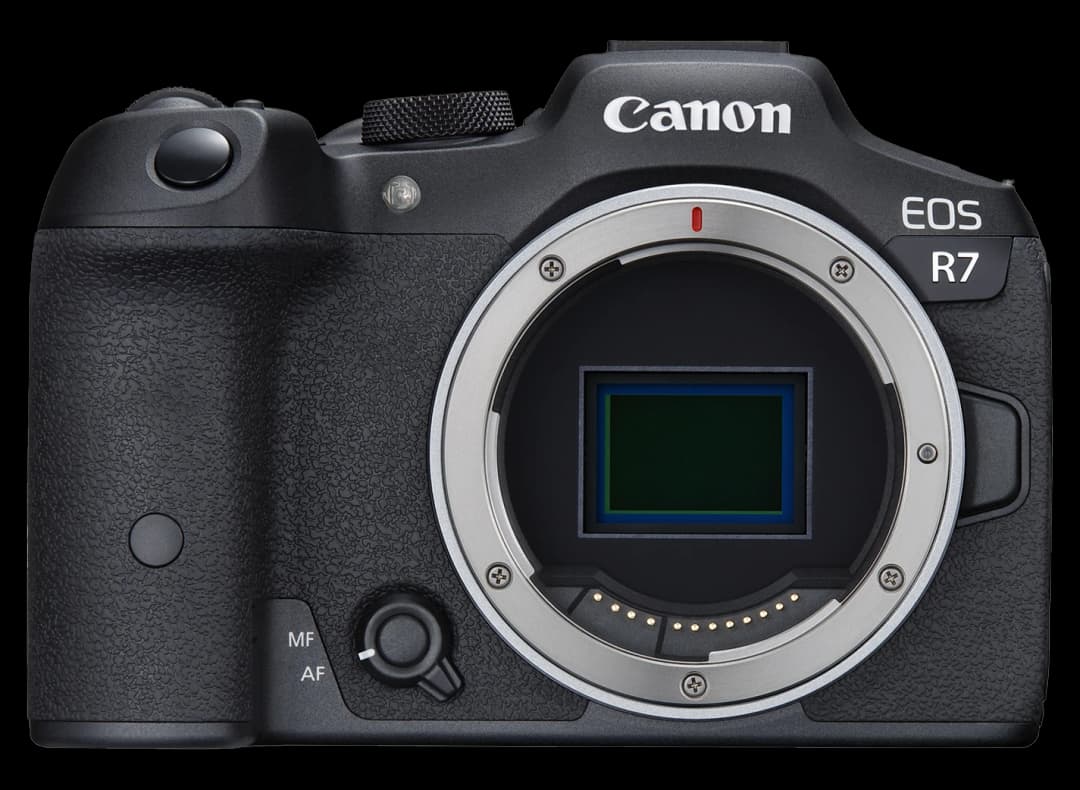
Canon
EOS R7
2022
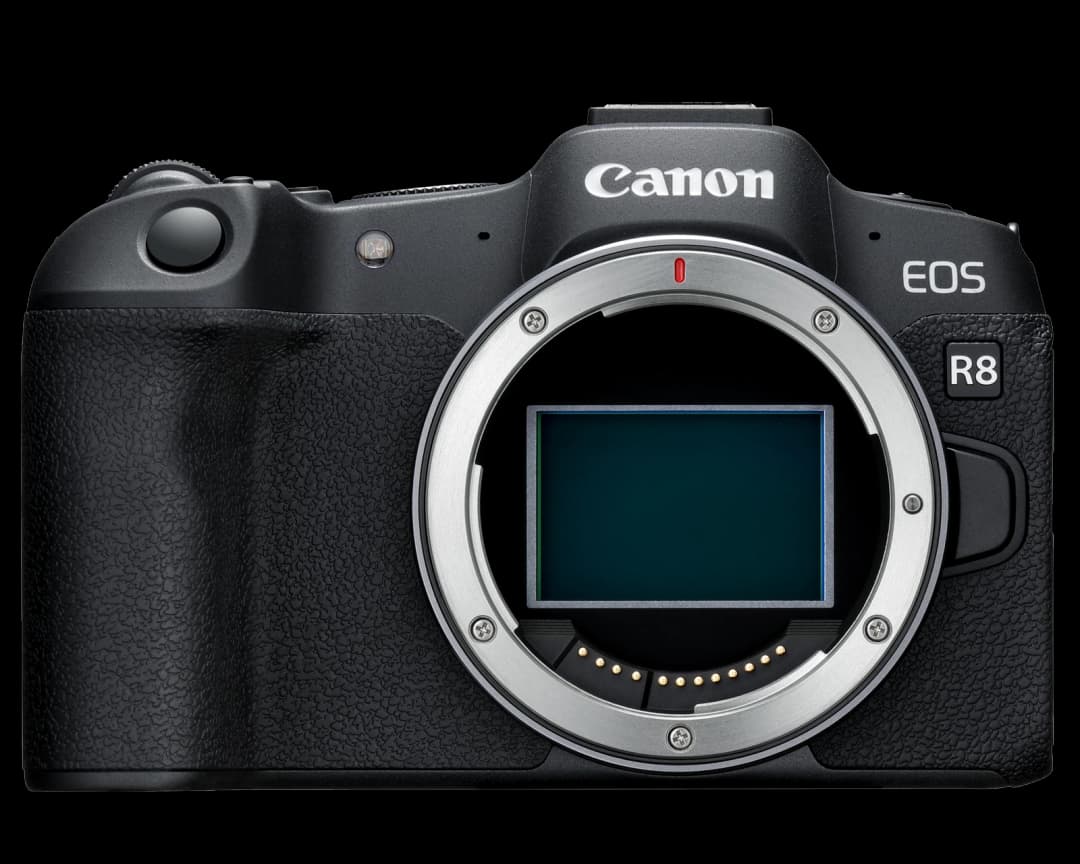
Canon
EOS R8
2023
Canon EOS R7 vs Canon EOS R8: Which Deserves Your 1,500 Euros in 2026?
Visual summary
— Reads in 5 seconds
Canon
EOS R7
Canon
EOS R8
Where to buy
— Live merchant price comparator
Canon EOS R7

CANON EOS R7 Mirrorless Camera - Body Only, Black
1 349 GBP · amazon.co.uk


Canon EOS R8

CANON EOS R8 Mirrorless Camera - Body Only, Black
1 629 GBP · Currys
You'll find the best prices on the market here, updated daily — and by going through these partner links, you support Camera Duel without paying a cent more.
The arbitration in brief
Same price, two opposing philosophies: choose the R7 if you need stabilisation, dual slots and native Log; choose the R8 if low light and full frame take priority.
Canon launched the R7 in 2022 and the R8 in 2023 at the same launch price of 1 499 dollars. This identical positioning is misleading. The two bodies are not aimed at the same photographer.
The R7 is a high-end APS-C. Canon packed it with the attributes of a reportage body: weather-sealing, dual SD UHS-II slots, 7-stop IBIS, 15 fps mechanical burst, native C-Log3 and 32.5 megapixels. It is the spiritual successor to the EOS 90D, transposed into the RF ecosystem.
The R8 is an entry-level full-frame body. Canon extracted the 24-megapixel sensor from the R6 Mark II, housed it in a lightweight 461-gram chassis and removed IBIS, the dual slot and video Log. The goal was to make full frame accessible. The result is a body that reaches ISO 102 400 native and focuses down to -6.5 EV in low light, two figures the R7 cannot match.
In 2026 both models appear on the used market at prices noticeably below their launch figures. This comparison answers a concrete question: which of the two justifies your budget according to your main use? We judge across eight spec categories, measured data and field feedback on landscape and travel work.
Standout strengths
— Where each camera shines
Canon
EOS R7
Top advantages
- 32.5 MPMegapixels+35 % vs Canon EOS R8
- 15 fpsMechanical burst2,5× vs Canon EOS R8
- OuiLog profileAbsent sur Canon EOS R8
- OuiIn-body stabilisationAbsent sur Canon EOS R8
Canon
EOS R8
Top advantages
- 102 400Native ISO max3,2× vs Canon EOS R7
- 204 800Extended ISO max4× vs Canon EOS R7
- 180 fpsMax video fps3× vs Canon EOS R7
- 1053AF points1,6× vs Canon EOS R7
Detailed spec-by-spec
— Round by round, the eight categories
Sensor
Autofocus
Speed & burst
Video
Stabilisation
Build
Ergonomics & screen
Connectivity & battery
Detailed analysis analysis
— Strengths, trade-offs and ideal user
Canon EOS R7: what it does well, what it concedes
The R7 carries 32.5 megapixels on a 22.2 × 14.8 mm APS-C sensor. That is 8.5 megapixels more than the R8. In practice it means larger files (around 35 MB uncompressed RAW) but real cropping latitude in post and enough resolution for prints above 60 × 40 cm. Measured dynamic range reaches 10.5 EV at 100 ISO, versus 11.6 EV on the R8. The gap is noticeable in highlights on high-contrast scenes.
The 15 fps mechanical burst is the most distinctive figure for the R7 in this category. The R8 tops out at 6 fps mechanical. For weddings, amateur sport or wildlife in decent light, the difference is decisive. The RAW buffer holds 51 images continuously, covering roughly 3.4 seconds at full speed. IBIS delivers 7 stops according to Canon, a direct advantage for travel photography in low light without a tripod. I used it for 1/4 s handheld interiors on assignments in Brittany: the hit rate is high, provided you do not exceed 1/2 s with a heavy lens.
The compromises are real. Native ISO stops at 32 000, versus 102 400 on the R8. Above 6 400 ISO noise becomes visible on R7 files. Low-light AF reaches -5 EV, 1.5 EV behind the R8. For intensive night work this delta shows up as hesitant focus in very dark scenes.
Key strengths to remember:
- 32.5 MP for cropping and large-format work.
- 15 fps mechanical, dual SD UHS-II slots, weather-sealing.
- 7-stop IBIS and native C-Log3 for hybrid video.
- Native ISO limited to 32 000, a structural weakness versus full frame.
For whom
The R7 suits the versatile photographer who works in controlled light or outdoors by day. The wedding photographer who needs 15 fps mechanical burst, dual-card backup in real time and weather-sealing for outdoor ceremonies will find a reliable tool here. The travel photographer who wants a compact yet complete body with IBIS and video Log will also be satisfied. The APS-C 1.6× crop factor extends the effective reach of telephoto lenses, useful for wildlife or sport on a limited optics budget.
Canon EOS R8: what it does well, what it concedes
The R8 carries a 36 × 24 mm full-frame sensor with 24 megapixels. This format physically gathers more light per pixel than the R7’s APS-C. Measured dynamic range reaches 11.6 EV at 100 ISO, 1.1 EV ahead of the R7. In practice this translates into better highlight recovery in RAW and greater latitude when developing high-contrast scenes.
Native ISO climbs to 102 400, versus 32 000 on the R7. That is more than 1.5 stops of extra native sensitivity. Low-light AF reaches -6.5 EV, the best of the two bodies. These two figures make the R8 markedly more comfortable for night reportage, concerts or poorly lit interiors. Electronic burst hits 40 fps with a 56-image RAW buffer, 10 fps faster than the R7 electronically. The R8 also offers 180 fps video, a value the R7 cannot approach.
The compromises are structural. The lack of IBIS is the most serious deal-breaker. Without sensor stabilisation all compensation falls to the lens. With a non-stabilised lens, shutter speeds below 1/60 s become risky handheld. The single SD UHS-II slot rules out real-time redundant backup, excluding the R8 from wedding or professional reportage workflows where file loss is unacceptable. CIPA battery life of 370 shots is 400 shots behind the R7, a gap felt on a full day of shooting without mains access.
Key strengths to remember:
- Full-frame sensor, 11.6 EV dynamic range, native ISO 102 400.
- Low-light AF at -6.5 EV, the best of the pair.
- 40 fps electronic, 56 RAW buffer.
- No IBIS and single slot: two identified deal-breakers.
For whom
The R8 suits the photographer who prioritises low-light image quality over operational robustness. The studio or natural-light portrait photographer, the street photographer who works at night, or the amateur videographer who wants to exploit 180 fps without buying a mid-range body will find a sensor-to-price ratio hard to beat in 2026. It is not, however, a tool for the professional who cannot afford to lose a card.
Our verdict
Which one to buy, and why
Both bodies share the same launch price and RF mount. Everything else diverges.
The R7 wins the stabilisation, build and connectivity rounds. The R8 wins the sensor and AF rounds. Speed and video are tied. On camera-duel.com’s overall photo score the margin is marginal: 7.6 for the R7 versus 7.7 for the R8. In video the R7 takes the lead with 6.1 versus 5.3, thanks to native Log and sensor stabilisation.
Deal-breakers to weigh before deciding:
- R8 without IBIS: any shutter speed below 1/60 s handheld without a stabilised lens is risky.
- R8 with a single slot: redundant backup is impossible, ruling it out of pro wedding and reportage workflows.
- R7 limited to native ISO 32 000: below 1/125 s at f/2.8 in darkness, noise becomes a real issue.
- R7 at 612 grams versus 461 grams for the R8: on a long trip the 151-gram difference adds up.
In 2026 both bodies appear used between 700 and 950 euros depending on condition. At that price the used R7 represents exceptional value for the hybrid photographer: IBIS, dual slots, Log and 15 fps mechanical in a weather-sealed body. The used R8 is relevant only if you already own stabilised RF lenses and low light is your dominant use.
The R7 is the default choice for most uses. Its IBIS–dual-slot–weather-sealing triad keeps it operational in conditions where the R8 shows its structural limits. The R8 only makes sense in one precise scenario: you shoot mainly in low light, you already own stabilised RF optics, and you accept the single-slot risk. Outside that scenario the R7 is the more complete body of the two.
Frequently asked questions
Before you buy, the questions we get
Which should I choose for wedding photography?
The R7, without hesitation. The dual SD UHS-II slots allow real-time redundant backup, a minimum requirement for professional wedding work. The 7-stop IBIS handles difficult reception lighting. The 15 fps mechanical burst covers decisive moments. The R8 is disqualified by its single slot: losing a card during a wedding is an unacceptable professional risk.
Does the R8 compensate for the lack of IBIS with optical stabilisation?
Partially. Stabilised RF lenses such as the RF 24-105 f/4 L IS deliver up to 5 stops according to Canon. That is less than the 7 stops of the R7’s IBIS. Above all, optical stabilisation does not compensate subject blur in low light; it only counters photographer shake. With a non-stabilised lens (RF 50 f/1.8, RF 85 f/2 for example) the R8 offers no compensation below 1/focal length.
Is the R8 really better in low light than the R7?
Yes, on two objective measures. The R8’s native ISO reaches 102 400 versus 32 000 on the R7, roughly 1.5 stops more native sensitivity. Low-light AF reaches -6.5 EV versus -5 EV on the R7. In practice the R8 locks focus in scenes where the R7 hesitates. The R8’s dynamic range is also 1.1 EV higher at 100 ISO according to DXOMark data cross-checked with manufacturer sheets.
Which will age better in the Canon RF ecosystem?
The R7 has a structural advantage: its dual slots, IBIS and build make it less dependent on future software updates. The R8 is more exposed to perceived obsolescence because it lacks features its successors will probably include (IBIS, dual slots). Both share the RF mount, guaranteeing long-term lens compatibility. On firmware, Canon has shown with the R5 and R6 that it updates its hybrid bodies for several years.
Is the R8 a good choice for hybrid video?
No, not as it stands. The lack of native C-Log3 is a deal-breaker for any serious colour workflow. The R7 offers C-Log3 and HLG, internal 4:2:2 subsampling and a vectorscope in the monitoring tools. The R8 is limited to internal 4:2:0 and offers no native Log. The 180 fps figure is real but only applies to reduced-resolution slow motion. For documentary or travel hybrid video the R7 is far better equipped.