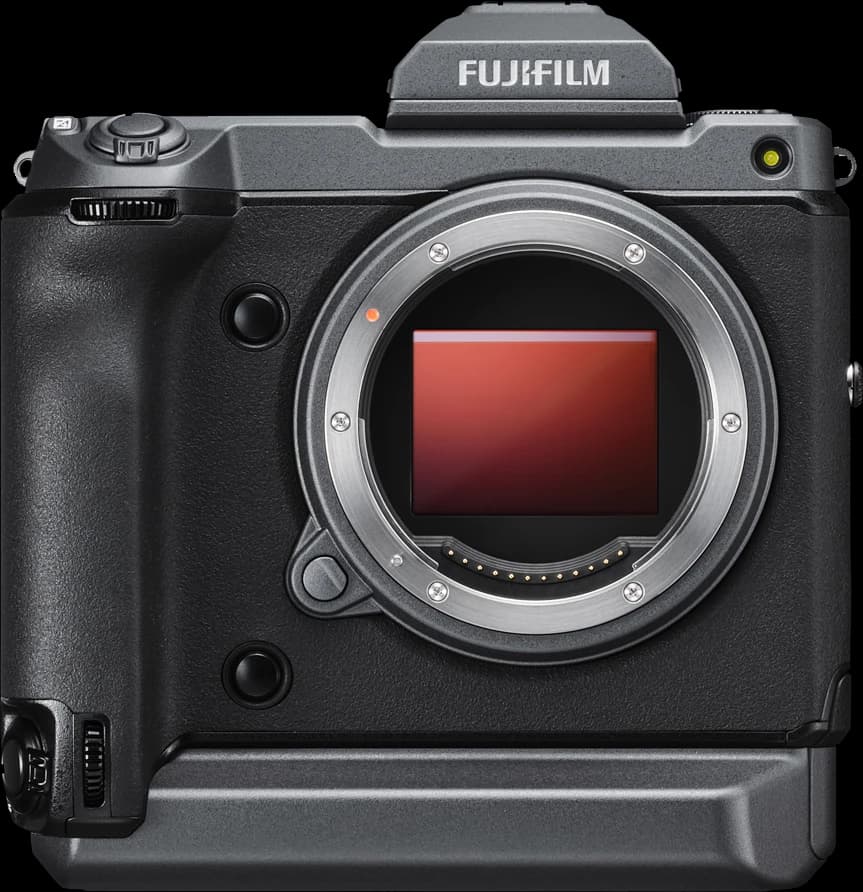
Fujifilm
GFX 100
2023
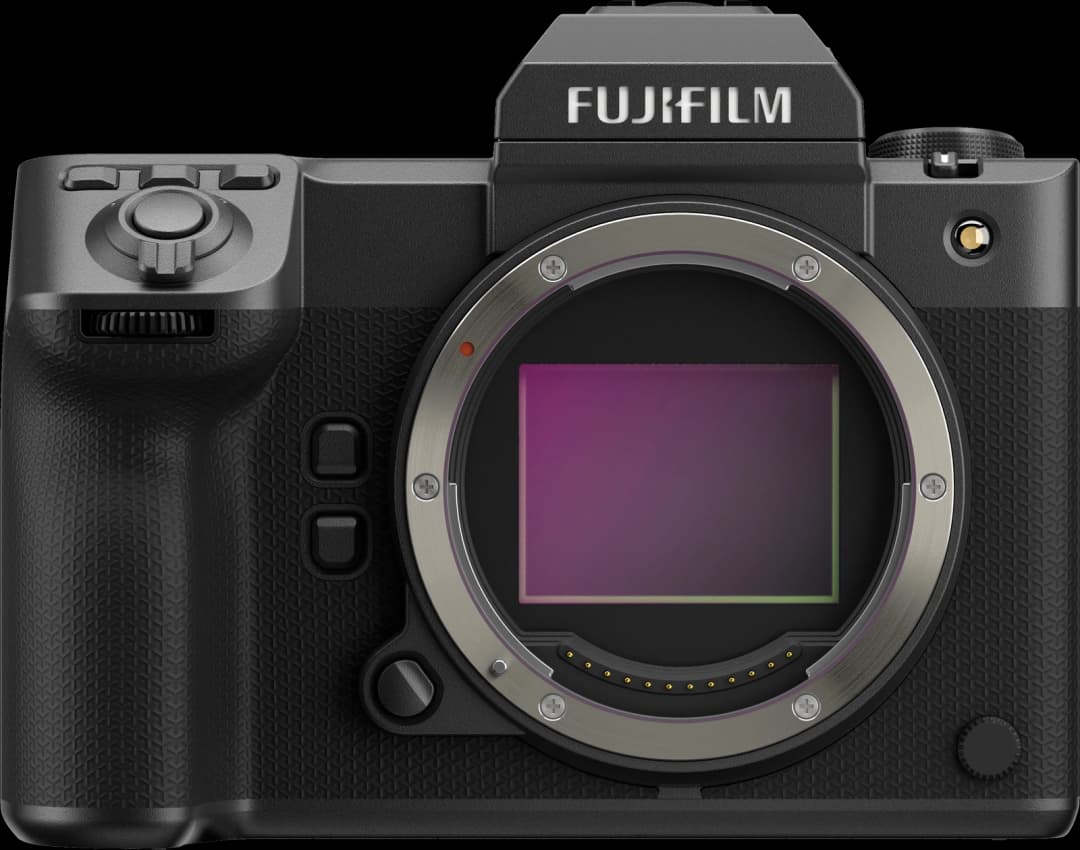
Fujifilm
GFX 100 II
2023
Fujifilm GFX 100 vs GFX 100 II: Which One Justifies Its Price in 2026?
Visual summary
— Reads in 5 seconds
Fujifilm
GFX 100
Fujifilm
GFX 100 II
The arbitration in brief
The GFX 100 II outperforms its predecessor on almost every front and costs 2,500 USD less: choose it without hesitation, unless battery life is your absolute constraint.
The Fujifilm GFX 100 and the GFX 100 II share the same 102-megapixel resolution on a medium-format sensor measuring approximately 44 × 33 mm. They were launched the same year, in 2023, at very different launch prices: 9,999 USD for the first, 7,499 USD for the second. This pricing positioning already sends a strong signal. Fujifilm has managed to offer an improved version at a lower price, which is rare in the medium-format segment.
Both bodies target the same core audience: professional or semi-professional photographers working in portraiture, weddings, landscapes and architecture. They share the G mount, the same lens ecosystem, weather-sealing and dual card slots. On paper they appear interchangeable. In practice the differences are significant.
This comparison judges seven dimensions: sensor, autofocus, speed, video, stabilisation, ergonomics and connectivity. It answers a concrete question: does the original GFX 100 still deserve to be bought in 2026, new or used, against a GFX 100 II whose price has continued to fall on the secondary market? The answer is quantified, not rhetorical.
Standout strengths
— Where each camera shines
Fujifilm
GFX 100
Top advantages
- 60 fpsMax video fps2× vs Fujifilm GFX 100 II
- 1×4K crop+27 % vs Fujifilm GFX 100 II
- 800 clichésBattery life (CIPA)+48 % vs Fujifilm GFX 100 II
- 30 minRecording limitAbsent sur Fujifilm GFX 100 II
Fujifilm
GFX 100 II
Top advantages
- 3520 Mb/sMax bitrate8,8× vs Fujifilm GFX 100
- 8 fpsMechanical burst1,6× vs Fujifilm GFX 100
- 8 stopsIBIS rating+45 % vs Fujifilm GFX 100
- 8.7 fpsElectronic burst1,7× vs Fujifilm GFX 100
Detailed spec-by-spec
— Round by round, the eight categories
Sensor
Autofocus
Speed & burst
Video
Stabilisation
Build
Ergonomics & screen
Connectivity & battery
Detailed analysis analysis
— Strengths, trade-offs and ideal user
Fujifilm GFX 100: what it does well, what it concedes
The original GFX 100 delivers 102 MP on a 43.8 × 32.9 mm sensor with a measured dynamic range of 12.3 EV. That is a solid figure for landscape and studio portraiture. In practice this level of dynamic range allows significant recovery in highlights and shadows in RAW. The verdict remains positive for static use, yet the GFX 100 II measures 12.6 EV, giving an extra half-stop of latitude.
Autofocus covers 100 % of the frame across 425 points with human-eye detection. It reaches -4 EV in low light. That threshold is acceptable for a studio or well-lit interior, but insufficient for a dimly lit wedding reception corridor or a night street scene. The lack of animal-eye detection is a genuine shortcoming for wildlife photographers. Burst rate tops out at 5 fps in both mechanical and electronic shutter, with a maximum shutter speed of 1/4000 s. This ceiling effectively rules out fast-moving subjects.
The concessions worth noting:
- 5 fps burst with no documented RAW buffer, versus 8.7 fps and a 1,000-image buffer on the successor.
- 1/4000 s maximum, which limits work in bright light with fast lenses.
- 5.5 stops of IBIS, functional but behind the 8 stops of the GFX 100 II.
- 800-shot CIPA battery life, the only area where it holds an advantage.
In video the GFX 100 offers 4K at 60 fps with no crop (factor 1×) and an H.264/H.265 10-bit codec. Recording is limited to 30 minutes. For a photographer who uses video occasionally this limit is acceptable. For a hybrid shooter alternating stills and video on a wedding day it becomes restrictive.
For whom
The GFX 100 suits the studio or landscape photographer who works on a tripod in controlled light without speed demands. Its 800-shot battery life is a genuine asset for long reporting days without access to mains power. It also suits the used-market buyer who finds the body at a significantly lower price than the GFX 100 II and whose needs are limited to still photography in controlled conditions. It does not suit dynamic wedding photographers, wildlife shooters or videographers.
Fujifilm GFX 100 II: what it does well, what it concedes
The GFX 100 II carries the same 102 MP as its predecessor, but on a slightly larger 44 × 33 mm sensor, with measured dynamic range of 12.6 EV and a native minimum ISO of 80 (versus 100 on the GFX 100). These differences are modest in absolute terms, yet they accumulate in a consistent direction: more highlight latitude and better base-ISO behaviour for studio work.
Autofocus reaches -5.5 EV, 1.5 EV lower than the GFX 100. In practice that is the difference between a dimly lit living room and a near-dark scene. Animal-eye detection is present. Burst rate reaches 8.7 fps electronically with a 1,000-image RAW buffer, placing the body in a different category for dynamic reportage. Electronic shutter speed extends to 1/32000 s, useful in bright sun with large-aperture lenses.
The structural strengths:
- 8 stops of IBIS versus 5.5, i.e. 2.5 stops extra margin handheld.
- 8K at 30 fps internally, unlimited 4K, ProRes codec, proxy recording, built-in XLR.
- 9.44 M-dot OLED viewfinder at 1× magnification versus 5.76 M dots at 0.68×.
- Weight of 1,030 g versus 1,320 g, i.e. 290 g less over a full day.
The only notable concession is battery life: 540 shots CIPA versus 800. That is a 32 % gap. On a wedding day without recharging it means carrying an extra battery. 4K applies a 1.27× crop, narrowing the angle of view in video. This point deserves attention if you work with wide focal lengths.
For whom
The GFX 100 II is aimed at the hybrid photographer who alternates professional stills and video, the wedding photographer working in difficult light and motion, and the portraitist who wants a reference viewfinder with 1× magnification. Its reduced weight of 1,030 g makes it more comfortable for nomadic use. It also suits the videographer seeking a medium-format body capable of 8K with ProRes codec and no recording limit. The used buyer will find this body at a competitive price against a new GFX 100.
Our verdict
Which one to buy, and why
The GFX 100 II wins six rounds out of eight. It is faster, more stable, lighter, more capable in video and more precise in autofocus. It launched 2,500 USD cheaper. The result is rare: a successor that improves almost everything while lowering the price.
The deal-breakers for the GFX 100 in 2026 are clear:
- 5 fps maximum burst, undocumented buffer: unsuited to dynamic reportage.
- No animal-eye detection: a deal-breaker for wildlife work.
- Video recording limited to 30 minutes: restrictive for any serious hybrid use.
- 1/4000 s maximum: problematic in bright sun with fast lenses.
The only concrete advantage of the GFX 100 is its 800-shot CIPA battery life, i.e. 260 shots more than the GFX 100 II. That is a real argument for travel or expedition photographers without regular access to power. I have verified it in the field: on a landscape day in Brittany in cold temperatures, one extra battery is enough to offset the difference on the GFX 100 II.
On the 2026 used market the GFX 100 trades well below its launch price. If the gap reaches 3,000 USD or more versus a GFX 100 II in good condition, the question is worth asking for strictly stills use in controlled conditions. In every other case the GFX 100 II is the rational choice. It is more versatile, more modern, and its value proposition is objectively better. Choose the GFX 100 II.
Frequently asked questions
Before you buy, the questions we get
Which one to choose for weddings in 2026?
The GFX 100 II without hesitation. Autofocus reaches -5.5 EV versus -4 EV, human-eye detection is identical on both bodies, yet the 8.7 fps burst with a 1,000-image buffer changes the game during decisive moments. 8-stop IBIS allows handheld shooting at very slow speeds in reception lighting. The only constraint is the 540-shot battery life: plan on two batteries for a full day.
Does the 2,500 USD gap between the two bodies justify the GFX 100?
No. The gap favours the GFX 100 II, which launched cheaper (7,499 USD versus 9,999 USD) and outperforms on six of the eight categories analysed. The GFX 100 only justifies a new purchase in 2026 if you find it at a very low used price with strictly stills use limited to studio or tripod work. In every other case the GFX 100 II delivers better return on investment.
Should you care about 8K if you only shoot 4K?
The 8K resolution of the GFX 100 II is not its main video argument. What matters more is unlimited 4K recording, the ProRes codec, the built-in XLR input, proxy recording and 4:2:2 10-bit. All of these features are missing on the GFX 100. If you shoot 4K professionally the GFX 100 II is superior regardless of 8K. Note however that 4K applies a 1.27× crop on the GFX 100 II versus 1× on the GFX 100.
Is the GFX 100 still relevant for landscape work in 2026?
On a tripod in controlled light the GFX 100 remains competent. Its 12.3 EV dynamic range is solid, its 102 MP allow large-format prints and cropping. Its 800-shot battery life is a genuine asset for long hikes. Yet the GFX 100 II offers 12.6 EV, 8 stops of IBIS (useful for long handheld exposures) and weighs 290 g less. For nomadic landscape work the GFX 100 II is better. The GFX 100 only makes sense if you find it at a markedly lower used price.
Which body will age better over the next two to three years?
The GFX 100 II has a more recent architecture: 9.44 M-dot OLED viewfinder at 1× magnification, CFexpress Type B slot for future data rates, Full HDMI port, USB 3.2 Gen 2 and firmware that Fujifilm has already shown to be updatable on this generation. The GFX 100 is limited by its SD UHS-II slot only, its Micro HDMI port and USB 3.2 Gen 1. In terms of hardware and software longevity the GFX 100 II is better positioned to absorb developments over the next two to three years.