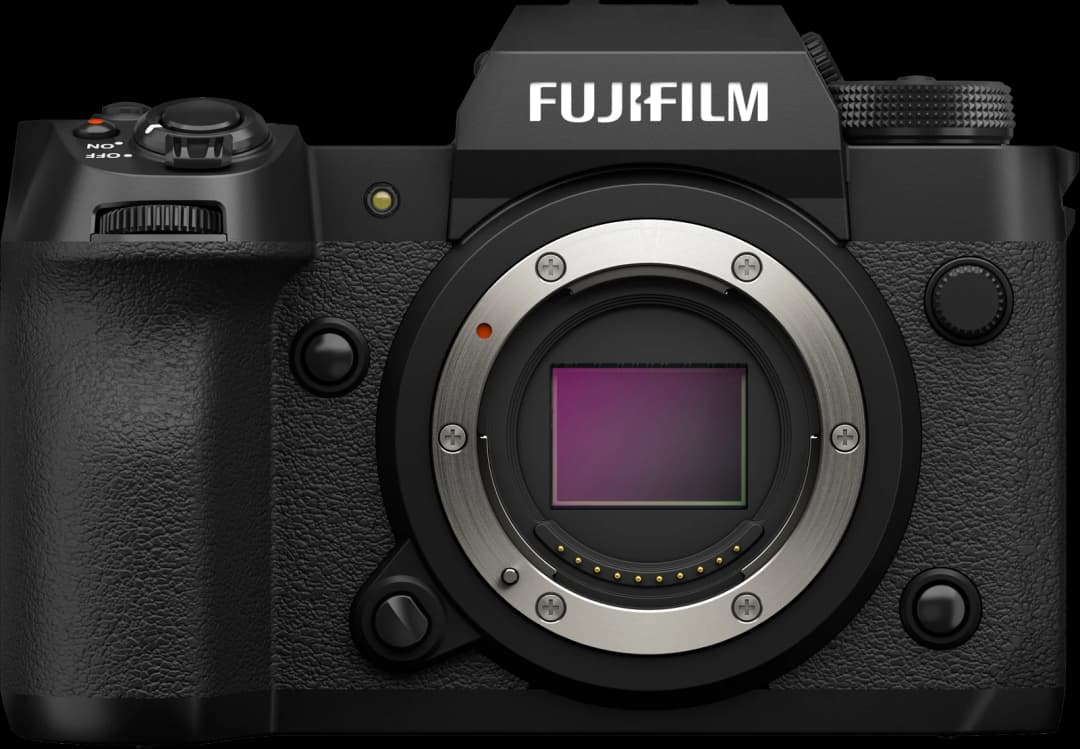
Fujifilm
X-H2
2022
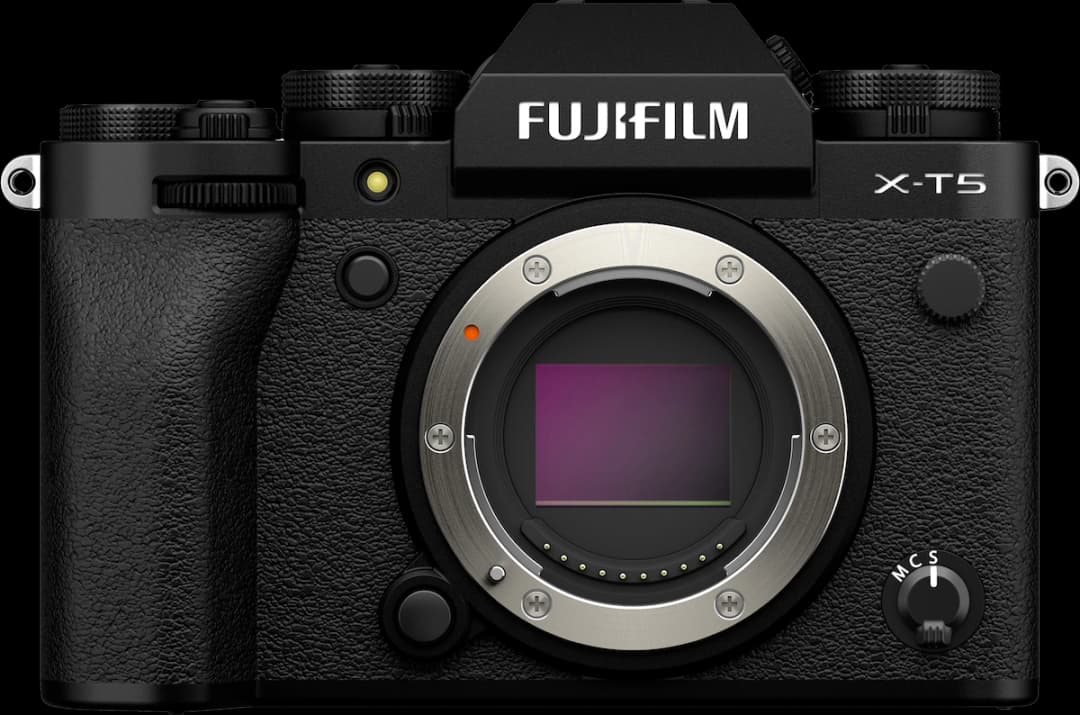
Fujifilm
X-T5
2022
Fujifilm X-H2 vs X-T5: Which One Deserves Your Money in 2026?
Visual summary
— Reads in 5 seconds
Fujifilm
X-H2
Fujifilm
X-T5
Where to buy
— Live merchant price comparator
Fujifilm X-H2
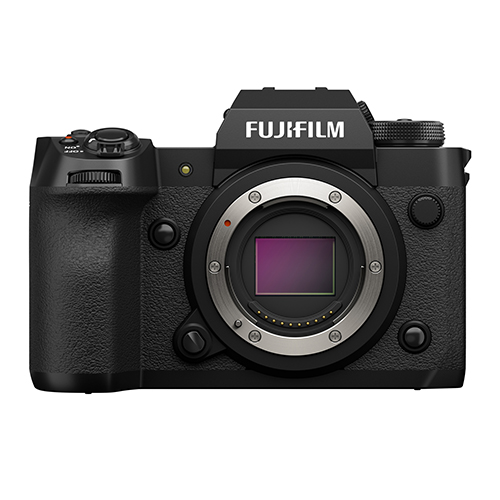
FUJIFILM X-H2 Body only
1 849 GBP · Clifton Cameras


Fujifilm X-T5

FUJIFILM X-T5 Mirrorless Camera - Silver, Body Only, Silver/Grey
1 549 GBP · Amazon UK


You'll find the best prices on the market here, updated daily — and by going through these partner links, you support Camera Duel without paying a cent more.
The arbitration in brief
The X-H2 stands out for video and long burst work; the X-T5 wins with its compactness and slightly superior battery life, but falls short on almost all the technical criteria that matter.
Both bodies were released in 2022, on the same X-Trans CMOS 5 HR platform, with the same 40.2-megapixel APS-C sensor. Fujifilm made a deliberate choice: not to differentiate them by the sensor, but by positioning. The X-H2 is the production-oriented hybrid body, with a bulky chassis, comprehensive connectivity and extended video capabilities. The X-T5 is the compact photo body, designed for photographers who want the X-H2's resolution in a more discreet format.
The X-H2 launched at 1,999 USD. The X-T5 at 1,699 USD. The 300 USD gap is not insignificant, but it does not tell the whole story. In 2026, both bodies are available on the used market at significantly lower prices, making the comparison even more relevant for buyers who do not want to pay new prices.
This comparison settles four concrete questions. First, does the X-H2's video advantage (8K, ProRes, active cooling) justify the premium? Second, does the X-H2's deeper buffer (162 RAW images versus 114) make a practical difference for a wedding or reportage photographer? Third, does the X-T5 compensate for its technical concessions with its size and weight (557 g versus 660 g)? Fourth, is the X-T5's single SD slot a deal-breaker in a professional context?
Both bodies share the X-mount, the same 425-point AF covering 100 % of the frame, the same native sensitivity up to 12,800 ISO, the same 7-stop IBIS stabilisation and the same weather sealing. Differentiation happens elsewhere. That is exactly what we will unpack.
Standout strengths
— Where each camera shines
Fujifilm
X-H2
Top advantages
- 720 Mb/sMax bitrate2× vs Fujifilm X-T5
- 162RAW buffer+42 % vs Fujifilm X-T5
- OuiActive coolingAbsent sur Fujifilm X-T5
- OuiDual Native ISOAbsent sur Fujifilm X-T5
Fujifilm
X-T5
Top advantages
- OuiOpen GateAbsent sur Fujifilm X-H2
- 557 gWeight+18 % vs Fujifilm X-H2
- 1.84 M dotsScreen resolution+14 % vs Fujifilm X-H2
- 580 clichésBattery life (CIPA)+7 % vs Fujifilm X-H2
Video reviews
— Long-form reviews
Fujifilm X-H2
—
Fujifilm X-T5
Fujifilm X-T5 Final Review
DPReview TV · 10 min
Detailed spec-by-spec
— Round by round, the eight categories
Sensor
Autofocus
Speed & burst
Video
Stabilisation
Build
Ergonomics & screen
Connectivity & battery
Detailed analysis analysis
— Strengths, trade-offs and ideal user
Fujifilm X-H2: what it does well, what it concedes
The X-H2 carries an X-Trans CMOS 5 HR sensor of 40.2 megapixels with a measured dynamic range of 10.8 EV. That is 0.4 EV more than the X-T5. The gap is modest in landscape work, but it translates into a slight extra margin when recovering highlights in RAW. For portraiture in high-contrast natural light, it can avoid an exposure compromise.
The RAW buffer is one of the real points of differentiation. The X-H2 handles 162 RAW images in electronic burst at 20 fps before saturating. The X-T5 stops at 114 images. In practice, at 20 fps, the X-H2 sustains 8.1 seconds of continuous burst versus 5.7 seconds for the X-T5. On a wedding, a civil ceremony or sports reportage, this margin avoids having to manage the buffer mid-action.
Video is where the X-H2 pulls furthest ahead:
- 8K up to 30 fps versus 6.2K on the X-T5.
- ProRes 422 HQ, ProRes 422, ProRes 422 LT codecs recorded internally, absent on the X-T5.
- Maximum bitrate of 720 Mb/s versus 360 Mb/s.
- Integrated active cooling, unlimited recording without thermal throttling.
- Dual native ISO and proxy recording, two functions absent on the X-T5.
The chassis is more substantial: 660 g and 136.3 x 92.9 x 84.6 mm. It is not a discreet body. In return, it offers dual CFexpress Type B and SD UHS-II slots, a 5.76-million-dot EVF (versus 3.69 M dots on the X-T5) and a full-size Type A HDMI output. For shooting with an external monitor or a photographer who backs up simultaneously, these points are not negligible.
The main concession of the X-H2 is its weight and bulk. On light travel or hiking, the extra 103 g and body depth are noticeable over a full day.
For whom
The X-H2 suits the hybrid photographer or videographer who works in a professional context and cannot afford to lose images. The dual slot is an essential safety net for weddings and assignments where a second pass is impossible. The 162-image RAW buffer and ProRes codecs meet real production demands. This body also appeals to the content creator who delivers rushes directly into post-production without recompression. Conversely, it does not suit the traveller who trims every gram from their bag, nor the photographer who will never use video beyond 4K H.265.
Fujifilm X-T5: what it does well, what it concedes
The X-T5 shares the X-Trans CMOS 5 HR sensor of 40.2 megapixels with the X-H2. Measured dynamic range is 10.4 EV, i.e. 0.4 EV less. In practice, for landscape or portrait work, this gap is imperceptible in everyday use. Both bodies produce comparable RAW files in stills.
The X-T5 weighs 557 g with dimensions of 129.5 x 91 x 63.8 mm. It is a noticeably more compact body, especially in depth (63.8 mm versus 84.6 mm). Paired with pancake or lightweight prime X-mount lenses, it forms a credible travel kit. I have used a body of this size on coastal hikes in Brittany in damp weather: the weather sealing delivers, and the compactness genuinely reduces fatigue by the end of the day.
CIPA battery life is 580 shots versus 540 for the X-H2. The difference is small, but the X-T5 takes the point. The rear screen shows 1.84 million dots versus 1.62 M dots on the X-H2, a difference visible under a loupe but without decisive impact in real conditions.
The X-T5's concessions are clear:
- Single SD UHS-II slot: no real-time redundant backup.
- Buffer limited to 114 RAW images: saturates faster in long bursts.
- No ProRes, no active cooling, no proxy recording.
- Micro Type D HDMI output: adapter required for an external monitor.
Open-gate mode is the only video specification where the X-T5 leads the X-H2. It allows use of the full sensor area for anamorphic shooting or flexible cropping in post. It is a genuine advantage for specific creative use, but it does not offset the absence of ProRes and active cooling for regular professional video work.
For whom
The X-T5 is made for the photo-centric photographer who wants 40.2 megapixels in a compact format. It suits the traveller who optimises bag weight, the street photographer who wants a discreet body, and the landscape photographer who does not need dual slots. Conversely, the single slot is a deal-breaker for any professional who cannot risk losing a card mid-assignment. Video is functional but limited: this body does not suit serious hybrid use.
Our verdict
Which one to buy, and why
The X-H2 wins this comparison on 5 rounds (sensor, speed, video, build, partial ergonomics). The X-T5 takes 2 rounds (overall ergonomics, connectivity). AF is a perfect tie. This tally reflects a simple reality: the X-H2 is the more complete of the two bodies, and its 300 USD launch premium is justified by concrete specifications, not marketing.
The deal-breakers are identifiable without ambiguity. The X-T5's single SD slot is unacceptable for any professional photographer who works without a safety net. Losing a wedding or reportage card is not an option. The X-H2 answers this requirement with dual CFexpress Type B and SD UHS-II slots. Conversely, the X-H2's weight (660 g body only, no lens) is a real barrier for light travel or street photography over a full day.
On video, the verdict is clear:
- ProRes 422 HQ recorded internally on the X-H2, absent on the X-T5.
- 720 Mb/s maximum bitrate versus 360 Mb/s.
- Active cooling on the X-H2: long recording without thermal cut-off.
- Dual native ISO and proxy recording on the X-H2, absent on the X-T5.
If you shoot video regularly and professionally, the X-T5 is not the right tool. The X-H2 is the only one of the two that supports a serious hybrid workflow.
In 2026, both bodies are available on the used market at attractive prices. Used X-H2 prices run around 1,200 to 1,400 USD depending on condition. The X-T5 trades between 950 and 1,100 USD. The gap remains proportional, and the used X-H2 offers excellent value for a videographer or wedding photographer seeking a durable solution.
The opinion is clear-cut: choose the X-H2 if you work professionally, in hybrid photo-video, or if you need a deep buffer and dual slots. Choose the X-T5 only if weight and compactness are your absolute priority and you accept the single slot as a deliberate constraint. For any other use, the X-H2 delivers more for a price gap that no longer justifies hesitation.
Frequently asked questions
Before you buy, the questions we get
Which one to choose for professional wedding photography?
The X-H2, without hesitation. The dual slot (CFexpress Type B + SD UHS-II) allows simultaneous real-time backup. This is a baseline requirement in a professional context: losing a card without backup is a serious fault. The X-T5 offers only a single SD slot, which is a deal-breaker for this type of assignment. The X-H2's 162-image RAW buffer versus 114 on the X-T5 is an additional advantage during long sequences (bride and groom entrance, first look).
Does the 300 USD gap between the two bodies justify itself?
Yes, if you use video or the dual slot. The X-H2 brings internal ProRes 422 HQ, a 720 Mb/s bitrate (versus 360 Mb/s), active cooling, dual native ISO and proxy recording. These functions have real production value. If you only shoot stills and accept the single slot, the gap is harder to justify. In 2026, on the used market, the difference narrows to roughly 200 to 300 USD: the X-H2 remains the better investment for versatile use.
Should I give in to the 8K effect if I only shoot 4K?
Not for final resolution, but capturing in 8K and downscaling to 4K improves image quality through oversampling. The X-H2 records 8K with oversampling enabled, producing a cleaner 4K than native 4K. This is a measurable advantage in sharpness and noise handling. If your final delivery is 4K, the X-H2 gives you a higher-quality image than the X-T5 limited to 6.2K. This is not a marketing argument: it is a direct consequence of the processing pipeline.
Is the X-T5 really sufficient for travel and hiking?
Yes, that is its natural territory. 557 g body only, 63.8 mm depth, certified weather sealing: it handles rain, cold and humidity. I have used bodies of this size in similar conditions in Brittany, and the compactness genuinely reduces fatigue over a full day of walking. Battery life of 580 shots CIPA is adequate. The limit remains the single slot: if you lose your SD card while hiking far from a retailer, your images are gone. Use a high-quality card and back up in the evening at your accommodation.
Which body will age better over the next two or three years?
The X-H2 has a structural advantage: the CFexpress Type B slot is more future-proof than the X-T5's SD UHS-II alone. CFexpress card speeds continue to rise, and the X-H2 will benefit. The 5.76-million-dot EVF on the X-H2 remains a reference in the APS-C range. On the software side, both bodies receive Fujifilm updates identically. The X-H2 ages better for hybrid use. The X-T5 remains relevant for pure stills, but its single slot will become an increasing constraint as RAW file sizes grow.