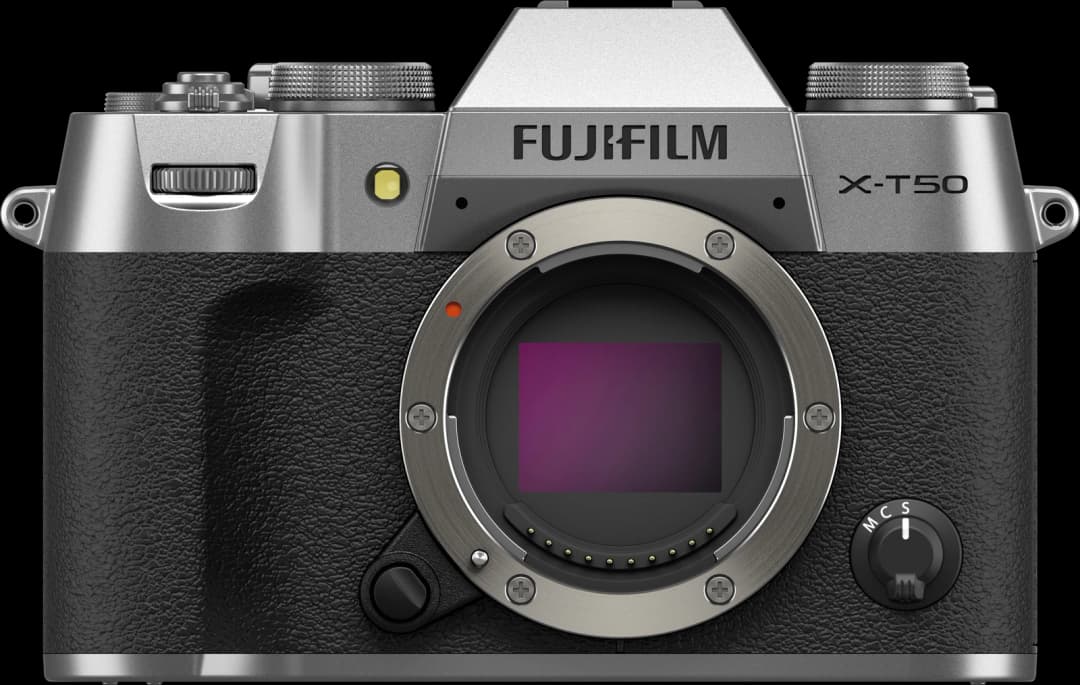
Fujifilm
X-T50
2024
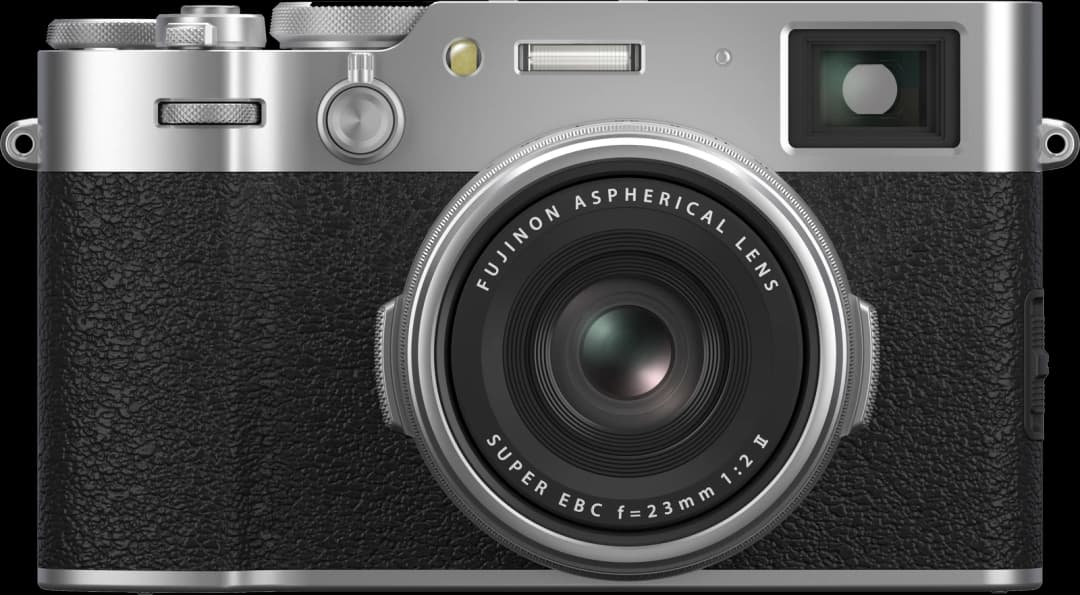
Fujifilm
X100VI
2024
Fujifilm X-T50 vs X100VI: which to choose between versatility and weather-sealed compactness?
Visual summary
— Reads in 5 seconds
Fujifilm
X-T50
Fujifilm
X100VI
Where to buy
— Live merchant price comparator
Fujifilm X-T50
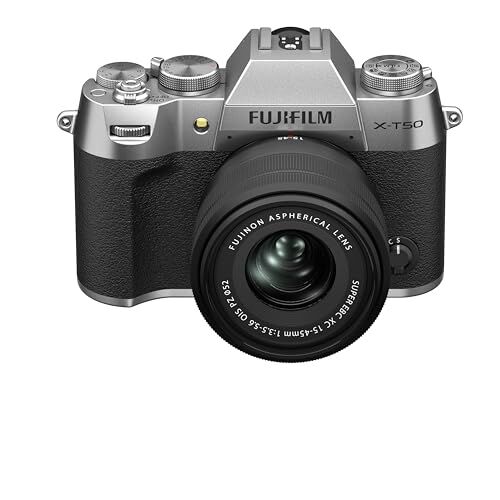
FUJIFILM X-T50 Mirrorless Camera with FUJINON XC 15-45 mm f/3.5-5.6 OIS PZ Lens - Silver, Silver/Grey
1 282,62 GBP · PcNova.co.uk


You'll find the best prices on the market here, updated daily — and by going through these partner links, you support Camera Duel without paying a cent more.
The arbitration in brief
The X100VI excels for travel and street thanks to its weather sealing and 450-shot battery life; the X-T50 convinces in video and viewfinder ergonomics for studio or reportage use.
Both cameras share the same 40.2-megapixel X-Trans CMOS 5 HR sensor and were released the same year. On paper, the matchup looks close. In practice, the two cameras target very different user profiles.
The X-T50 is an interchangeable-lens X-mount hybrid. It targets the photographer who wants access to the full Fujinon ecosystem, with classic ergonomics and a high-magnification viewfinder. Its launch price is $1,399.
The X100VI is an expert compact with a fixed 23 mm f/2 lens (35 mm equivalent). It continues a cult line at Fujifilm, with built-in weather sealing and improved battery life. Its launch price is $1,599, or $200 more.
This comparison judges four concrete questions: does the price gap justify the specs? Which holds up better in tough conditions? Which offers the best video experience? And which will age better in a travel bag? camera-duel.com's overall scores give the X-T50 6.6 in photo and 6.9 in video, against 6.7 in photo and 6.9 in video for the X100VI. The gap is tiny. So the decision comes down to the details of each spec.
Standout strengths
— Where each camera shines
Fujifilm
X-T50
Top advantages
- 360 Mb/sMax bitrate1,8× vs Fujifilm X100VI
- 7 stopsIBIS rating+17 % vs Fujifilm X100VI
- -7 EVAF low light (EV)+2 vs Fujifilm X100VI
- OuiUnlimited recordingAbsent sur Fujifilm X100VI
Fujifilm
X100VI
Top advantages
- 11 fpsMechanical burst+38 % vs Fujifilm X-T50
- OuiOpen GateAbsent sur Fujifilm X-T50
- 3.69 M dotsViewfinder resolution1,6× vs Fujifilm X-T50
- 84RAW buffer+6 % vs Fujifilm X-T50
Detailed spec-by-spec
— Round by round, the eight categories
Sensor
Autofocus
Speed & burst
Video
Stabilisation
Build
Ergonomics & screen
Connectivity & battery
Detailed analysis analysis
— Strengths, trade-offs and ideal user
Fujifilm X-T50: what it does well, what it concedes
The X-T50 features the same 40.2-megapixel X-Trans CMOS 5 HR sensor as the X100VI. Its native ISO range runs from 125 to 12,800, with extension to 51,200. Measured dynamic range data is unavailable from cross-referenced sources for this camera, unlike the X100VI which scores 10.4 EV on DXOMark. This point warrants attention: the lack of published measurement does not confirm inferiority, but it prevents a direct numerical comparison.
Autofocus covers 100% of the frame with 425 points, human and animal eye detection, and works down to -4 EV in low light. Mechanical burst tops out at 8 fps, electronic burst at 20 fps with a 79 RAW-image buffer. These are solid figures for reportage and action portraiture, but mechanical burst is 3 fps slower than the X100VI.
Where the X-T50 pulls ahead is on three specific points:
- 7 stops of IBIS versus 6 stops on the X100VI, a measurable advantage for handheld long exposures.
- 60 fps in 4K video versus 30 fps on the X100VI, useful for slow motion or filmed sports.
- Unlimited video recording versus a 30-minute limit on the X100VI, a decisive edge for long shoots.
The EVF offers 0.93× magnification, the highest of the two. This is a tangible asset for precise composition and bright-light work. The 1.84 M-dot screen beats the X100VI's (1.62 M dots). CIPA battery life is 305 shots, or 145 shots less than the X100VI. This is the most noticeable daily compromise. The UHS-II SD card partially offsets this with faster transfer speeds than the X100VI's UHS-I. The body lacks weather sealing: deal-breaker for any outdoor use in humidity or rain.
For whom
The X-T50 suits the photographer who wants access to the full Fujinon X-mount lens ecosystem, from wide-angles to telephotos. It works well for studio portraiture, indoor reportage, vlog-style or short documentary video. Unlimited recording and 60 fps in 4K make it a serious tool for content creators who film continuously. The 0.93× viewfinder magnification will appeal to photographers used to DSLRs. However, it does not suit anyone who works regularly in rain or humid environments, due to the lack of weather sealing.
Fujifilm X100VI: what it does well, what it concedes
The X100VI shares the same 40.2-megapixel sensor as the X-T50. It adds data missing from its rival: 10.4 EV dynamic range measured by DXOMark. This is the only sensor spec that differentiates the two on paper, favouring the X100VI for high-contrast scenes, especially in travel or outdoors.
Autofocus works down to -5 EV in low light, or 1 EV better than the X-T50. This gap is modest but real in very dark environments, like concerts or unlit interiors. Mechanical burst reaches 11 fps versus 8 fps on the X-T50, and the RAW buffer holds 84 images versus 79. These figures remain in the same performance bracket.
The X100VI's strengths focus on four areas:
- Certified weather sealing, absent on the X-T50, deal-breaker for travel in wet conditions.
- 450 shots CIPA battery life versus 305, or 47% more, a tangible daily advantage.
- 6K video in open gate mode, versus 4K max on the X-T50, useful for post-crop without quality loss.
- EVF with 3.69 M dots versus 2.36 M, for a sharper, more detailed image.
The trade-offs are real. Video is limited to 30 minutes per clip, ruling out long shoots. 4K video burst tops out at 30 fps, versus 60 fps on the X-T50. The UHS-I SD card is slower than the X-T50's UHS-II for file transfers. The lens is fixed: 23 mm f/2, 35 mm equivalent. This is a definitive choice. Anyone needing a telephoto or ultra-wide must go for the X-T50.
For whom
The X100VI is made for the travel, travel, travel, street or environmental portrait photographer who wants a single compact, weather-sealed body with a versatile fixed lens. Its 450-shot battery life and robustness make it a reliable companion for long outdoor days. It also suits the photographer seeking a discreet camera, less bulky than an interchangeable-lens hybrid. However, it does not suit the videographer shooting long sequences, nor anyone needing to change focal lengths by situation.
Our verdict
Which one to buy, and why
Overall scores are nearly identical: 6.6 photo and 6.9 video for the X-T50, 6.7 photo and 6.9 video for the X100VI. The decision does not hinge on raw sensor performance, which is identical. It hinges on the deal-breakers.
The first deal-breaker is weather sealing. The X100VI has it, the X-T50 does not. For any photographer working outdoors, in rain, by the sea or in humid environments, this ends the debate. Weather sealing is not a luxury on a $1,399 body: it is basic protection that Fujifilm should have included on the X-T50.
The second deal-breaker is the X100VI's fixed lens. The 23 mm f/2 excels for street and travel. But it is fixed. Anyone needing focal flexibility, telephoto or macro must choose the X-T50 and the X-mount ecosystem.
Other gaps rank as follows:
- Long-duration video: X-T50 wins with unlimited recording and 60 fps in 4K.
- Battery life: X100VI wins with 450 shots versus 305, or 47% more.
- IBIS: X-T50 wins with 7 stops versus 6 stops.
- Viewfinder: X-T50 wins on magnification (0.93× versus 0.66×), X100VI on resolution (3.69 M versus 2.36 M dots).
On value for money, the X100VI costs $200 more at launch. This difference is justified by weather sealing and superior battery life, but not by sensor or AF performance. On the used market, both now trade below launch prices, but the X100VI remains more sought-after due to its iconic expert compact status.
My verdict: choose the X100VI if you travel often, work outdoors and accept the fixed-lens constraint. Choose the X-T50 if you need lens flexibility, long-duration video or a high-magnification viewfinder. The lack of weather sealing on the X-T50 remains a hard-to-forgive weakness at this price.
Frequently asked questions
Before you buy, the questions we get
Which to choose for a long trip with minimal gear?
The X100VI wins out. Its weather sealing protects against rain and humidity. Its 450-shot battery life reduces reliance on power outlets. Its 521 g weight exceeds the X-T50's (438 g), but no interchangeable lenses make up for it in total luggage volume. The fixed 23 mm f/2 lens covers most travel and street situations. If you need long focal lengths for wildlife or distant architecture, the X-T50 with a Fujinon telephoto is the only option.
Is the X-T50 a better video tool than the X100VI?
Yes, on two specific points. The X-T50 records 4K at 60 fps where the X100VI maxes at 30 fps. It records without time limit, versus 30 minutes on the X100VI. For a vlogger or documentarian shooting long sequences, the X-T50 is the logical choice. The X100VI offers 6K open gate video, useful for post-cropping, but this resolution does not offset the 30-minute limit for professional or semi-pro use.
Does the $200 gap between the two bodies justify itself?
Partially. The X100VI costs $1,599 versus $1,399 for the X-T50. Weather sealing and superior battery life (450 versus 305 shots) justify part of the gap for field use. However, sensor performance is identical, AF nearly so, and video is inferior on the X100VI. If you do not need weather sealing and film regularly, the X-T50 offers better functional value for the price.
Which has the best low-light autofocus?
The X100VI reaches -5 EV versus -4 EV for the X-T50. The 1 EV gap doubles AF light sensitivity. In practice, this becomes noticeable in very dark environments: unlit concerts, interiors with a single candle, night scenes without fill. For normal or moderately low light, both perform equivalently. The X100VI edges ahead only in the most extreme conditions.
Which will age better in five years?
The X-T50 benefits from the X-mount ecosystem, with over 90 compatible lenses. It can evolve with new optics without a body change. The X100VI is tied to its fixed lens: it will age as a complete unit, without upgrade options. However, the X100 series holds historically high resale value on the used market, which can offset this. For long-term investment in a system, the X-T50 is more future-proof. For a compact you keep as-is, the X100VI remains relevant.