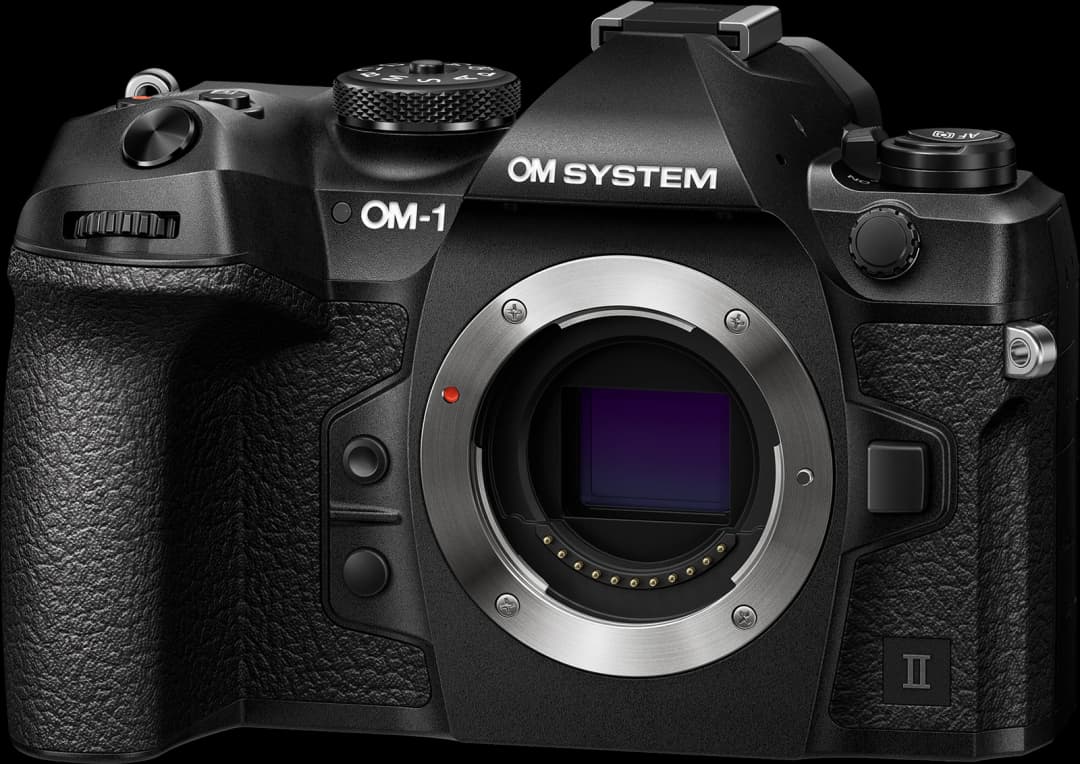
OM System
OM-1 Mark II
2024
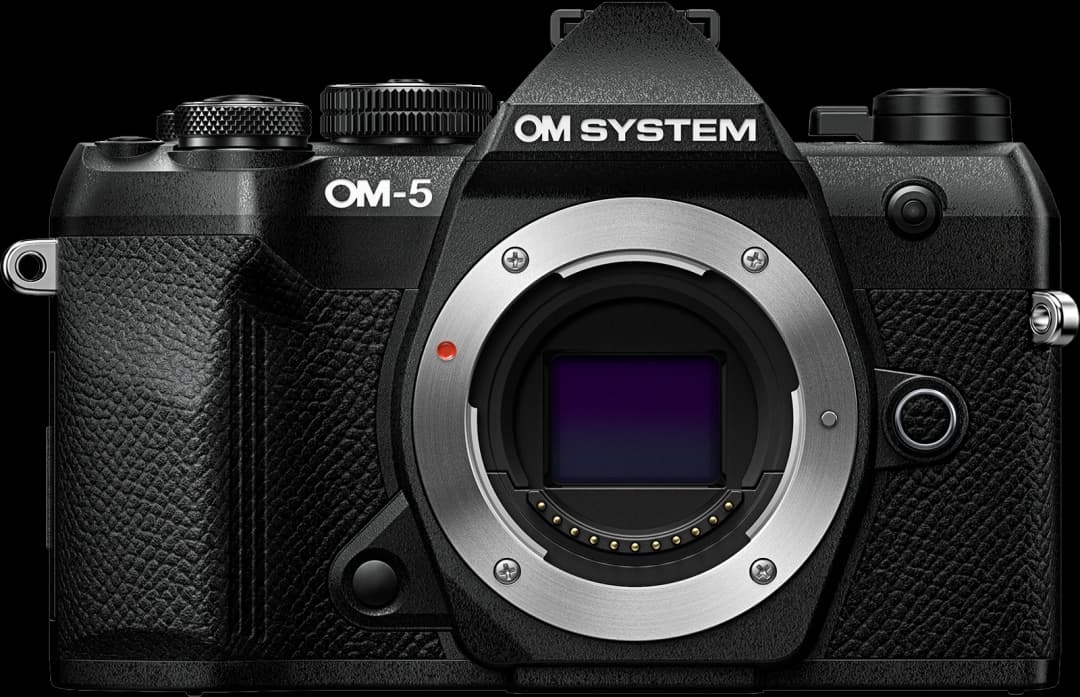
OM System
OM-5 Mark II
2024
OM System OM-1 Mark II vs OM-5 Mark II: Which Justifies Its Price in 2026?
Visual summary
— Reads in 5 seconds
OM System
OM-1 Mark II
OM System
OM-5 Mark II
Where to buy
— Live merchant price comparator
OM System OM-5 Mark II

OM SYSTEM OM-1 Mark II Micro Four Thirds System Camera, 20 MP BSI Stacked Sensor, 5-Axis Image Stabilisation, Black
1 399,99 GBP · amazon.co.uk


You'll find the best prices on the market here, updated daily — and by going through these partner links, you support Camera Duel without paying a cent more.
The arbitration in brief
The OM-1 Mark II dominates on almost all technical fronts; the OM-5 Mark II only holds up if weight and budget are absolute constraints.
Both bodies share the same Micro Four Thirds mount, the same 2024 vintage and the same 20.4-megapixel resolution. On paper the comparison looks close. In practice it is not.
The OM-1 Mark II is OM System’s flagship. It carries a stacked CMOS sensor, electronic burst at 120 fps, AF with 1 053 points and stabilisation rated at 8.5 stops. Its launch price is 2 399 USD. It is built for photographers who accept no performance compromises.
The OM-5 Mark II sits in the mid-range. It uses a conventional CMOS sensor, electronic burst capped at 30 fps and AF with 121 points. Its launch price is 1 199 USD, exactly half. It targets travel and street photographers who value discretion and lightness, tipping the scales at 418 grams.
The 1 200 USD gap between the two bodies is the first figure to keep in mind. This is not a comparison between equals: it is a question of range hierarchy. What follows is an analysis of what you actually buy at each price point and when the difference is justified—or not.
Standout strengths
— Where each camera shines
OM System
OM-1 Mark II
Top advantages
- 1053AF points8,7× vs OM System OM-5 Mark II
- 102 400Extended ISO max4× vs OM System OM-5 Mark II
- 120 fpsElectronic burst4× vs OM System OM-5 Mark II
- 240 fpsMax video fps2× vs OM System OM-5 Mark II
OM System
OM-5 Mark II
Top advantages
- 418 gWeight+43 % vs OM System OM-1 Mark II
- 237 Mb/sMax bitrate+17 % vs OM System OM-1 Mark II
Detailed spec-by-spec
— Round by round, the eight categories
Sensor
Autofocus
Speed & burst
Video
Stabilisation
Build
Ergonomics & screen
Connectivity & battery
Detailed analysis analysis
— Strengths, trade-offs and ideal user
OM System OM-1 Mark II: what it does well, what it concedes
The stacked CMOS sensor in the OM-1 Mark II is the camera’s centrepiece. Stacked technology allows far faster sensor readout than a conventional CMOS. The direct result is electronic burst at 120 fps with negligible rolling shutter and a RAW buffer of 213 frames. For sport or wildlife that is a capability the OM-5 Mark II simply cannot approach.
AF follows the same logic. With 1 053 points versus 121 on the OM-5 Mark II, detection density is in a different league. Low-light performance reaches -8 EV, versus -2 EV on the lower model. Animal detection is present, which is not the case on the OM-5 Mark II. These three factors combined make the OM-1 Mark II a credible tool for wildlife and sport, where the OM-5 Mark II falls short.
There are concessions. The body weighs 599 grams, 181 grams more than the OM-5 Mark II. That is noticeable on a full day’s walking. The EVF shows 5.76 million dots with 0.83x magnification, a genuine strength. Yet the 2 399 USD price legitimately raises the question: do the uses justify the investment?
Key strengths to remember:
- 120 fps electronic burst with 213-frame RAW buffer.
- AF with 1 053 points, animal detection, low-light threshold at -8 EV.
- IBIS at 8.5 stops and dual SD UHS-II slots.
- CIPA battery life of 520 shots versus 310 on the OM-5 Mark II.
The OM-1 Mark II is a body with no technical blind spots in the MFT range.
For whom
The OM-1 Mark II suits the photographer who works across several disciplines and refuses to swap bodies between uses. The travel photographer who also shoots wildlife or sports reportage will find genuine versatility here. The hybrid videographer will appreciate proxy recording, external ProRes RAW support, H.265 profiles and 4:2:2 subsampling. The wedding photographer benefits from dual SD UHS-II slots as a safety net and 120 fps burst to capture every moment. It is also a body for demanding conditions: certified weather-sealing, 8.5-stop IBIS for handheld long exposures, and native ISO down to 80.
OM System OM-5 Mark II: what it does well, what it concedes
The OM-5 Mark II builds its identity on two arguments: weight and price. At 418 grams it is the lightest weather-sealed body in the OM System range. For a travel or street photographer walking several hours a day, the 181-gram difference versus the OM-1 Mark II is tangible and daily.
The conventional CMOS sensor shares the same 20.4-megapixel resolution as the OM-1 Mark II. Limits appear quickly, however. Minimum native ISO is 200, versus 80 on the OM-1 Mark II. There is no ISO extension beyond 25 600. Dynamic range is not stated in verified sources, so direct comparison is not possible. Electronic burst tops out at 30 fps and the RAW buffer is not publicly documented.
The 121-point AF covers 100 % of the sensor, but density remains low. Animal detection is absent. The low-light threshold stops at -2 EV, six stops above the OM-1 Mark II. For daytime street or travel photography in normal conditions that is adequate. For wildlife or sport it is not.
Concessions to accept:
- Single SD UHS-II card slot, a deal-breaker for professionals.
- Electronic burst at 30 fps only, buffer undocumented.
- EVF with 2.36 million dots and 0.69x magnification, clearly inferior.
- CIPA battery life of 310 shots, 210 fewer than the OM-1 Mark II.
The OM-5 Mark II is an honest body within its limits. It does not claim to rival the OM-1 Mark II on performance. It offers a different compromise.
For whom
The OM-5 Mark II suits the lightweight travel photographer who mainly shoots landscape, street and documentary work in normal conditions. It also fits the photographer migrating from a heavier system and wanting to reduce total kit weight without sacrificing weather-sealing. At 1 199 USD it represents a reasonable entry point into the OM System Micro Four Thirds ecosystem, with access to the full lens range. It is not suited to wildlife, sport or professional wedding work where the single card slot and limited AF become real obstacles.
Our verdict
Which one to buy, and why
The OM-1 Mark II wins seven of the eight rounds in this comparison. The OM-5 Mark II takes only one point: weight, with 418 grams versus 599 grams. The result faithfully reflects the reality of a contest between two distinct tiers of the range.
The deal-breakers for the OM-5 Mark II are clear. The single card slot is unacceptable for professional or semi-professional use. AF with 121 points, a -2 EV low-light threshold and the absence of animal detection close the door on sport, wildlife and low-light wedding work. Battery life of 310 shots forces spare batteries on any busy day.
Deal-breakers and comparative advantages:
- OM-1 Mark II: dual SD UHS-II slots, AF to -8 EV, 120 fps burst, 213-frame RAW buffer.
- OM-5 Mark II: single slot, AF to -2 EV, 30 fps burst, buffer undocumented.
- The price gap is 1 200 USD at launch, exactly the price of the OM-5 Mark II.
Value for money deserves a nuanced reading. At 2 399 USD the OM-1 Mark II is expensive. On the used market in 2026, however, first-generation OM-1 bodies (2022) trade at noticeably lower prices and share much of the same technical DNA. If budget is the main constraint, that route is worth exploring before settling for the OM-5 Mark II.
The verdict is clear: choose the OM-1 Mark II if you can absorb the price. The 1 200 USD difference buys a stacked sensor, AF six stops more sensitive, burst four times faster and dual card slots. For an active photographer that is not a luxury; it is a functional difference. The OM-5 Mark II only makes sense if weight is an absolute constraint and uses are strictly limited to travel and daytime street photography.
Frequently asked questions
Before you buy, the questions we get
Does the 1 200 USD gap between the two bodies really justify itself?
Yes, if your uses extend beyond normal-condition travel photography. The OM-1 Mark II adds a stacked CMOS sensor, electronic burst at 120 fps versus 30 fps, AF with 1 053 points versus 121, a low-light threshold at -8 EV versus -2 EV, dual SD UHS-II slots and battery life of 520 shots versus 310. If you shoot exclusively street and landscape in daylight, the gap is hard to justify. In every other case it is justified.
Which to choose for wedding photography?
The OM-1 Mark II without hesitation. Dual SD UHS-II slots are a prerequisite for any professional: losing a card during a wedding is an irreparable mistake. The 120 fps burst and 1 053-point AF with human eye detection guarantee reliable focus on decisive moments in difficult light. The OM-5 Mark II, with its single slot and AF limited to -2 EV, is not a suitable tool for this work.
Is the OM-5 Mark II sufficient for travel photography?
For the majority of travel photographers, yes. Weather-sealing is present on both bodies. 7.5-stop IBIS covers indoor or ambient low-light needs. The 418 grams are a real asset over several days of walking. The limit appears as soon as the trip includes wildlife or sport: 121-point AF and the -2 EV threshold are no longer enough. For urban or landscape travel the OM-5 Mark II is a coherent choice.
Which body will age better over the next few years?
The OM-1 Mark II. The stacked CMOS sensor remains a superior technology in readout speed and low-light performance. The 120 fps burst with 213-frame RAW buffer and dual SD UHS-II slots are features that retain relevance over time. The OM-5 Mark II, with a conventional CMOS sensor and single slot, will date more quickly against evolving competition. The Micro Four Thirds ecosystem is mature and stable, protecting both bodies on the optical side.
Does the OM-5 Mark II’s video performance catch up with the OM-1 Mark II?
Partially. The OM-5 Mark II shows a maximum video bitrate of 237 Mb/s versus 202 Mb/s on the OM-1 Mark II, its only measurable video advantage. Yet the OM-1 Mark II offers proxy recording, external ProRes RAW support, the H.265 codec, All-I and Long-GOP modes, and internal 4:2:2 subsampling. The OM-5 Mark II is limited to H.264 in IPB. For serious video use the OM-1 Mark II remains clearly superior despite the slightly lower bitrate.