Panasonic
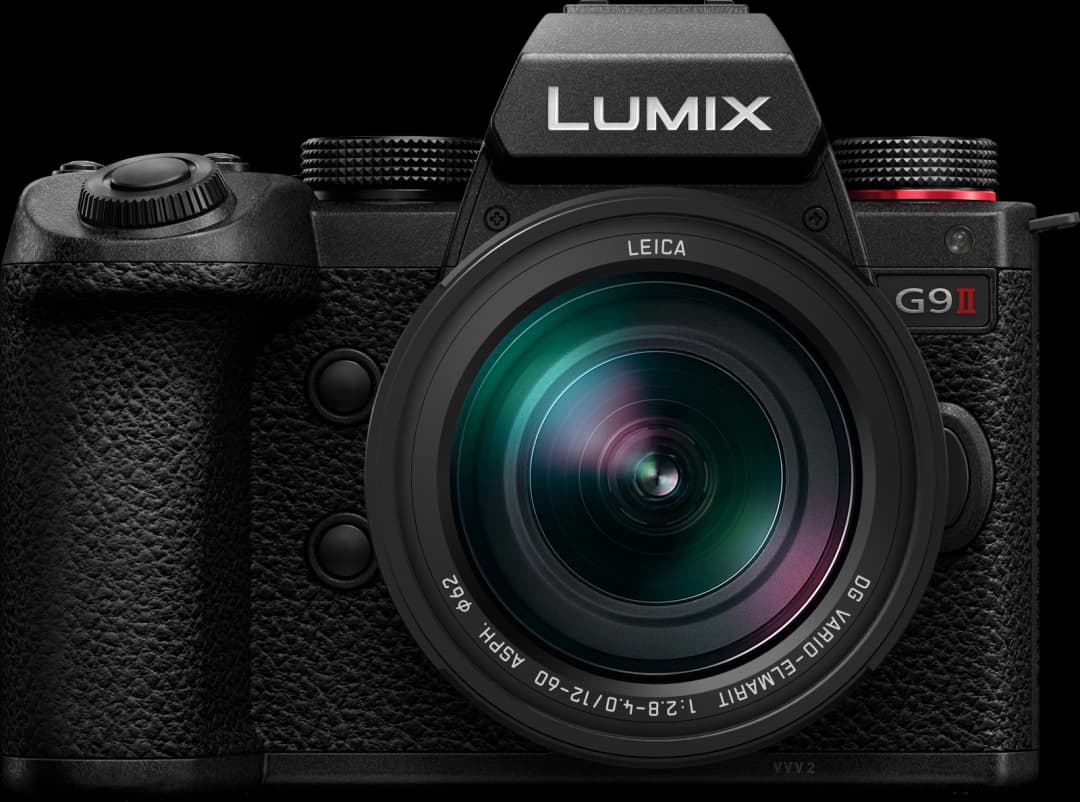
Lumix G9 II
2023
Panasonic
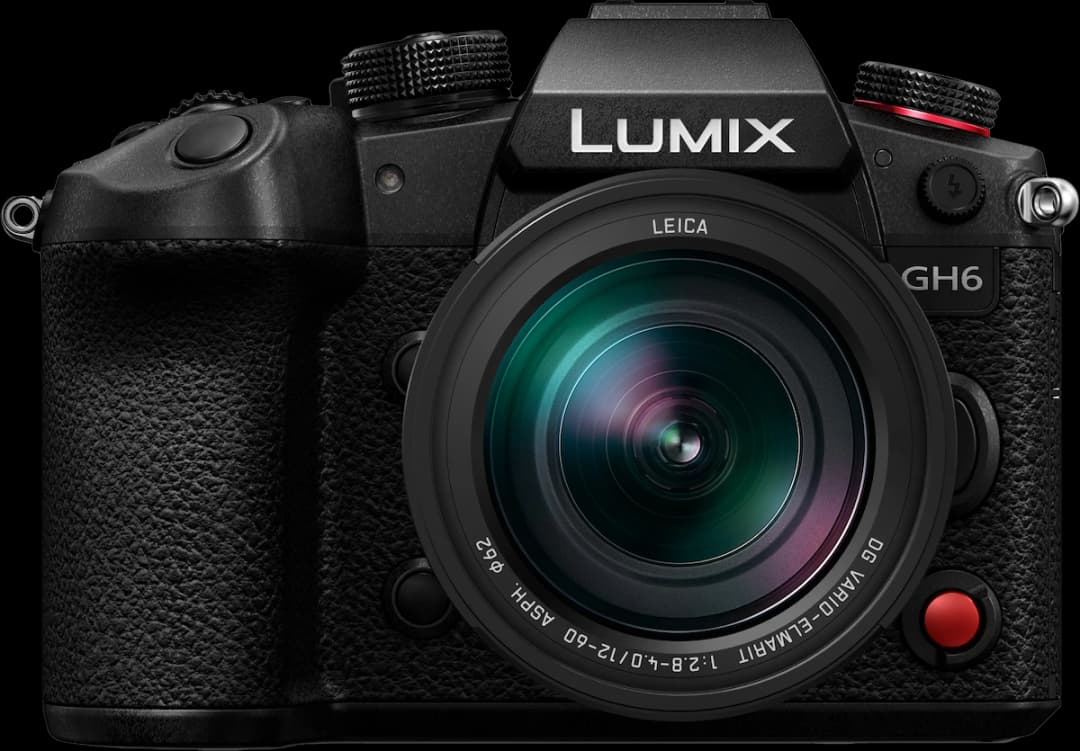
Lumix GH6
2022
Panasonic Lumix G9 II vs GH6: Which Still Deserves Your Budget in 2026?
Visual summary
— Reads in 5 seconds
Panasonic
Lumix G9 II
Panasonic
Lumix GH6
Where to buy
— Live merchant price comparator
Panasonic Lumix G9 II

Panasonic Lumix G9 II 12-60mm F2.8-4.0 25,21 MP Live MOS 11552 x 8672 pixels Noir
1 773,44 GBP · Quzo UK


You'll find the best prices on the market here, updated daily — and by going through these partner links, you support Camera Duel without paying a cent more.
The arbitration in brief
The G9 II dominates in photography, AF and ergonomics; the GH6 holds up only if you have a professional video workflow with XLR input and need native V-Log.
Two Micro Four Thirds bodies, the same 25-megapixel sensor, two positioning strategies that diverged from launch. The Lumix GH6 arrived in 2022 at 2 199 USD, aimed at the demanding hybrid videographer. The Lumix G9 II followed in 2023 at 1 899 USD, with a broader brief: sports, reportage, weddings, and competent video without sacrificing versatility.
In 2026 both bodies coexist on the used market and, for some retailers, still new. The original 300 USD launch gap in the G9 II’s favour has widened on the secondary market. The question is no longer which is newer. It is which matches your primary use.
Both share the Micro Four Thirds mount, weather-sealing, dual card slots, unlimited recording, 10-bit and full-size HDMI. On paper they look close. In the data the differences are clear and structural. Dynamic range, AF point density, electronic burst rate and viewfinder magnification clearly separate the two. On video the GH6 retains a targeted edge: native V-Log, built-in XLR input, and rolling shutter measured at 14 ms.
This comparison arbitrates between a hybrid photographer who wants versatility and a videographer working in semi-professional conditions with a controlled audio chain. Our algorithm scores sum up the stakes: the G9 II scores 7.5 in photo versus 6.5 for the GH6, while the GH6 edges back to 6.8 in video versus 6.6 for the G9 II. The gap is real, yet narrow in video. It is decisive in photography.
Standout strengths
— Where each camera shines
Panasonic
Lumix G9 II
Top advantages
- 779AF points3,5× vs Panasonic Lumix GH6
- 30 fpsElectronic burst2,1× vs Panasonic Lumix GH6
- 10.5 EVDynamic range (EV)+19 % vs Panasonic Lumix GH6
- 1.6×Viewfinder magnification2,1× vs Panasonic Lumix GH6
Panasonic
Lumix GH6
Top advantages
- OuiXLR inputAbsent sur Panasonic Lumix G9 II
- 200RAW bufferAbsent sur Panasonic Lumix G9 II
- 14 msRolling shutterAbsent sur Panasonic Lumix G9 II
Detailed spec-by-spec
— Round by round, the eight categories
Sensor
Autofocus
Speed & burst
Video
Stabilisation
Build
Ergonomics & screen
Connectivity & battery
Detailed analysis analysis
— Strengths, trade-offs and ideal user
Panasonic Lumix G9 II: what it does well, what it concedes
The G9 II uses a 25-megapixel MFT CMOS sensor with measured dynamic range of 10.5 EV. That is 1.7 EV more than the GH6. In practice it delivers markedly better highlight and shadow recovery in post, especially visible in landscapes and mixed-light weddings. It is the most structural sensor difference.
Autofocus is the second major strength. The G9 II deploys 779 AF points against 225 on the GH6, with low-light detection rated at -6 EV. Coverage reaches 100 % of the sensor. Human and animal eye detection exists on both, but point density changes tracking precision on fast-moving subjects. In electronic burst the G9 II reaches 30 fps where the GH6 tops out at 14 fps. For sport or wildlife that gap is decisive.
The G9 II’s three structural advantages:
- 10.5 EV dynamic range versus 8.8 EV on the GH6.
- 779 AF points with low-light detection at -6 EV.
- 30 fps electronic burst versus 14 fps.
The viewfinder deserves mention. The G9 II shows 1.6x magnification against 0.76x on the GH6. That is a considerable difference for precise photographic framing. Stabilisation compensates 8 stops versus 7.5 stops on the GH6. The main concession is the lack of native V-Log (HLG only internally) and no XLR input. For a professional video workflow those are real limits. Official RAW buffer figures are not published, so direct comparison with the GH6’s 200 RAW images is impossible on this criterion alone.
For whom
The G9 II suits the hybrid photographer who shoots stills first and video second. Typical profile: reporter or wedding photographer needing responsive AF, high burst rates and enough dynamic range to handle difficult light. It also fits the travel photographer wanting a weather-sealed, light (658 g) body with a comfortable viewfinder (1.6x) and 390-shot CIPA battery life. Videographers working solo without a dedicated sound recordist and without needing native V-Log will find the G9 II adequate for demanding hybrid productions.
Panasonic Lumix GH6: what it does well, what it concedes
The GH6 launched in 2022 as Panasonic’s reference MFT video body. Its 25-megapixel sensor shares the same format as the G9 II, yet measured dynamic range drops to 8.8 EV. That is a real concession in stills. In video the figure matters less thanks to V-Log, which offers greater grading latitude than HLG.
The most differentiating video strength is the built-in XLR input. It is a deal-breaker for videographers recording professional audio without an external adapter. The GH6 also offers native V-Log, absent on the G9 II. Rolling shutter is measured at 14 ms, data unavailable for the G9 II, giving the GH6 an edge on fast camera movements. The announced 200-image RAW buffer is an asset for sustained sequences, even though electronic burst is capped at 14 fps.
The GH6’s targeted strengths:
- Native V-Log for professional grading without conversion.
- Built-in XLR input for location audio without adapters.
- 200-image RAW buffer for sustained sequences.
- CFexpress Type B primary slot for high-bitrate video.
The concessions are serious in stills. AF counts only 225 points, with no published low-light data. Electronic burst is limited to 14 fps. Weight reaches 823 g, 165 g more than the G9 II. The viewfinder shows 0.76x magnification, well behind the G9 II’s 1.6x. The GH6 is a video tool first. In photography it trails measurably on almost every technical criterion.
For whom
The GH6 targets the hybrid videographer working in semi-professional conditions. Typical profile: documentary maker, event videographer or independent operator needing a controlled audio chain via XLR, native V-Log for post-production grading, and CFexpress Type B support for high data rates. It also suits crews shooting multicam Panasonic and requiring colour consistency with a GH5 or S5. In 2026 its used price makes it accessible, yet its advantage over the G9 II narrows to a very specific video use case.
Our verdict
Which one to buy, and why
The G9 II wins this comparison on five of eight rounds. It leads on the sensor (10.5 EV versus 8.8 EV), autofocus (779 points versus 225, low-light at -6 EV), stabilisation (8 stops versus 7.5), ergonomics (viewfinder 1.6x versus 0.76x, weight 658 g versus 823 g) and connectivity (battery life 390 shots versus 360). Its photo score of 7.5 out of 10 versus 6.5 for the GH6 reflects those gaps.
The GH6 regains the lead only on one precise use: video shooting with a professional audio workflow. Built-in XLR, native V-Log and rolling shutter measured at 14 ms are three concrete arguments. Its video score of 6.8 out of 10 versus 6.6 for the G9 II is real, yet narrow. For the vast majority of hybrid videographers who do not need XLR or native V-Log, the G9 II covers the same ground.
Deal-breakers to remember:
- Built-in XLR: if you record location audio without an adapter, the GH6 is the only choice.
- Native V-Log: if your post-production workflow relies on V-Log, the GH6 is indispensable.
- 1.6x viewfinder: if you shoot through the eye, the G9 II has no competition in this MFT range.
- 30 fps electronic: if you cover sport or wildlife, the GH6 cannot keep up.
On value in 2026 the G9 II is newer, was cheaper at launch, and is more versatile. On the used market the GH6 appears at attractive prices, but its photographic limits remain structural regardless of price. Buying a used GH6 for wedding or reportage photography would be a positioning error.
The verdict is clear: choose the G9 II in the overwhelming majority of cases. Only if you specifically need built-in XLR and native V-Log in an MFT body does the GH6 remain relevant. Outside that narrow case, the G9 II is the better buy.
Frequently asked questions
Before you buy, the questions we get
Which should I choose to photograph a wedding in 2026?
The G9 II is the logical choice. Its 10.5 EV dynamic range lets you recover highlights indoors and shadows outdoors. Its 779 AF points with human-eye detection deliver reliable focus on moving subjects. The 30 fps electronic burst covers decisive moments. The GH6, with 8.8 EV dynamic range and 225 AF points, trails on every one of these criteria. For the video portion of the wedding the G9 II is sufficient unless you need XLR.
Is the GH6 really better in video than the G9 II?
Slightly, and only on specific criteria. The GH6 offers native V-Log, built-in XLR input and rolling shutter measured at 14 ms. The G9 II is limited to internal HLG and has no XLR. On every other video parameter ( 6K resolution, 10-bit, 240 fps, unlimited recording, external ProRes RAW) the two bodies are equivalent. Our algorithm’s video score gives the GH6 6.8 versus 6.6 for the G9 II. The gap is real but narrow. If you do not need XLR or V-Log, the G9 II is enough.
Does the price difference between the two still make sense in 2026?
The GH6 launched at 2 199 USD versus 1 899 USD for the G9 II, a 300 USD premium for a body released one year earlier. In 2026 the G9 II is newer and more versatile. On the used market the GH6 can be found at lower prices, which may make it attractive for a videographer on a tight budget who specifically needs XLR and V-Log. For any other use, paying more for the GH6, even used, is not justified.
Is the GH6 viewfinder really inferior to the G9 II’s?
Yes, and the difference is significant. The G9 II shows 1.6x magnification versus 0.76x on the GH6. Resolution is virtually identical (3.69 M dots versus 3.68 M dots). In practice 1.6x magnification offers more comfortable, precise manual-focus framing and less fatigue over long sessions. The GH6 uses an OLED panel, improving contrast, but that does not offset the magnification gap for still photography.
Which body will age better in the Micro Four Thirds ecosystem?
The G9 II is newer (2023 versus 2022) and benefits from a more modern AF system with 779 points and -6 EV low-light detection. Panasonic firmware updates have historically supported recent bodies longer. The MFT ecosystem remains active with both OM System and Panasonic. The G9 II is better positioned to absorb future software developments. The GH6 remains a solid tool, but its 225-point AF already carries a structural lag that firmware cannot close.