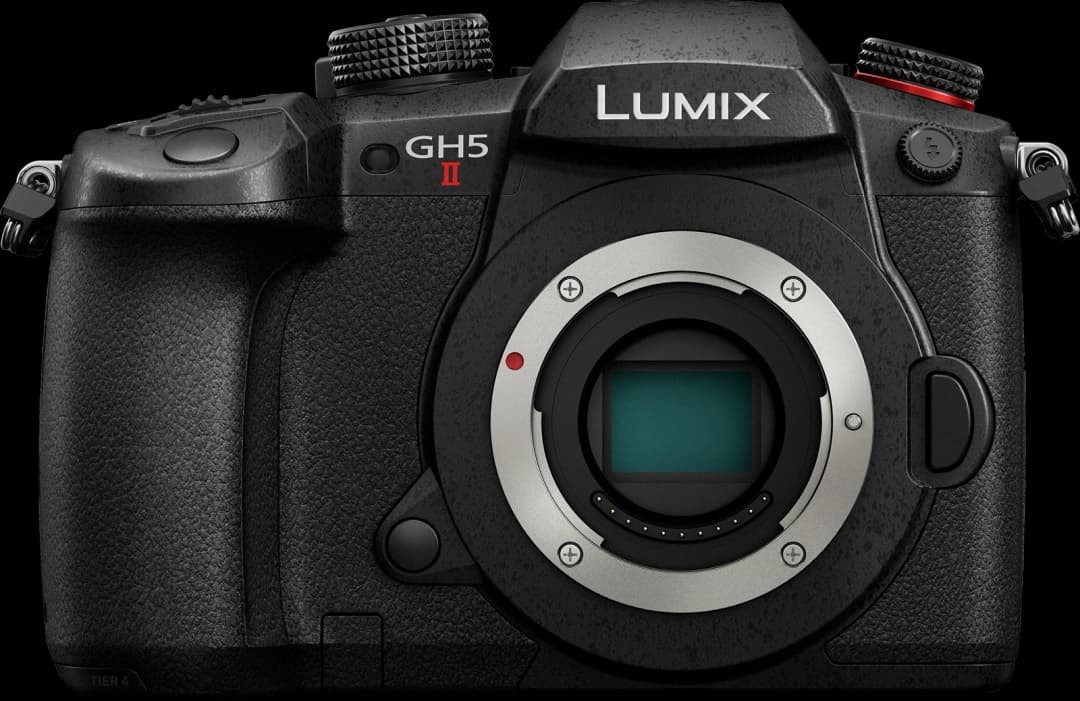
Panasonic
Lumix GH5 II
2021
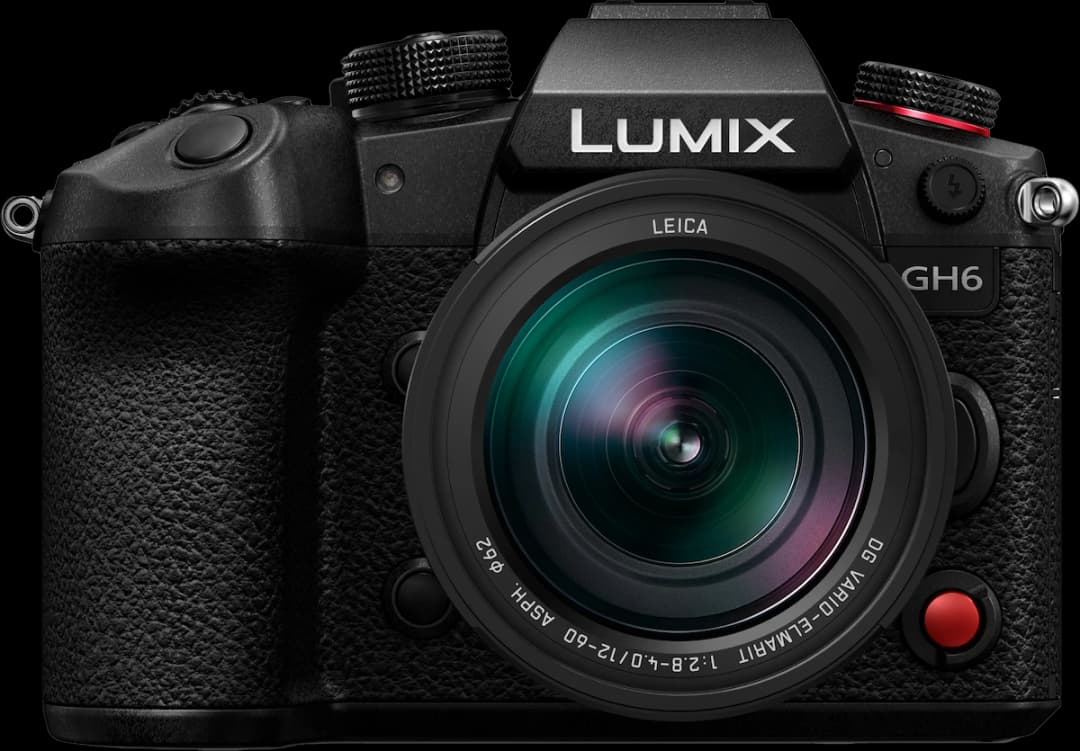
Panasonic
Lumix GH6
2022
Panasonic GH5 II vs GH6: Which to Choose for Hybrid Video in 2026?
Visual summary
— Reads in 5 seconds
Panasonic
Lumix GH5 II
Panasonic
Lumix GH6
Where to buy
— Live merchant price comparator
Panasonic Lumix GH6
Panasonic Lumix GH6 Mirrorless Camera with 12-35mm Lumix Lens + Batter
1 419 GBP · Scan Computers
You'll find the best prices on the market here, updated daily — and by going through these partner links, you support Camera Duel without paying a cent more.
The arbitration in brief
The GH6 outperforms the GH5 II on almost all video and sensor fronts, but the GH5 II remains relevant on occasion for tight budgets.
The Panasonic Lumix GH5 II was released in 2021, the GH6 in 2022. Only a year apart, yet a generation apart on several critical specs. Both bodies share the same Micro Four Thirds mount, the same overall size and the same hybrid photo-video vocation. They target independent videographers, wedding photographers and content creators who want a weather-sealed, versatile and compact tool.
The GH5 II launched at 1 699 USD, the GH6 at 2 199 USD. The 500 USD gap at launch has narrowed today on the used market, making the comparison even more relevant in 2026. The GH5 II was designed as an incremental evolution of the original GH5: same 20,3 MP sensor, improved AF, unlimited recording added. The GH6 breaks more decisively with the previous generation: new 25 MP sensor, 6K video, IBIS raised to 7,5 stops, CFexpress Type B slot.
This comparison settles three concrete questions. First, does the 500 USD gap justify measurable gains? Second, does the GH5 II retain a real advantage in dynamic range and professional connectivity? Third, which will age better in an MFT ecosystem that evolves slowly? The data come from Panasonic datasheets, cross-referenced with DPReview, DXOMark and DigicamDB.
Standout strengths
— Where each camera shines
Panasonic
Lumix GH5 II
Top advantages
- 400 Mb/sMax bitrate2× vs Panasonic Lumix GH6
- 10.2 EVDynamic range (EV)+16 % vs Panasonic Lumix GH6
- OuiGenlock + Time CodeAbsent sur Panasonic Lumix GH6
- 1/16000Max shutter speedvs 1/8000
Panasonic
Lumix GH6
Top advantages
- 51 200Extended ISO max2× vs Panasonic Lumix GH5 II
- 25 MPMegapixels+23 % vs Panasonic Lumix GH5 II
- 100Native ISO min2× vs Panasonic Lumix GH5 II
- 240 fpsMax video fps+33 % vs Panasonic Lumix GH5 II
Detailed spec-by-spec
— Round by round, the eight categories
Sensor
Autofocus
Speed & burst
Video
Stabilisation
Build
Ergonomics & screen
Connectivity & battery
Detailed analysis analysis
— Strengths, trade-offs and ideal user
Panasonic Lumix GH5 II: what it does well, what it concedes
The GH5 II carries a 20,3 MP sensor with a measured dynamic range of 10,2 EV. That is 1,4 EV more than the GH6. In practice it means more latitude in post-production on high-contrast scenes, backlit landscapes or interiors with windows. For a photographer working in RAW and recovering highlights, the difference is concrete and measurable.
On video the GH5 II tops out at C4K at 180 fps with a maximum bitrate of 400 Mb/s. This bitrate exceeds that of the GH6 (200 Mb/s) and guarantees denser, less compressed files that are more workable in heavy grading. It also supports genlock and timecode, functions absent on the GH6, making it the stronger choice for synchronised multicamera shoots. Log profile compatibility is extensive: V-Log L, HLG, Cinelike D2, Cinelike V2, Like709.
The concessions are real:
- 727 g versus 823 g for the GH6, a mobility advantage.
- Battery life of 400 CIPA shots versus 360 for the GH6.
- Electronic shutter up to 1/16 000 s versus 1/8 000 s on the GH6, useful in bright light with wide apertures.
- IBIS at 6,5 stops versus 7,5 stops on the GH6, one stop less compensation.
- Extended ISO limited to 25 600 versus 51 200 on the GH6.
The deal-breaker for the GH5 II is its video ceiling: C4K maximum, no 6K, no open gate. For purely photographic use or for a videographer working in 4K with multicamera sync constraints, it remains relevant. For a creator who wants 6K cropping headroom, it is outclassed.
For whom
The GH5 II suits the videographer who works in multicamera production and needs native genlock and timecode. It also suits the hybrid photographer who values raw dynamic range (10,2 EV) and battery life (400 shots) over resolution. Typical profile: independent documentary director, wedding photographer who also shoots short clips, or content creator buying used to keep the budget under 1 000 USD in 2026.
Panasonic Lumix GH6: what it does well, what it concedes
The GH6 steps up resolution with 25 MP on an MFT sensor identical in size (17,3 x 13 mm). Pixel density rises, benefiting cropping and large-format prints. In return, measured dynamic range drops to 8,8 EV, 1,4 EV less than the GH5 II. This loss is noticeable in landscape photography or high-contrast situations. It is less penalising in video, where log and grading absorb part of the difference.
Video is where the GH6 excels. It records up to 6K, with an open-gate mode and expanded anamorphic options (1,3x, 1,5x, 1,8x, 2,0x). Burst rate reaches 14 fps mechanical and electronic, versus 12 fps on the GH5 II. IBIS reaches 7,5 stops, one stop more, which makes a concrete difference for handheld video at slow shutter speeds. Rolling shutter is measured at 14 ms, a figure not published for the GH5 II. The CFexpress Type B slot absorbs high bitrates without buffer saturation.
The concessions on the GH6 are clear:
- Dynamic range at 8,8 EV, 1,4 EV below the GH5 II.
- Maximum video bitrate 200 Mb/s, versus 400 Mb/s on the GH5 II.
- No native genlock or timecode, ruling out synchronised multicamera work without external gear.
- Weight 823 g, 96 g more than the GH5 II.
- Battery life 360 CIPA shots, 40 shots fewer.
The GH6 is the logical choice for a videographer who wants resolution headroom, superior stabilisation and a more complete video feature set. The ProRes RAW output to an external recorder is an extra advantage the GH5 II does not offer.
For whom
The GH6 is built for the solo videographer who wants a single tool covering 4K and 6K, with 7,5-stop stabilisation for handheld shooting. It also suits the wedding or portrait photographer who values the 25 MP for cropping and large prints. Typical profile: YouTube or documentary videographer working alone, wedding photographer who also delivers short 4K films, or creator planning to move to 6K for future productions.
Our verdict
Which one to buy, and why
The GH6 wins this comparison on five of the eight categories analysed: sensor, speed, video, stabilisation and partial ergonomics. The GH5 II takes AF (thanks to the low-light limit of -4 EV, a figure not published for the GH6), connectivity (battery life 400 shots, genlock, timecode) and raw dynamic range (10,2 EV versus 8,8 EV).
The deal-breakers are clear:
- If you shoot synchronised multicamera, the genlock and timecode on the GH5 II are non-negotiable. The GH6 does not offer them.
- If you work in landscape or high-dynamic-range photography, the 10,2 EV of the GH5 II versus 8,8 EV on the GH6 is a concrete advantage in post-production.
- If you need 6K, open gate, 7,5-stop IBIS or external ProRes RAW output, the GH6 is the only option.
On value for money in 2026, the GH5 II regularly appears under 800 USD used, sometimes under 700 USD in good condition. The GH6 sits around 1 000 to 1 200 USD used. The 300 to 400 USD gap between them is justified if you actually use 6K, the improved IBIS or the CFexpress slot. It is not justified if your work is standard 4K with sync constraints.
My clear verdict: choose the GH6 in the vast majority of cases. The combination of 7,5-stop IBIS, 6K video, 25 MP and external ProRes RAW represents a tool that will age better in the years ahead. The GH5 II remains relevant only used, under 750 USD, for specific multicamera work or for a photographer who places sensor dynamic range above everything else. Outside these two precise cases, the GH6 is the better investment.
Frequently asked questions
Before you buy, the questions we get
Which to choose for wedding photography in 2026?
The GH6 is better suited to weddings. Its 25 MP give more cropping latitude and its 7,5-stop IBIS compensates better in difficult low-light conditions indoors. Eye AF is present on both bodies. The GH5 II retains an advantage in dynamic range (10,2 EV versus 8,8 EV), useful for backlit ceremony shots, but the gap is not enough to overturn the verdict. If you also deliver wedding films in 4K or 6K, the GH6 is the logical choice.
Does the 500 USD launch gap still justify itself today?
In 2026 the used gap is roughly 300 to 400 USD. It is justified if you use 6K video, 7,5-stop IBIS or external ProRes RAW output. It is not justified if your work is standard 4K with genlock or if you buy mainly for landscape photography, where the GH5 II defends its 10,2 EV of dynamic range better. Calculate your real usage before deciding.
Does the GH5 II catch up with the GH6 in low light thanks to its -4 EV AF?
On low-light AF the GH5 II is ahead: its declared limit is -4 EV, a figure absent from the GH6’s official specifications. In practice this means the GH5 II locks onto subjects in darker conditions. On the other hand the GH6 offers extended ISO up to 51 200 versus 25 600 on the GH5 II, which partially compensates for exposure. Both bodies remain MFT sensors: neither matches full-frame in low light.
Does the CFexpress slot on the GH6 really change anything in practice?
Yes, for high-resolution video. The CFexpress Type B slot on the GH6 absorbs high bitrates without buffer saturation, especially in 6K All-Intra. The GH5 II relies on two SD UHS-II slots, sufficient for C4K at 400 Mb/s but limiting if you move up in resolution. If you shoot in 6K or plan to, CFexpress is a concrete advantage. For standard 4K use the two configurations are equivalent.
Which will age better in the MFT ecosystem?
The GH6 will age better. Its 6K video, 7,5-stop IBIS, external ProRes RAW output and CFexpress slot give it wider headroom for years to come. The MFT ecosystem evolves slowly, but lenses remain compatible between the two bodies. The GH5 II is a solid tool but at the end of its cycle: its video specs top out at C4K and its 400 Mb/s bitrate does not offset the lack of 6K in the long term.