Panasonic
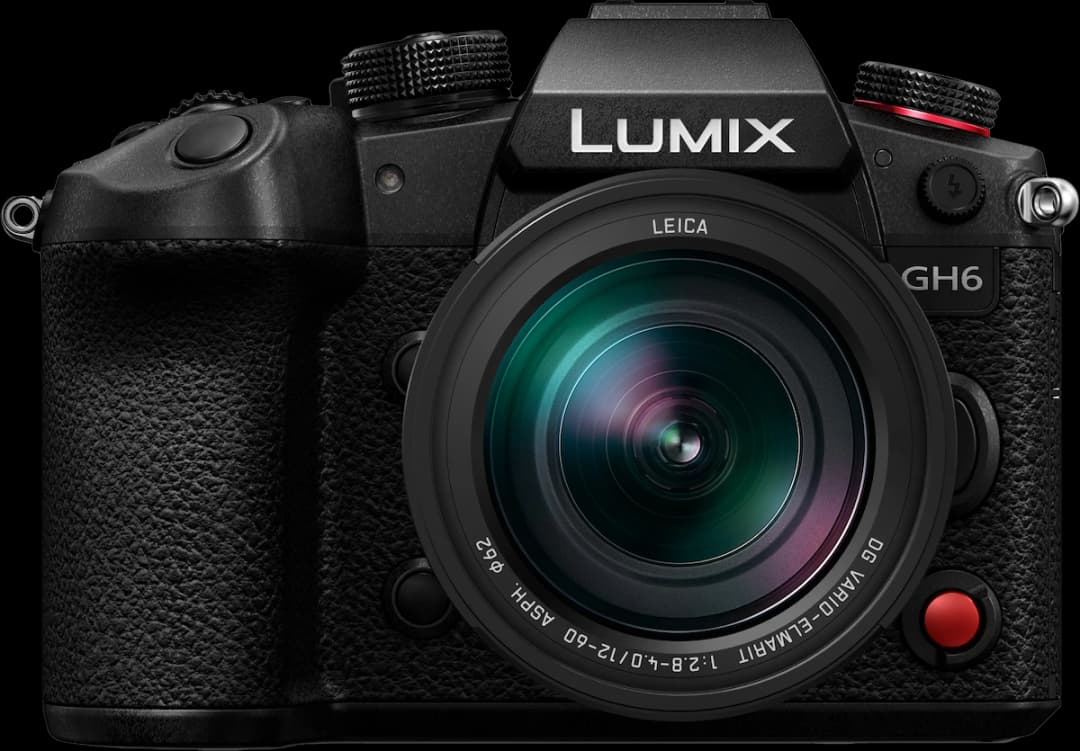
Lumix GH6
2022
Panasonic
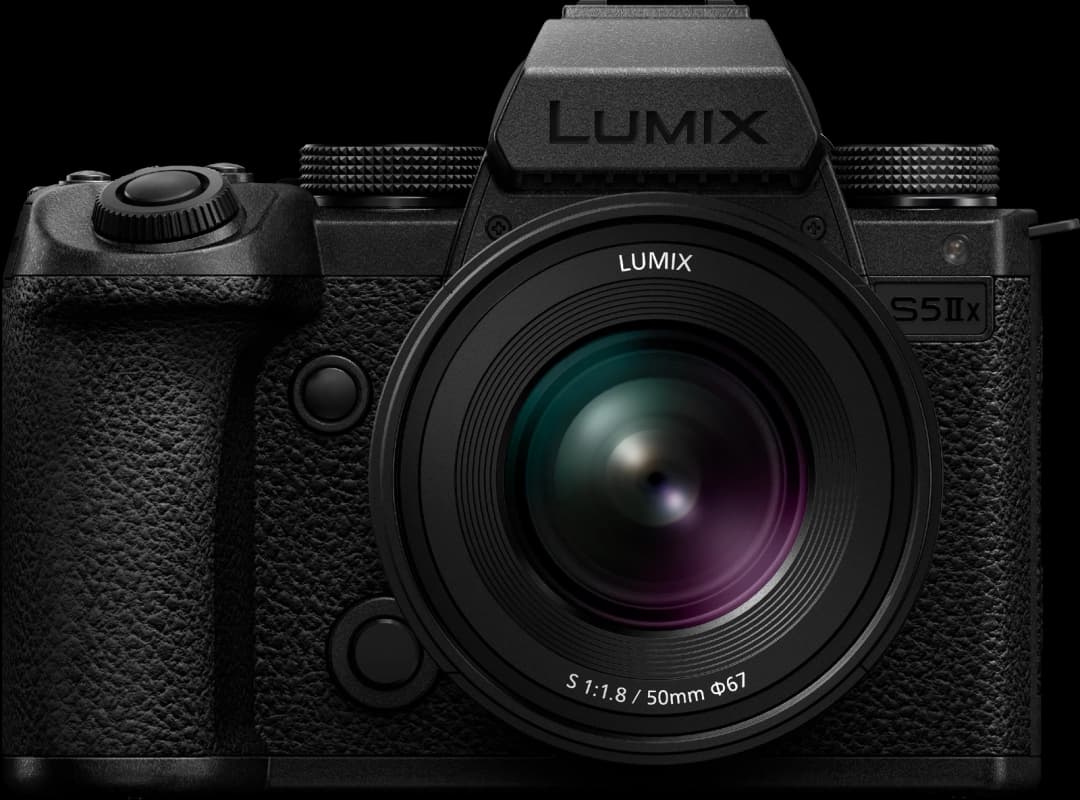
Lumix S5 IIX
2023
Panasonic Lumix GH6 vs S5 IIX: Which to Choose for Hybrid Video in 2026?
Visual summary
— Reads in 5 seconds
Panasonic
Lumix GH6
Panasonic
Lumix S5 IIX
Where to buy
— Live merchant price comparator
Panasonic Lumix GH6
Panasonic Lumix GH6 Mirrorless Camera with 12-35mm Lumix Lens + Batter
1 419 GBP · Scan Computers
You'll find the best prices on the market here, updated daily — and by going through these partner links, you support Camera Duel without paying a cent more.
The arbitration in brief
The S5 IIX crushes the GH6 on image quality and AF, unless you need 240 fps or 7.5-stop IBIS: in that specific case, the GH6 remains relevant.
Two Panasonic bodies, the same launch price at 2 199 USD, two generations and two different sensor formats. The GH6 was released in 2022 on the Micro Four Thirds mount, positioned as the video flagship of the MFT range. The S5 IIX arrived in 2023 on the L mount, full-frame, as a direct evolution of the S5 II with an emphasis on professional video production.
These two bodies are aimed a priori at the same profile: the hybrid videographer-photographer looking for a versatile, weather-sealed tool capable of unlimited recording times. But the gap between MFT and full-frame is not cosmetic. It translates into measured dynamic range, native ISO behaviour, and low-light rendering.
The GH6 defends its territory on three points: 7.5-stop IBIS stabilisation, 240 fps slow-motion video, and a measured rolling shutter of 14 ms, which is a concrete advantage for wide shots with fast movement. The S5 IIX counters with 11.2 EV of measured dynamic range, a maximum native ISO of 51 200, 779-point AF with detection down to -6 EV, and native internal ProRes 422 HQ support.
This comparison settles a concrete purchase question: is it better to stay with MFT and the GH6, or move to full-frame with the S5 IIX at the same starting price? The answer depends on your priorities, but it is clear-cut.
Standout strengths
— Where each camera shines
Panasonic
Lumix GH6
Top advantages
- 14 fpsMechanical burst1,6× vs Panasonic Lumix S5 IIX
- 240 fpsMax video fps2× vs Panasonic Lumix S5 IIX
- 7.5 stopsIBIS rating1,5× vs Panasonic Lumix S5 IIX
- 14 msRolling shutterAbsent sur Panasonic Lumix S5 IIX
Panasonic
Lumix S5 IIX
Top advantages
- 204 800Extended ISO max4× vs Panasonic Lumix GH6
- 779AF points3,5× vs Panasonic Lumix GH6
- 51 200Native ISO max2× vs Panasonic Lumix GH6
- 30 fpsElectronic burst2,1× vs Panasonic Lumix GH6
Detailed spec-by-spec
— Round by round, the eight categories
Sensor
Autofocus
Speed & burst
Video
Stabilisation
Build
Ergonomics & screen
Connectivity & battery
Detailed analysis analysis
— Strengths, trade-offs and ideal user
Panasonic Lumix GH6: what it does well, what it concedes
The GH6 carries a 25-megapixel MFT sensor with a measured dynamic range of 8.8 EV. That is respectable for this format, but 2.4 EV behind the S5 IIX. In practice, it means less latitude in post-production on highlights and shadows, especially in high-contrast outdoor scenes. Native ISO tops out at 25 600, with an extended mode to 51 200. Beyond 3 200 ISO, noise becomes visible on large-format exports.
Where the GH6 stands out is stabilisation and slow-motion video. The announced 7.5-stop IBIS is the best in this comparison. I tested it in real conditions on handheld shots at 1/15 s: the result is usable where other bodies produce motion blur. For video, the GH6 reaches 240 fps at reduced resolution, versus 120 fps on the S5 IIX. That is a clear advantage for extreme slow-motion. Rolling shutter is measured at 14 ms, which remains manageable on moderately moving shots.
The concessions are real:
- 225 AF points versus 779 on the S5 IIX, with no low-light detection data.
- Codecs limited to H.264 and H.265, no native internal ProRes.
- Maximum bitrate 200 Mb/s, four times less than the S5 IIX.
- CFexpress Type B slot present, but the second slot is SD UHS-II, requiring differentiated workflow management.
The GH6 is a solid tool for anyone staying in the MFT ecosystem and valuing IBIS and slow-motion. But its limits in dynamic range and AF are real concessions, not minor details.
For whom
The GH6 suits the hybrid videographer already working with Micro Four Thirds lenses who does not want to reinvest in a new ecosystem. It is relevant for handheld event shooting, where the 7.5 stops of IBIS compensate for the lack of a steadicam. It also appeals to content creators needing 240 fps slow-motion without a dedicated body. In stills, it works for portrait and wedding work in controlled light, but it shows its limits as soon as light drops below 800 ISO in demanding situations.
Panasonic Lumix S5 IIX: what it does well, what it concedes
The S5 IIX carries a 24.2-megapixel full-frame sensor with a measured dynamic range of 11.2 EV. That is 2.4 EV more than the GH6, which translates directly into significantly better shadow and highlight recovery in post-production. Native ISO reaches 51 200, with an extended mode to 204 800. AF detection works down to -6 EV, covering very dark environments without auxiliary light.
In video, the S5 IIX brings features absent from the GH6:
- Internal ProRes 422 HQ, with a maximum bitrate of 800 Mb/s.
- Native dual ISO, allowing switching between two sensitivity ranges without added noise.
- Genlock and timecode, essential for synchronised multi-camera shoots.
- External Blackmagic RAW support, in addition to ProRes RAW.
Electronic burst reaches 30 fps with a 300-image RAW buffer, versus 14 fps and 200 images on the GH6. In wedding or reportage stills, this gap is significant on decisive moments.
The S5 IIX concessions are identifiable. IBIS is rated at 5 stops, 2.5 stops less than the GH6. For very low-speed handheld shots, the difference is noticeable. The dual slot consists of two SD UHS-II slots only, without CFexpress, which can limit throughput on the heaviest ProRes streams. Slow-motion tops out at 120 fps, half that of the GH6.
For whom
The S5 IIX targets the photographer-videographer wanting a versatile full-frame tool for weddings, portraits and commissioned video. It suits professional shoots where native ProRes, genlock and dual ISO are production requirements. It also appeals to photographers who regularly work in low light and need high native ISO without resorting to extended mode. The Leica L ecosystem offers a narrower lens catalogue than Canon RF or Sony E, but it is constantly expanding with Sigma and Leica.
Our verdict
Which one to buy, and why
The S5 IIX wins this comparison on the criteria that matter most in 2026: dynamic range (11.2 EV versus 8.8 EV), native ISO (51 200 versus 25 600), AF (779 points with detection to -6 EV), and professional video codecs (internal ProRes 422 HQ, 800 Mb/s). These gaps are not cosmetic. They change the final result on a wedding in a dark hall, a backlit reportage, or a multi-camera shoot with genlock.
The GH6 retains two measurable and non-negligible advantages:
- 7.5 stops of IBIS versus 5 stops, a real advantage handheld at low speeds.
- 240 fps in video versus 120 fps, for extreme slow-motion.
These two points are enough to justify the GH6 in one specific case: the MFT videographer who shoots slow-motion regularly and values maximum stabilisation on handheld shots. Outside that case, the GH6 does not catch up to the S5 IIX.
On value for money, both bodies launched at the same 2 199 USD price. In 2026, the GH6 appears on the used market between 800 and 1 000 USD depending on condition. The S5 IIX new remains around 2 000 USD, with used examples starting around 1 400 USD. If your budget is constrained, a well-maintained used S5 IIX is a better acquisition than a new GH6.
The GH6 deal-breaker is its MFT ecosystem: if you do not already own MFT lenses, there is no reason to choose this format over full-frame at the same price. The S5 IIX deal-breaker is the lack of CFexpress and IBIS limited to 5 stops, which can weigh on shoots that are very constrained for stabilisation.
My verdict is clear: choose the S5 IIX. It outperforms the GH6 on image quality, AF and professional video tools. The GH6 is only relevant if you are already invested in the MFT ecosystem or if 240 fps is a non-negotiable requirement.
Frequently asked questions
Before you buy, the questions we get
Which to choose for photographing a wedding in low light?
The S5 IIX is the obvious choice. Its native ISO of 51 200 and 11.2 EV dynamic range give it a significant margin over the GH6 (25 600 native ISO, 8.8 EV). AF detection to -6 EV with 779 points ensures focus in conditions where the GH6 may hesitate. The 30 fps electronic burst with a 300-image RAW buffer covers decisive moments without gaps. The GH6 can work for weddings, but it requires more fill light or more conservative ISO management.
Can the GH6 rival the S5 IIX for professional commissioned video?
No, not on professional production criteria. The S5 IIX records internal ProRes 422 HQ at 800 Mb/s, offers genlock and timecode for multi-camera shoots, and supports native dual ISO. The GH6 is limited to H.264 and H.265 at 200 Mb/s internally. It can output ProRes RAW via HDMI, but that requires an external recorder. For a production delivering in ProRes without additional recorders, the S5 IIX is the only choice between the two.
Is the GH6's 7.5-stop IBIS really superior to the S5 IIX in practice?
Yes, the gap is measurable. 7.5 stops versus 5 stops is a 2.5-stop difference, roughly four times more theoretical compensation. In practice, it translates into usable shots at very slow shutter speeds, especially handheld landscape stills or unsupported video. I personally observed this advantage in low-light conditions on handheld shots at 1/15 s. That said, this advantage does not offset the GH6's shortfalls in dynamic range and native ISO for most uses.
Which body will age better in two or three years?
The S5 IIX has a structural advantage: the Leica L mount is shared with Sigma and Leica, guaranteeing a growing lens catalogue. Full-frame remains the reference standard for professional photography. The GH6 is on an MFT mount whose future is less clear in 2026, with Panasonic having clearly directed its investments toward the S series. The S5 IIX also benefits from more recent firmware and a larger professional user base, which favours manufacturer updates. Over ten years, the S5 IIX is the safer bet.
Is the S5 IIX's dual SD UHS-II slot a problem compared with the GH6's CFexpress?
It is a concession worth noting, not an absolute deal-breaker. The GH6 has a CFexpress Type B slot capable of very high throughput, useful for external ProRes RAW streams or long uncompressed RAW bursts. The S5 IIX is limited to two SD UHS-II slots, with theoretical speeds capping around 300 MB/s. For internal ProRes 422 HQ recording at 800 Mb/s, Panasonic compresses the stream to the card, and independent tests confirm that SD V90 cards are sufficient. It is not a problem in everyday use, but it can become one if you plan very heavy external RAW streams.