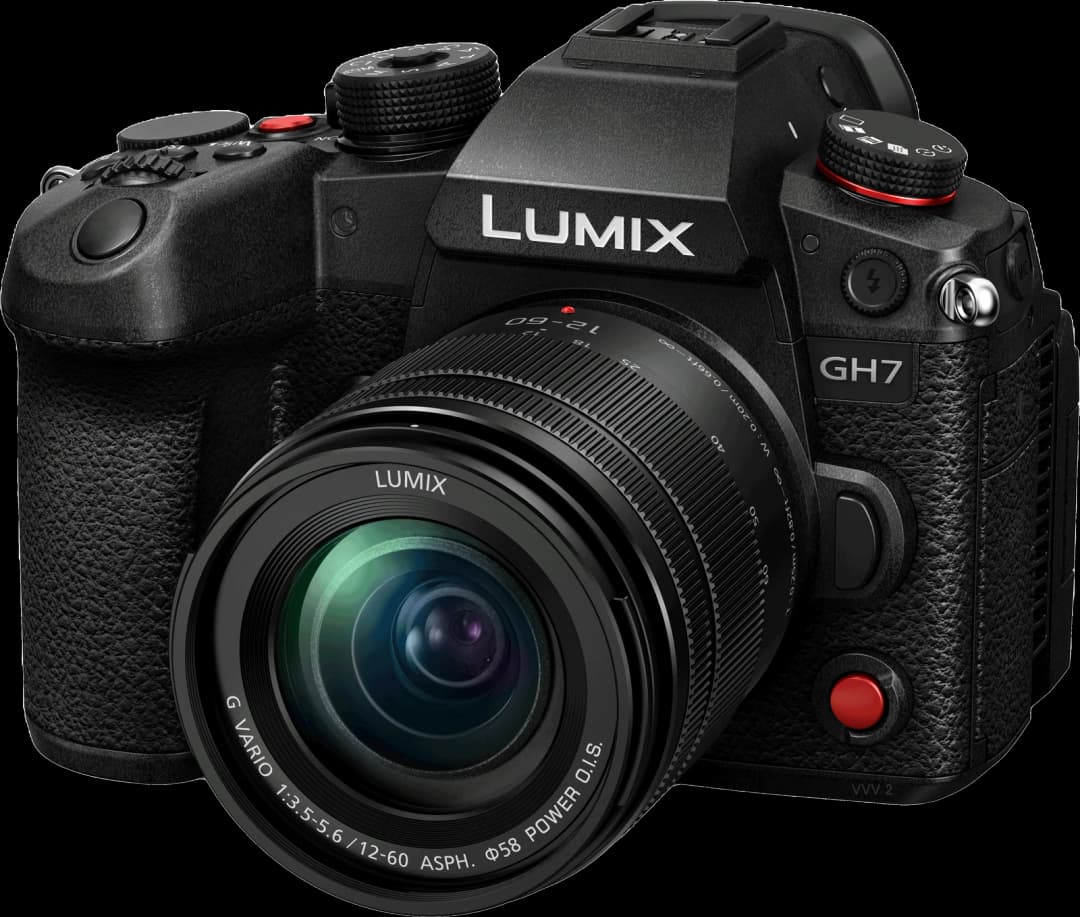
Panasonic
Lumix GH7
2024
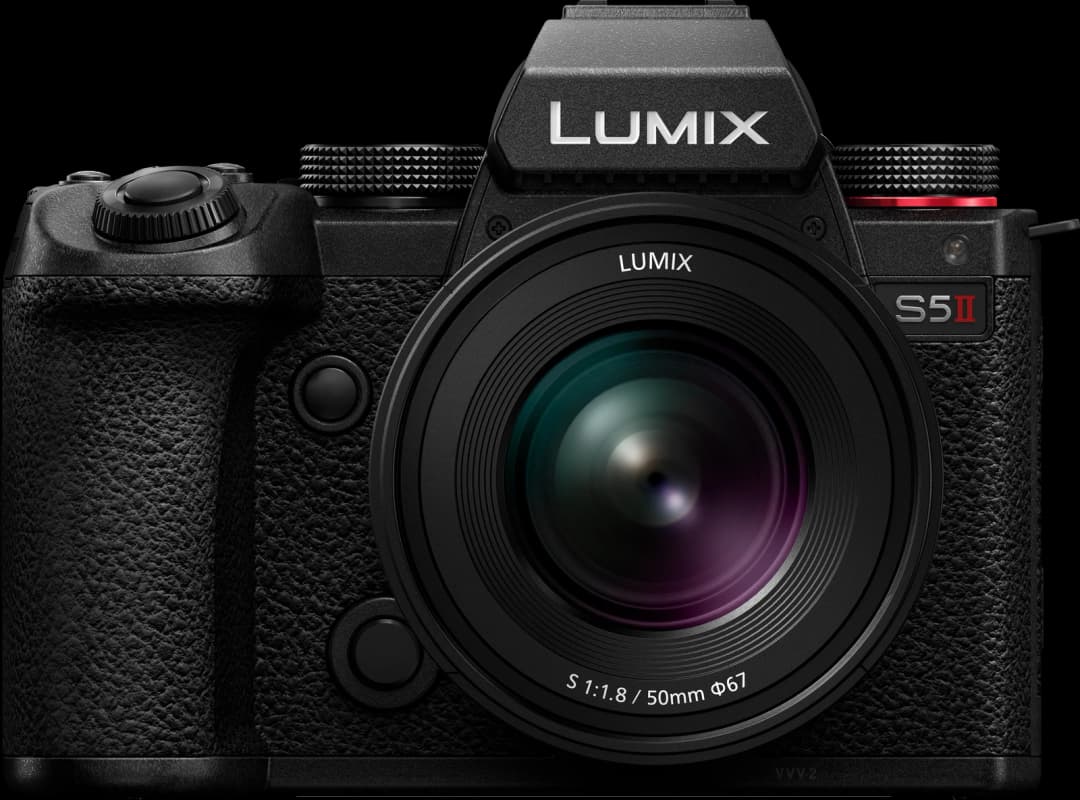
Panasonic
Lumix S5 II
2023
Panasonic Lumix GH7 vs S5 II: Which to Choose Between Advanced Video and Full-Frame Versatility?
Visual summary
— Reads in 5 seconds
Panasonic
Lumix GH7
Panasonic
Lumix S5 II
Where to buy
— Live merchant price comparator
Panasonic Lumix S5 II

Panasonic LUMIX DC-S5 II Full Frame Mirrorless Camera Body, 4K 60P and 6k 30P, Flip Screen, Wi-Fi, Phase Hybrid AF With 779 points, Active IS, Black
1 093,65 GBP · Amazon UK


You'll find the best prices on the market here, updated daily — and by going through these partner links, you support Camera Duel without paying a cent more.
The arbitration in brief
The GH7 stands out for professional video thanks to internal ProRes and 75 fps electronic; the S5 II wins on photo and low light thanks to its full-frame sensor and native ISO up to 51,200.
Two Panasonic hybrid bodies, two generations, two sensor formats. The Lumix GH7, released in 2024 at a launch price of 2 199 USD, is the direct successor to the GH6 on the Micro Four Thirds mount. It targets demanding videographers and content creators who want internal ProRes without an external recorder. The Lumix S5 II, launched in 2023 at 1 999 USD, belongs to the full-frame L-mount range. It marked a turning point for Panasonic by finally introducing phase-detection autofocus, closing the brand’s historic gap on this point.
The two cameras now sit in the same price bracket on the used market, making a direct comparison legitimate. They share several fundamentals: weather-sealing, dual card slots, unlimited recording, 10-bit, V-Log, IBIS. Yet their differences are deep and structural.
The GH7 bets everything on video: internal ProRes 422 HQ, 75 fps electronic, 300 fps slow-motion, 800 Mb/s maximum bitrate, genlock and timecode, 32-bit float audio. The S5 II counters with a 35,6 x 23,8 mm full-frame sensor, native ISO up to 51 200, 11,2 EV dynamic range and -6 EV low-light AF.
This comparison answers a concrete question: is it worth paying 200 USD more for a GH7 geared toward professional video, or should you choose the S5 II and its full-frame sensor for more balanced photo-video versatility? The answer depends on your primary use, and that is exactly what you will find here.
Standout strengths
— Where each camera shines
Panasonic
Lumix GH7
Top advantages
- 14 fpsMechanical burst1,6× vs Panasonic Lumix S5 II
- 75 fpsElectronic burst2,5× vs Panasonic Lumix S5 II
- 300 fpsMax video fps2,5× vs Panasonic Lumix S5 II
- 800 Mb/sMax bitrate4× vs Panasonic Lumix S5 II
Panasonic
Lumix S5 II
Top advantages
- 204 800Extended ISO max8× vs Panasonic Lumix GH7
- 51 200Native ISO max4× vs Panasonic Lumix GH7
- 230RAW buffer+44 % vs Panasonic Lumix GH7
- -6 EVAF low light (EV)+2 vs Panasonic Lumix GH7
Detailed spec-by-spec
— Round by round, the eight categories
Sensor
Autofocus
Speed & burst
Video
Stabilisation
Build
Ergonomics & screen
Connectivity & battery
Detailed analysis analysis
— Strengths, trade-offs and ideal user
Panasonic Lumix GH7: what it does well, what it concedes
The GH7 is built around a 25,2-megapixel Micro Four Thirds sensor with a physical size of 17,3 x 13 mm. This smaller surface compared with full frame has a direct consequence: native ISO tops out at 12 800, versus 51 200 on the S5 II. In practice, above 3 200 ISO noise becomes noticeable and measured dynamic range of 10,2 EV compresses. For low-light photography this is a real concession.
But the GH7 is not a photo camera. It is a video tool. And on that ground it has no equal in this price range:
- Internal ProRes 422 HQ and ProRes RAW HQ without an external recorder.
- 75 fps electronic with rolling shutter measured at 5,7 ms, among the lowest in the segment.
- 300 fps slow-motion video, versus 120 fps on the S5 II.
- 800 Mb/s maximum bitrate, versus 200 Mb/s on the S5 II.
- 32-bit float audio and integrated genlock/timecode, absent on the S5 II.
The 7,5-stop IBIS is also superior to the 5 stops of the S5 II. For a videographer shooting handheld, this gap translates into more stable footage without a gimbal. The 14 fps mechanical and 75 fps electronic burst with a 160 RAW buffer also position the GH7 for fast reportage, even if the buffer is smaller than the S5 II’s 230 frames.
The screen features a dual-hinge tilt and vari-angle design, a concrete advantage for solo shooting. The CFexpress Type B slot handles ProRes bitrates without saturation. At 805 g, however, it is the heavier of the two, which can weigh on long shoots.
For whom
The GH7 suits the hybrid videographer working in semi-professional production: music videos, documentaries, events, weddings with colour-critical requirements. It also suits the photojournalist who needs fast bursts and high stabilisation. Conversely, if your main activity is portrait or landscape photography in constrained natural light, the MFT sensor and native ISO ceiling of 12 800 represent a real limit. This body is made for those who edit their rushes in ProRes and need genlock to synchronise multiple cameras on a shoot.
Panasonic Lumix S5 II: what it does well, what it concedes
The S5 II carries a 35,6 x 23,8 mm full-frame sensor delivering 24,2 megapixels. The light-gathering area is roughly four times larger than that of the GH7. This translates directly into the numbers: native ISO up to 51 200, extended ISO up to 204 800, 11,2 EV dynamic range and -6 EV low-light AF versus -4 EV on the GH7.
These last two figures deserve interpretation. A 2 EV difference in low-light AF equals the ability to focus in conditions half as bright. In practice, the S5 II acquires focus in lighting the GH7 cannot handle reliably. For weddings in dark halls or portraits in low artificial light, this is a decisive advantage.
The S5 II’s concessions are clear:
- Electronic burst limited to 30 fps, versus 75 fps on the GH7.
- No internal ProRes, no 32-bit float audio, no genlock.
- IBIS rated at only 5 stops, versus 7,5 stops on the GH7.
- Dual SD UHS-II slots only, no CFexpress Type B.
The 230-frame RAW buffer is larger than the GH7’s (160 frames), partially offsetting the lower burst rate. Video remains competent: 6K, 10-bit, V-Log, unlimited recording, uncropped 4K. Yet the 200 Mb/s maximum bitrate and lack of internal ProRes place the S5 II behind for demanding video production.
At 740 g and with slightly more compact dimensions, it is the more portable of the two. CIPA battery life of 370 shots is marginally better.
For whom
The S5 II suits the versatile photographer who alternates between portrait, wedding and travel work and needs accessible full frame without sacrificing video. It also suits anyone who regularly works in difficult light and cannot afford to push ISO into extended mode. The L-mount ecosystem, shared with Leica and Sigma, offers a wider choice of lenses than MFT, especially fast primes. This body is made for the generalist who wants one camera to cover both photo and video without major compromises in either discipline.
Our verdict
Which one to buy, and why
The algorithmic scores summarise the situation well: 8,2 in photo for the S5 II versus 7,1 for the GH7, and 8,4 in video for the GH7 versus 7,9 for the S5 II. These gaps are not cosmetic. They reflect deep design differences.
If your primary activity is professional video, the GH7 is the only rational choice. Internal ProRes 422 HQ, 300 fps slow motion, 800 Mb/s bitrate, genlock, 32-bit float audio and 5,7 ms rolling shutter form a package the S5 II cannot match. No firmware update will close these gaps: they are structural. The deal-breaker for the S5 II in pro video is the absence of internal ProRes and genlock.
If your primary activity is photography, the S5 II wins. Native ISO of 51 200, 11,2 EV dynamic range and -6 EV low-light AF deliver measurable advantages in difficult conditions. The full-frame sensor produces a different rendering, with better noise handling and subject separation that MFT cannot replicate at equivalent sensitivity. The deal-breaker for the GH7 in photo is the native ISO ceiling of 12 800 and 10,2 EV dynamic range.
On value, the S5 II launched slightly cheaper (1 999 USD versus 2 199 USD) and is now available used at attractive prices, often under 1 500 USD. The newer GH7 has depreciated less. If budget is a constraint, a good used S5 II is a serious option.
My final verdict: choose the GH7 if video represents more than 60 % of your work. Choose the S5 II in all other cases. The full-frame sensor, low-light AF and native ISO range of the S5 II make it the more versatile body of the two. The GH7 is a remarkable specialised tool, but it demands use that matches its specialisation.
Frequently asked questions
Before you buy, the questions we get
Which to choose for weddings?
The S5 II is better suited to weddings. The -6 EV low-light AF (versus -4 EV on the GH7) maintains focus in dark halls or low-light ceremonies. Native ISO up to 51 200 allows higher sensitivity without entering extended mode. The GH7 remains relevant if you are filming the wedding in ProRes with high production demands, but for ceremony reportage photography the S5 II’s full-frame sensor is more reliable.
Does the GH7’s superior IBIS compensate for its smaller sensor?
Partially. The GH7’s 7,5-stop IBIS versus 5 stops on the S5 II is a real advantage for handheld video and long exposures. But IBIS does not compensate for the difference in sensor area when it comes to noise. At 3 200 ISO, a full-frame sensor structurally produces less noise than MFT, regardless of stabilisation. The two parameters are not interchangeable.
Does the GH7’s internal ProRes justify the price difference?
If you edit in ProRes, yes. An external ProRes recorder (Atomos Shogun or equivalent) costs between 500 and 800 USD. The GH7 integrates this functionality natively, plus ProRes RAW HQ and 800 Mb/s bitrate. On a production budget the saving is real. Conversely, if you edit in H.265 or H.264, the S5 II’s 200 Mb/s 10-bit footage is sufficient and less expensive.
Which body will age better over the next two to three years?
The S5 II belongs to the L-mount ecosystem shared with Leica and Sigma. This ecosystem continues to grow in lenses. The GH7 uses the Micro Four Thirds mount, whose future has been less certain since Olympus’s gradual withdrawal (now OM System). Panasonic still supports the mount, but development of new high-end native MFT lenses has slowed. On the software side both bodies receive regular firmware updates. The S5 II, however, benefits from a more dynamic lens ecosystem in 2026.
Can the GH7 be used for sports photography?
The 75 fps electronic burst and 5,7 ms rolling shutter are serious arguments for sports. The 160-frame RAW buffer and 100 % AF coverage complete the picture. However, the native ISO ceiling of 12 800 is a limit for covered stadiums or events under artificial light. The S5 II, with native ISO up to 51 200 and -6 EV low-light AF, is more versatile for indoor sports. For outdoor sports in bright light the GH7 remains competitive.