Panasonic
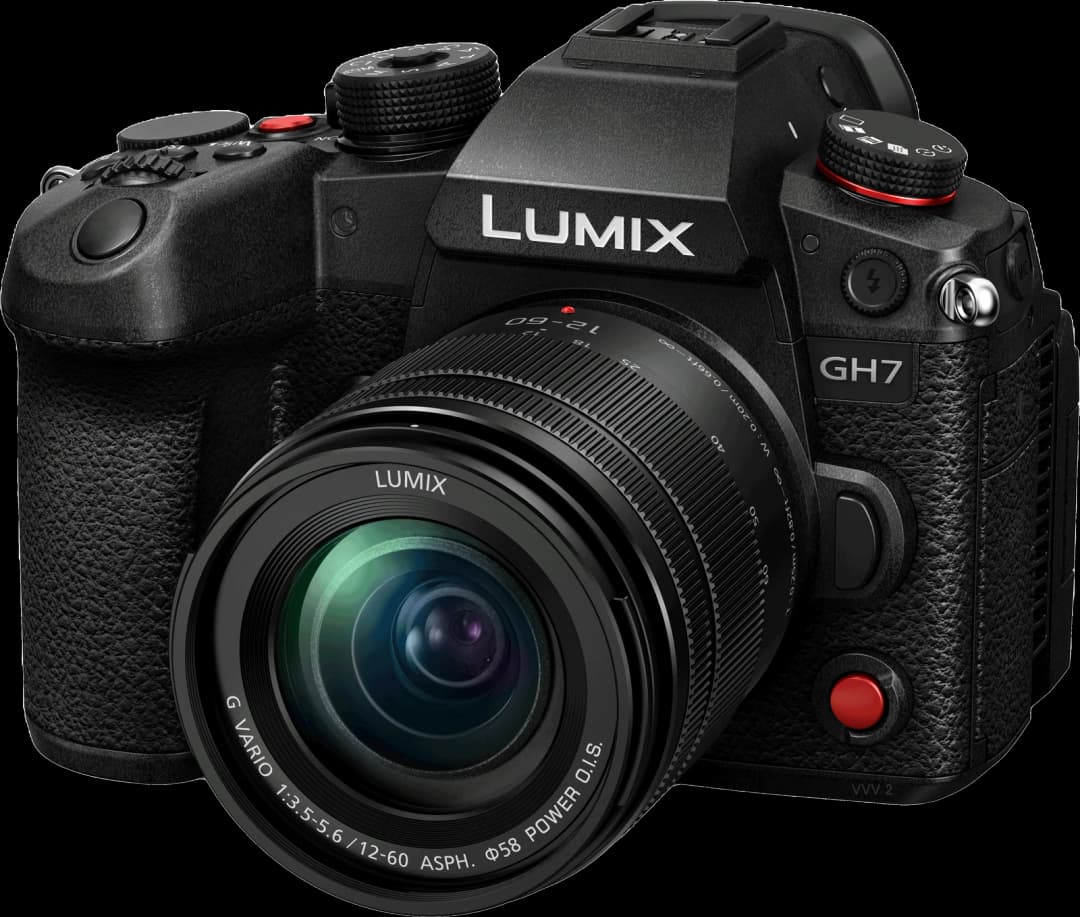
Lumix GH7
2024
Panasonic
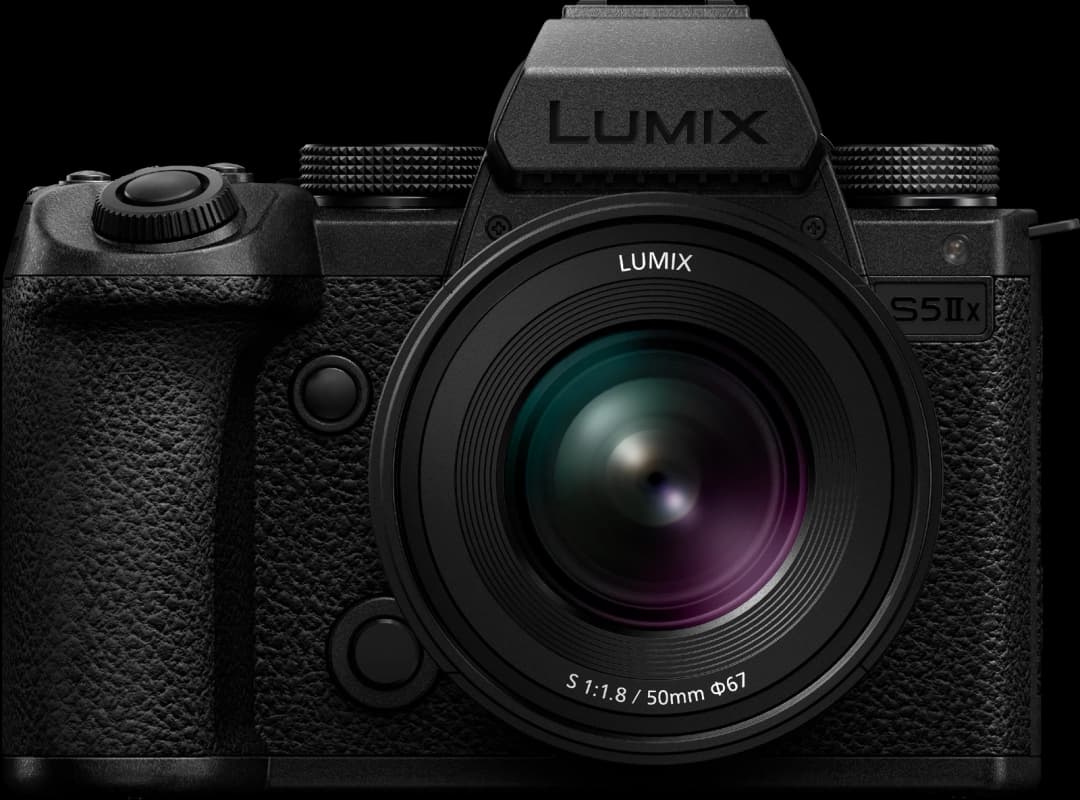
Lumix S5 IIX
2023
Panasonic Lumix GH7 vs S5 IIX: MFT Video or Versatile Full-Frame?
Visual summary
— Reads in 5 seconds
Panasonic
Lumix GH7
Panasonic
Lumix S5 IIX
The arbitration in brief
The S5 IIX dominates in stills and low light thanks to its full-frame sensor; the GH7 leads in advanced video with internal ProRes RAW and 300 fps.
Two Panasonic hybrids, the same launch price of 2 199 USD, two opposing philosophies. The Lumix GH7, released in 2024, is the direct successor to the GH6 on the Micro Four Thirds mount. It targets video creators who want maximum features in a compact body. The Lumix S5 IIX, released in 2023 on the Leica L mount, is the reinforced version of the S5 II: the same 24,2-megapixel full-frame sensor, but with enhanced firmware for professional video.
The paradox of this duel is real. The GH7, with its small 17,3 x 13 mm MFT sensor, posts superior video specs on several key points. The S5 IIX, with its 35,6 x 23,8 mm sensor, regains the advantage as soon as we move to stills, low light or depth-of-field rendering. Both bodies are weather-sealed, equipped with dual card slots, IBIS and unlimited video recording.
The question is not "which is better". The question is: what is your dominant use? If you mainly shoot video with demanding post-production constraints (internal RAW, 300 fps, 32-bit float audio), the GH7 has arguments the S5 IIX cannot counter. If you alternate stills and video, if you work in difficult light, or if you want a body that will age better in the L-mount ecosystem, the S5 IIX takes the lead.
This arbitration breaks down the eight spec categories, identifies the deal-breakers for each side and concludes unambiguously.
Standout strengths
— Where each camera shines
Panasonic
Lumix GH7
Top advantages
- 14 fpsMechanical burst1,6× vs Panasonic Lumix S5 IIX
- 75 fpsElectronic burst2,5× vs Panasonic Lumix S5 IIX
- 300 fpsMax video fps2,5× vs Panasonic Lumix S5 IIX
- 7.5 stopsIBIS rating1,5× vs Panasonic Lumix S5 IIX
Panasonic
Lumix S5 IIX
Top advantages
- 204 800Extended ISO max8× vs Panasonic Lumix GH7
- 51 200Native ISO max4× vs Panasonic Lumix GH7
- 300RAW buffer1,9× vs Panasonic Lumix GH7
- -6 EVAF low light (EV)+2 vs Panasonic Lumix GH7
Detailed spec-by-spec
— Round by round, the eight categories
Sensor
Autofocus
Speed & burst
Video
Stabilisation
Build
Ergonomics & screen
Connectivity & battery
Detailed analysis analysis
— Strengths, trade-offs and ideal user
Panasonic Lumix GH7: what it does well, what it concedes
The GH7 is first and foremost a video machine. Its most differentiating asset is internal ProRes RAW HQ recording, a feature absent from the S5 IIX. In practice, this means you can record RAW without an external recorder, directly to CFexpress Type B. For an independent videographer or documentary filmmaker, this represents a significant saving on equipment and a real gain in mobility. The GH7 also reaches 300 fps in video, versus 120 fps for the S5 IIX. On extreme slow-motion in 1080p, the gap is visible and cannot be recovered in post-production.
Electronic burst reaches 75 fps with a 160 RAW image buffer. Electronic shutter speed climbs to 1/32 000 s, useful in bright light with a fast lens. IBIS compensates 7,5 stops, i.e. 2,5 stops more than the S5 IIX. In handheld long exposure or video without a gimbal, this difference translates into sharp images where the S5 IIX produces motion blur.
The concessions are real. The 17,3 x 13 mm MFT sensor tops out at ISO 12 800 native and 25 600 extended. Against the S5 IIX full-frame sensor, digital noise at high sensitivity is structurally more present. Measured dynamic range sits at 10,2 EV, versus 11,2 EV for the S5 IIX. Low-light AF bottoms out at -4 EV, two stops behind the S5 IIX.
GH7 strengths in summary:
- Internal ProRes RAW HQ on CFexpress Type B, no external recorder.
- 300 fps in video for extreme slow motion.
- 7,5 stops of IBIS, the best of the two bodies.
- 75 fps electronic burst with 1/32 000 s shutter.
- Internal 32-bit float audio.
For pure stills, the GH7 remains competent but does not rival the S5 IIX full-frame sensor once light drops.
For whom
The GH7 is made for the hybrid videographer who also shoots stills, not the other way around. Its typical profile: documentary filmmaker, event videographer, content creator who needs extreme slow motion and internal RAW without a recorder. The 7,5-stop IBIS also makes it relevant for travel or reportage photographers who often work handheld in variable light. The MFT ecosystem offers compact, lightweight lenses, a real advantage on the move. However, if your priority is low-light stills, weddings in dark venues or portraits with full-frame depth-of-field rendering, the GH7 is not the right choice.
Panasonic Lumix S5 IIX: what it does well, what it concedes
The S5 IIX starts with a structural advantage: a 35,6 x 23,8 mm full-frame sensor. Its light-gathering surface is roughly 2,4 times larger than that of the GH7. This translates directly into a maximum native ISO of 51 200 (versus 12 800 for the GH7) and extended ISO up to 204 800. Measured dynamic range reaches 11,2 EV at base ISO, i.e. 1 EV more than the GH7. In practice, highlights recover better in post-production and shadow noise stays more contained at high sensitivity.
Low-light AF reaches -6 EV, two stops below the GH7. On a wedding in a hall, a theatre scene or a night assignment, this difference is operational. The RAW buffer reaches 300 images, versus 160 for the GH7. In electronic burst at 30 fps, the S5 IIX lasts longer before saturating. Mechanical burst tops out at 9 fps, below the GH7's 14 fps, but sufficient for most hybrid uses.
In video, the S5 IIX reaches 6K (versus 5,8K for the GH7) but caps at 120 fps. It offers neither internal ProRes RAW nor 32-bit float audio, two absences that matter in professional production. IBIS compensates only 5 stops, versus 7,5 stops for the GH7.
S5 IIX strengths in summary:
- 35,6 x 23,8 mm full-frame sensor for native depth-of-field rendering.
- ISO 51 200 native and 204 800 extended for low light.
- 11,2 EV measured dynamic range.
- Low-light AF at -6 EV, two stops below the GH7.
- 300-image RAW buffer for long bursts.
The S5 IIX deal-breaker is its dual SD UHS-II slots only. The GH7 offers a CFexpress Type B slot for high RAW data rates. On intensive ProRes shoots, the lack of CFexpress on the S5 IIX can become a constraint.
For whom
The S5 IIX suits the photographer-videographer who does not want to choose between the two disciplines. Its typical profile: wedding or event photographer who also delivers video, portrait photographer working in natural light or studio, reporter who alternates exterior and interior. The L-mount ecosystem (Panasonic, Leica, Sigma) offers a wide and growing lens catalogue. Low-light performance at ISO 51 200 native and -6 EV AF make it a reliable tool without flash in venues. For professional video use with internal RAW or 32-bit float audio, you will have to accept the firmware limits or turn to the GH7.
Our verdict
Which one to buy, and why
The overall score summarises the situation well: Photo 8,2 / Video 8,6 for the S5 IIX versus Photo 7,1 / Video 8,4 for the GH7. The S5 IIX is the more versatile body of the two. But versatility comes at a cost: on advanced video specs, the GH7 regains the lead on several non-negligible points.
The deal-breakers are clear on both sides:
- If you need internal ProRes RAW, the S5 IIX is eliminated outright.
- If you regularly work above ISO 12 800, the GH7 is structurally limited by its MFT sensor.
- If you shoot slow motion beyond 120 fps, only the GH7 reaches 300 fps.
- If your AF must function below -4 EV, the S5 IIX is the only viable choice.
On value for money, both bodies launched at the same 2 199 USD price. In 2026, the S5 IIX is regularly found below this price on the used market, strengthening its value-to-use ratio for a hybrid photographer. The GH7, one year newer, remains closer to its launch price.
The ecosystem is a factor not to be overlooked. The L-mount of the S5 IIX gives access to a wider and more evolving catalogue than the GH7's MFT. Panasonic has slowed its investments in the MFT ecosystem in recent years. For a photographer thinking long-term, L-mount offers a better outlook for lens renewal.
My final arbitration: choose the S5 IIX if your use is mixed photo-video, if you work in difficult light, or if you want a body that will age better in its ecosystem. Choose the GH7 if video is your dominant use and you need internal RAW, 300 fps or 32-bit float audio without an external recorder. The GH7 is a production tool. The S5 IIX is a photographer's body that can also film.
Frequently asked questions
Before you buy, the questions we get
Which to choose for weddings?
The S5 IIX is the logical choice for weddings. Its full-frame sensor holds up to ISO 51 200 native without prohibitive degradation, and its AF reaches -6 EV, two stops below the GH7. In dark halls, backlit scenes or candlelight, these two advantages are operational. The 300-image RAW buffer also allows long sequences without interruption. The GH7 can cover a wedding, but it will struggle as soon as light drops below ISO 12 800.
Does the GH7 catch up with the S5 IIX in stills thanks to its 25 megapixels?
No. The 25,2 megapixels of the GH7 versus 24,2 for the S5 IIX represent a negligible difference in effective resolution. On the other hand, the surface of the MFT sensor (17,3 x 13 mm) versus full-frame (35,6 x 23,8 mm) creates a structural gap in low light and dynamic range (10,2 EV versus 11,2 EV). More megapixels on a small sensor do not compensate for less light collected per photosite. The S5 IIX wins the sensor round without discussion.
Does the GH7's internal ProRes RAW really change anything compared with the S5 IIX?
Yes, in a concrete way. The GH7 records ProRes RAW HQ directly to CFexpress Type B, without an external recorder. The S5 IIX does not offer internal RAW: an Atomos or Blackmagic recorder is required to obtain ProRes RAW. In solo or run-and-gun production, the absence of a recorder simplifies the rig, reduces weight and eliminates a point of failure. If your workflow involves systematic RAW grading, the GH7 is more autonomous. If you work in compressed ProRes 422 HQ, the two bodies are equivalent on this point.
Which body will age better over five years?
The S5 IIX has the advantage here. The L-mount (Panasonic, Leica, Sigma) has a wider lens catalogue and more visible manufacturer commitment than MFT. Panasonic has focused its recent investments on the S series. The GH7 remains an excellent tool, but the MFT ecosystem is in retreat compared with its 2018-2020 level. For a photographer planning to renew lenses or expand their kit, L-mount offers a better five-year outlook.
Does the GH7's 7,5-stop IBIS compensate for the smaller sensor for handheld stills?
Partially. The 7,5-stop IBIS of the GH7 versus 5 stops for the S5 IIX allows slower shutter speeds without motion blur. In handheld landscape or architecture, this advantage is real. But IBIS does not compensate for digital noise linked to sensor size. At ISO 6 400, the GH7 structurally produces more noise than the S5 IIX, regardless of stabilisation. The GH7's IBIS is an advantage in decent light. In low light, the S5 IIX full-frame sensor regains the lead.