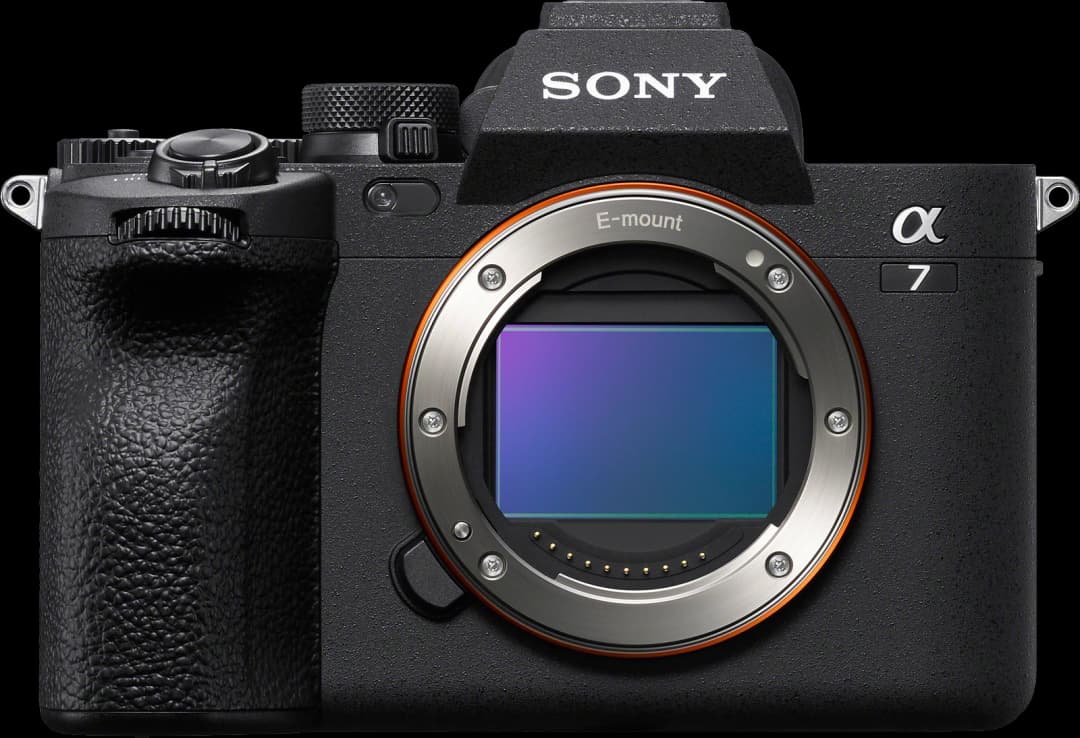
Sony
α7 IV
2021
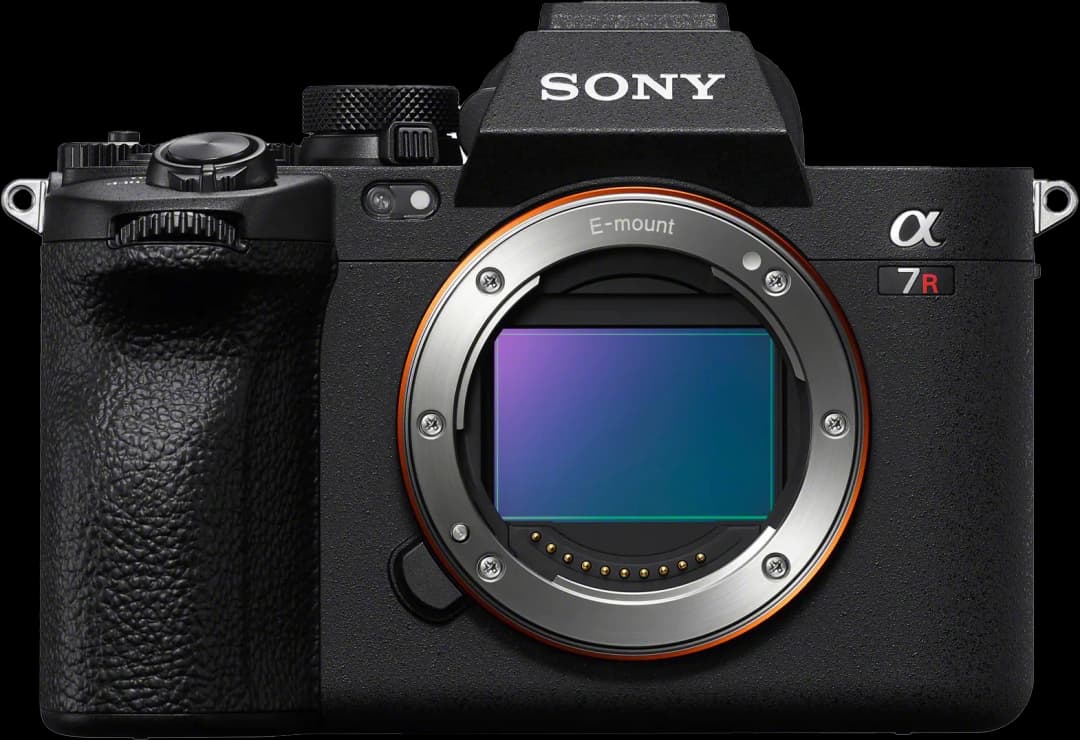
Sony
α7R V
2022
Sony α7 IV vs α7R V: Which to Choose Between Versatility and High Definition?
Visual summary
— Reads in 5 seconds
Sony
α7 IV
Sony
α7R V
Where to buy
— Live merchant price comparator
Sony α7 IV

SONY a7 IV Mirrorless Camera - Black, Body Only, Black
1 999 GBP · Amazon UK


You'll find the best prices on the market here, updated daily — and by going through these partner links, you support Camera Duel without paying a cent more.
The arbitration in brief
Choose the α7 IV for unlimited video, low light and buffer; take the α7R V if 61 MP resolution and 8-stop IBIS are non-negotiable.
The Sony α7 IV was released in 2021 at 2 800 EUR. The Sony α7R V followed in 2022 at 3 900 USD. Both bodies share the same E-mount, the same weather-sealing, the same dual CFexpress Type A and SD UHS-II slots. On paper they look close. In practice they do not target the same photographer.
The α7 IV is a general-purpose hybrid. It is aimed at wedding, portrait or video photographers who want a reliable, responsive tool capable of shooting without duration limits. Its 33 MP sensor is sufficient for virtually all standard commercial uses. Its 828-image RAW buffer is one of the most generous in the segment.
The α7R V is a high-resolution camera. Its 61 MP are intended for large-format landscapes, aggressively cropped portraits and studio work. Its 8-stop IBIS partially offsets the shutter-speed constraint imposed by this high resolution. Its 9.44 M-dot EVF is currently the best in the Sony full-frame range.
The price gap between the two models is real. In 2026 the α7 IV is frequently found under 2 000 EUR on the used market, while the α7R V still exceeds 3 000 EUR used. This gap influences part of the decision.
This comparison analyses eight specification categories. It decides on wedding, portrait, landscape and video uses. It identifies the deal-breakers for each side.
Standout strengths
— Where each camera shines
Sony
α7 IV
Top advantages
- 204 800Extended ISO max2× vs Sony α7R V
- 828RAW buffer12,2× vs Sony α7R V
- 51 200Native ISO max1,6× vs Sony α7R V
- OuiUnlimited recordingAbsent sur Sony α7R V
Sony
α7R V
Top advantages
- 61 MPMegapixels1,8× vs Sony α7 IV
- 8 stopsIBIS rating+45 % vs Sony α7 IV
- 9.44 M dotsViewfinder resolution2,6× vs Sony α7 IV
- 2.10 M dotsScreen resolution2× vs Sony α7 IV
Video reviews
— Long-form reviews
Sony α7 IV
Sony a7 IV First Impressions Review
DPReview TV · 20 min
Sony α7R V
Sony a7R V Final Review
DPReview TV · 10 min
Detailed spec-by-spec
— Round by round, the eight categories
Sensor
Autofocus
Speed & burst
Video
Stabilisation
Build
Ergonomics & screen
Connectivity & battery
Detailed analysis analysis
— Strengths, trade-offs and ideal user
Sony α7 IV: what it does well, what it concedes
The BSI-CMOS 33 MP sensor of the α7 IV reaches a measured dynamic range of 11.7 EV at base ISO 100 (source DXOMark). This figure is identical to that of the α7R V. The α7 IV’s advantage lies elsewhere: its native ISO reaches 51 200, versus 32 000 on the R V. In low light this wider native range delays the point at which digital noise becomes problematic. Extended ISO reaches 204 800, versus 102 400 on the R V. These extended values should still be used with discernment, but they reflect a sensor architecture oriented toward sensitivity rather than resolution.
The AF system covers 94 % of the sensor with 759 points, versus 79 % and 693 points on the R V. This near-total coverage is a concrete advantage in weddings: subjects at the edge of the frame remain within the detection zone. The RAW buffer is the most distinctive point: 828 images in continuous shooting, versus 68 on the R V. This is not a marginal difference. It is a deal-breaker for any use that involves long bursts, whether amateur sport, ceremonies or reportage.
In video the α7 IV records 4K 60p 10-bit with no duration limit. The R V imposes a 60-minute limit. For a videographer shooting long interviews or continuous events, this constraint is prohibitive. The α7 IV’s strengths can be summarised as:
- Native ISO 51 200 versus 32 000: better tolerance in degraded light.
- 828-image RAW buffer versus 68: long bursts without interruption.
- Unlimited video versus 60 min: no duration constraint during shooting.
- Weight 658 g versus 723 g: modest but real difference for extended carrying.
The main concession is resolution. 33 MP do not allow as aggressive cropping as 61 MP. For large-format prints beyond 60 × 90 cm the limit begins to be felt.
For whom
The α7 IV suits the wedding or event photographer who alternates stills and video in the same day. It also suits the hybrid videographer who refuses recording interruptions. Its 828-image buffer makes it a credible tool for reportage and amateur sport. The travel photographer who works in degraded light and adverse weather will find the combination of native ISO 51 200 and weather-sealing reassuring. This body is not suitable for the landscape photographer who prints large format or the studio photographer who systematically crops in post-production.
Sony α7R V: what it does well, what it concedes
The BSI-CMOS 61 MP sensor of the α7R V produces compressed RAW files of approximately 60 MB. This resolution allows prints up to 100 × 150 cm without interpolation and a 50 % crop that still leaves 15 MP usable. For portrait or landscape work this is a real freedom in post-production. Measured dynamic range is identical to the α7 IV: 11.7 EV at base ISO 100 (source DXOMark). The resolution advantage therefore does not cost dynamic range.
The 8-stop IBIS is the most differentiating specification of the α7R V. With 61 MP, the slightest vibration translates into motion blur. A 5.5-stop IBIS like that on the α7 IV would be insufficient to fully exploit this resolution handheld. The 8 stops allow very slow shutter speeds in static photography, opening possibilities in night landscapes or interior architecture without a tripod. The 9.44 M-dot EVF with 0.9× magnification is the best in the Sony full-frame range in 2026. For manual focusing or sharpness checking on a high-resolution subject, the gap with the 3.69 M dots of the α7 IV is perceptible.
The α7R V’s strengths can be summarised as:
- 61 MP versus 33 MP: large-format printing and aggressive cropping without quality loss.
- 8-stop IBIS versus 5.5 stops: stabilisation suited to high-resolution handheld shooting.
- 9.44 M-dot viewfinder versus 3.69 M dots: markedly superior viewing precision.
- 8K video: 4K editing crop and future-proofing for high-end productions.
The main concession is the buffer: only 68 RAW images. This is a deal-breaker for any situation that requires long bursts. The 60-minute video recording limit is an additional constraint for event videographers. Native ISO capped at 32 000 is lower than the α7 IV, which slightly penalises very degraded lighting conditions.
For whom
The α7R V is aimed at the landscape or studio photographer who prints large format and crops in post-production. It suits the commercial portrait photographer who wants maximum latitude on every image. Its 8-stop IBIS makes it relevant for handheld architectural photography. It is not suitable for the videographer who shoots long events, nor for the sports or reportage photographer who needs a deep buffer. Its price, more than 1 000 USD higher at launch, must be justified by use that actually exploits the 61 MP.
Our verdict
Which one to buy, and why
The α7 IV wins 5 rounds out of 8 in our algorithm (sensor, AF, speed, connectivity, weight). The α7R V wins 3 (resolution video, stabilisation, viewfinder and screen ergonomics). The overall photo score is 8.0 for the α7 IV versus 8.4 for the R V. The gap is real but modest. It reflects the R V’s resolution advantage without masking the practical strengths of the α7 IV.
The deal-breakers are clear on both sides:
- 68-image RAW buffer on the R V: disqualifying for reportage, dynamic weddings and any burst use.
- 60-minute video limit on the R V: disqualifying for event videographers.
- 33 MP on the α7 IV: insufficient for large-format prints beyond 60 × 90 cm or systematic cropping.
- 5.5-stop IBIS on the α7 IV: limits very slow handheld shooting with long lenses.
On value for money the α7 IV is the rational choice for the majority of hybrid photographers. In 2026 it is regularly found under 2 000 EUR used in excellent condition. The used α7R V still exceeds 3 000 EUR. This gap of more than 1 000 EUR is only justified if the 61 MP are a production necessity, not a comfort.
My clear opinion: choose the α7 IV if you photograph events, shoot long-form video, or regularly work in degraded light. Choose the α7R V only if your main activity is large-format landscape, studio portrait with intensive cropping, or if the 9.44 M-dot viewfinder and 8-stop IBIS meet a precise technical constraint. For any mixed use the α7 IV is more versatile, less expensive, and its deep buffer avoids unpleasant surprises in the field.
Frequently asked questions
Before you buy, the questions we get
Which to choose for wedding photography?
The α7 IV is the appropriate choice for weddings. Its 828-image RAW buffer allows long bursts during key moments (ceremony exit, first dance). Its 94 % AF coverage detects subjects at the edge of the frame. Its native ISO of 51 200 handles receptions in degraded light better. The α7R V is penalised by its 68-image buffer and its 60-minute video limit, two constraints that are directly problematic in an event context.
Does the price gap between the two bodies justify itself?
At launch the α7R V cost 1 100 USD more than the α7 IV. In 2026 the used gap remains above 1 000 EUR. This gap is justified only if you regularly exploit the 61 MP: large-format printing, intensive post-production cropping, or high-definition commercial portraiture. For mixed or event use the α7 IV offers better return on investment. The money saved can fund an additional lens.
Should one give in to the 8K effect if shooting mainly in 4K?
The 8K video of the α7R V has a concrete benefit even when delivering 4K: the crop in post-production gives comfortable framing margin without quality loss. That said, the 60-minute recording limit and the absence of unlimited recording are real constraints. The α7 IV records 4K 60p 10-bit with no duration limit. For an event videographer or long-form content creator the α7 IV is more suitable. The R V’s 8K is relevant for productions that anticipate high-resolution delivery or intensive cropping in editing.
Which body will age better over three to five years?
Both bodies share the E-mount, dual CFexpress Type A slots, USB-C 3.2 Gen2 and weather-sealing. The α7R V has a 9.44 M-dot viewfinder and 8-stop IBIS that remain references in 2026. The α7 IV has an 828-image buffer that still exceeds most direct competitors. In terms of practical longevity the α7R V ages better on raw image quality thanks to its 61 MP. The α7 IV ages better on operational versatility. Neither is threatened with short-term obsolescence.
Is the α7R V usable for sport or wildlife?
Its 68-image RAW buffer is a serious obstacle for sport or wildlife in sustained bursts. At 10 fps the buffer fills in less than 7 seconds. The α7 IV lasts 82 seconds in the same conditions with its 828 images. On this precise point I rely on manufacturer data and DPReview measurements: the R V is not designed for long bursts. Its AF covers 79 % of the sensor versus 94 % on the α7 IV, which also penalises edge-of-frame detection on fast-moving subjects.