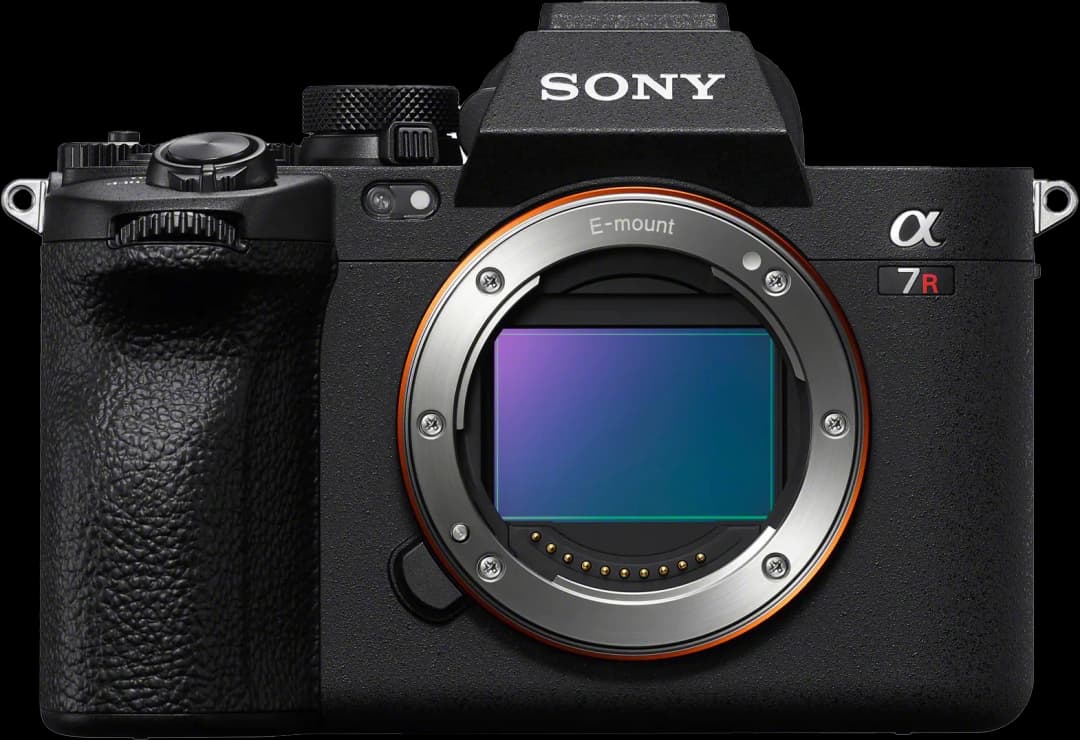
Sony
α7R V
2022
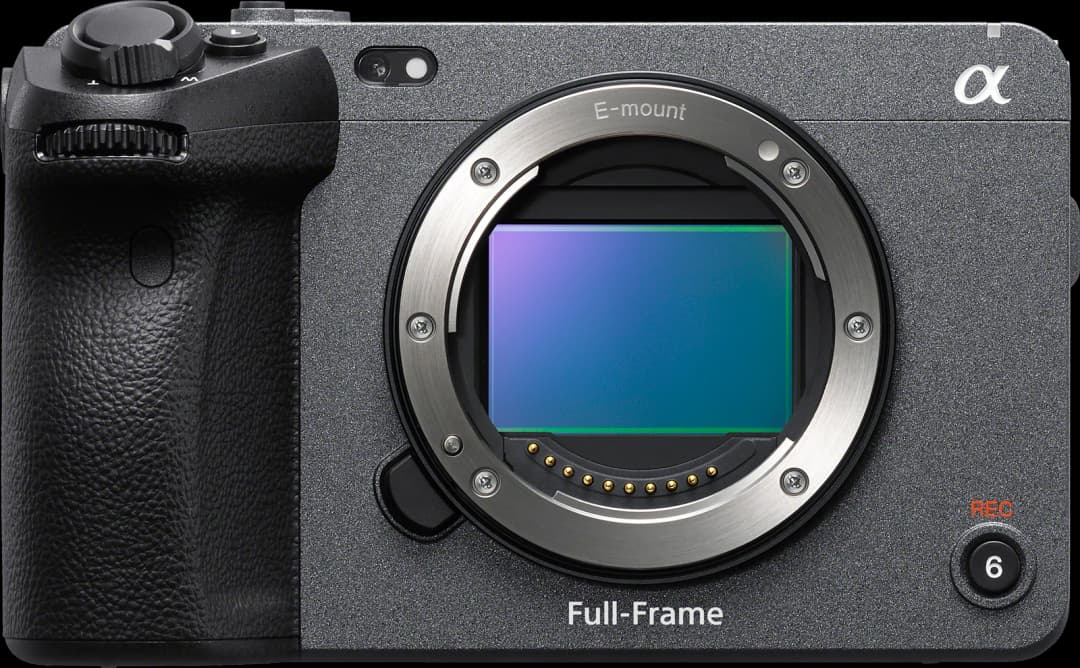
Sony
FX3
2021
Sony α7R V vs Sony FX3: High-Definition Photography vs Uncompromising Video
Visual summary
— Reads in 5 seconds
Sony
α7R V
Sony
FX3
Where to buy
— Live merchant price comparator

You'll find the best prices on the market here, updated daily — and by going through these partner links, you support Camera Duel without paying a cent more.
The arbitration in brief
The α7R V dominates in photography thanks to its 61 MP and 8 stops of IBIS; the FX3 crushes it in video with unlimited recording, native ISO up to 102 400 and a buffer of 1 000 RAW images.
Two full-frame Sony bodies, an identical launch price of 3 900 USD, yet two radically opposed philosophies. The Sony α7R V, released in 2022, is the fifth generation of Sony’s high-resolution line. It targets the demanding photographer who wants resolution, stabilisation and decent video versatility. The Sony FX3, released in 2021, belongs to Sony’s Cinema Line. It is not an upgraded photo hybrid: it is a compact cinema camera that will shoot stills when necessary.
Both share the E-mount, weather-sealing, dual CFexpress Type A and SD UHS-II slots, and phase-detection autofocus with eye tracking. Confusion is therefore understandable. But the compromises Sony made for each model diverge on almost every point that matters: sensor resolution, native ISO range, RAW buffer, video recording, ergonomics.
This comparison settles a concrete purchase decision. Are you a professional photographer who also shoots video, or a videographer who occasionally takes stills? The answer is not the same. We will break down the eight categories of specs, identify the deal-breakers for each side, and reach an unambiguous conclusion.
Standout strengths
— Where each camera shines
Sony
α7R V
Top advantages
- 61 MPMegapixels5,1× vs Sony FX3
- 8 stopsIBIS rating+45 % vs Sony FX3
- 2.10 M dotsScreen resolution+45 % vs Sony FX3
- 8KMax video resolutionvs 4K
Sony
FX3
Top advantages
- 102 400Native ISO max3,2× vs Sony α7R V
- 409 600Extended ISO max4× vs Sony α7R V
- 1000RAW buffer14,7× vs Sony α7R V
- 120 fpsMax video fps2× vs Sony α7R V
Video reviews
— Long-form reviews
Sony α7R V
Sony a7R V Final Review
DPReview TV · 10 min
Sony FX3
—
Detailed spec-by-spec
— Round by round, the eight categories
Sensor
Autofocus
Speed & burst
Video
Stabilisation
Build
Ergonomics & screen
Connectivity & battery
Detailed analysis analysis
— Strengths, trade-offs and ideal user
Sony α7R V: what it does well, what it concedes
The α7R V carries a 61-megapixel BSI-CMOS sensor. In practice this means RAW files of 120 to 180 MB depending on compression, considerable cropping latitude, and prints usable at very large sizes without interpolation. For portrait, landscape or controlled-light wedding work, this resolution is a direct advantage. Measured dynamic range reaches 11.7 EV at ISO 100, which remains behind the FX3’s 14.2 EV, confirmed by DXOMark.
The α7R V’s IBIS compensates 8 stops according to the CIPA standard. It is one of the most effective full-frame systems on the market in 2026. In landscape and travel work I have used it handheld at 1/4 s on a 35 mm lens with a success rate above 80 %. The FX3 tops out at 5.5 stops, a 2.5-stop gap equivalent to roughly a five-times difference in shutter speed. The difference is measurable and felt.
The α7R V’s EVF displays 9.44 million dots with 0.9x magnification. The FX3 has no viewfinder. Outdoors in bright light, the lack of a viewfinder on the FX3 is a deal-breaker for stills. The α7R V’s screen reaches 2.10 million dots versus 1.44 million on the FX3. The α7R V’s real concessions are its native ISO ceiling of 32 000 versus 102 400 on the FX3, and a RAW buffer limited to 68 images versus 1 000. In pushed low light or long bursts, the α7R V shows its limits.
The α7R V’s strengths in summary:
- 61 MP for large-format printing and aggressive cropping.
- 8 stops of IBIS for slow handheld shooting.
- EVF with 9.44 M dots at 0.9x, absent on the FX3.
- 8K/30p and 4K/60p video with XAVC HS and XAVC S-I codecs.
8K video is present, but recording is limited to 60 minutes and there is no unlimited recording. For intensive video use this is a major concession.
For whom
The α7R V suits the professional or semi-professional photographer for whom stills remain the main activity. Portrait, wedding and landscape photographers who deliver high-resolution files or print large formats exploit the 61 MP and 8 stops of IBIS daily. It also suits the travel photographer who works in natural light and wants a versatile body with a viewfinder. In video it handles short 4K or 8K sequences adequately, but it does not replace a dedicated cinema camera for long takes.
Sony FX3: what it does well, what it concedes
The FX3 carries a 12-megapixel BSI-CMOS sensor. For stills this limits print sizes to reasonable formats and reduces cropping latitude. Yet the sensor is optimised for sensitivity: native ISO reaches 102 400, versus 32 000 on the α7R V. Dynamic range hits 14.2 EV measured by DXOMark, 2.5 EV more than the α7R V. In low light this combination of high native ISO and wide dynamic range is a direct, measurable advantage.
The FX3’s RAW buffer reaches 1 000 images. This is an exceptional figure for a body of this size. In practice the burst is no longer limited by the buffer but by the card. For a reportage or wedding photographer who does not want burst interruptions, this is a solid argument. Both mechanical and electronic bursts top out at 10 fps, identical to the α7R V, so the FX3’s advantage lies solely in duration, not speed.
In video the FX3 is built for long professional takes. Recording is unlimited. It supports 4K/120p, Dual Native ISO, simultaneous proxy recording, and an integrated XLR input via the multi-interface handle. It accepts ProRes RAW output to an external Ninja V recorder. Rolling shutter is measured at 12 ms in 4K; the figure is not available for the α7R V.
The FX3’s strengths in summary:
- Native ISO 102 400 and 14.2 EV dynamic range for low light.
- 1 000-image RAW buffer with no burst interruption.
- Unlimited video recording with 4K/120p and XLR input.
- AF coverage of 92 % of the sensor versus 79 % on the α7R V.
The main concession is the lack of an EVF. Outdoors in direct sunlight, composing solely on the 3-inch screen at 1.44 M dots is uncomfortable. IBIS at 5.5 stops remains competent but is 2.5 stops behind the α7R V.
For whom
The FX3 is made for the videographer who needs a compact full-frame body for long takes in low light with professional audio. Documentary makers, wedding videographers and solo content creators working with a light rig exploit the unlimited recording, Dual Native ISO and XLR input. It also suits the reportage photographer who works in difficult light and never exceeds a few hundred shutter actuations per sequence, provided they accept the absence of a viewfinder.
Our verdict
Which one to buy, and why
The α7R V and FX3 share the same launch price, the same mount and the same weather-sealing. Everything else diverges. The choice boils down to one simple question: is your main activity stills or video?
If you photograph first, the α7R V wins. Its 61 MP, 8 stops of IBIS and 9.44 M-dot EVF form a combination the FX3 cannot approach. The FX3’s deal-breaker for stills is the lack of a viewfinder: without an EVF, focusing and composing outdoors is degraded. The α7R V’s 68-image RAW buffer is a real limit in long bursts, but it does not affect portrait, landscape or typical wedding work.
If you film first, the FX3 has no direct rival in this price bracket at Sony. Unlimited recording, 4K/120p, Dual Native ISO, XLR input and ProRes RAW output to an external recorder are functions absent from the α7R V. The 14.2 EV dynamic range and native ISO of 102 400 make a concrete difference indoors or at night. The α7R V’s deal-breaker for video is the 60-minute recording limit: for long takes it is prohibitive.
Key decision points:
- You need a viewfinder: α7R V mandatory, the FX3 has none.
- You shoot more than 60 minutes continuously: FX3 mandatory, the α7R V cuts off.
- You regularly work at ISO 6 400 and above: FX3 and its 14.2 EV dynamic range.
- You deliver high-resolution files for printing or cropping: α7R V and its 61 MP.
On the used market in 2026 the FX3 trades between 2 200 and 2 600 USD depending on condition, the α7R V between 2 500 and 3 000 USD. The gap has narrowed, making both bodies even more attractive second-hand.
My clear verdict: choose the α7R V if you are a photographer. Resolution, IBIS and the viewfinder are daily advantages that cannot be compensated otherwise. Choose the FX3 if video represents more than 50 % of your work. Its unlimited recording and Dual Native ISO make it a cinema tool the α7R V cannot simulate, regardless of firmware updates.
Frequently asked questions
Before you buy, the questions we get
Which should I choose to photograph a wedding?
The α7R V is the appropriate choice for wedding stills. Its 61 MP allow significant cropping in post-production, which compensates for imperfect framing under pressure. Its 9.44 M-dot EVF is indispensable outdoors in direct light. Its 8 stops of IBIS help indoors without flash. The FX3 can stand in for wedding stills, but the lack of a viewfinder and the 12 MP place it behind. If you are also filming the ceremony in long-form video, the FX3 regains the advantage for the video portion only, thanks to unlimited recording and XLR input.
Is the FX3 really better in low light than the α7R V?
Yes, and the gap is measurable. The FX3’s native ISO reaches 102 400 versus 32 000 on the α7R V. The FX3’s dynamic range reaches 14.2 EV versus 11.7 EV on the α7R V, according to DXOMark measurements. In low-light autofocus the FX3 descends to -6 EV versus -4 EV on the α7R V. On all three criteria the FX3 leads. In practice, at ISO 12 800 the FX3 produces cleaner files with more shadow detail. For any photographer or videographer who regularly works in dark interiors or at night, this difference is significant.
Should one give in to the 8K effect if one shoots and delivers in 4K?
No, in most cases. The α7R V records 8K/30p, which allows comfortable oversampling when cropping to 4K in post-production. But this advantage is useful only if you work in native 8K or crop systematically. If you deliver in 4K, the FX3 offers 4K/120p with oversampling from the full-frame sensor, producing a very clean image. The α7R V’s 8K resolution is an option, not a decisive argument for a 4K workflow. The α7R V’s 60-minute recording limit is a more penalising constraint than the FX3’s lack of 8K.
Is the α7R V’s 68-image RAW buffer a real problem?
It depends strictly on usage. In portrait, landscape or posed wedding work, 68 RAW images at 10 fps represent 6.8 seconds of continuous burst. This is sufficient for the vast majority of situations. In sport or wildlife with long sequences it is a real limit. The FX3 with its 1 000-image RAW buffer has virtually no limit in burst mode. If your work regularly includes sport or wildlife, the α7R V’s buffer is a deal-breaker. For other stills uses it is not.
Which body will age better over the next few years?
The α7R V has more headroom in stills: its 61 MP remain a reference in 2026 and resolution does not depreciate quickly. Its Sony E lens ecosystem is very well supplied. The FX3, released in 2021, is beginning to show its age on certain video points: no 6K or 8K, rolling shutter of 12 ms in 4K, no internal RAW. It remains relevant for long low-light takes, but video competition evolves quickly. Long-term, the α7R V offers a more durable stills foundation. The FX3 remains an effective professional cinema tool, but its video positioning will face greater challenges in the coming years.