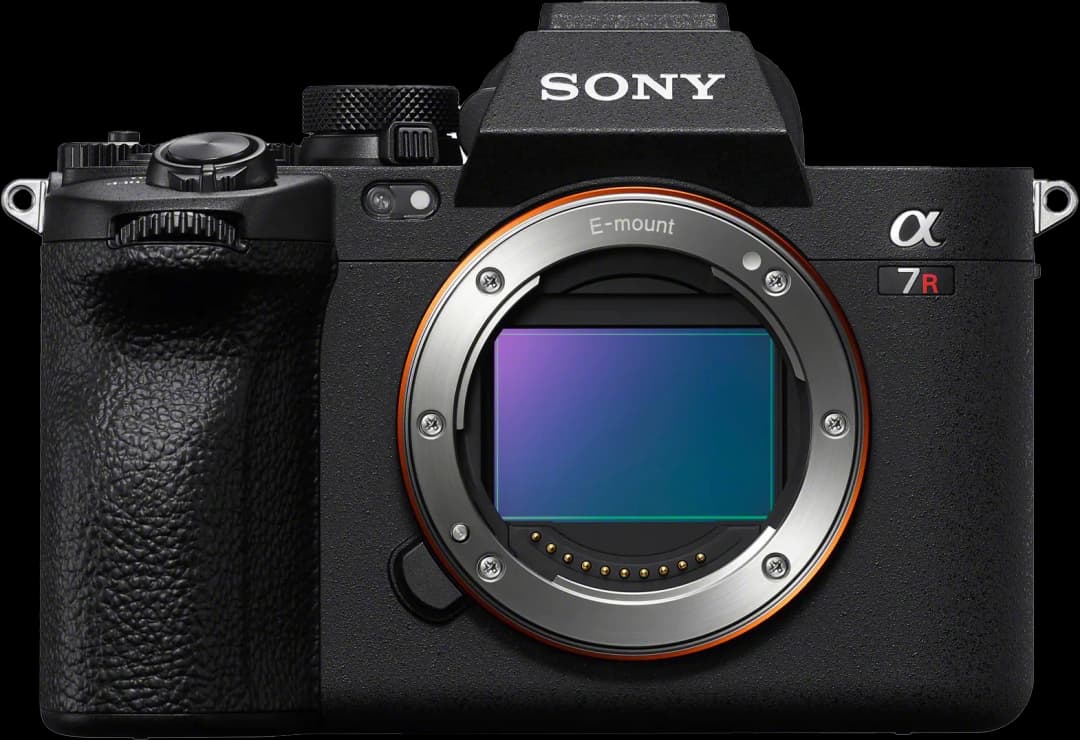
Sony
α7R V
2022
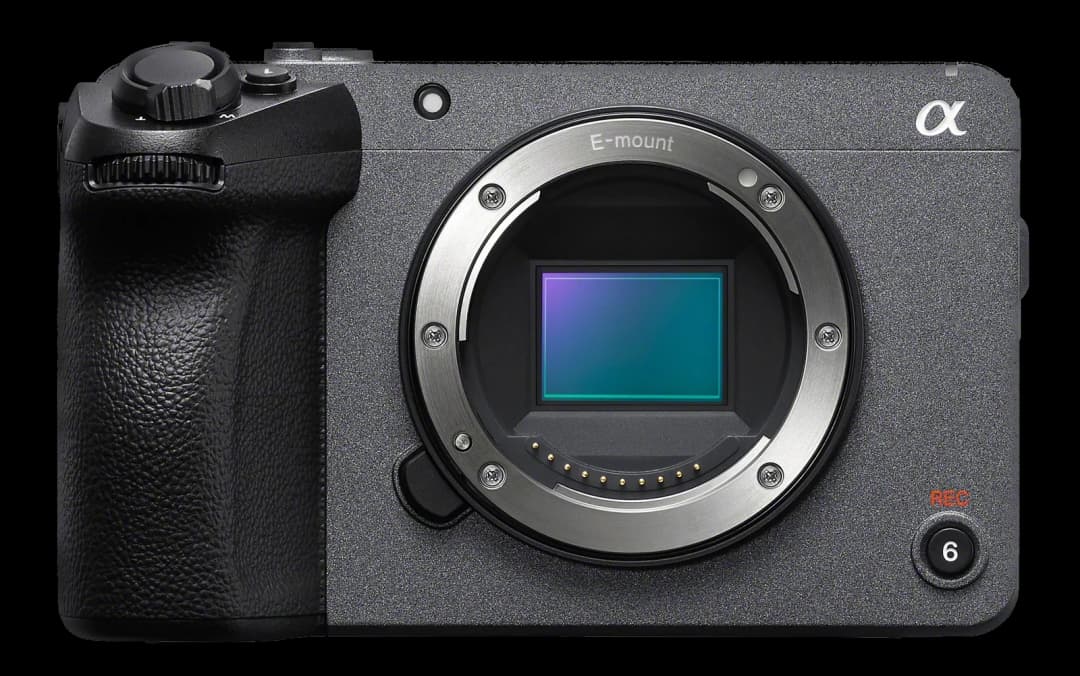
Sony
FX30
2022
Sony α7R V vs Sony FX30: high-resolution photography versus uncompromising video
Visual summary
— Reads in 5 seconds
Sony
α7R V
Sony
FX30
Where to buy
— Live merchant price comparator
Sony α7R V

Sony a7r V Digital Camera Body
2 999 GBP · Clifton Cameras

You'll find the best prices on the market here, updated daily — and by going through these partner links, you support Camera Duel without paying a cent more.
The arbitration in brief
The α7R V excels in demanding photography thanks to its 61 MP and 8 stops of IBIS; the FX30 dominates the video comparison with unlimited recording, 4K/120 fps and a price tag half as high.
These two Sony bodies share the same E mount, the same launch year (2022) and identical weather sealing. Everything else sets them apart. The α7R V is a full-frame hybrid at 3 900 USD designed for high-resolution photography. The FX30 is an APS-C hybrid camera at 1 800 USD built for semi-professional video production. One targets the photographer who shoots large format, delivers 61-megapixel files and demands 8 stops of stabilisation. The other is aimed at the videographer or content creator who shoots continuously, encodes in 4K/120 fps and connects an XLR microphone without an adapter.
The price gap is real: 2 100 USD difference at launch. Is this gap justified in photography? In video, does the FX30 overturn the hierarchy despite its smaller sensor? This comparison answers both questions using manufacturer data cross-referenced with DXOMark, DPReview and Photons to Photos.
An important contextual point: the α7R V is not a video body, even though it carries 8K. The FX30 is not a photography body, even though it produces 26-megapixel RAW files. Confusing the two positions leads to the wrong purchase. The arbitration here is therefore structural, not marginal.
Standout strengths
— Where each camera shines
Sony
α7R V
Top advantages
- 61 MPMegapixels2,3× vs Sony FX30
- 8 stopsIBIS rating+45 % vs Sony FX30
- -4 EVAF low light (EV)+1 vs Sony FX30
- 8KMax video resolutionvs DCI 4K
Sony
FX30
Top advantages
- 1000RAW buffer14,7× vs Sony α7R V
- 120 fpsMax video fps2× vs Sony α7R V
- 14 EVDynamic range (EV)+20 % vs Sony α7R V
- OuiUnlimited recordingAbsent sur Sony α7R V
Video reviews
— Long-form reviews
Sony α7R V
Sony a7R V Final Review
DPReview TV · 10 min
Sony FX30
—
Detailed spec-by-spec
— Round by round, the eight categories
Sensor
Autofocus
Speed & burst
Video
Stabilisation
Build
Ergonomics & screen
Connectivity & battery
Detailed analysis analysis
— Strengths, trade-offs and ideal user
Sony α7R V: what it does well, what it concedes
The α7R V is built around a full-frame BSI-CMOS sensor of 61 megapixels (35,7 x 23,8 mm). In practice, this density allows prints up to 100 x 67 cm at 300 dpi without interpolation, and a 50 % crop that still retains 15 usable megapixels. For studio portraiture, landscape or weddings with high-resolution file delivery, no other Sony body offers this level of detail at this price.
Measured dynamic range is 11,7 EV according to DXOMark, 2,3 EV behind the FX30. In practice, in high-contrast scenes (backlit wedding, sunrise landscape), the α7R V recovers less detail in highlights and deep shadows. This is not a deal-breaker in controlled portrait work, but it is a genuine concession in natural landscape. The 8-stop IBIS partly compensates: it allows slower shutter speeds without a tripod, which reduces the need to push ISO and preserves effective dynamic range.
Autofocus detects human and animal eyes, covers 79 % of the sensor with 693 points, and reaches -4 EV in low light. The EVF displays 9,44 million dots with 0,9x magnification, the best in the current Sony hybrid range. In video, the body caps at 60 minutes of continuous recording and offers neither unlimited recording, proxies nor native XLR input. These are structural limits, not oversights.
Key strengths in summary:
- 61 MP for large-format printing and aggressive cropping.
- 8 stops of IBIS, the best compensation in the Sony hybrid range.
- EVF 9,44 M dots at 0,9x, the reference for precise framing.
- Low-light AF at -4 EV, one stop below the FX30.
The main concession remains the 11,7 EV dynamic range and the complete absence of pro video tools (XLR, proxy, unlimited recording).
For whom
The α7R V suits the professional or advanced photographer whose main activity is still photography. Portrait, wedding, landscape, architecture: any use that values raw resolution and precise framing. This body is made for the photographer who delivers files to demanding clients, prints large format or crops heavily in post-production. The 8-stop IBIS also makes it relevant for the travel photographer working in natural light without a tripod. Conversely, if video represents more than 30 % of your activity, the α7R V is not the right tool: its recording limitations and lack of native XLR input place it structurally behind the FX30.
Sony FX30: what it does well, what it concedes
The FX30 carries a 26-megapixel APS-C BSI-CMOS sensor (23,4 x 15,6 mm). Resolution is 35 megapixels lower than the α7R V, which closes the door on very large prints. But measured dynamic range reaches 14 EV, 2,3 EV more than the α7R V. In practice, this extra margin recovers more highlight detail during outdoor shoots or high-contrast scenes.
The FX30’s video proposition is built for lightweight professional production. Recording is unlimited (no 60-minute cap). The body reaches 120 fps in DCI 4K, enabling 5x slow motion in a 24p timeline without resolution loss. It supports ProRes RAW and Blackmagic RAW via external output, two formats directly usable in DaVinci Resolve. XLR input is available via the XLR-H1 grip (sold separately but natively compatible). Rolling shutter is measured at 15 ms, a respectable figure for an APS-C sensor in video.
Autofocus covers 92 % of the sensor with 759 points, versus 79 % on the α7R V. Human and animal eye detection is present. Low-light AF reaches -3 EV, one stop above the α7R V. The RAW buffer is rated at 1 000 images, making burst shooting practically unlimited. The lack of an EVF is a deliberate video-oriented design choice: the FX30 is intended for use on a rig with an external monitor.
Key strengths in summary:
- Unlimited video recording with no declared overheating.
- Native 4K/120 fps for slow motion without cropping.
- 14 EV dynamic range, the highest of the two bodies.
- 1 000-image RAW buffer, burst without practical constraint.
- Support for ProRes RAW and Blackmagic RAW via external output.
The main concession is the absence of an EVF, IBIS limited to 5,5 stops and the 26 megapixels that cap high-resolution photography ambitions.
For whom
The FX30 is made for the videographer, content creator or independent filmmaker looking for a compact, weather-sealed body capable of shooting without interruption. It also suits the hybrid photographer for whom video represents the majority of revenue: filmed weddings, corporate reportage, lightweight documentary. The lack of an EVF disqualifies it for intensive outdoor photography. At 1 800 USD, it offers a video-to-price ratio that is hard to beat in the Sony range in 2026.
Our verdict
Which one to buy, and why
The α7R V and the FX30 do not address the same buyer. Choosing between them first requires answering a simple question: is your main activity photography or video?
In photography, the α7R V has no serious rival in this matchup. Its 61 megapixels, 8-stop IBIS and 9,44-million-dot EVF make it the reference tool for portrait, landscape and high-resolution wedding work. The 11,7 EV dynamic range is the only measurable weakness, and it only becomes critical in high-contrast natural landscapes. The FX30, with its 26 megapixels and lack of viewfinder, cannot compete on this ground.
In video, the FX30 completely reverses the hierarchy. Unlimited recording, 4K/120 fps, 14 EV dynamic range, external ProRes RAW support and native XLR input form a package the α7R V cannot replicate, regardless of its 8K resolution. The α7R V caps at 60 minutes of recording, without proxy, without XLR, without dual ISO. These are deal-breakers for professional video use.
Deal-breakers to remember:
- No EVF on the FX30: deal-breaker for photography in bright outdoor conditions.
- Recording limited to 60 minutes on the α7R V: deal-breaker for any long shoot.
- 26 MP on the FX30: deal-breaker for large-format printing or heavy cropping.
- No native XLR input on the α7R V: deal-breaker for professional audio capture.
On value for money, the FX30 at 1 800 USD is hard to ignore for a videographer. The 2 100 USD gap with the α7R V is only justified if high-resolution photography is at the core of your activity. On the used market, both bodies are found in 2026 between 1 200 and 1 400 USD for the FX30 and 2 800 and 3 200 USD for the α7R V, which maintains the structural gap.
My view: if you mainly photograph and video is secondary, take the α7R V without hesitation. If you produce video professionally or your budget is constrained, the FX30 is the rational choice. There is no credible scenario in which the α7R V is the better video tool of the two.
Frequently asked questions
Before you buy, the questions we get
Which one to choose for photographing and filming a wedding?
If photography takes priority, the α7R V wins: 61 megapixels, 8-stop IBIS and 9,44 M-dot EVF guarantee usable files in all conditions. If you film the ceremony continuously, the FX30 becomes essential: unlimited recording, 4K/120 fps for slow motion and XLR input for ceremony sound. The ideal combination for a photo-video wedding duo is an α7R V as the main photo body and an FX30 as the secondary video camera, both sharing the same E mount and the same lenses.
Is the 2 100 USD price gap between the two bodies justified?
In photography, yes. The α7R V delivers 35 additional megapixels, 2,5 extra stops of IBIS and an EVF absent from the FX30. These three points have direct value for the professional photographer. In video, no. The FX30 surpasses the α7R V on almost every pro video criterion (unlimited recording, 4K/120 fps, XLR, external ProRes RAW, dual ISO) for 2 100 USD less. The price gap is only justified if high-resolution photography is your main activity.
Should I be swayed by the α7R V’s 8K if I edit in 4K?
No, unless you use the 8K as a cropping source in post-production. Shooting 8K to deliver 4K provides comfortable cropping margin, but the α7R V caps at 60 minutes of continuous recording and does not offer proxy recording. For everyday 4K video use, the FX30 is more practical: it reaches 4K/120 fps, records without time limit and supports ProRes RAW via external output. The α7R V’s 8K is a photography asset (oversampling, printing), not a decisive video argument.
Can the FX30 replace an α7R V for landscape photography?
Partially. The FX30’s 14 EV dynamic range exceeds the α7R V’s (11,7 EV), which is a real advantage in high-contrast scenes. But the 26-megapixel APS-C sensor limits large-format prints and cropping. The lack of an EVF is a hindrance in bright outdoor conditions. The 5,5-stop IBIS is adequate but inferior to the α7R V’s 8 stops for long handheld exposures. For demanding landscape work, the α7R V remains the better of the two, despite its lower dynamic range.
Which body will age better over the next three to five years?
The α7R V will age better in photography: 61 megapixels remain a lasting reference, and Sony’s E-mount lens ecosystem is the most extensive in the hybrid market. The FX30 will age better in video: its production-oriented architecture (unlimited recording, XLR, external ProRes RAW) matches professional workflows that evolve slowly. Both bodies share the E mount, which protects the lens investment in either case. The main risk for the FX30 is the arrival of an APS-C successor with a higher-resolution sensor; for the α7R V, pressure will come from a possible α7R VI with improved dynamic range.