Review · OM System · 2025
OM System OM-3 Astro Review: The Body Built for the Stars
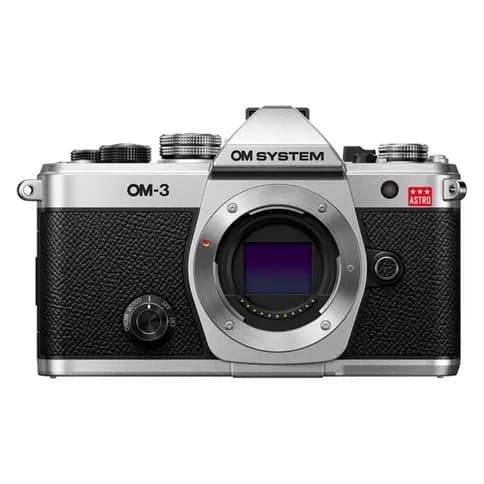
The OM-3 Astro is the only body on the market natively optimised for astrophotography. At 2 499 EUR, it targets night-sky photographers seeking a compact, weather-sealed, all-in-one tool without video compromises.
Verdict
The OM System OM-3 Astro is not a generalist body with a night mode added via firmware. It is a specialised variant of the OM-3, built around a modified anti-infrared filter that allows H-alpha wavelengths (656 nm) to pass, invisible on a standard sensor. Result: emission nebulae appear in long exposures without an external filter. This design choice has a direct cost: daytime colour rendition is altered, making the body less versatile than a standard OM-3. The main deal-breaker remains the lack of dual card slots on a 2 499 EUR body, and the MFT format imposes a 17.4 x 13 mm sensor area, roughly four times smaller than full-frame. For travel astrophotography, these trade-offs are acceptable. For daily mixed use, they are not. Buy the OM-3 Astro if the night sky is your primary subject. Buy the standard OM-3 if you want a versatile MFT body.
Pros
- Native H-alpha modified IR filter: no external filter needed for emission nebulae
- AF at -8 EV: detection possible under a starry sky without assistance
- 7.5-stop compensated IBIS: handheld long exposures up to several seconds
- 120 fps electronic burst on Stacked CMOS sensor: tracks moving subjects even at night
- Full weather-sealing: usable down to -10 °C, in rain and spray
- C4K 10-bit Log video with H.265 codec: genuine video versatility beyond astro
Cons
- Single SD UHS-II card slot on a 2 499 EUR body: deal-breaker for data security
- MFT format (17.4 x 13 mm): inferior light gathering to full-frame on low surface brightness objects
- Altered daytime colour rendition due to modified IR filter: daytime use compromised
- 2 360 000-dot EVF with 0.69x magnification: below current full-frame standards
- Max native 25 600 ISO: limited compared to full-frame bodies on very dark subjects
Who is it for?
- The deep-sky photographer who wants to capture H-alpha nebulae without investing in a 300 EUR external clip filter
- The travelling astrophotographer heading on expeditions seeking a compact (496 g), weather-sealed kit usable in humid conditions
- The night videographer needing a C4K 10-bit Log body with 7.5-stop IBIS for time-lapses and night shots
- The existing MFT photographer with Micro Four Thirds lenses wanting a dedicated astro body without switching ecosystems
On video
Natural Portraits · 11 min 32
OM-3 Astro: ¿La MEJOR cámara para astrofotografía? (Prueba REAL en campo)
Presentation and Positioning
The OM System OM-3 Astro was released in 2025 at 2 499 EUR. It occupies a unique position on the market: an MFT hybrid body designed natively for astrophotography, not just equipped with a night mode.
OM System has built its reputation on weather-sealing and compactness. The standard OM-3, released the same year, is already a robust body with a 20.4 MP Stacked CMOS sensor and 7.5-stop IBIS. The OM-3 Astro adopts this base entirely and adds a fundamental modification: the anti-infrared filter in front of the sensor is replaced by an extended transmission filter. This filter allows wavelengths around 656 nm to pass, corresponding to the H-alpha line of ionised hydrogen. It is this line that gives their red colour to emission nebulae like Orion or the Rosette.
On a standard body, the IR filter precisely cuts this wavelength to avoid a red cast in daylight. On the OM-3 Astro, this filter is relaxed. The consequence is twofold: H-alpha nebulae become visible in long exposures without an external filter, but natural light white balance is disrupted. OM System offers corrected colour profiles to partially compensate for this effect in daytime use, but the correction remains imperfect. This body is designed for the night. Using it for daytime travel reportage works against it.
Scores by use calculated by the camera-duel.com algorithm: the OM-3 Astro excels in video (8.9/10) and night uses, but remains limited in generalist photography (6.8/10) due to its MFT format and modified filter.
The historical context is worth recalling. OM System (formerly Olympus) has always targeted demanding field photographers with compact, weather-sealed bodies. The OM-D E-M1 Mark III already offered Live Composite mode for long exposures and Starry Sky AF. The OM-3 Astro goes further by modifying the sensor itself, representing a significant design investment for a niche segment. It is a coherent bet aligned with the brand's DNA, but one that mechanically reduces the body's potential audience.
| Sensor | MFT |
|---|---|
| Sensor size | 17.3 × 13 mm |
| Resolution | 20.4 MP |
| Sensor type | Stacked CMOS |
| Native ISO range | 80 – 25600 |
| Extended ISO | up to 102400 |
| In-body stabilization | 7.5 stops |
| Eye detection (human / animal) | Yes / Yes |
| Mechanical burst | 6 fps |
| Electronic burst | 120 fps |
| Max shutter speed | 1/32000 |
Ergonomics and Build
At 496 g and 139.3 x 88.9 x 45.8 mm, the OM-3 Astro is one of the most compact hybrid bodies in its price category. Weather-sealing is comprehensive.
Compactness and Weather-Sealing
The 496 g weight is a real argument for the travelling astrophotographer. Compare with the Panasonic Lumix GH7, direct MFT competitor, at 805 g. On a night of observation with tripod, the body weight difference alone is marginal. But in an expedition backpack where every gram counts, the gap becomes relevant. Weather-sealing is certified for sub-zero temperatures, essential for winter high-altitude or northern latitude astrophotography. I regularly shoot in Breton sea spray and near 0 °C temperatures: OM System weather-sealing is serious, not cosmetic.
The body is only 45.8 mm deep. This shallow depth is a constraint for large hands with heavy lenses, but an advantage for bag storage. The Micro Four Thirds mount is compatible with the entire MFT ecosystem, over 40 native lenses from OM System and Panasonic, plus adapters to other mounts. For astrophotography, fast wide-angle lenses like the Laowa 7.5 mm f/2 MFT or Olympus 8 mm f/1.8 Fisheye Pro are directly usable.
EVF, Screen and Interface
The EVF displays 2 360 000 dots with 0.69x magnification. It is sufficient for composition but inferior to the 3 686 400 dots of the Sony A7R V or 5 760 000 dots of the Nikon Z8. For astrophotography, the EVF is rarely used: work is mainly on the vari-angle screen in Live View to frame a precise celestial object. The 3-inch, 1 620 000-dot vari-angle screen is a real asset for pointing at the zenith without lying on the ground.
The touchscreen facilitates manual focus on a bright star used as reference. Screen brightness can be minimised to preserve the operator's dark adaptation, a feature experienced astrophotographers will appreciate. The general interface matches the standard OM-3, with customisable C1 to C4 modes to store complete astro-dedicated configurations.
Image Quality and Sensor
The 20.4 MP Stacked CMOS sensor in MFT format (17.4 x 13 mm) is identical to the standard OM-3. The modification concerns the filter, not the silicon.
Dynamic Range and High-ISO Noise
DXOMark and Photons to Photos data for the standard OM-3 (shared base with the Astro) indicate dynamic range measured at 100 base ISO in the usual range for modern MFT sensors. MFT dynamic range remains structurally inferior to full-frame: the light-gathering area is about four times smaller, resulting in a less favourable signal-to-noise ratio at high ISO. Max native ISO is set at 25 600, with extension to 102 400. In practice, values beyond 6 400 ISO on an MFT sensor produce visible chromatic noise in dark areas of an astronomical image, precisely where nebula details reside.
For deep-sky astrophotography, this limitation is partially offset by image stacking. The OM-3 Astro's High Res Shot mode, which shifts the sensor in micro-steps to synthesise a higher-resolution image, can be repurposed for night stacking. In practice, this mode is designed for static subjects: it does not work on apparently moving stars without motorised tracking. With an equatorial mount, the result is usable. Without a mount, stars trail and stacking produces artefacts.
The H-Alpha Filter: Real Advantage, Real Constraint
The IR filter modification is the body's central argument. On a standard sensor, sensitivity at 656 nm (H-alpha) is reduced to about 20-30% of peak sensitivity. On the OM-3 Astro, this sensitivity approaches the sensor's peak level. In long exposures on an emission nebula, the difference is visually significant: red structures invisible on a standard body become detectable without an external narrowband filter. This is a real gain, documented by users of comparable modified bodies (Canon Ra, Nikon D810A in their time).
The trade-off is documented and non-negligible. In daylight, the modified filter allows excess near-infrared that shifts white balance towards red-magenta. OM System offers built-in correction profiles, but automatic correction is imperfect on skin tones and blue skies. In RAW, post-processing correction is possible but requires a dedicated calibration profile. If you plan to use this body for portrait or landscape in full daylight, the answer is no. If daytime use is limited to landscapes without dominant blue skies, correction remains manageable.
20.4 MP in MFT: Sufficient for Astro?
20.4 MP resolution on a 17.4 x 13 mm area yields high pixel density. Pixel size is smaller than equivalent full-frame, increasing per-pixel noise. For planetary or lunar astrophotography, high resolution is an advantage. For deep sky, pixel size determines sampling with a given telescope. In practice, 20.4 MP suffices for most wide-field astro uses. For deep sky at long focal lengths with a telescope, full-frame remains preferable for per-pixel signal-to-noise.
Autofocus and Low-Light Performance
The OM-3 Astro's AF reaches -8 EV, placing this body among the market's most capable on night subjects.
Detection at -8 EV: What It Means in Practice
An AF value of -8 EV corresponds to an extremely dark scene, comparable to a night sky with low light pollution. For reference, -6 EV approximates a scene lit only by starlight. OM System's claimed -8 EV is measured in controlled conditions with a fast lens. In field practice, this value is hard to verify independently without calibrated gear. I cannot confirm this value from personal hands-on with this specific body. Manufacturer data is taken as stated.
What is verifiable: the OM-3 Astro has 1 053 AF points covering 100% of the sensor, with human and animal eye detection. For astrophotography, AF on a bright star is usable for initial focus before switching to manual. Eye detection is anecdotal for deep sky but useful for mixed sessions (night portrait, Milky Way with human model in foreground).
Low-Light AF Comparison with Competitors
The Nikon Zf reaches -10 EV per our database, two stops beyond the OM-3 Astro. The Nikon Z8 hits -9 EV. These full-frame bodies have a structural low-light advantage from larger sensor area. The Canon EOS R8 stops at -6.5 EV, Panasonic Lumix GH7 at -4 EV. On this precise criterion, the OM-3 Astro positions well in MFT and holds up against mid-range full-frames.
- OM-3 Astro: AF at -8 EV, 1 053 points, 100% coverage
- Nikon Zf: AF at -10 EV, full-frame, 273 points
- Nikon Z8: AF at -9 EV, full-frame, 493 points
- Panasonic Lumix GH7: AF at -4 EV, MFT, 779 points
- Canon EOS R8: AF at -6.5 EV, full-frame, 1 053 points
The AF point count (1 053) matches the Canon EOS R8 and Canon EOS R5 Mark II. This high number ensures fine coverage of the focus area, useful for precisely framing a celestial object at the frame edge. Phase detection on Stacked CMOS sensor delivers superior responsiveness to contrast-only systems, relevant for tracking moving subjects even at night.
Burst and IBIS Stabilisation
The Stacked CMOS sensor enables 120 fps electronic burst. IBIS compensates 7.5 stops. These figures define the body's capabilities well beyond astrophotography.
120 fps Burst: Stacked CMOS Without Apparent Compromise
120 fps electronic burst is enabled by Stacked CMOS architecture, integrating buffer memory directly on the sensor. This reduces rolling shutter, a recurring issue on classic BSI sensors in fast electronic mode. For astrophotography, 120 fps is anecdotal: work is in long exposures, not bursts. But this figure positions the body as versatile for sports or wildlife alongside night sessions. Mechanical burst is limited to 6 fps, modest for a body at this price.
Max electronic shutter speed reaches 1/32 000 s. This is useful in full sun with very fast lenses (f/1.4 or f/1.8) to avoid overexposure without ND filter. For astrophotography, shutter speed rarely exceeds a few seconds. Max speed is thus a secondary argument here.
7.5-Stop IBIS: Major Asset for Handheld Long Exposures
7.5-stop IBIS is among the highest MFT values. The Panasonic Lumix GH7 also claims 7.5 stops. High-end full-frames like Canon EOS R5 Mark II reach 8.5 stops, Nikon Z8 8 stops. For handheld astrophotography, IBIS allows several-second exposures on bright subjects (Moon, planets) without tripod. On low surface brightness objects (nebulae, galaxies), tripod remains essential as the limit is photon noise, not motion blur.
For night video and handheld time-lapses, 7.5-stop IBIS is a concrete advantage. A slow-moving Milky Way shot, stabilised electronically and optically, is achievable without gimbal. This is a strong argument for travelling videographers wanting a lightweight kit. Body IBIS combined with compatible MFT lens optical stabilisation (Dual IS) can theoretically exceed 7.5 stops on some pairings, per manufacturer data.
Video: C4K 10-bit Log
The 8.9/10 video score from camera-duel.com reflects serious capabilities. The body records C4K up to 240 fps in 10-bit with Log.
Resolution, Frame Rates and Codecs
Max resolution is C4K (4 096 x 2 160 pixels), with max frame rate of 240 fps. Available codecs are H.265 and H.264 in 10-bit. Log is available, enabling post-production colour grading with greater exposure latitude than standard profile. These specs place the OM-3 Astro at mid-range hybrid video body level, well above entry-level limited to 4K/30p in 8-bit.
240 fps in C4K is high. For comparison, Panasonic Lumix GH7 reaches 300 fps in 5.8K per our database, also MFT. The Sony FX30, APS-C video-oriented competitor, stops at 120 fps in DCI 4K. The OM-3 Astro thus positions favourably on high frame rates for its size and weight.
Night Video: IBIS and Log as Differentiators
For night video, 7.5-stop IBIS and 10-bit Log recording are relevant. Log recovers details in highlights (urban lights) and shadows (dark sky areas) during grading. IBIS avoids motion blur on wide shots. The limit remains high-ISO noise: at max native 25 600 ISO, the MFT sensor shows visible noise on dark shots. The Panasonic Lumix S5 II, full-frame at 2 199 USD, reaches 51 200 ISO native with four times the sensor area.
10 Gbps USB-C 3.2 enables power and fast data transfer. HDMI output is Micro (Type D), a concession on a body at this price: Type D is more fragile and less common than Type A or C on pro external monitors. For serious field monitor use, an adapter will be needed.
| Max resolution | C4K |
|---|---|
| Max frame rate | 240 fps |
| Codecs | H.265, H.264 |
| Bit depth | 10 bit |
| Log profile | Yes |
| In-body stabilization | 7.5 stops |
| HDMI output | HDMI Micro (Type D) |
| USB connector | USB-C 3.2 (10 Gbps) |
Connectivity and Battery Life
590-shot CIPA autonomy is decent for a hybrid body. Connectivity is modern but has a weak point on HDMI output.
| Release year | 2025 |
|---|---|
| Weight (with battery) | 496 g |
| Dimensions | 139.3 x 88.9 x 45.8 |
| Weather sealing | Yes |
| Viewfinder | EVF |
| Viewfinder resolution | 2360000 dots |
| Screen | 3 inches |
| Screen articulation | vari-angle |
| Touchscreen | Yes |
| Battery (CIPA) | 590 frames |
| Dual SD slot | No |
| Lens mount | Micro Four Thirds |
590 shots CIPA autonomy is a standard condition measure, not astrophotography. A 4-hour astro session with constant Live View, active IBIS and repeated long exposures drains the battery far faster. In practice, external USB-C power is essential for long night sessions. 10 Gbps USB-C 3.2 allows in-use powering, a real advantage over USB 2.0-limited bodies.
Wireless connectivity (Wi-Fi and Bluetooth) enables image transfer and remote control via OM System app. Remote control is useful in astrophotography to trigger without touching the body and avoid vibrations. Compatibility with external intervalometers via remote port is not listed in our database: check before purchase if using third-party wired triggers.
Against the Competition: MFT, APS-C and Full-Frame
The OM-3 Astro has no direct specialised astrophotography competitor. Relevant comparison is on three axes: generalist MFT, night full-frame and overall value.
Vs Panasonic Lumix GH7: The MFT Duel
The Panasonic Lumix GH7 is the most direct MFT competitor on price (2 199 USD) and hybrid positioning. It offers 25.2 MP vs 20.4 MP, identical 7.5-stop IBIS, and above all dual card slots, absent on the OM-3 Astro. Its AF reaches -4 EV vs -8 EV for the OM-3 Astro. For astrophotography, the OM-3 Astro's AF edge is real. For data security and general versatility, the GH7 is superior. The GH7 lacks modified IR filter: H-alpha nebulae require an external clip filter (~300 EUR extra).
Vs Nikon Zf: Night Full-Frame
The Nikon Zf is full-frame at 1 999 USD with AF at -10 EV, two stops beyond the OM-3 Astro. Its 24.5 MP full-frame sensor gathers more light per pixel structurally. It has dual slots and 8-stop IBIS. For astrophotography without native H-alpha filter, the Zf outperforms on signal-to-noise. But it lacks the OM-3 Astro's modified IR filter: emission nebulae remain underrepresented without external filter. The Zf is also 500 USD cheaper at launch.
| Spec | OM System OM-3 ASTROTested here | Panasonic Lumix GH7 | Nikon Zf | OM System OM-3 |
|---|---|---|---|---|
| Released | 2025 | 2024 | 2023 | 2025 |
| Sensor | MFT | MFT | Full Frame | MFT |
| Resolution | 20.4 MP | 25.2 MP | 24.5 MP | 20.4 MP |
| Native ISO max | 25600 | 12800 | 64000 | 25600 |
| Dynamic range | — | 10.2 EV | 11.1 EV | — |
| AF points | — | 779 | 273 | 1053 |
| Burst (elec.) | 120 fps | 75 fps | 30 fps | 120 fps |
| IBIS | 7.5 stops | 7.5 stops | 8 stops | 7.5 stops |
| Max video | C4K/240p | 5.8K/300p | 4K/60p | C4K/240p |
| Weather sealing | Yes | Yes | Yes | Yes |
| Dual SD slot | No | Yes | Yes | No |
| Weight | 496 g | 805 g | 710 g | 496 g |
| Launch price | 2499 EUR | 2199 USD | 1999 USD | 1999 USD |
OM-3 Astro comparison vs Panasonic GH7 (direct MFT rival), Nikon Zf (night full-frame) and standard OM-3 (shared base without modified filter).
The Standard OM-3: The Awkward Question
The standard OM-3 shares the exact same sensor, IBIS, AF and ergonomics as the OM-3 Astro. The only difference is the IR filter. The standard OM-3 price is not listed in our database yet, but OM System lineup logic suggests below 2 499 EUR. If the price gap exceeds 400 EUR, the OM-3 Astro justifies itself solely by the native H-alpha filter. For an astrophotographer also shooting regularly in daylight, the standard OM-3 with external H-alpha clip filter may be a more flexible alternative.
Price and Value
At 2 499 EUR, the OM-3 Astro is positioned in upper MFT range. This price justifies only if astrophotography is your primary use.
2 499 EUR price places the OM-3 Astro in a tough competitive zone. For this budget, a full-frame Nikon Zf is available at 1 999 USD (~1 850 EUR at current rates), with dual slots, 8-stop IBIS and -10 EV AF. The ~650 EUR difference easily covers an H-alpha clip filter for the Zf. The OM-3 Astro's premium thus rests on compactness (496 g vs 710 g for Zf), full weather-sealing and integrated filter convenience (no handling in pitch black).
On the used market, H-alpha modified bodies (third-party conversions) start at 800 to 1 200 EUR on OM-D E-M1 Mark III or E-M5 Mark III. These offer comparable H-alpha sensitivity but without manufacturer warranty or latest AF/IBIS features. For beginner astrophotographers, converting a used body remains a serious economical alternative. For pros wanting warranty and latest specs, new OM-3 Astro is justified.
Verdict
The OM System OM-3 Astro is an assumed niche body. It does one thing better than any other body at this price: capture H-alpha nebulae without external filter.
The overall 7.4/10 score reflects a technically solid body limited by MFT format and ultra-specialised positioning. The 6.8/10 photo score is penalised by lack of dual slots, MFT dynamic range and altered daytime colours. The 8.9/10 video score is earned: C4K 240 fps, 10-bit Log, 7.5-stop IBIS and 496 g form a rare combination.
Strengths are clear: native H-alpha filter, -8 EV AF, weather-sealing, compactness and 120 fps burst on Stacked CMOS. Weaknesses are equally clear: single SD UHS-II slot is unacceptable at 2 499 EUR, MFT format imposes physical low-light limits, and the body is impractical for routine daytime use without colour correction.
Buy the OM-3 Astro if astrophotography represents 80% or more of your practice, if you are already equipped with MFT lenses, and if you value compactness and integrated filter convenience. Do not buy the OM-3 Astro if you seek a versatile body, shoot regularly in daylight, or if lack of dual slots poses a data security issue.
Frequently asked questions
Can the OM System OM-3 Astro be used for daytime photography?▾
Technically yes, but with significant limitations. The modified IR filter allows excess near-infrared that shifts white balance towards red-magenta in daylight. OM System offers built-in correction profiles, but correction is imperfect on skin tones and blue skies. In RAW, post-processing correction is possible with a dedicated calibration profile. For regular daytime use (portrait, landscape, reportage), the OM-3 Astro is not the right choice. Prefer the standard OM-3.
What is the difference between the OM-3 Astro and standard OM-3?▾
The only documented difference is the anti-infrared filter in front of the sensor. On the standard OM-3, this filter cuts wavelengths around 656 nm (H-alpha). On the OM-3 Astro, it is replaced by an extended transmission filter allowing this wavelength. The 20.4 MP Stacked CMOS sensor, 7.5-stop IBIS, -8 EV AF, 120 fps burst and ergonomics are identical on both bodies.
Is the OM-3 Astro compatible with a telescope?▾
Yes. The Micro Four Thirds mount accepts standard T2 (T-mount) adapters used to connect a body to a telescope. MFT format gives a 2x crop factor vs full-frame, doubling the telescope's effective focal length. This is an advantage for small celestial objects (planets, globular clusters) and a constraint for wide fields (extended nebulae). Lack of integrated equatorial mount means long exposures require external motorised tracking to avoid star trailing.
Is an external H-alpha filter still needed with the OM-3 Astro?▾
For most H-alpha emission objects (Rosette, Orion, Heart and Soul nebulae), the OM-3 Astro's built-in filter suffices without external. For very faint objects or high light pollution, an external narrowband filter (OIII, SII or dedicated H-alpha) may still improve contrast. The built-in filter replaces wideband H-alpha clip filters (~300 EUR), not pro narrowband filters (~500 to 1 000 EUR) used in competitive astrophotography.
Which lens to choose with the OM-3 Astro for beginner astrophotography?▾
For wide field (Milky Way, constellations), a fast wide-angle lens is recommended: Olympus 8 mm f/1.8 Fisheye Pro or Laowa 7.5 mm f/2 MFT are references. For deep sky without telescope, Olympus 17 mm f/1.2 Pro or 25 mm f/1.2 Pro offer good luminosity-field compromise. These recommendations are based on manufacturer lens specs, not personal astrophotography hands-on with the OM-3 Astro specifically.
Is the lack of dual slots really a problem for astrophotography?▾
Yes, even more than for other uses. An astrophotography session typically lasts 3-6 hours, often in isolated conditions (mountain, desert, countryside). SD card failure mid-session means losing all images, with no immediate recovery. Dual slots enable real-time redundant backup or automatic overflow to the second card. At 2 499 EUR, omitting this feature is hard to justify. Use a pro-grade SD UHS-II card and check its condition before each session.
Related reviews
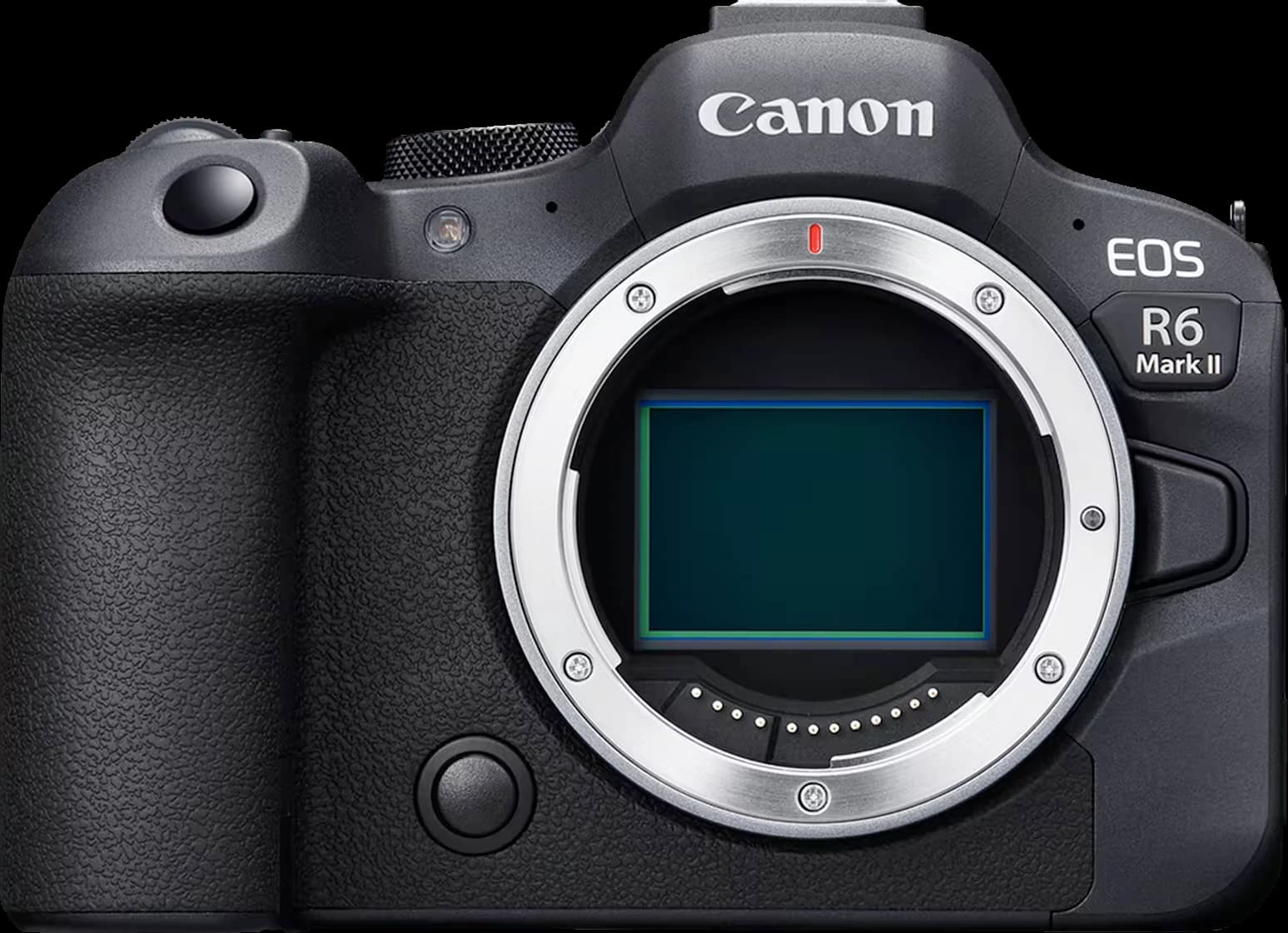
Review Canon EOS R6 Mark II: Still the Right Choice in 2026?
The Canon EOS R6 Mark II remains the most balanced general-purpose hybrid in its class for weddings, portraits and travel, provided you accept a RAW buffer limited to 75 images and video capped at 4K/60p.
Read the review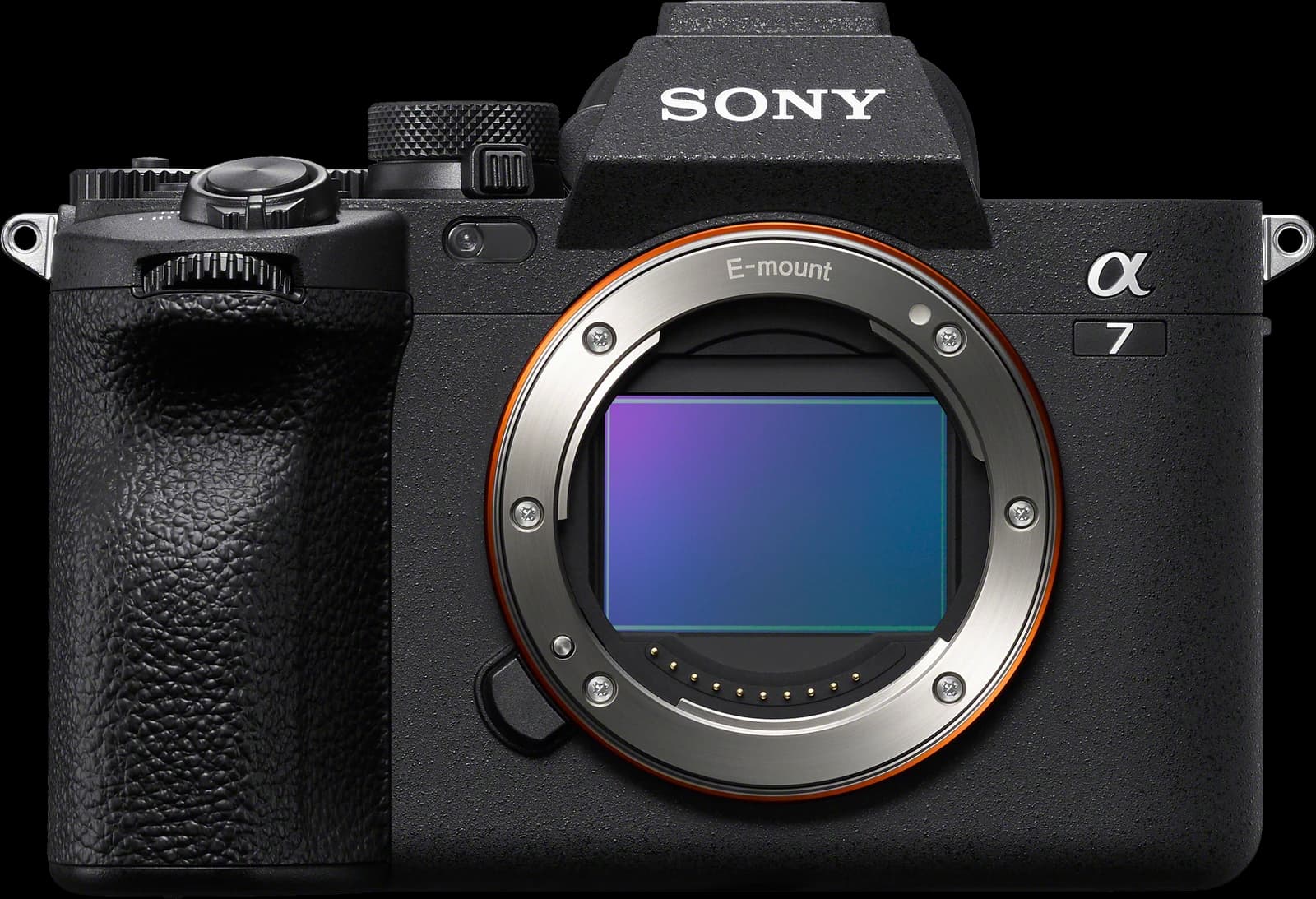
Review: Sony α7 IV – Still the Right Choice in 2026?
Full-frame all-rounder still relevant used for weddings, portraits and occasional video. New, 2023-2024 rivals offer more for the same budget.
Read the review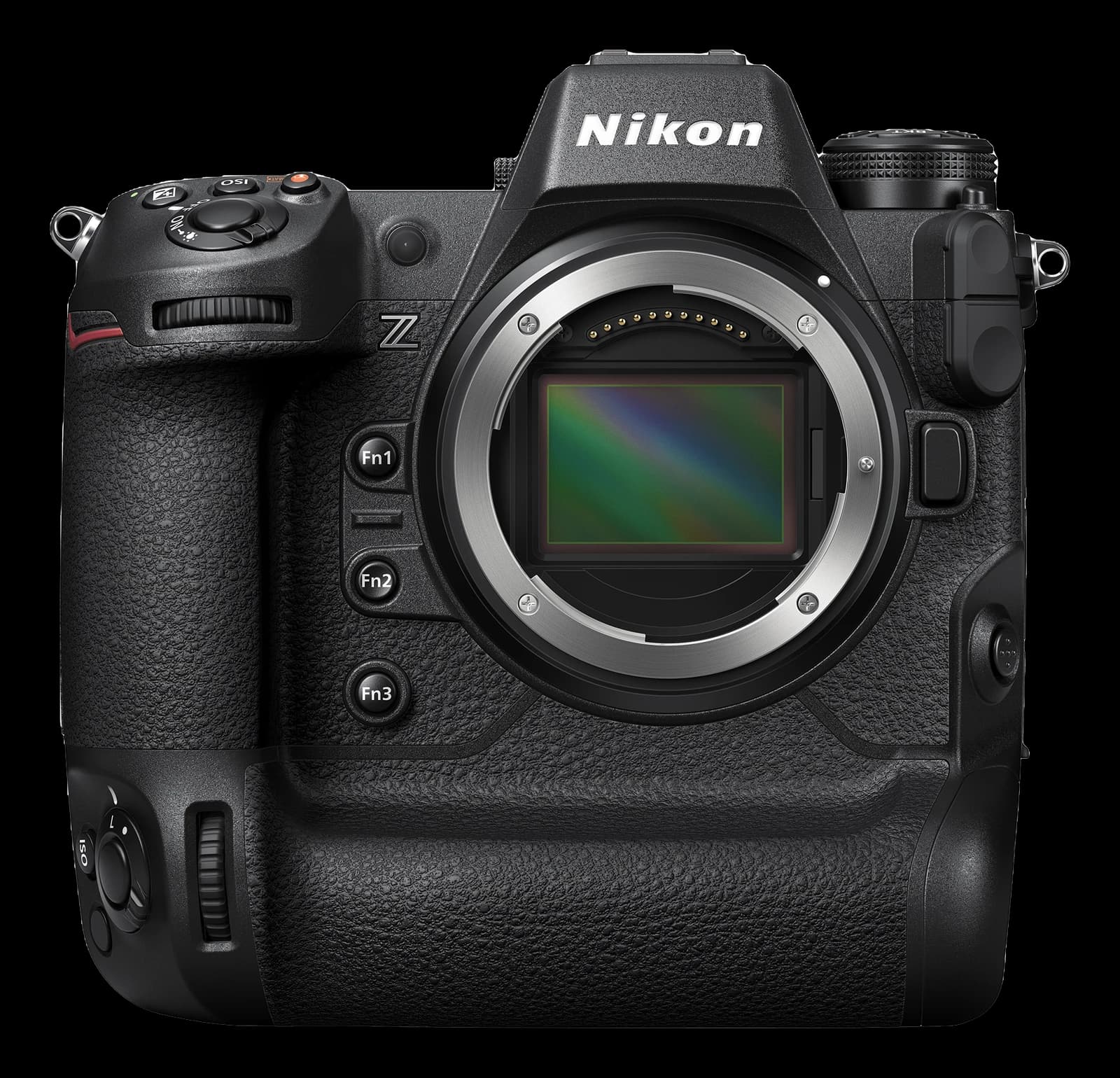
Nikon Z9 Review: Is the Nikon Flagship Still at the Top?
The Nikon Z9 remains a benchmark for professional sport and reportage thanks to its -8.5 EV AF and 1000 RAW buffer, yet the Z8 delivers the essentials for 1999 USD less.
Read the review