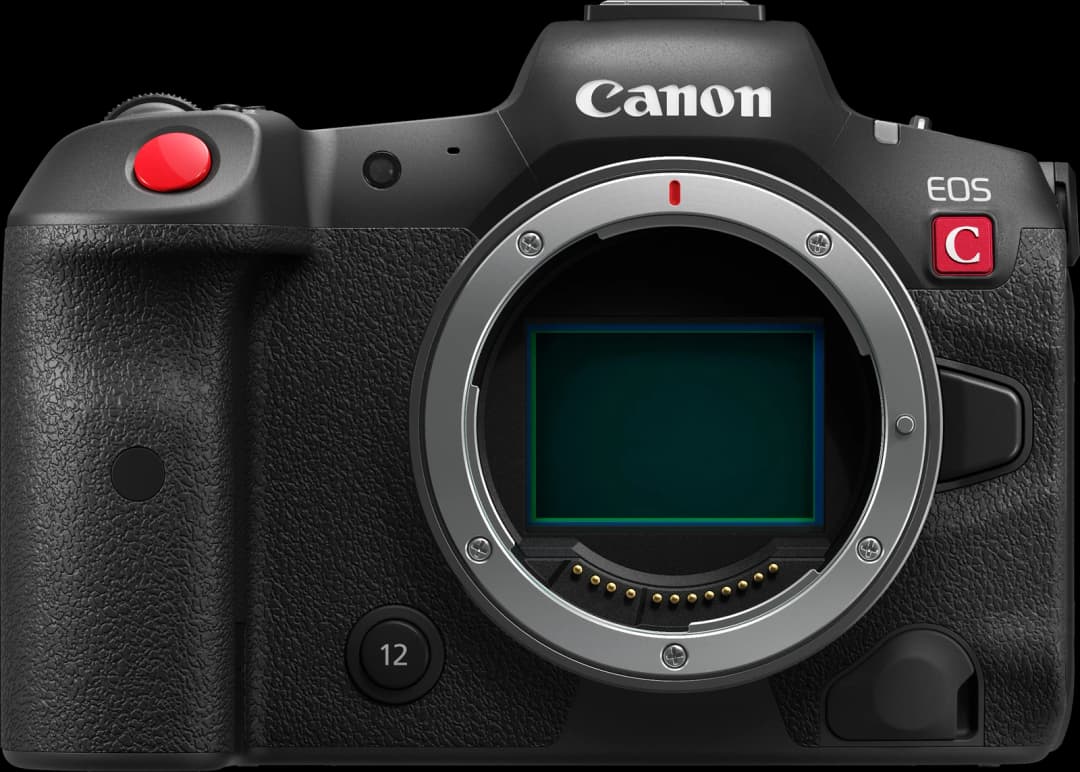
Canon
EOS R5 C
2022
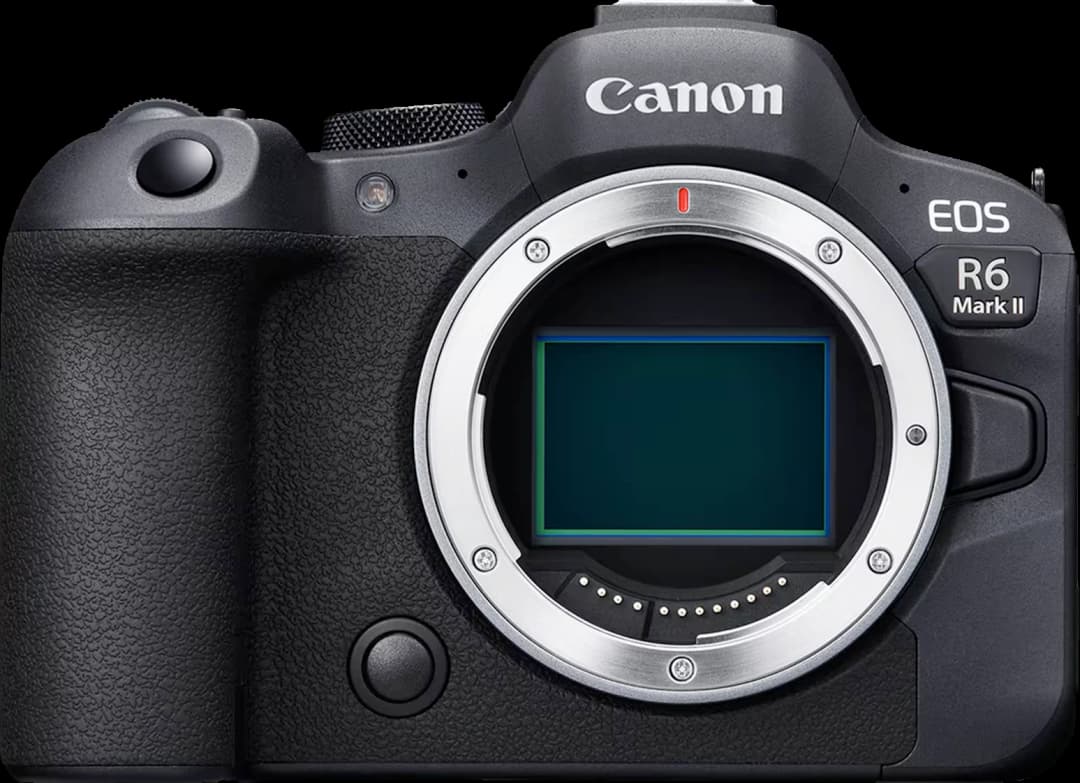
Canon
EOS R6 Mark II
2022
Canon EOS R5 C vs Canon EOS R6 Mark II: Which to Choose Between Video Power and Photo Versatility
Visual summary
— Reads in 5 seconds
Canon
EOS R5 C
Canon
EOS R6 Mark II
Where to buy
— Live merchant price comparator
Canon EOS R5 C

Canon EOS R5 C Cinema EOS Full Frame Mirrorless Camera Body Only
3 299 GBP · Clifton Cameras


Canon EOS R6 Mark II

CANON EOS R6 Mark II Mirrorless Camera - Body Only, Black
1 474 GBP · Pro-Camera


You'll find the best prices on the market here, updated daily — and by going through these partner links, you support Camera Duel without paying a cent more.
The arbitration in brief
The R5 C is a professional video production tool with 45 MP for stills; the R6 Mark II is a more affordable, lighter and better-stabilised versatile hybrid for everyday photography.
These two bodies were released the same year, in 2022, under the same Canon RF mount. They share a full-frame sensor and an AF system with 1 053 points. The resemblance ends there.
The Canon EOS R5 C is an actively cooled hybrid designed for productions that demand internal 8K RAW video without time limits. Its launch price was 4 499 USD. It targets professional videographers and photographers who need 45 megapixels for large-format prints or aggressive cropping.
The Canon EOS R6 Mark II is positioned differently. At 2 499 USD at launch, it targets versatile photographers, photojournalists and wedding photographers who want a responsive, lightweight (670 g) body with 8 stops of IBIS. Its electronic burst at 40 fps and native ISO up to 102 400 make it formidable in difficult light.
The price gap between the two is 2 000 USD. This gap is justified only if professional video is central to your work. For stills alone, or for a hybrid use focused on reportage and events, the question deserves serious consideration.
This comparison judges eight categories of specifications. It identifies the deal-breakers for each side and concludes with a clear opinion based on your primary use.
Standout strengths
— Where each camera shines
Canon
EOS R5 C
Top advantages
- 45 MPMegapixels1,9× vs Canon EOS R6 Mark II
- 2140 Mb/sMax bitrate6,3× vs Canon EOS R6 Mark II
- 180RAW buffer2,4× vs Canon EOS R6 Mark II
- 14.6 EVDynamic range (EV)+27 % vs Canon EOS R6 Mark II
Canon
EOS R6 Mark II
Top advantages
- 102 400Native ISO max2× vs Canon EOS R5 C
- 204 801Extended ISO max2× vs Canon EOS R5 C
- 40 fpsElectronic burst2× vs Canon EOS R5 C
- 60 fpsMax video fps2× vs Canon EOS R5 C
Video reviews
— Long-form reviews
Canon EOS R5 C
—
Canon EOS R6 Mark II
Canon EOS R6 Mark II Final Review
DPReview TV · 9 min
Detailed spec-by-spec
— Round by round, the eight categories
Sensor
Autofocus
Speed & burst
Video
Stabilisation
Build
Ergonomics & screen
Connectivity & battery
Detailed analysis analysis
— Strengths, trade-offs and ideal user
Canon EOS R5 C: what it does well, what it concedes
The Canon EOS R5 C carries a full-frame sensor of 45 megapixels. In practice, this allows prints up to approximately 90 x 60 cm at 300 dpi without interpolation, and cropping to 50 % of the frame while retaining a usable large-format image. The measured dynamic range is 14.6 EV at base ISO 100 (source: DXOMark). This is one of the highest values in the full-frame segment in 2026. For landscape or studio portraiture, this latitude in post-processing is a concrete advantage.
In video, the R5 C stands apart. It records internal 8K RAW at 12 bits, with ProRes and RAW codecs available natively. The maximum bitrate reaches 2 140 Mb/s. The built-in active cooling allows unlimited recording without thermal throttling. Sound engineers will appreciate the integrated XLR inputs and support for genlock and timecode. The R5 C is the only body in this comparison to offer these professional synchronisation functions.
The compromises are real. The absence of IBIS is a deal-breaker for handheld low-light stills. The RAW buffer of 180 images is generous, but the electronic burst tops out at 20 fps, versus 40 fps on the R6 Mark II. CIPA battery life is 320 shots, less than half that of the R6 Mark II. The weight of 770 g (body only) and dimensions of 142 x 101 x 111 mm make it cumbersome for light travel.
Its strengths in summary:
- 45 MP and 14.6 EV of dynamic range for high-definition stills.
- Internal 8K RAW, ProRes, 2 140 Mb/s, unlimited recording.
- XLR inputs, genlock, timecode for structured productions.
- RAW buffer of 180 images for long sequences.
The R5 C is a production tool, not a reportage body.
For whom
The R5 C suits the photographer or videographer who works in structured productions. Typically: a professional who alternates between shooting music videos, documentaries or commercials, and stills for campaigns that require large-format prints. It also suits the landscape photographer who exploits the 14.6 EV dynamic range in post-processing and accepts working on a tripod, thereby compensating for the lack of IBIS. It is not the body for the wedding photographer who moves from one room to another with a single body in hand. Nor is it the choice for the traveller who wants to travel light.
Canon EOS R6 Mark II: what it does well, what it concedes
The Canon EOS R6 Mark II carries 24.2 megapixels on a full-frame sensor. The resolution is lower than the R5 C, but remains sufficient for prints up to approximately 50 x 33 cm at 300 dpi, and for virtually all web, press and event uses. The measured dynamic range is 11.5 EV (source: DXOMark), i.e. 3.1 EV less than the R5 C. This gap is noticeable in high-contrast situations, especially in landscapes or weddings with windows in the background.
Where the R6 Mark II stands out is speed and sensitivity. The electronic burst reaches 40 fps with active AF tracking. The RAW buffer is 75 images at that rate, representing roughly 1.9 seconds of continuous burst. Low-light AF reaches -6.5 EV, i.e. 0.5 EV better than the R5 C. Native ISO climbs to 102 400, versus 51 200 on the R5 C. In practice, the R6 Mark II produces usable images in conditions where the R5 C begins to struggle.
The 8-stop IBIS is a major asset for handheld low-light stills, gimbal-free video, and travel photographers. CIPA battery life of 760 shots is more than double that of the R5 C. The weight of 670 g and dimensions of 138.4 x 98.4 x 88.4 mm make it noticeably more compact.
Its strengths in summary:
- 40 fps electronic with AF tracking and 75-image buffer.
- 8-stop IBIS for handheld stills and video.
- Maximum native ISO 102 400 for low light without extended mode.
- 760 shots CIPA, a full day without recharging.
Video is limited to 4K 60p in 10-bit H.265. For professional video use, this is a significant compromise.
For whom
The R6 Mark II is made for the versatile photographer who shoots in varied and unpredictable conditions. The wedding photographer who moves from a dark church ceremony to an outdoor cocktail and an evening reception without changing bodies will find the 8-stop IBIS and native ISO 102 400 two decisive allies. The amateur sports or reportage photographer will appreciate the 40 fps and AF tracking. For travel, the 670 g weight and 760-shot battery life are concrete arguments. This body does not suit anyone who needs professional video beyond 4K 10-bit.
Our verdict
Which one to buy, and why
These two bodies do not address the same buyer. Confusing them would be a purchasing error.
If your main activity is professional video, the R5 C has no rival in this comparison. The internal 8K RAW, ProRes codecs, 2 140 Mb/s bitrate, XLR inputs, genlock and active cooling form a package the R6 Mark II cannot replicate. The 2 000 USD launch gap is fully justified on these criteria. In 2026, the used market offers R5 C bodies around 2 800 to 3 200 USD depending on condition, narrowing the gap with a new R6 Mark II.
If your main activity is stills, with occasional video, the R6 Mark II is the rational choice. It offers:
- 40 fps electronic to capture every decisive moment.
- 8-stop IBIS for handheld work in all conditions.
- Native ISO 102 400 for low light without compromise.
- 760 shots CIPA for a full day without recharging.
The deal-breaker of the R5 C for versatile stills is the lack of IBIS. On a 45 MP body, the slightest camera shake is amplified. Without a tripod or stabilised lens, handheld shots below 1/125 s become risky. The R6 Mark II does not have this problem.
The deal-breaker of the R6 Mark II for professional video is the ceiling at 4K 10-bit H.265. For a broadcaster, advertising production or documentary shoot, this codec is insufficient. The R5 C is then indispensable.
My clear verdict: choose the R6 Mark II if you are primarily a photographer. At 2 499 USD at launch, it offers a value-for-money ratio the R5 C cannot match on the stills side. The R5 C is a justified investment only if professional video represents at least half of your billable activity.
Frequently asked questions
Before you buy, the questions we get
Which to choose for wedding photography?
The R6 Mark II is the appropriate choice for weddings. The 8-stop IBIS allows handheld work in dark churches and venues without pushing ISO beyond reasonable levels. Native ISO at 102 400 provides additional headroom. The 40 fps burst captures decisive moments effortlessly. The R5 C, without IBIS and with only 320 shots of battery life, imposes significant logistical constraints over a 10- to 12-hour wedding day.
Is the 2 000 USD gap between the two bodies justified?
Only if professional video is your main activity. The R5 C offers internal 8K RAW, ProRes, 2 140 Mb/s bitrate, XLR inputs, genlock and active cooling. These functions do not exist on the R6 Mark II. For a photographer who shoots occasional 4K video, the 2 000 USD gap is not justifiable. In 2026, the used market allows finding an R5 C between 2 800 and 3 200 USD, making the comparison more balanced for intermediate budgets.
Does the R5 C compensate for the lack of IBIS with its 45 MP?
No, it is the opposite. The higher the resolution, the more visible camera shake becomes. At 45 MP, a slightly blurred image at 1/60 s will be unusable where it would pass at 24 MP. The absence of IBIS on the R5 C is a real deal-breaker for handheld low-light stills. The solution lies in stabilised RF lenses or a tripod. The R6 Mark II with its 8-stop IBIS is structurally better suited to handheld photography.
Should one give in to 8K if shooting and delivering in 4K?
8K brings two concrete advantages even for 4K delivery: cropping without loss of final resolution (factor of 4 in available area), and oversampling that improves sharpness and reduces noise in 4K. That said, these advantages come at a cost: heavy files, demanding post-production, and a body price of 4 499 USD. If your entire workflow is in 4K and you do not crop in post, the R6 Mark II in 4K 60p 10-bit is sufficient and far less constraining.
Which body will age better over three to five years?
Both share the Canon RF mount, guaranteeing compatibility with future lenses. The R5 C will age better on the video side: its RAW and ProRes codecs, 2 140 Mb/s bitrate and professional synchronisation functions will remain relevant for a long time. The R6 Mark II will age well on the stills side thanks to its AF and IBIS, but its 24.2 MP resolution and video limited to 4K 10-bit could become constraints in a market moving toward higher resolution. In terms of physical durability, both are weather-sealed and comparable.