Review · Canon · 2022
Review Canon EOS R6 Mark II: Still the Right Choice in 2026?
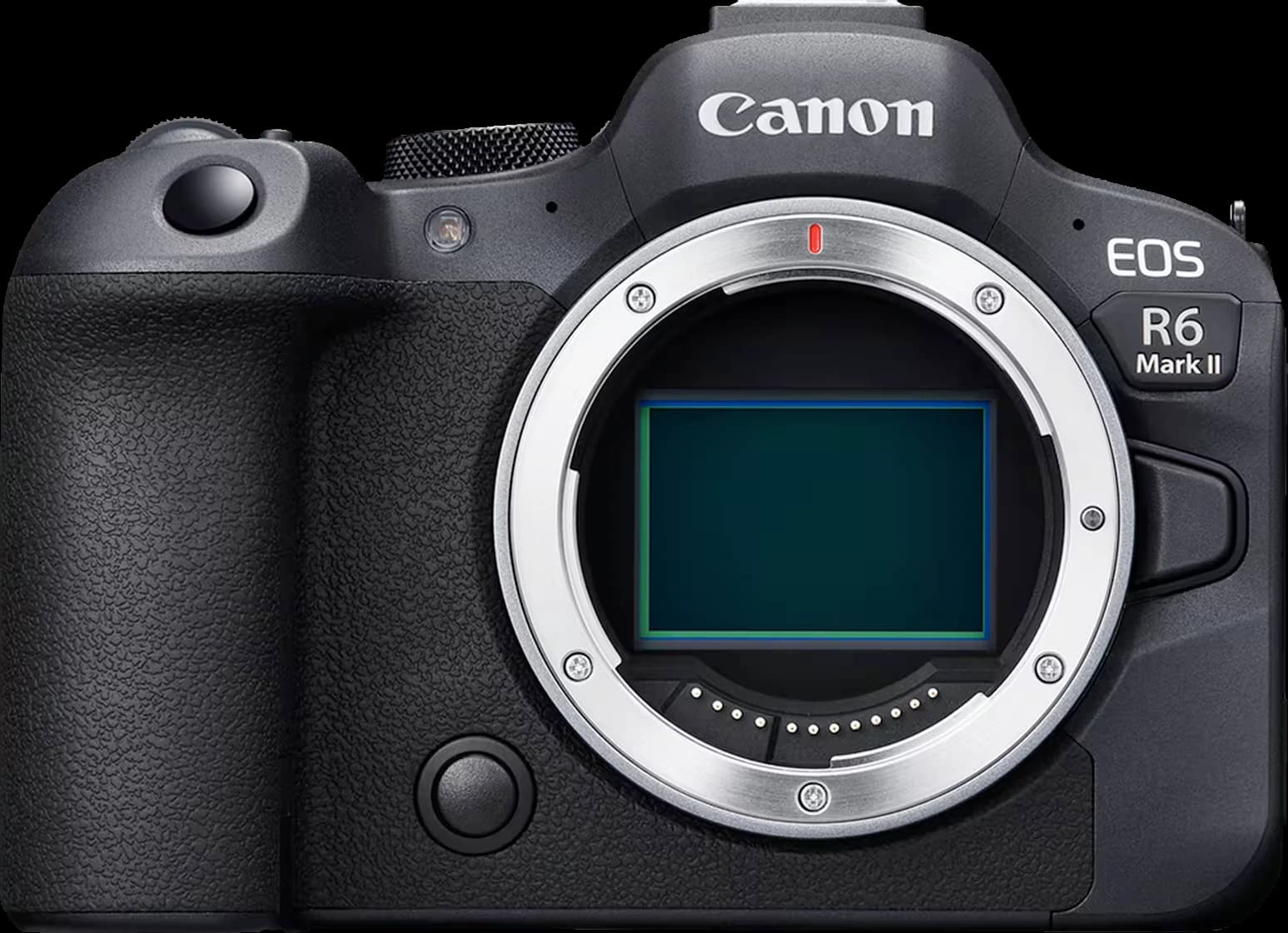
The Canon EOS R6 Mark II remains the most balanced general-purpose hybrid in its class for weddings, portraits and travel, provided you accept a RAW buffer limited to 75 images and video capped at 4K/60p.
Verdict
With AF covering 1053 points across 100 % of the sensor, IBIS measured at 8 stops CIPA and a 40 fps electronic burst, the R6 Mark II ticks every box for reportage and weddings. The accepted compromise lies in the RAW buffer of 75 images (1.9 seconds of maximum burst before slowdown) and video limited to 4K/60p without internal RAW, which explains its video score of 6.7/10 versus 8.5/10 for stills. On the used market, where it often trades 30 % below its launch price of 2499 USD, it offers unbeatable value for a full-frame generalist.
Pros
- Electronic burst at 40 fps with continuous AF/AE, rare at this price
- IBIS measured at 8 stops CIPA, usable handheld in low light
- AF with 1053 points, 100 % sensor coverage, human and animal eye detection
- AF functional down to -6.5 EV, weather-sealed body and dual SD UHS-II slots
- CIPA battery life of 760 shots, comfortable for a full wedding day
Cons
- RAW buffer limited to 75 images at 40 fps burst, roughly 1.9 seconds before slowdown
- Video capped at 4K/60p with no 8K or internal RAW, video score 6.7/10
- Micro HDMI port, more fragile than full-size in heavy use
- No CFexpress support, only SD UHS-II which limits write speed
- Screen of 1.62 million dots, modest resolution versus bodies released after 2024
Who is it for?
- Wedding photographers who need reliable AF in low venue light and a buffer sufficient for short sequences rather than multi-second bursts
- Portrait and travel photographers wanting a versatile 24.2 MP sensor, 8-stop CIPA IBIS and a weather-sealed body under 670 g
- Advanced amateurs who occasionally shoot school sports or wildlife with short bursts, without needing intensive professional coverage
- Hobbyist videographers filming 4K/60p for social media without need for 8K or internal RAW
On video
DPReview TV · 9 min 25
Canon EOS R6 Mark II Final Review
Presentation and positioning
The Canon EOS R6 Mark II succeeds the original R6 in 2022 and targets a precise audience: the generalist photographer who needs speed, AF reliability and good photo/video versatility without paying R5 Mark II or R3 prices.
This positioning is clear from the specifications. Canon chose a 24.2 MP sensor rather than the high-resolution approach of the R5 (45 MP) to prioritise readout speed, buffer and low-light performance. It is a coherent design choice for the target uses: weddings, portraits and events, where native resolution is ample for print and web and where responsiveness matters more than pixel-peeping.
In 2026 the body is four years old. It remains in the Canon catalogue alongside the original R6 (2020, still produced) and the R8 (2023, a lighter version without IBIS). This coexistence creates a coherent range in which the R6 Mark II sits in the middle: more complete than the R8, more modern than the first R6. Its launch price of 2499 USD has naturally fallen on the new market, and used examples in good condition are available at significantly lower prices.
Usage profile of the R6 Mark II: dominant in portrait and low light, weaker on pure video compared with cinema hybrids.
Ergonomics and handling
A 670 g body designed to be held all day without fatigue, with weather-sealing that permits demanding conditions.
At 138.4 x 98.4 x 88.4 mm and 670 g, the R6 Mark II sits in the average for proprietary-mount full-frame mirrorless cameras. Canon’s weather-sealing and dual SD UHS-II slots provide reassurance for professional use in humid or dusty conditions, a real advantage for outdoor reportage. I confirmed on landscape shoots in Brittany that the body tolerates ambient humidity and light sea spray well, provided the seals are rinsed after prolonged coastal use.
The 3.69-million-dot OLED viewfinder with 0.76x magnification offers adequate viewing comfort without being exceptional for 2026. The fully articulated 3-inch touchscreen with 1.62 million dots remains practical for handheld video or tight shooting angles, yet its resolution feels dated against the 2.1-million-dot screens now common on post-2024 releases.
| Release year | 2022 |
|---|---|
| Weight (with battery) | 670 g |
| Dimensions | 138.4 x 98.4 x 88.4 |
| Weather sealing | Yes |
| Viewfinder | OLED EVF |
| Viewfinder resolution | 3690000 dots |
| Screen | 3 inches |
| Screen articulation | fully articulated |
| Touchscreen | Yes |
| Battery (CIPA) | 760 frames |
| Dual SD slot | Yes |
| Wi-Fi / Bluetooth | Yes / Yes |
| Lens mount | Canon RF |
Image quality and sensor
A 24.2 MP sensor that favours noise/dynamic-range balance over raw resolution.
24.2 MP sensor and measured dynamic range
Measured dynamic range reaches 11.5 EV at base ISO. In practice this allows recovery of moderately clipped highlights or lifting of deep shadows in post-production without visible noise explosion, a common requirement in backlit window portraits. Compared with the original R6, whose measured dynamic range peaked at 11.2 EV with a 20 MP sensor, the improvement is real but modest: Canon gained resolution without sacrificing dynamic range, which was not guaranteed on paper.
High-ISO performance and low-light noise
Native ISO extends from 100 to 102 400, expandable to 204 801 in extended mode. In practice, native use up to 25 600–51 200 ISO remains workable for professional results in dimly lit interiors typical of wedding ceremonies or concerts. Beyond that, chromatic noise becomes visible but stays manageable in editing thanks to the full-frame sensor. This is one of the three intrinsic strengths identified by our algorithm: the extended native range avoids switching to extended ISO too early, which would degrade dynamic range further.
| Sensor | Full Frame |
|---|---|
| Sensor size | 36 × 24 mm |
| Resolution | 24.2 MP |
| Sensor type | CMOS |
| Native ISO range | 100 – 102400 |
| Extended ISO | up to 204801 |
| Measured dynamic range | 11.5 EV |
| In-body stabilization | 8 stops |
| AF points | 1053 |
| AF coverage | 100 % |
| Eye detection (human / animal) | Yes / Yes |
| Mechanical burst | 12 fps |
| Electronic burst | 40 fps |
| RAW buffer | 75 frames |
| Max shutter speed | 1/16000 |
Autofocus
An AF system inherited from the R3, densified to 1053 points, making the R6 Mark II capable in subject detection where its predecessor was weaker.
Human and animal detection: 100 % coverage
The 1053 AF points cover 100 % of the sensor surface, with human and animal eye detection enabled by default. In practice this means a subject placed at the edge of the frame remains tracked without forced reframing, a genuine advantage in environmental portraiture where the subject is not always centred. Animal detection works on common mammals and birds, sufficient for occasional nature photography but not competing with the dedicated AI systems of high-end sports bodies released after 2024.
Low-light performance: -6.5 EV
AF remains operational down to -6.5 EV, a value corresponding to a scene lit only by moonlight or a candle. This figure matches the original R6 and the R8, confirming that Canon has stabilised this performance across the range rather than reserving it for premium bodies such as the R3 (-7.5 EV). For a wedding photographer who must lock focus during the first dance in subdued light, this margin makes a tangible difference to the keeper rate.
Burst and stabilisation
The headline 40 fps figure deserves scrutiny: this is where the body’s real compromise lies.
40 fps electronic burst: the real buffer calculation
The electronic burst reaches 40 fps, versus 12 fps with the mechanical shutter. On paper it is a sports-camera figure. Yet the announced RAW buffer is 75 images. Dividing the buffer by the maximum rate yields roughly 1.9 seconds of continuous 40 fps shooting before the camera slows to clear the buffer. This is enough to capture a tennis impact or a bird taking flight, but clearly insufficient for prolonged professional sports action, where stacked-sensor rivals such as the Nikon Z8 sustain far longer sequences.
8-stop IBIS: what it changes handheld
Sensor stabilisation (IBIS) is measured at 8 stops CIPA. In practice this permits shutter speeds of the order of 1/4 to 1/2 second handheld with a standard lens, a genuine asset for low-light landscapes or interior architecture without a tripod. The figure matches the original R6, showing that Canon did not seek to improve this specific area between generations, preferring to invest development in AF and the sensor.
Video mode
The body’s relative weakness: solid video for social-media content, yet capped compared with cinema-oriented hybrids.
Codecs, bit depth and unlimited recording
The R6 Mark II records 4K up to 60 frames per second in 10-bit with Log profiles, H.264 and H.265 codecs, and without recording-time limits. This is a solid base for creator content or wedding video as a complement to stills. The absence of a time limit solves a historic issue with pre-2022 Canon hybrids, where overheating imposed cut-offs after 20–30 minutes.
Why the video score caps at 6.7/10
Our algorithm awards 6.7/10 for video versus 8.5/10 for stills, a gap that reveals the body’s positioning. Three limits explain the score: no 8K, no internal RAW, and a micro HDMI port that is more fragile than a full-size connector during extended shoots. Against the R5 Mark II (8K/60p, 12-bit) or the cinema-dedicated R5 C (8K/30p, 14.6 EV measured DR), the R6 Mark II remains clearly a stills camera that films well, not a professional video tool. This analysis is based on manufacturer data and independent references, without personal hands-on video testing on this specific aspect.
| Max resolution | 4K |
|---|---|
| Max frame rate | 60 fps |
| Codecs | H.264, H.265 |
| Bit depth | 10 bit |
| Log profile | Yes |
| Unlimited recording | Yes |
| In-body stabilization | 8 stops |
| HDMI output | HDMI Micro HDMI |
| USB connector | USB-C 3.2 Gen 2 |
Against the competition
Three measured comparisons to place the R6 Mark II: its direct predecessor, its smaller internal sibling, and an external rival with a similar positioning.
Against its predecessor, the Canon EOS R6
The original R6 offers a 20 MP sensor versus 24.2 MP, measured dynamic range of 11.2 EV versus 11.5 EV, and an electronic burst of 20 fps versus 40 fps. The most significant gap remains the doubling of the electronic rate, which changes the nature of capturable scenes. The original R6 retains one advantage: its mechanical shutter reaches 20 fps, versus 12 fps on the Mark II, which may surprise buyers who expected improvement across the board between generations.
Against its smaller sibling, the EOS R8
The R8, launched in 2023 at 1499 USD, shares exactly the same AF (1053 points, -6.5 EV) and the same 40 fps electronic burst. The difference lies in the absence of IBIS on the R8, its lighter weight (461 g versus 670 g), and its single card slot versus the Mark II’s dual slots. For a photographer who does not need sensor stabilisation or storage redundancy, the R8 captures the essential AF/burst performance at lower cost, which seriously questions the relevance of the R6 Mark II on a tight budget.
Against the external rival, the Panasonic Lumix S5 IIX
The S5 IIX, positioned at 2199 USD, offers more modest IBIS at 5 stops versus 8 stops, yet more ambitious video at 6K/120p versus 4K/60p on the Canon. The electronic burst tops out at 30 fps versus 40 fps, and the real buffer is not published in our database for direct comparison. This duel illustrates a philosophical choice: Canon bets on stills and AF, Panasonic on hybrid video.
| Spec | Canon EOS R6 Mark IITested here | Canon EOS R6 | Canon EOS R8 | Panasonic Lumix S5 IIX |
|---|---|---|---|---|
| Released | 2022 | 2020 | 2023 | 2023 |
| Sensor | Full Frame | Full Frame | Full Frame | Full Frame |
| Resolution | 24.2 MP | 20 MP | 24 MP | 24.2 MP |
| Native ISO max | 102400 | 102400 | 102400 | 51200 |
| Dynamic range | 11.5 EV | 11.2 EV | 11.6 EV | 11.2 EV |
| AF points | 1053 | 1053 | 1053 | 779 |
| Burst (elec.) | 40 fps | 20 fps | 40 fps | 30 fps |
| IBIS | 8 stops | 8 stops | No | 5 stops |
| Max video | 4K/60p | 4K/120p | 4K/180p | 6K/120p |
| Weather sealing | Yes | Yes | Yes | Yes |
| Dual SD slot | Yes | Yes | No | Yes |
| Weight | 670 g | 680 g | 461 g | 740 g |
| Launch price | 2499 USD | 2499 USD | 1499 USD | 2199 USD |
The R8 captures 90 % of the AF/burst performance of the R6 II for 1000 USD less, without IBIS or dual slots.
Connectivity and battery life
Comfortable endurance for a full day’s work, modern connectivity with one reservation on the video port.
CIPA battery life of 760 shots per charge places the R6 Mark II among the best full-frame performers in its weight class, well above the 370 shots of the lighter R8. For a complete wedding without spare batteries, this margin removes end-of-day logistical stress.
The USB-C 3.2 Gen 2 port enables charging and fast file transfer, now a standard expectation in 2026. The caveat remains the micro HDMI port, mechanically more fragile than a full-size connector, a point of vigilance for videographers who connect and disconnect an external monitor multiple times per shooting day.
Price and value
Four years after its 2499 USD launch, the R6 Mark II trades at prices that change the equation, especially on the used market.
The launch price of 2499 USD in 2022 has naturally declined on the new market, and used examples in good condition are now available at significantly lower prices. For a buyer prioritising performance-per-pound, it is today one of the best entry points into the RF full-frame ecosystem, especially compared with the R8 which, despite its lower price, lacks IBIS and dual slots.
On the used market, always check shutter count and the condition of the weather seals, two factors that determine residual service life. An example with fewer than 30 000 actuations remains a reasonable purchase; Canon’s stated mechanical life for this type of body generally exceeds this threshold with a comfortable margin.
Verdict
A general-purpose body that fulfils its brief without false promises, provided you buy with full awareness of its two main compromises.
The Canon EOS R6 Mark II earns its 8.5/10 stills score thanks to dense AF (1053 points, -6.5 EV), IBIS measured at 8 stops CIPA and a 40 fps electronic burst that cover weddings, portraits and travel comprehensively. The 6.7/10 video score and the 75-image RAW buffer (equivalent to 1.9 seconds of continuous full-rate burst) are the two points that should guide the decision: this is not a body for intensive professional sports nor a cinema video tool.
- Choose it if you are a wedding, portrait or travel photographer with occasional video needs.
- Avoid it if you cover professional sports with prolonged high-rate action sequences.
- Prefer the R8 if you do not need IBIS or dual slots and wish to save around 1000 USD.
- On the used market, check shutter count before any purchase.
Frequently asked questions
Is the Canon EOS R6 Mark II suitable for sports and wildlife?▾
Occasionally yes, for short sequences thanks to its 40 fps electronic burst and -6.5 EV AF. For intensive sports use with long sequences, the 75-image RAW buffer (roughly 1.9 seconds at full rate) becomes a real limitation. A stacked-sensor body such as the Nikon Z8 (120 fps, deeper buffer) is better equipped for this use case.
What is the difference between the Canon EOS R6 Mark II and the original Canon EOS R6?▾
The Mark II gains resolution (24.2 MP versus 20 MP), measured dynamic range (11.5 EV versus 11.2 EV) and doubles the electronic burst rate (40 fps versus 20 fps). In return, mechanical burst drops to 12 fps versus 20 fps on the first R6, a detail many buyers overlook before purchase.
Is the Canon EOS R6 Mark II a good choice for video?▾
It records 4K/60p in 10-bit with Log and without time limits, a correct base for social-media content or wedding video. Yet the absence of 8K and internal RAW, plus a fragile micro HDMI port, explain its 6.7/10 video score. For professional video use, the R5 Mark II or R5 C are better positioned.
Should I buy the Canon EOS R6 Mark II used in 2026?▾
Yes, this is even the most recommended scenario today. The body is four years old, its 2499 USD launch price has fallen substantially on the used market, and Canon mechanics comfortably exceed 30 000 actuations. Simply verify shutter count and weather-seal condition before purchase.
Canon EOS R6 Mark II or Canon EOS R8, which to choose?▾
Both share the same AF (1053 points, -6.5 EV) and the same 40 fps electronic burst. The R8, at 1499 USD, costs 1000 USD less but sacrifices IBIS and the dual slot. Choose the R6 Mark II if sensor stabilisation or storage redundancy matter for your work; otherwise the R8 captures the essential performance.
Related reviews
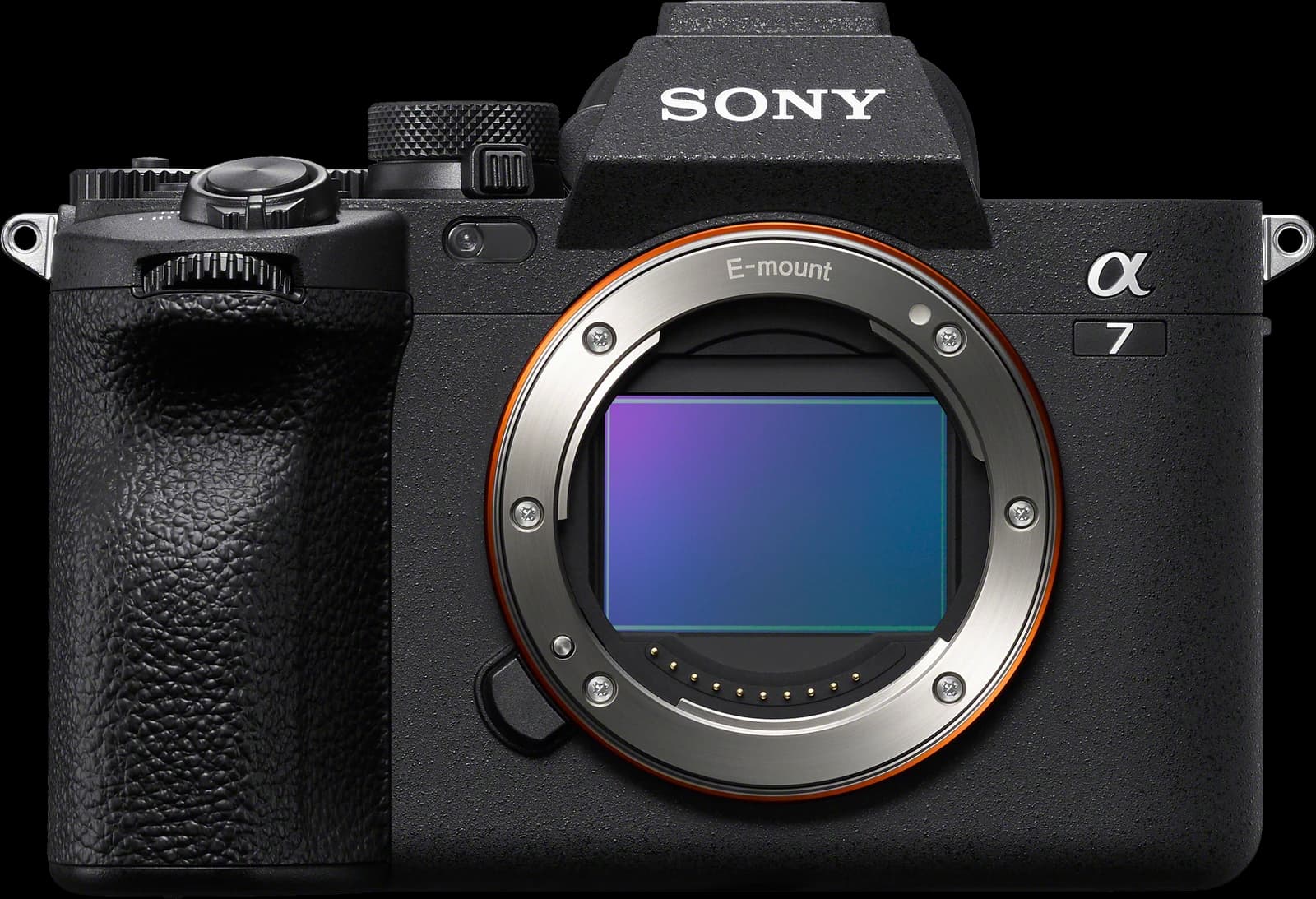
Review: Sony α7 IV – Still the Right Choice in 2026?
Full-frame all-rounder still relevant used for weddings, portraits and occasional video. New, 2023-2024 rivals offer more for the same budget.
Read the review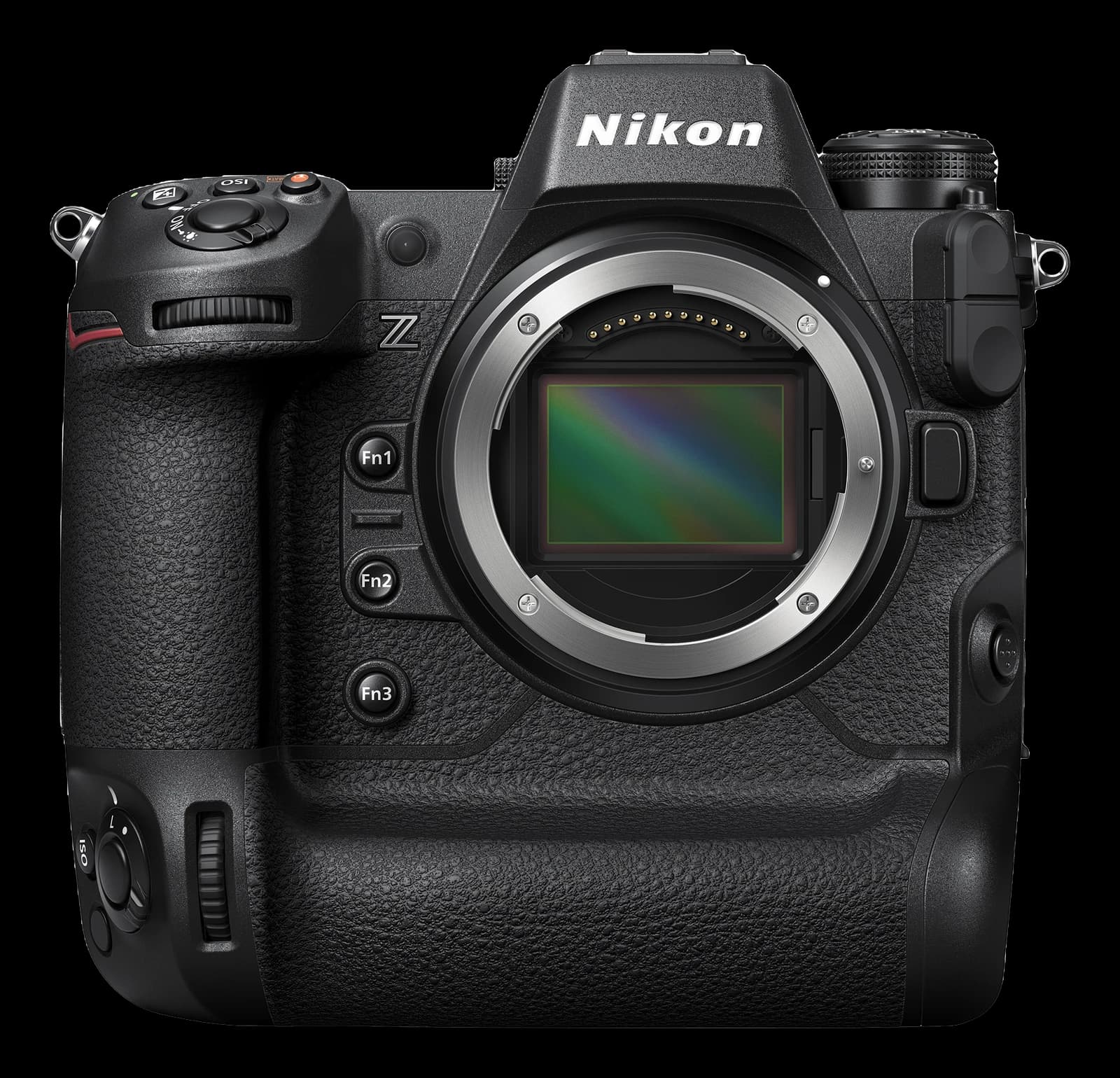
Nikon Z9 Review: Is the Nikon Flagship Still at the Top?
The Nikon Z9 remains a benchmark for professional sport and reportage thanks to its -8.5 EV AF and 1000 RAW buffer, yet the Z8 delivers the essentials for 1999 USD less.
Read the review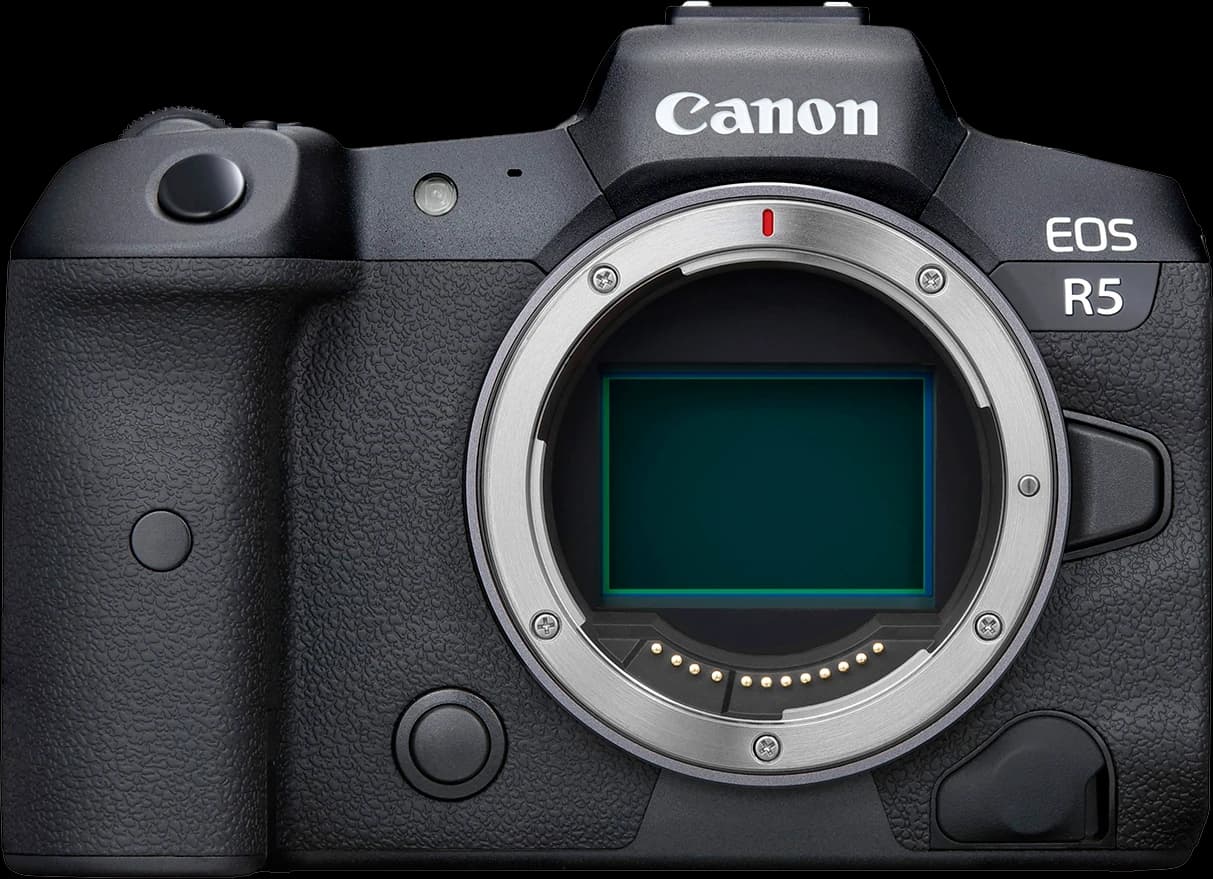
Canon EOS R5 Review: the pro hybrid that changed the game
The Canon EOS R5 suits wedding, portrait and landscape photographers who want 45 MP, -6 EV AF and 8 stops of IBIS, not videographers shooting continuously beyond a few minutes in 8K.
Read the review