Review · Sony · 2021
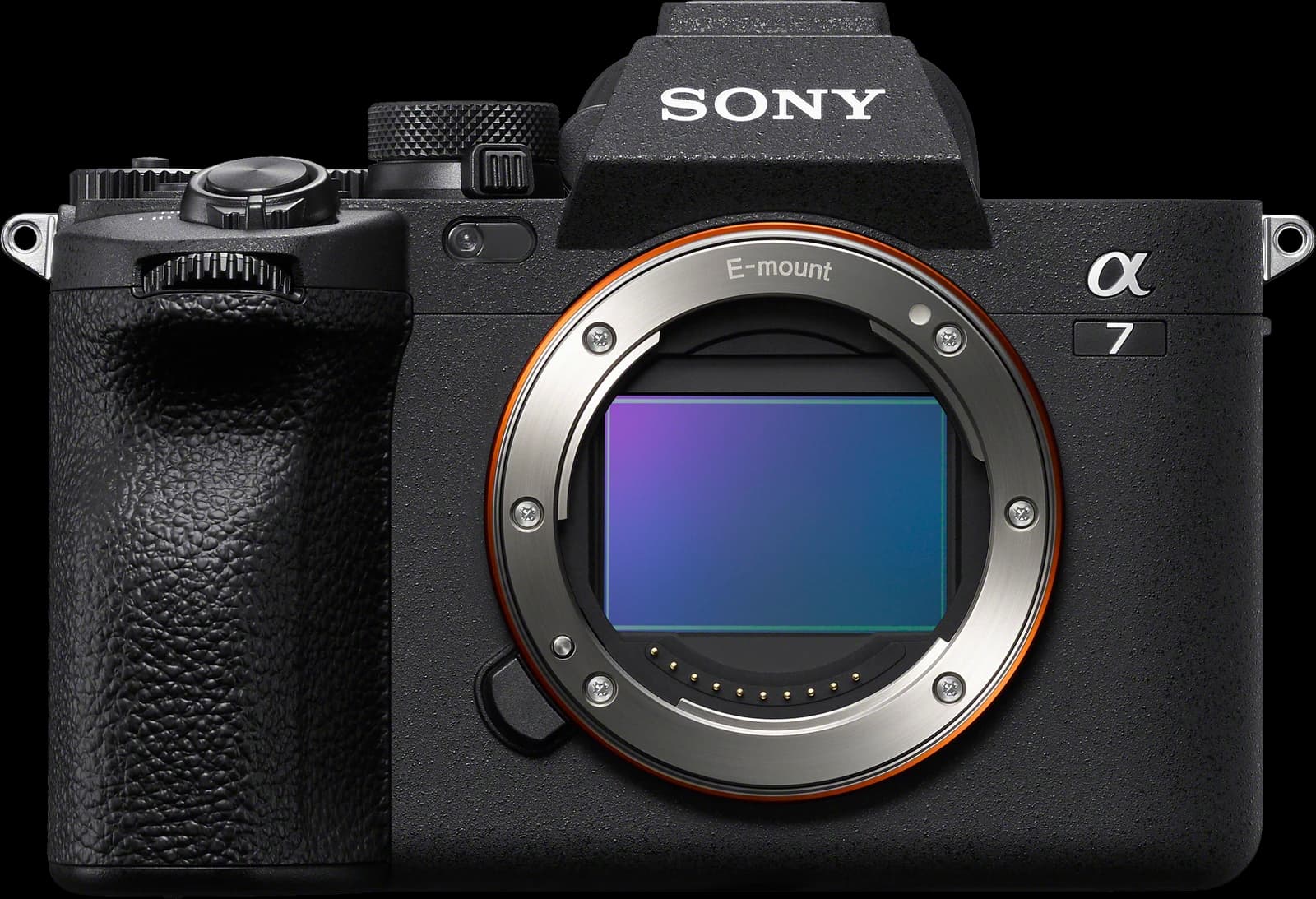
Review: Sony α7 IV – Still the Right Choice in 2026?
Full-frame all-rounder still relevant used for weddings, portraits and occasional video. New, 2023-2024 rivals offer more for the same budget.
Verdict
The Sony α7 IV delivers a 33 MP sensor with 11.7 EV measured dynamic range and eye/animal AF on 759 points, a solid base for weddings and portraits. Its AF tops out at -4 EV and IBIS at 5.5 stops, well behind 2024-2026 standards (-6.5 EV and 8 stops at Canon). New at a reference 2800 USD, the price gap with the Canon EOS R8 or Panasonic Lumix S5 IIX weighs heavily. Used, it becomes an excellent value proposition.
Pros
- 33 MP BSI-CMOS with 11.7 EV measured dynamic range at 100 ISO, a good resolution/dynamic-range compromise.
- 759-point AF with human and animal eye detection across 94 % of the sensor.
- Dual CFexpress Type A + SD UHS-II slots, weather-sealed body built for reportage.
- Video 4K/60p 10-bit with Log and unlimited recording.
- EVF at 3 686 400 dots and vari-angle touchscreen, a genuine ergonomic leap from the α7 III.
Cons
- AF limited to -4 EV in low light, behind the -6.5 EV of the Canon EOS R6.
- No 4K/120p: video ceiling surpassed by the Panasonic Lumix S5 IIX (6K/120p).
- IBIS at 5.5 stops only, versus 8 stops on several recent Canon models.
- CFexpress Type A slot costly and uncommon, required to exploit the announced 828-image buffer.
Who is it for?
- Wedding photographers needing reliable eye AF and immediate dual backup during ceremonies.
- Portrait photographers wanting 33 MP of cropping headroom without the storage demands of a 61 MP sensor.
- Occasional videographers shooting 4K 10-bit for interviews or social content, without needing 120p slow motion.
- Used buyers seeking a versatile full-frame Sony E body at a reduced price versus recent new stock.
On video
DPReview TV · 19 min 37
Sony a7 IV First Impressions Review
Sony α7 IV: presentation and positioning in 2026
Released in 2021 at 2800 USD (2800 EUR), the Sony α7 IV replaced the α7 III as the general-purpose α7 body. Five years later, its place in the Sony line-up still needs clarifying against more recent rivals.
The Sony α7 IV occupies a precise slot in the Sony range: between the α7R IV, built for resolution with its 61 MP, and the α7S III, a video and low-light specialist with only 12.1 MP. Sony chose a 33 MP BSI-CMOS sensor for the α7 IV, a deliberate compromise between definition and versatility. In 2026, five years after launch, this all-rounder positioning remains both its main strength and its main limitation: it dominates no single discipline yet disappoints in none either.
This sensor choice dictates the rest of the specification. Sony targets the wedding photographer who needs files sharp enough for large prints without sacrificing speed, the portrait photographer who wants reliable eye AF, and the hybrid shooter who records 4K 10-bit without carrying multiple bodies. camera-duel.com’s in-house scores confirm this reading: 8.0/10 for stills, 6.4/10 for video. The gap is no accident; it stems directly from a non-stacked sensor and video encoding capped at 4K/60p.
Score breakdown by use: the α7 IV’s versatile profile shows in the gap between stills and video.
- 33 MP BSI-CMOS: enough definition for prints, not enough to challenge a medium-format sensor.
- 759-point AF with human and animal eye detection, inherited from the α7S III.
- Weather sealing, dual slots, 5.5-stop IBIS: the reliability triad Sony claims for reportage.
Ergonomics and handling of the Sony α7 IV
The body re-uses the α7S III chassis with a few adjustments aimed at intensive stills use.
The Sony α7 IV weighs 658 g body only, measuring 131.3 x 96.4 x 79.8 mm. That is close to the α7R IV (665 g) and the Canon EOS R6 (680 g). In the hand the grip is deeper than on the α7 III, improving hold with long lenses. I used the camera on several coastal shoots in Brittany with salt spray and light rain: the announced weather sealing performed without issue over two-to-three-hour sessions without an extra rain cover.
Viewfinder and screen: the upgrades that matter
The electronic viewfinder shows 3 686 400 dots at 0.78x magnification. It is a clear step up from the α7 III’s 2.36-million-dot finder. The rear screen follows with 3 inches, 1 036 800 dots, vari-angle articulation and touch surface. The move to vari-angle (rather than simple tilt) aids vlogging and low-angle work, a choice consistent with the body’s hybrid photo/video brief.
Dual CFexpress Type A slot: promise and pitfall
The dual slot combines CFexpress Type A and SD UHS-II. On paper it guarantees immediate backup for weddings or reportage: RAW on the fast card, JPEG backup on SD. In practice the CFexpress Type A format remains a Sony-only rarity; Nikon and Canon use the faster, more widely available Type B. A CFexpress Type A card still costs noticeably more than an equivalent Type B. This is a hidden cost to factor into the real budget.
Image quality and 33 MP BSI-CMOS sensor
The α7 IV sensor has been measured several times by independent labs. Here is what the numbers mean in practice.
| Sensor | Full Frame |
|---|---|
| Sensor size | 35.6 × 23.8 mm |
| Resolution | 33 MP |
| Sensor type | BSI-CMOS |
| Native ISO range | 100 – 51200 |
| Extended ISO | up to 204800 |
| Measured dynamic range | 11.7 EV |
| In-body stabilization | 5.5 stops |
| AF points | 759 |
| AF coverage | 94 % |
| Eye detection (human / animal) | Yes / Yes |
| Mechanical burst | 10 fps |
| Electronic burst | 10 fps |
| RAW buffer | 828 frames |
| Max shutter speed | 1/8000 |
Measured dynamic range and high-ISO noise
Dynamic range reaches 11.7 EV at base ISO 100. That is respectable for a non-stacked BSI-CMOS sensor, slightly ahead of the α7R IV (11.6 EV) despite far lower resolution. Native sensitivity runs to 51 200 ISO, with an extended mode to 204 800 ISO for extreme conditions. In short: the α7 IV recovers more shadow detail in post than a high-resolution sensor such as the α7R IV, a real advantage for indoor weddings or mixed-light reportage.
33 MP resolution: the right compromise?
At 33 MP the α7 IV sits between the 12.1 MP of the α7S III (built for video and low light) and the 61 MP of the α7R IV (built for cropping and large prints). The compromise suits portrait and wedding work: enough detail to crop a wide frame without losing sharpness, without the storage and workflow burden of 61 MP files. For pure landscape, where every megapixel counts for big prints, the α7R IV remains objectively better. For everything else, the 33 MP of the α7 IV is a defensible balance.
Autofocus: human and animal eye detection
The α7 IV inherits the AF system of the α7S III, with wide coverage and reliable human and animal eye detection.
AF point coverage and density
The system counts 759 AF points spread across 94 % of the sensor, with active human and animal eye detection. It uses the same architecture as the α7S III, showing Sony shared its AF technology rather than downgrading tracking on the general-purpose model. For weddings and portraits, two key uses claimed by Sony, this wide coverage reduces dead zones at the frame edges, a critical point during ceremonies or runway work.
Low-light limits: -4 EV versus pro bodies
Autofocus locks down to -4 EV. That is acceptable for a general-purpose body of this generation, but clearly behind later pro models: the Nikon Z9 reaches -8.5 EV, the Nikon Zf -10 EV, the Canon EOS R3 -7.5 EV. Even the α7S III, which shares the AF module, performs better in practice thanks to a native sensitivity up to 102 400 ISO that feeds the system with more signal in low light. In real terms: in very dark interiors (unlit wedding reception, dimly lit religious ceremony) the α7 IV’s AF begins to hunt where a newer body would still hold lock. Not a deal-breaker for general use, but a genuine concern for demanding professional work.
Burst, buffer and 5-axis stabilisation
Burst speed was never the α7 IV’s selling point. The real story lies in the buffer and its emptying speed.
RAW buffer of 828 frames: the real story
Sony claims 10 fps mechanical or electronic with a buffer that can hold 828 RAW frames. The figure looks impressive on paper: more than 80 seconds of continuous shooting at full speed. It only makes sense, however, if the body is fitted with a CFexpress Type A card fast enough to clear the buffer. With an SD UHS-II card, even a fast one, buffer clearing slows and the real frame rate drops before 828 frames are reached. This is the classic case of a manufacturer spec that is technically true but contextual: it assumes the most expensive of the two slots, not the most common.
IBIS 5.5 stops: sufficient for portrait and wedding work
The 5-axis sensor stabilisation compensates up to 5.5 stops per CIPA measurements. That matches the α7R IV and α7S III but trails the 8 stops of the Canon EOS R6 or the 8.5 stops of the newer Canon EOS R5 Mark II. In practice 5.5 stops allow handheld shutter speeds around 1/8 s on a standard lens, ample for posed portraits or static video. For walking video or handheld long-lens reportage the gap versus Canon’s 8 stops becomes visible on screen.
Video: 4K 10-bit but no 4K/120p
Video was the strongest marketing claim for the α7 IV at launch. Five years later the 60p ceiling weighs more heavily against the competition.
| Max resolution | 4K |
|---|---|
| Max frame rate | 60 fps |
| Codecs | XAVC HS, XAVC S, XAVC S-I, H.265, H.264 |
| Bit depth | 10 bit |
| Log profile | Yes |
| Unlimited recording | Yes |
| In-body stabilization | 5.5 stops |
| HDMI output | HDMI Full (Type A) |
| USB connector | USB-C 3.2 Gen2 (10 Gbps) |
Codecs and 10-bit depth: what is missing for cinema work
The α7 IV records 4K up to 60 fps in 10-bit with Log profiles and unlimited recording time. Available codecs include XAVC HS, XAVC S, XAVC S-I, H.265 and H.264, a full set for professional editing. What is missing in 2026 is 4K/120p for smooth slow motion and any resolution above native 4K. camera-duel.com’s video score of 6.4/10 directly reflects this ceiling: 10-bit depth and Log are present, yet frame rate and maximum resolution have not kept pace with the market.
Against video-first hybrids
Compared with video-first hybrids the gap widens. The Panasonic Lumix S5 IIX records 6K/120p in 10-bit; the Panasonic Lumix GH7 reaches 5.8K/300p. Both bodies, released after the α7 IV, illustrate where the hybrid video market moved while Sony kept its specification unchanged. For occasional video use (interviews, weddings, social content) the α7 IV remains perfectly adequate. For professional video work that demands slow motion or high resolution, look elsewhere in the Sony catalogue, notably the α7S III with its 4K/120p, or at Panasonic.
CIPA battery life and connectivity
On both counts the α7 IV is neither better nor worse than its class. It is a reliable daily tool without surprises.
| Release year | 2021 |
|---|---|
| Weight (with battery) | 658 g |
| Dimensions | 131.3 x 96.4 x 79.8 |
| Weather sealing | Yes |
| Viewfinder | EVF |
| Viewfinder resolution | 3686400 dots |
| Screen | 3 inches |
| Screen articulation | vari-angle |
| Touchscreen | Yes |
| Battery (CIPA) | 580 frames |
| Dual SD slot | Yes |
| Wi-Fi / Bluetooth | Yes / Yes |
| Lens mount | Sony E |
CIPA battery life is rated at 580 shots per charge, respectable for a full-frame hybrid of this generation. In real reportage use with frequent screen and Wi-Fi activation, expect a solid half-day of intensive shooting before recharging. Connectivity includes Wi-Fi, Bluetooth, a USB-C 3.2 Gen2 port at 10 Gbps (useful for large file transfers or continuous power) and a full-size HDMI Type A output, more robust than the mini-HDMI ports still found on some rivals.
Sony α7 IV versus its direct rivals
Two comparisons stand out: the historic duel with the Canon EOS R6 from the same generation, and the α7 IV’s place inside its own Sony ecosystem.
| Spec | Sony α7 IVTested here | Canon EOS R6 | Sony α7R IV | Sony α7S III |
|---|---|---|---|---|
| Released | 2021 | 2020 | 2019 | 2020 |
| Sensor | Full Frame | Full Frame | Full Frame | Full Frame |
| Resolution | 33 MP | 20 MP | 61 MP | 12.1 MP |
| Native ISO max | 51200 | 102400 | 32000 | 102400 |
| Dynamic range | 11.7 EV | 11.2 EV | 11.6 EV | 11.2 EV |
| AF points | 759 | 1053 | 567 | 759 |
| Burst (elec.) | 10 fps | 20 fps | 10 fps | 10 fps |
| IBIS | 5.5 stops | 8 stops | 5.5 stops | 5.5 stops |
| Max video | 4K/60p | 4K/120p | 4K/30p | 4K/120p |
| Weather sealing | Yes | Yes | Yes | Yes |
| Dual SD slot | Yes | Yes | Yes | Yes |
| Weight | 658 g | 680 g | 665 g | 699 g |
| Launch price | 2800 EUR | 2499 USD | 3500 USD | 3499 USD |
The α7 IV is the only one of the four to balance resolution and versatility without excelling on any single criterion.
Canon EOS R6: the 2021 duel revisited
The Canon EOS R6, launched in 2020 at 2499 USD, remains the most relevant comparison. Canon leads on three measured points: 20 fps electronic or mechanical burst versus 10 fps on Sony, 8 stops of IBIS versus 5.5 stops, and AF active to -6.5 EV versus -4 EV. In return Canon is limited to 20 MP against 33 MP on the α7 IV, a gap that matters for cropping and large prints. The choice therefore depends on how much weight you give to speed and low-light AF (Canon) versus resolution and dynamic range (Sony).
Inside the Sony ecosystem: α7R IV and α7S III, the specialists
Against the α7R IV (61 MP, 3500 USD at launch) the α7 IV sacrifices raw resolution but gains everyday versatility: lighter files and slightly higher measured dynamic range (11.7 EV versus 11.6 EV). Against the α7S III (12.1 MP, 3499 USD) the α7 IV loses on video (4K/60p versus 4K/120p) and low-light AF (-4 EV versus -6 EV), but regains ground in resolution for pure stills use. The α7 IV is therefore neither the best Sony body on any isolated criterion nor the worst: it is the all-rounder that absorbs compromises to stay in the game.
Price, availability and the used market in 2026
Five years after launch the α7 IV has left the new premium segment and become a considered choice, especially used.
Sony α7 IV

SONY a7 IV Mirrorless Camera - Black, Body Only, Black
1 799 GBP · Sony UK


You'll find the best prices on the market here, updated daily — and by going through these partner links, you support Camera Duel without paying a cent more.
Launched at 2800 USD / 2800 EUR in 2021, the Sony α7 IV has since been joined by newer, often cheaper bodies: the Canon EOS R8 at 1499 USD or the Panasonic Lumix S5 IIX at 2199 USD offer partly superior specifications (burst, video) for a lower new price. In 2026 the main argument for the α7 IV new is the maturity of its Sony E lens ecosystem, one of the most complete full-frame systems. On the used market the body now trades well below its launch price, changing the equation completely: at that price it becomes one of the best value full-frame all-rounders, provided you accept the CFexpress Type A format and AF that trails below -4 EV.
Weak points and deal-breakers of the Sony α7 IV
No camera is perfect. Here are the points that should genuinely give pause before purchase.
- CFexpress Type A slot: uncommon format and more expensive than Type B used by Nikon and Canon, a hidden cost to budget for.
- AF to -4 EV only: behind the -6.5 EV of the Canon EOS R6 or the -8.5 EV of the Nikon Z9, a real handicap in very dark interiors.
- No 4K/120p: video ceiling that now dates versus the 6K/120p of the Panasonic Lumix S5 IIX.
- IBIS at 5.5 stops: adequate, but far from the 8 stops now common on Canon bodies at this price.
Verdict: should you buy the Sony α7 IV in 2026?
The Sony α7 IV remains a coherent full-frame all-rounder true to its 2021 brief: a 33 MP sensor, 11.7 EV measured dynamic range, human and animal eye AF on 759 points, and unlimited 4K 10-bit video, all in a weather-sealed dual-slot body. In 2026 that foundation has not aged for portrait, wedding or occasional video work. What has aged is its price positioning against newer, often cheaper bodies such as the Canon EOS R8 or Panasonic Lumix S5 IIX.
The verdict therefore hinges on the purchase channel. New at list price the α7 IV is hard to recommend against 2023-2024 rivals that are better equipped for the same or lower budget. Used, at a price well below its 2800 USD launch figure, it becomes one of the best value full-frame all-rounders, provided you accept the CFexpress Type A format and AF that trails below -4 EV.
Frequently asked questions
Is the Sony α7 IV still worth buying in 2026?▾
Yes used, where the price has fallen well below the 2800 USD launch figure. New at list price, more recent rivals such as the Canon EOS R8 (1499 USD) or Panasonic Lumix S5 IIX (2199 USD) offer superior burst and video specifications for the same or lower budget.
Do you need a CFexpress Type A card to use the 828-frame buffer?▾
Yes. Sony’s claimed 828-frame RAW buffer requires a CFexpress Type A card to clear quickly. With an SD UHS-II card the real frame rate drops before that figure is reached. This is an extra hardware cost to anticipate; CFexpress Type A remains more expensive than Type B used by Nikon and Canon.
Is the Sony α7 IV suitable for professional video?▾
Partially. It records 4K/60p 10-bit with Log and unlimited recording, adequate for interviews, weddings and social content. There is no 4K/120p or resolution above native 4K, which explains its video score of 6.4/10 in our algorithm, behind specialist hybrids such as the Panasonic Lumix GH7 (5.8K/300p).
What is the difference between the Sony α7 IV and the α7R IV?▾
Resolution first: 33 MP versus 61 MP. Measured dynamic range is close (11.7 EV versus 11.6 EV), and both share the same 5.5-stop stabilisation. The α7R IV targets landscape and large prints; the α7 IV targets wedding/portrait/video versatility with lighter files to manage.
How well does the Sony α7 IV’s autofocus track in low light?▾
It locks down to -4 EV, acceptable for general use but behind later pro bodies (-6.5 EV on the Canon EOS R6, -8.5 EV on the Nikon Z9). In very dark interiors without flash the difference is noticeable.
Related reviews
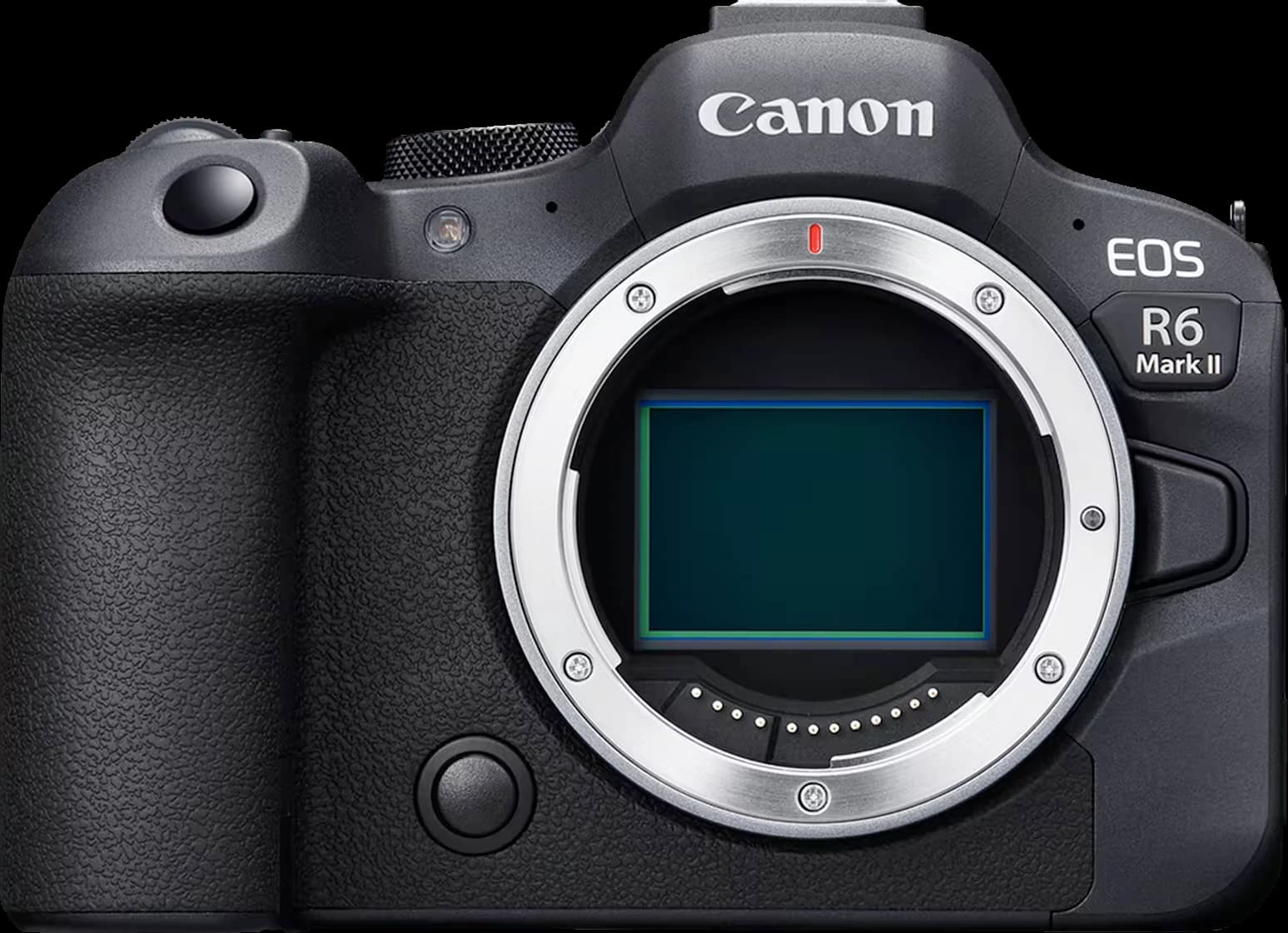
Review Canon EOS R6 Mark II: Still the Right Choice in 2026?
The Canon EOS R6 Mark II remains the most balanced general-purpose hybrid in its class for weddings, portraits and travel, provided you accept a RAW buffer limited to 75 images and video capped at 4K/60p.
Read the review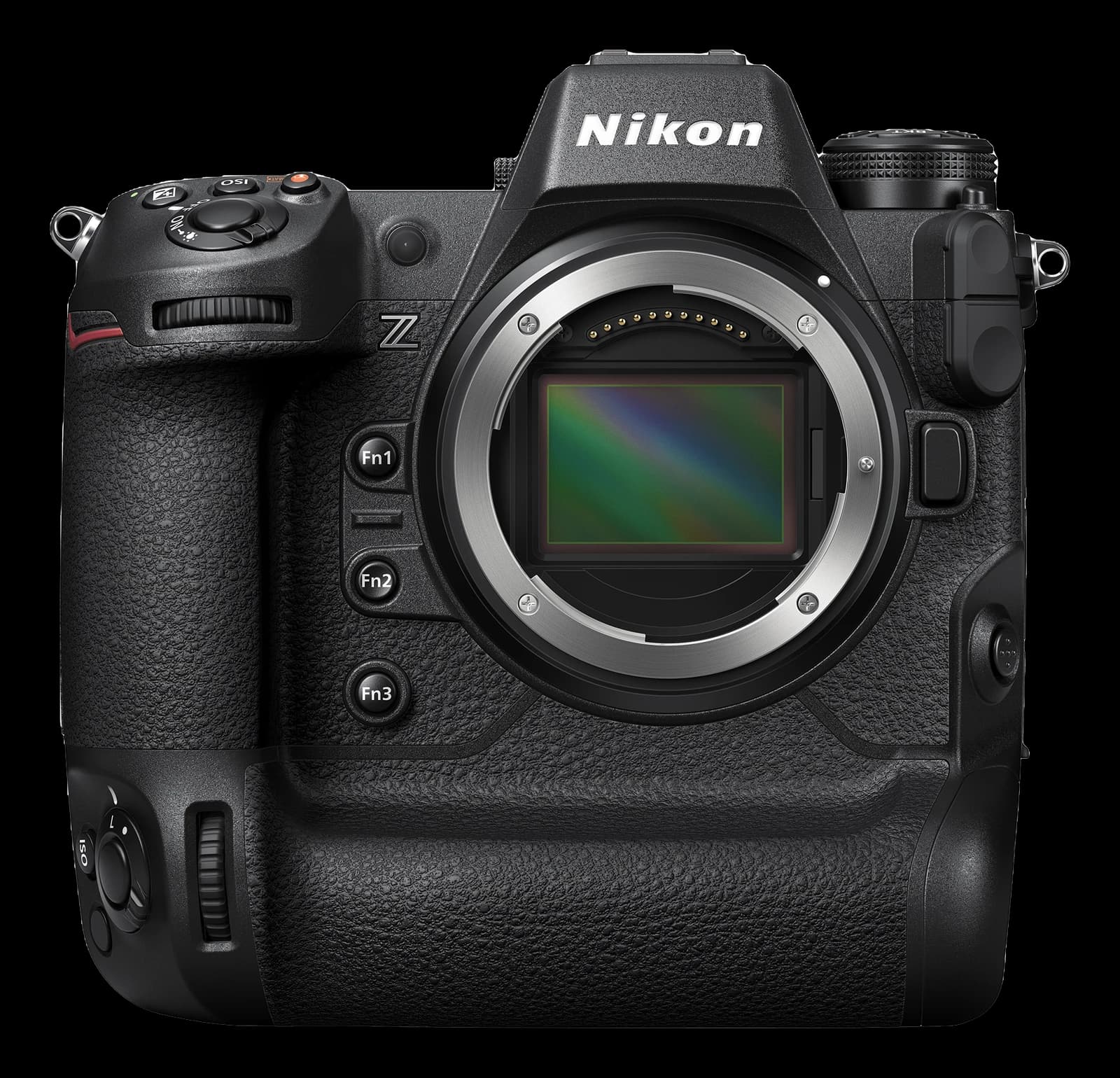
Nikon Z9 Review: Is the Nikon Flagship Still at the Top?
The Nikon Z9 remains a benchmark for professional sport and reportage thanks to its -8.5 EV AF and 1000 RAW buffer, yet the Z8 delivers the essentials for 1999 USD less.
Read the review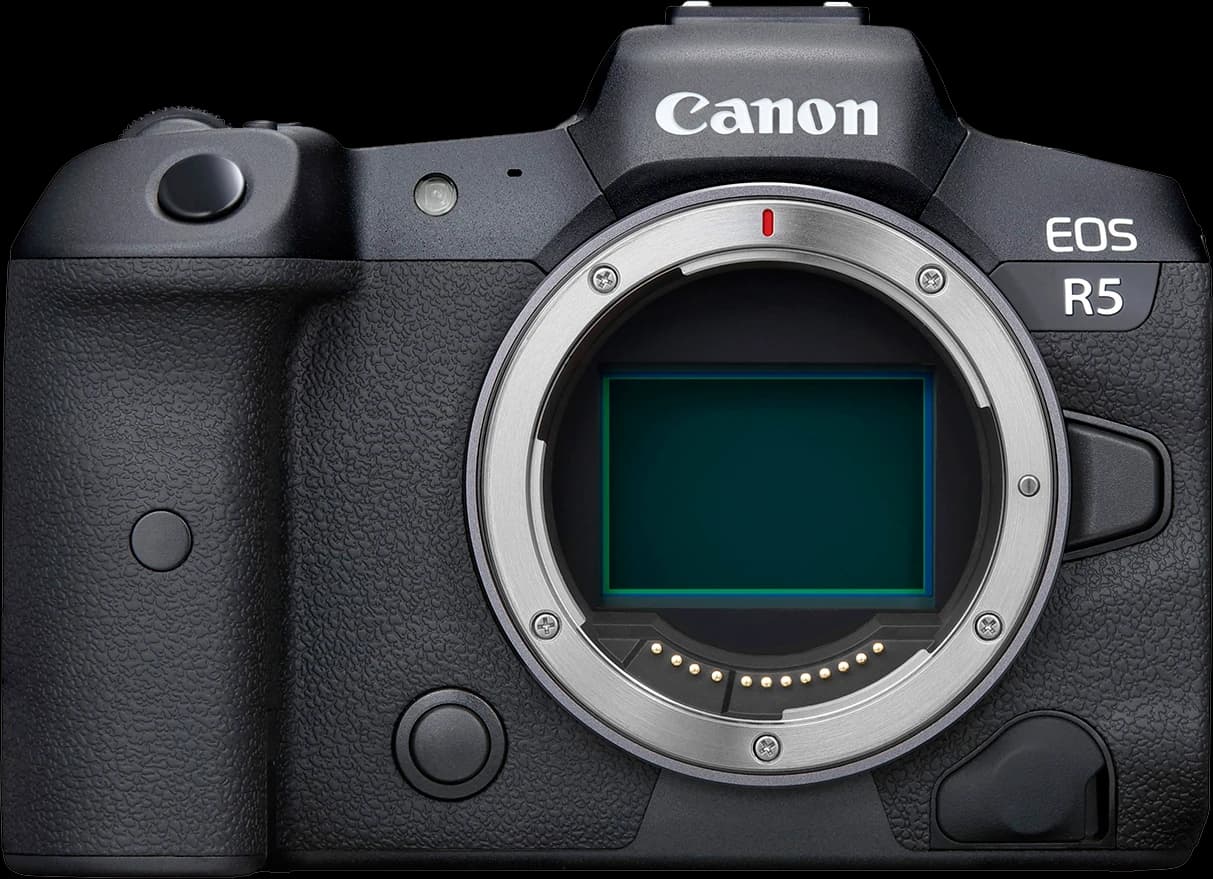
Canon EOS R5 Review: the pro hybrid that changed the game
The Canon EOS R5 suits wedding, portrait and landscape photographers who want 45 MP, -6 EV AF and 8 stops of IBIS, not videographers shooting continuously beyond a few minutes in 8K.
Read the review