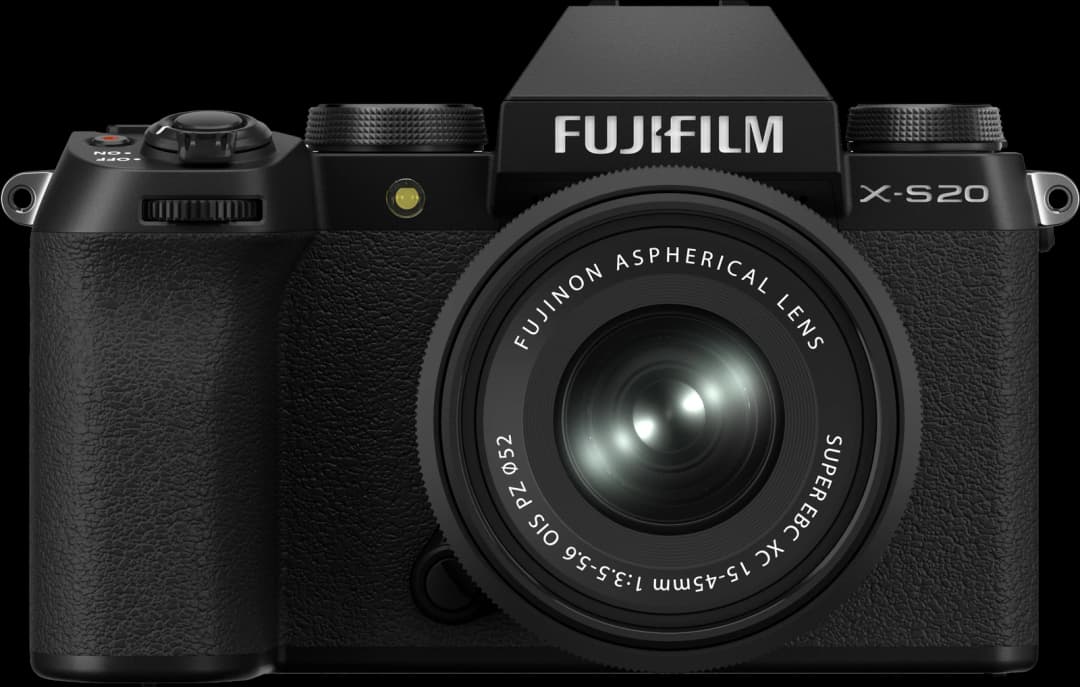
Fujifilm
X-S20
2023
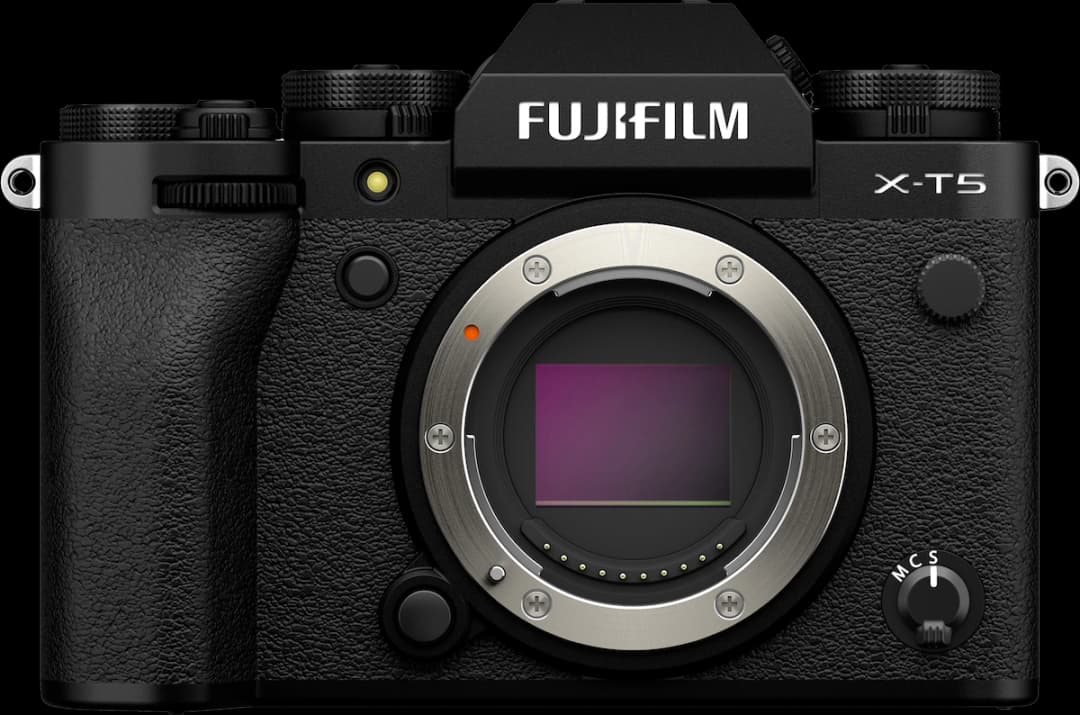
Fujifilm
X-T5
2022
Fujifilm X-S20 vs X-T5: Hybrid Versatility vs Photo Excellence
Visual summary
— Reads in 5 seconds
Fujifilm
X-S20
Fujifilm
X-T5
Where to buy
— Live merchant price comparator
Fujifilm X-S20

FUJIFILM X-S20 Mirrorless Camera - Body Only, Black
1 249,99 GBP · Scan Computers
Fujifilm X-T5

FUJIFILM X-T5 Mirrorless Camera - Silver, Body Only, Silver/Grey
1 549 GBP · Amazon UK


You'll find the best prices on the market here, updated daily — and by going through these partner links, you support Camera Duel without paying a cent more.
The arbitration in brief
Choose the X-S20 for video and travel, the X-T5 for demanding photography: 40 MP, weather-sealing and larger buffer make the difference.
The Fujifilm X-S20 and X-T5 share the same X-Mount, the same APS-C format and a price that overlaps on the used market. Yet these two bodies do not target the same photographer.
The X-S20 was released in 2023. It succeeds the X-S10 with an X-Trans CMOS 4 sensor of 26.1 MP, built-in proxy recording and 750 shots CIPA battery life. Its launch price was 1 299 USD. Fujifilm positions it as an accessible hybrid, comfortable in both stills and video.
The X-T5 was released in 2022. It steps up with an X-Trans CMOS 5 HR sensor of 40.2 MP, full weather-sealing and a high-resolution viewfinder at 3.69 M dots. Its launch price was 1 699 USD. Fujifilm aims it at photographers who prioritise image quality and field robustness.
Does the 400 USD gap at launch still make sense? The answer depends on two practical questions: do you print large or crop aggressively in post? And do you shoot video regularly?
This comparison judges the two bodies across eight spec categories, with manufacturer data cross-referenced against DXOMark, DPReview and Photons to Photos. The goal is simple: help you decide in a few minutes, without the marketing fluff.
Standout strengths
— Where each camera shines
Fujifilm
X-S20
Top advantages
- 30 fpsElectronic burst1,5× vs Fujifilm X-T5
- OuiProxy recordingAbsent sur Fujifilm X-T5
- 750 clichésBattery life (CIPA)+29 % vs Fujifilm X-T5
- 491 gWeight+13 % vs Fujifilm X-T5
Fujifilm
X-T5
Top advantages
- 40.2 MPMegapixels1,5× vs Fujifilm X-S20
- 15 fpsMechanical burst1,9× vs Fujifilm X-S20
- 114RAW buffer+44 % vs Fujifilm X-S20
- 125Native ISO min+28 % vs Fujifilm X-S20
Video reviews
— Long-form reviews
Fujifilm X-S20
—
Fujifilm X-T5
Fujifilm X-T5 Final Review
DPReview TV · 10 min
Detailed spec-by-spec
— Round by round, the eight categories
Sensor
Autofocus
Speed & burst
Video
Stabilisation
Build
Ergonomics & screen
Connectivity & battery
Detailed analysis analysis
— Strengths, trade-offs and ideal user
Fujifilm X-S20: what it does well, what it concedes
The X-S20 is built around the X-Trans CMOS 4 sensor of 26.1 MP. It is not Fujifilm’s newest generation, but the resolution remains sufficient for prints up to A2 without interpolation. Native ISO starts at 160, versus 125 on the X-T5. The difference is marginal in practice, but it points to a sensor architecture less optimised for maximum dynamic range in bright highlights. The X-S20’s dynamic range is not published by Fujifilm under DXOMark reference conditions, making any direct comparison on this point impossible.
Where the X-S20 pulls ahead is video and battery life.
- 30 fps electronic burst versus 20 fps on the X-T5.
- Built-in proxy recording, absent on the X-T5.
- Internal 4:2:2 subsampling versus 4:2:0 only on the X-T5.
- False-colour tools available in the video scopes, absent on the X-T5.
- 750 shots CIPA versus 580 on the X-T5.
The 30 fps electronic burst with a 79-image RAW buffer is useful for amateur sport or occasional reportage. Note: Fujifilm does not specify whether this buffer figure was measured in uncompressed RAW or lossy compressed RAW. In the field the real buffer in lossless RAW is probably lower. Check this before any intensive burst work.
The main concession of the X-S20 is the lack of weather-sealing. For a travel body this is a potential deal-breaker. No sealing gaskets means rain, sea spray or fine dust represent a real risk. I regularly use unsealed bodies in Brittany and by the sea: the risk is concrete, not theoretical. The 2.36 M-dot viewfinder with 0.62x magnification is adequate but clearly behind the X-T5.
For whom
The X-S20 suits the hybrid photographer who shoots as much video as stills. Typical profile: content creator, travel photographer who edits their own rushes, or portrait photographer who also delivers short video clips to clients. Proxy recording and internal 4:2:2 simplify the post-production workflow. The 750-shot battery life is a genuine advantage on long days without access to power. However, this user must accept the lack of weather-sealing and a less precise viewfinder for manual focusing.
Fujifilm X-T5: what it does well, what it concedes
The X-T5 carries the X-Trans CMOS 5 HR sensor of 40.2 MP. It is Fujifilm’s newest APS-C generation at the time of its release. Measured dynamic range reaches 10.4 EV according to manufacturer data. Native ISO starts at 125, giving a slight extra margin in bright light for long exposures or studio work. In large-format printing the 14.1 MP advantage over the X-S20 is visible from 60x90 cm onwards.
The 15 fps mechanical burst with a 114-image RAW buffer is the speed highlight. The X-T5 sustains longer bursts than the X-S20, even though its electronic burst tops out at 20 fps. Maximum shutter speed reaches 1/180 000 s electronically, versus 1/32 000 s on the X-S20. For sport in bright sun with a wide aperture, this gap matters.
- 40.2 MP for aggressive cropping and large prints.
- 15 fps mechanical with 114-image RAW buffer.
- Full weather-sealing for tough conditions.
- 3.69 M-dot viewfinder at 0.8x magnification.
- Minimum native ISO 125 versus 160 on the X-S20.
The main concession of the X-T5 is video. Lack of proxy, subsampling limited to 4:2:0 and no false-colour tools in the scopes penalise it for regular hybrid use. The three-axis tilting screen is less versatile than a vari-angle for vlogging or low-angle work. 580-shot CIPA battery life is respectable but 170 shots behind the X-S20. The single SD UHS-II slot is a deal-breaker for professionals who require redundancy.
For whom
The X-T5 is built for the photographer who places image quality at the centre of their priorities. Typical profile: landscape photographer, travel photographer who prints large, studio portraitist or reporter who works in all weather. Weather-sealing is a decisive argument for anyone working outdoors regularly. The 0.8x viewfinder makes manual focusing easier with Fujifilm lenses that have a focus ring. However, this user must accept significant video compromises and lower battery life.
Our verdict
Which one to buy, and why
The X-T5 wins the stills comparison without ambiguity. Its 40.2 MP sensor, weather-sealing, 114-image RAW buffer and 0.8x viewfinder make it the superior tool for any photographer who prints large, works outdoors or shoots sport. The measured 10.4 EV dynamic range confirms a latitude in post-production that the X-S20 cannot match due to the absence of equivalent published data.
The X-S20 wins the video and mobility comparison. Internal 4:2:2, proxy recording, 30 fps electronic burst and 750-shot battery life make it the better of the two for everyday hybrid use. Its 491 g weight versus 557 g is a marginal but real advantage on a long travel day.
Deal-breakers to identify before buying:
- Lack of weather-sealing on the X-S20: prohibitive for regular field use in rain or by the sea.
- Lack of proxy and 4:2:2 on the X-T5: prohibitive for a content creator who films often.
- Single card slot on both bodies: deal-breaker for any professional who requires redundancy.
On value for money, the X-S20 is now found below 900 USD on the used market. The X-T5 trades around 1 100 to 1 200 USD used. The gap has narrowed. At this price level the used X-T5 becomes a very solid proposition for a photographer who knows what they want.
My clear verdict: choose the X-T5 if you photograph more than you film. The sensor generation jump, weather-sealing and superior viewfinder justify the price difference. Choose the X-S20 only if video represents more than 40 % of your usage or if you categorically refuse to expose your body to rain without additional protection.
Frequently asked questions
Before you buy, the questions we get
Which one to choose for photographing a wedding?
The X-T5 is preferable for a wedding. Its 15 fps mechanical burst with 114-image RAW buffer holds up better on long sequences than the X-S20 (8 fps mechanical, 79 images). Weather-sealing protects during an outdoor ceremony in the rain. The 0.8x viewfinder makes manual focusing easier in reception lighting. The single card slot remains a weak point for both bodies: a second backup body is essential in a professional context.
Does the 400 USD gap at launch still make sense in 2026?
On the new market the gap has varied by retailer. On the used market the two bodies have converged: the X-S20 is found around 900 USD, the X-T5 around 1 100 to 1 200 USD. The remaining 200 to 300 USD gap is justified if you need weather-sealing, 40.2 MP or the high-resolution viewfinder. If you film regularly, the gap is not justified: the X-S20 delivers more in video for less money.
Is the X-S20 sufficient for landscape and large prints?
For prints up to A2 (59 x 42 cm), the 26.1 MP of the X-S20 are sufficient without interpolation. Beyond that, or if you crop aggressively in post, the 40.2 MP of the X-T5 take the advantage. The X-T5’s dynamic range is measured at 10.4 EV, offering greater latitude for high-contrast scenes (sunrise, backlighting). For demanding large-format landscape work, the X-T5 is the right choice.
Which body will age better over five years?
The X-T5 has an edge on physical durability thanks to its weather-sealing. The X-Trans CMOS 5 HR is also a newer architecture than the CMOS 4 in the X-S20, giving it potentially more headroom before being overtaken by competitors. Both share the same X-Mount, the same lens ecosystem and the same Fujifilm software support. On resale value, the X-T5 generally depreciates more slowly thanks to its higher positioning.
Can the X-S20 replace a dedicated video camera for a content creator?
For everyday content creation (YouTube, social media, interviews), the X-S20 is a credible solution. Unlimited recording, internal 4:2:2 in 10-bit, built-in proxy and vari-angle screen cover the essential needs. Maximum resolution reaches 6.2K. The absence of native XLR and 32-bit float audio limits professional audio recording without an adapter. For cinema or broadcast use, a dedicated camera remains preferable.