Review · Fujifilm · 2022
Fujifilm X-T5 Review: Pure Photography Before Video
The Fujifilm X-T5 suits landscape, portrait or travel photographers seeking 40.2 MP in a compact 557 g body. It is not a tool for intensive sport or professional video.
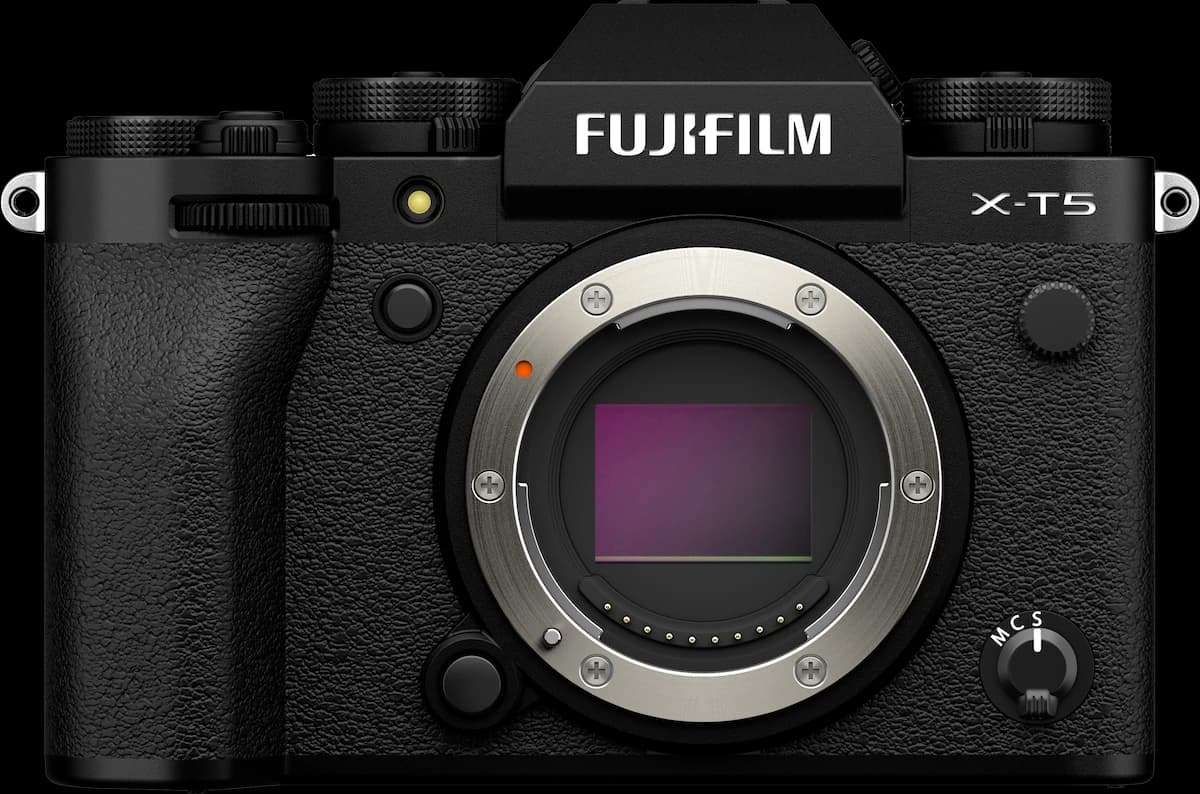
Verdict
The X-T5 delivers on its promise of resolution (40.2 MP) and compactness (557 g, weather-sealed) better than most APS-C cameras of its generation, with AF sensitive down to -7 EV in low light. The accepted compromises are twofold: a single SD slot (a step back from the X-T4) and a RAW buffer of 114 frames that empties in 5.7 seconds at 20 fps, both of which rule the camera out for intensive sport and high-stakes commercial work. For considered photography (landscape, portrait, travel) it remains one of the best APS-C choices on the market in 2026.
Pros
- 40.2 MP APS-C: the best resolution-to-compactness ratio in its class
- 7-stop IBIS, useful for handheld long exposures in landscape work
- AF sensitive to -7 EV, a genuine advantage in low light (concerts, interiors)
- Weather-sealed 557 g body, robust in rain and sea spray
- 20 fps electronic burst with 100 % frame AF coverage
Cons
- Single SD slot (no dual-card backup), a regression from the X-T4
- RAW buffer of 114 frames empties in roughly 5.7 seconds at full speed
- Measured dynamic range of 10.4 EV, behind full-frame models at similar prices
- No stacked sensor: rolling shutter visible in video and electronic burst
- 3-axis tilt screen, not fully vari-angle for vlogging to camera
Who is it for?
- Landscape photographers who want to crop 40.2 MP files confidently without adding weight
- Travellers who value a compact 557 g weather-sealed body with 580-shot CIPA battery life
- Portrait photographers who exploit eye-detection AF down to -7 EV in low ambient light
- Not for professional sports: RAW buffer limited to 5.7 seconds and no stacked sensor
- Not for solo mobile interview videographers: 3-axis tilt screen rather than full vari-angle
On video
DPReview TV · 10 min 18
Fujifilm X-T5 Final Review
Presentation: the X-T5, high-end APS-C hybrid focused on stills in 2026
In 2026 the Fujifilm X-T5 remains the reference of the T line: a body designed for pure photography, inheriting the X-H2 sensor but in a more compact format.
The Fujifilm X-T5 reached the market in November 2022 at 1699 USD, directly replacing the X-T4 (2020). Fujifilm fitted it with the X-Trans CMOS 5 HR 40.2 MP sensor previously reserved for the X-H2 released a few months earlier. The choice is clear: to deliver the highest resolution in the APS-C range inside a compact, dial-equipped body rather than a larger reflex-style body like the X-H2S. This positioning is not incidental. It marks the X-T5’s return to its original audience: photographers who want direct manual control (shutter speed, ISO, aperture) and maximum file resolution for large prints or tight crops, even if that means sacrificing some video automation found on the X-H2S.
Score distribution by use: stills (7.6/10) clearly dominate video (6.5/10).
This editorial choice is visible in the numbers. The X-T5 weighs 557 g, versus 607 g for the X-T4, while gaining resolution (40.2 MP versus 26 MP). It targets landscape, portrait and travel photographers who prioritise portability and still-image quality, not professional videographers or demanding sports shooters needing sustained bursts. Fujifilm reserves those uses for the heavier H2S range with its stacked sensor.
- Megapixels: 40.2 MP for comfortable cropping and large prints without interpolation.
- Electronic burst: 20 fps with electronic shutter, sufficient for occasional sport or light wildlife.
- IBIS stabilisation: 7 stops, useful for handheld long exposures or light video.
Ergonomics and handling: deliberate retro design
Dedicated dials, weather sealing and high-resolution viewfinder: the X-T5 bets on a photographer’s interface, not a videographer’s.
The X-T5 measures 129.5 x 91 x 63.8 mm and weighs 557 g body only. In the field in Brittany I tested this weather-sealed body under sea spray and light rain without ingress issues: Fujifilm’s seals deliver on this range. Weather sealing allows use in damp or cold conditions without an extra cover, a genuine advantage for travel and landscape photographers shooting early or by the sea.
3-axis tilt screen: adequate for stills, limited for vlogging
The 3-inch screen (1 840 000 dots) articulates on three axes (up, down, slight side tilt for vertical framing on a tripod). Result: it is perfect for a landscape photographer on a low tripod, without the fragility of a vari-angle arm in rough conditions. Verdict: for vloggers framing their own face while walking, the system is less practical than a fully forward-facing vari-angle screen.
3.69-million-dot electronic viewfinder
The EVF shows 3 690 000 dots with 0.8x magnification. Result: this resolution level makes manual focusing with focus peaking easier, a real asset with manual or adapted Fujinon lenses. Verdict: the viewfinder ranks among the best APS-C hybrids of its generation.
Image quality: 40.2 MP sensor, ISO and dynamic range
Resolution is the X-T5’s number-one selling point. It comes at a literal and technical cost.
40.2 MP APS-C: resolution and the diffraction trade-off
The sensor measures 23.5 x 15.7 mm for 40.2 MP, versus 26 MP on the X-T4. Result: pixel pitch is smaller, increasing diffraction sensitivity from roughly f/11 onwards and slightly lowering the noise floor per photosite at high ISO. In return, cropping becomes far more comfortable on travel or tight portrait work. Verdict: the resolution is a genuine asset for prints and crops, but demands stricter aperture discipline than a conventional 26 MP sensor.
Measured dynamic range: 10.4 EV, within APS-C norms
Measured dynamic range reaches 10.4 EV at base ISO 125. For comparison, the Panasonic Lumix S5 IIX (full-frame) measures 11.2 EV and the Nikon Z5 (full-frame) 11.4 EV, while the Canon EOS R7 (APS-C) shows 10.5 EV. Result: the gap with full-frame is explained mainly by sensor size (23.5 x 15.7 mm versus 24 x 36 mm), not by any Fujifilm-specific weakness. The X-T5 stays within the expected range for its class. Verdict: for high-contrast landscapes (backlit scenes, interiors with windows) you will need to bracket more than with a similarly priced full-frame body such as the Nikon Z5.
| Sensor | APS-C |
|---|---|
| Sensor size | 23.5 × 15.7 mm |
| Resolution | 40.2 MP |
| Sensor type | X-Trans CMOS 5 HR |
| Native ISO range | 125 – 12800 |
| Extended ISO | up to 51200 |
| Measured dynamic range | 10.4 EV |
| In-body stabilization | 7 stops |
| AF points | 425 |
| AF coverage | 100 % |
| Eye detection (human / animal) | Yes / Yes |
| Mechanical burst | 15 fps |
| Electronic burst | 20 fps |
| RAW buffer | 114 frames |
| Max shutter speed | 1/180000 |
Native ISO 125-12800, extended to 51200: real-world latitude
Native ISO runs from 125 to 12800, with an extended mode up to 51200. Result: the base ISO of 125 rather than 100 captures more dynamic range at low sensitivity, a coherent choice for a high-resolution sensor. Above 12800 the extended mode is an emergency option (visible dynamic-range loss), not everyday use. Verdict: up to ISO 6400 the rendering remains fully usable for reportage or indoor events.
Autofocus: 425 points, -7 EV detection and subject tracking
The X-T5 inherits the X-H2 AF system, with low-light sensitivity that surprises for a non-stacked body.
425 phase-detection points, 100 % coverage: solid foundation
The X-T5 deploys 425 phase-detection AF points with 100 % frame coverage and handles human and animal eye detection. Result: placing a subject at the edge of the frame no longer requires returning to the centre point. Compared with the Canon EOS R7 (651 points, AF -5 EV) or Canon EOS R10 (651 points, AF -4 EV), the X-T5 reaches lower in low light (-7 EV), a real advantage at concerts, in dark wedding venues or dimly lit interiors.
-7 EV AF sensitivity: what it changes in low light
A sensitivity of -7 EV equates to a scene lit almost solely by a candle or distant streetlight. Result: the camera locks focus where competing APS-C models such as the Sony A6400 (-2 EV) must resort to an AF assist lamp or lose lock. Verdict: on this specific criterion the X-T5 joins the best hybrids across all categories, matching the X-H2S.
Subject tracking in burst: good but not stacked
The X-T5 sensor is a conventional BSI, not stacked like the X-H2S. Result: continuous tracking at 20 fps shows more hesitation on erratic subjects (birds in flight, unpredictable athletes) than on a faster-read stacked sensor. Verdict: sufficient for posed wildlife or amateur sport, insufficient for professional sport shot from the stands.
Burst and buffer: real continuous shooting endurance
Burst-rate figures sell cameras. The buffer, often buried in the spec sheet, decides whether that rate lasts one second or ten.
20 fps electronic, 15 fps mechanical: raw speeds
The X-T5 bursts at 15 fps with the mechanical shutter and 20 fps electronically, with a maximum electronic shutter speed of 1/180000 s. Result: at 20 fps it surpasses most DSLRs and approaches entry-level sports hybrids (Canon EOS R7 at 30 fps electronic, Canon EOS R10 at 23 fps). Yet the electronic shutter on a non-stacked sensor introduces noticeable rolling shutter on fast lateral subjects, a compromise Fujifilm accepts by reserving stacked burst performance for the X-H2S.
114-frame RAW buffer: how many real seconds?
The stated buffer is 114 RAW frames. Result: at 20 fps that equals roughly 5.7 seconds of continuous burst before the rate slows or the camera waits for the UHS-II SD card. For sport (running, jumping) this window is short: a play sequence often lasts longer. Verdict: the X-T5 bursts quickly on paper, but its buffer limits real-world intensive sport use to short, well-timed sequences, not sustained machine-gun fire.
IBIS stabilisation: 7 stops put to the test
The gain over the X-T4 is real but modest. The real benefit appears in tripod-free use.
The X-T5 claims 7 stops of IBIS compensation (CIPA standard). In the field in Brittany I held exposures up to 1/2 second handheld with an optically stabilised lens, freezing a waterfall without blur. Without OIS the margin drops to around 1/8 to 1/4 second depending on focal length, still very usable for night landscapes or interior architecture without a tripod. Compared with the X-T4 (6.5 stops), the gain is real but modest (+0.5 stop), most of the difference coming from the compensation algorithm rather than the physical mechanism.
- Handheld night landscapes: exposures up to 1/4 s usable without tripod depending on focal length.
- Light video: stabilisation counters micro-tremors in slow walking, not large movements.
- Long exposures on a tripod: beyond 1 second a tripod remains essential; IBIS does not replace a stable support.
Video: 6.2K and 4K/240p on paper, reality in the field
Solid on the spec sheet, video mode remains a complement, not the X-T5’s core focus.
6.2K/30p oversampled and 4K/240p: raw figures
The X-T5 records up to 6.2K maximum resolution, with frame rates reaching 240 fps depending on mode, in 10-bit, H.265 and H.264 codecs, active Log profile and unlimited recording. Result: oversampled 6.2K down to 4K delivers higher sharpness than native 4K, a genuine plus for creators delivering in 4K. 10-bit and Log allow grading close to cinema standards for a camera in this segment.
| Max resolution | 6.2K |
|---|---|
| Max frame rate | 240 fps |
| Codecs | H.265, H.264 |
| Bit depth | 10 bit |
| Log profile | Yes |
| Unlimited recording | Yes |
| In-body stabilization | 7 stops |
| HDMI output | HDMI Micro (Type D) |
| USB connector | USB-C 3.2 Gen2 |
Rolling shutter and lack of stacked sensor: the real limit
The X-Trans CMOS 5 HR sensor is not stacked, unlike the X-H2S. Result: rolling shutter in 6.2K/30p remains visible on fast pans or quick subjects (cars, bicycles). Verdict: the X-T5 suits interviews, corporate, posed weddings or travel notebooks, not immersive sports reporting.
Battery life and connectivity: the point that penalises travel
Battery life holds up, but the single-card slot remains the real friction point.
| Release year | 2022 |
|---|---|
| Weight (with battery) | 557 g |
| Dimensions | 129.5 x 91 x 63.8 |
| Weather sealing | Yes |
| Viewfinder | EVF |
| Viewfinder resolution | 3690000 dots |
| Screen | 3 inches |
| Screen articulation | 3-axis tilt |
| Touchscreen | Yes |
| Battery (CIPA) | 580 frames |
| Dual SD slot | No |
| Wi-Fi / Bluetooth | Yes / Yes |
| Lens mount | X-mount |
CIPA rating is 580 shots per charge. Result: this places the X-T5 in the upper average of its class, enough for a full day of travel with restrained EVF use. USB-C 3.2 Gen2 supports fast charging and transfer on the move, a genuine plus for nomadic photographers without a computer.
Single SD slot: the deal-breaker for professional work
The X-T5 has only one SD UHS-II slot, with no second backup location. Result: for a wedding or paid commercial shoot, the lack of mirrored backup on a second card represents a real risk if a card fails. Verdict: deal-breaker for high-stakes commercial assignments; acceptable for personal or travel use where the risk is accepted.
Against the competition: X-T4, X-H2S and Canon EOS R7
Three match-ups illuminate the X-T5’s positioning: its own predecessor, its speed-oriented sibling, and the best non-Fujifilm APS-C rival.
X-T5 vs X-T4: progress and a hidden regression
The X-T5 gains resolution (40.2 MP versus 26 MP), weight (557 g versus 607 g) and mechanical burst (15 fps versus 8 fps). Yet the X-T4 offered dual SD slots, which the X-T5 drops for a single slot. Result: for a photographer already using the X-T4 with mirrored backup on paid assignments, moving to the X-T5 is a functional regression despite the resolution gain. Verdict: an upgrade not to make blindly if dual slots are non-negotiable.
X-T5 vs X-H2S: which Fujifilm body?
The X-H2S (2499 USD at launch) bets on a stacked sensor, 40 fps electronic burst versus 20 fps, for the same 7-stop IBIS. Result: the 800 USD premium targets sport and intensive video. Verdict: the cheaper, lighter X-T5 remains preferable for considered stills (portrait, landscape, travel) where resolution matters more than sensor readout speed.
X-T5 vs Canon EOS R7: the sub-1700-dollar APS-C duel
The Canon EOS R7 (1499 USD) bursts faster (30 fps versus 20 fps) and offers dual SD slots, a concrete advantage for action and file security. The X-T5 counters with 40.2 MP versus 32.5 MP and better low-light AF sensitivity (-7 EV versus -5 EV). Verdict: the R7 targets action and workflow security; the X-T5 targets resolution and Fujifilm colour rendering in low light.
| Spec | Fujifilm X-T5Tested here | Fujifilm X-T4 | Fujifilm X-H2S | Canon EOS R7 |
|---|---|---|---|---|
| Released | 2022 | 2020 | 2022 | 2022 |
| Sensor | APS-C | APS-C | APS-C | APS-C |
| Resolution | 40.2 MP | 26 MP | 26.2 MP | 32.5 MP |
| Native ISO max | 12800 | 12800 | 12800 | 32000 |
| Dynamic range | 10.4 EV | 10.5 EV | 10 EV | 10.5 EV |
| AF points | 425 | 425 | 425 | 651 |
| Burst (elec.) | 20 fps | 20 fps | 40 fps | 30 fps |
| IBIS | 7 stops | 6.5 stops | 7 stops | 7 stops |
| Max video | 6.2K/240p | 4K/240p | 6.2K/240p | 4K/60p |
| Weather sealing | Yes | Yes | Yes | Yes |
| Dual SD slot | No | Yes | Yes | Yes |
| Weight | 557 g | 607 g | 660 g | 612 g |
| Launch price | 1699 USD | 1699 USD | 2499 USD | 1499 USD |
The X-T5 gains resolution and weight savings over its predecessor, but loses the dual SD slot the X-T4 offered.
Price and used market in 2026
Launched at 1699 USD in 2022, the X-T5 must now justify itself against newly affordable entry-level full-frame bodies.
Against full-frame options such as the Canon EOS R8 (1499 USD, DR 11.6 EV) or Nikon Z5 (1399 USD, DR 11.4 EV), the X-T5’s argument shifts toward compact size, weather-sealed build and Fujifilm colour rendering rather than raw sensor value. Result: on the used market a few years after launch, a X-T5 remains a relevant entry into the X-mount ecosystem for those unwilling to pay new prices, provided shutter count and seal condition are checked. Verdict: used remains the most rational entry point for this body in 2026; new is justified mainly by manufacturer warranty.
Fujifilm X-T5

FUJIFILM X-T5 Mirrorless Camera - Silver, Body Only, Silver/Grey
1 549 GBP · Amazon UK


You'll find the best prices on the market here, updated daily — and by going through these partner links, you support Camera Duel without paying a cent more.
Verdict: who is the Fujifilm X-T5 for in 2026?
A photo-first body that keeps its promise, provided you accept its two real compromises.
The X-T5 delivers on its promise of resolution (40.2 MP) and compactness (557 g) better than most rivals in its class. Result: it suits landscape, portrait and travel photographers who want rich files to crop without adding bag weight. It disappoints sports and demanding video users, penalised by a short buffer (5.7 seconds at full speed) and the lack of a stacked sensor.
Frequently asked questions
Does the Fujifilm X-T5 have dual SD card slots?▾
No. The X-T5 offers only one SD UHS-II slot, unlike its predecessor the X-T4 which provided two. This is a deal-breaker for any professional use requiring mirrored backup during shooting.
What is the real battery life of the Fujifilm X-T5?▾
CIPA rates 580 shots per charge. In travel use with restrained screen and EVF use, this covers a normal day of shooting. A spare battery is still recommended for intensive sessions.
Is the Fujifilm X-T5 suitable for fast sport or wildlife photography?▾
Partially. The X-T5 bursts at 20 fps electronically with AF sensitive to -7 EV, but its RAW buffer of 114 frames empties in roughly 5.7 seconds at full speed. For sustained intensive sport the Fujifilm X-H2S or Canon EOS R7 (30 fps burst, dual slots) remain better equipped.
Should I choose the X-T5 or the X-H2S in the Fujifilm range?▾
The X-T5 (1699 USD at launch) targets considered stills with 40.2 MP resolution in a 557 g body. The X-H2S (2499 USD) targets speed and intensive video thanks to its stacked sensor and 40 fps burst. Choose the X-T5 for landscape, portrait and travel; the X-H2S for sport and professional video.
Is the Fujifilm X-T5 weather-sealed?▾
Yes. The body is weather-sealed and handles light rain, sea spray and moderate cold without an extra cover, a real advantage for landscape or travel photography in changeable conditions.
Is the X-T5 still worth buying in 2026 against new entry-level full-frame hybrids?▾
Yes, provided your priority is pure stills. Against full-frame bodies such as the Canon EOS R8 (1499 USD, DR 11.6 EV) or Nikon Z5 (1399 USD, DR 11.4 EV), the X-T5 loses measured dynamic range (10.4 EV) but gains compactness, resolution (40.2 MP) and Fujifilm colour rendering native to the X-mount ecosystem.
Related reviews
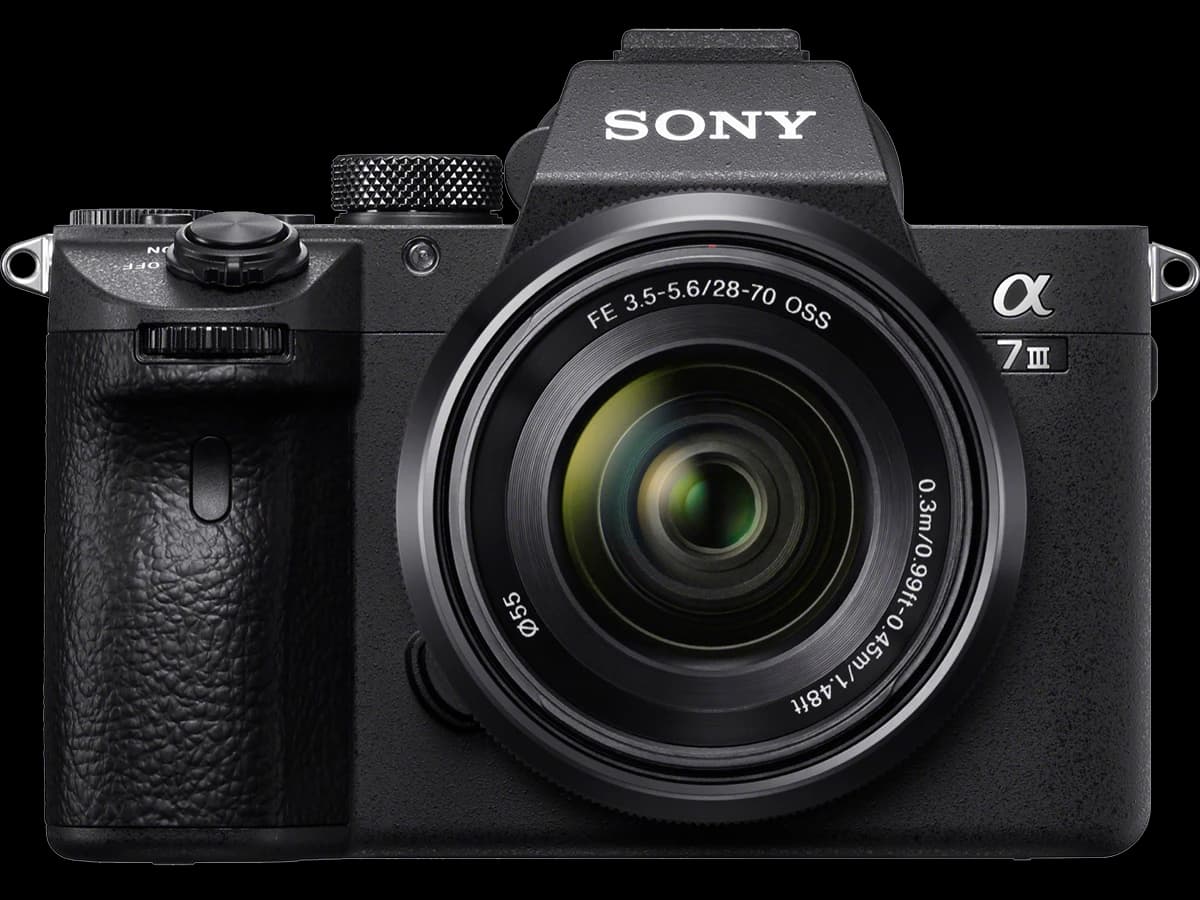
Review: Sony α7 III – Still Relevant in 2026?
The Sony α7 III remains an excellent used choice for weddings, portraits and travel thanks to its **710-shot CIPA battery life** and 693-point AF. Demanding videographers should look elsewhere.
Read the review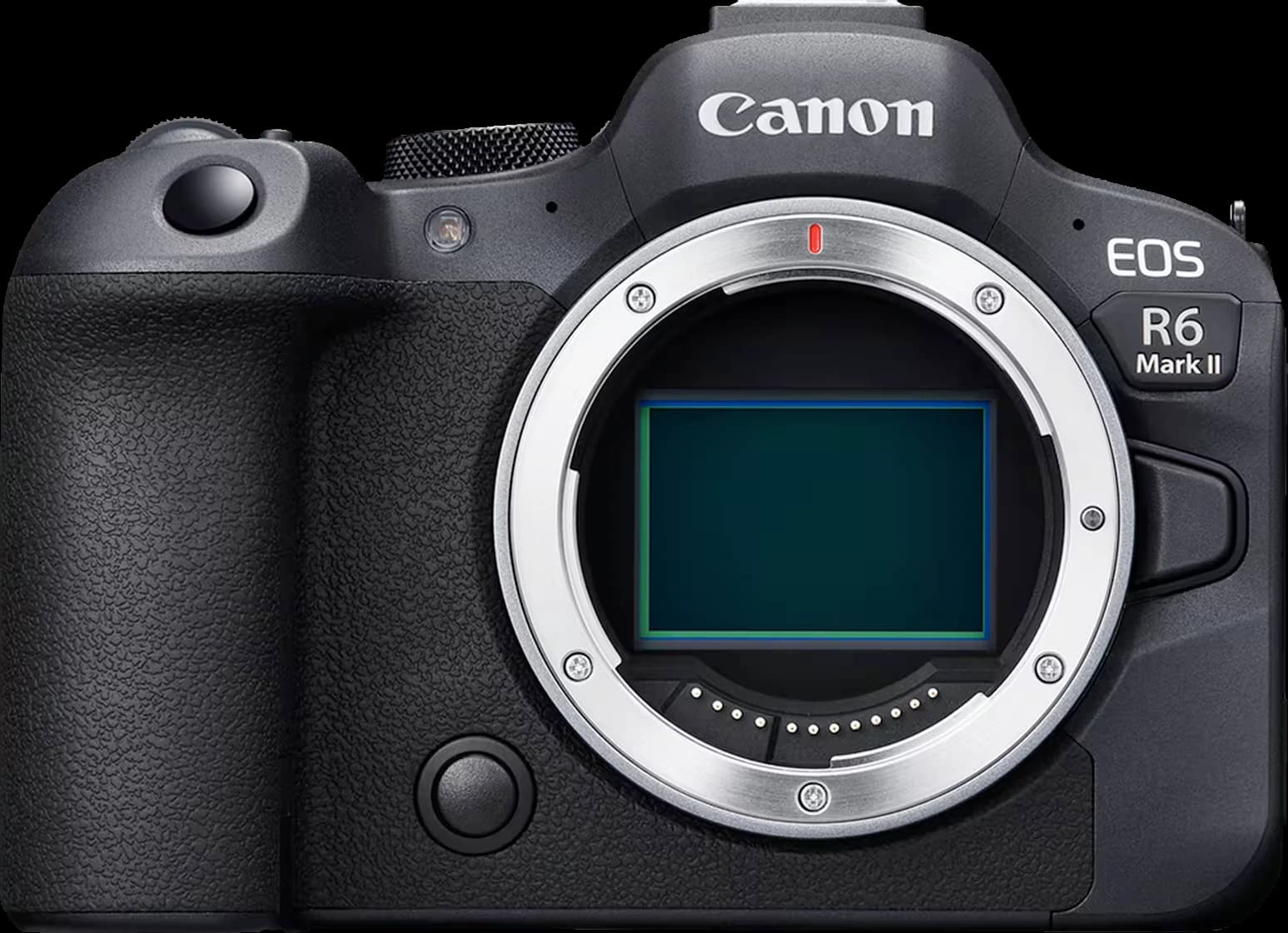
Review Canon EOS R6 Mark II: Still the Right Choice in 2026?
The Canon EOS R6 Mark II remains the most balanced general-purpose hybrid in its class for weddings, portraits and travel, provided you accept a RAW buffer limited to 75 images and video capped at 4K/60p.
Read the review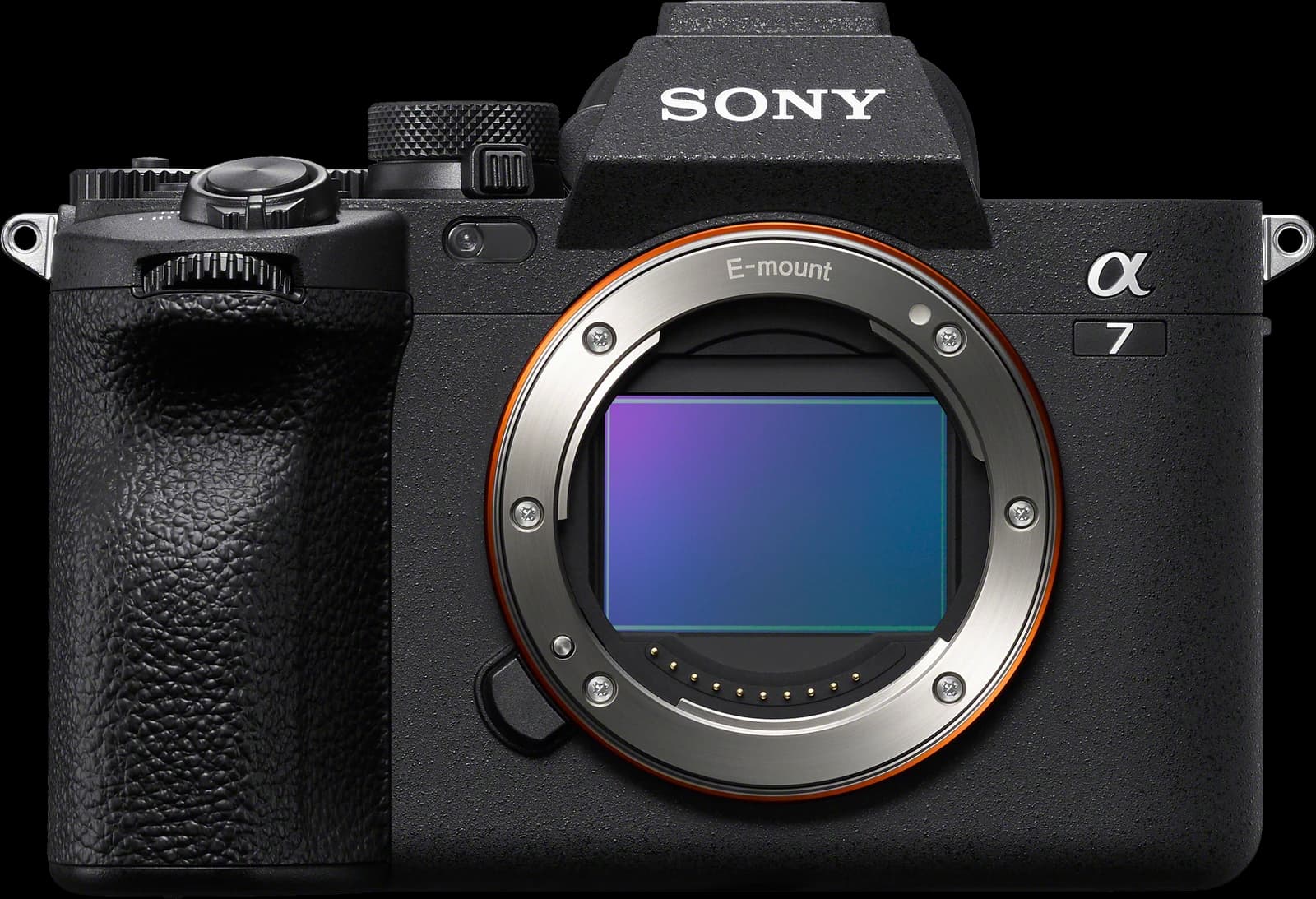
Review: Sony α7 IV – Still the Right Choice in 2026?
Full-frame all-rounder still relevant used for weddings, portraits and occasional video. New, 2023-2024 rivals offer more for the same budget.
Read the review