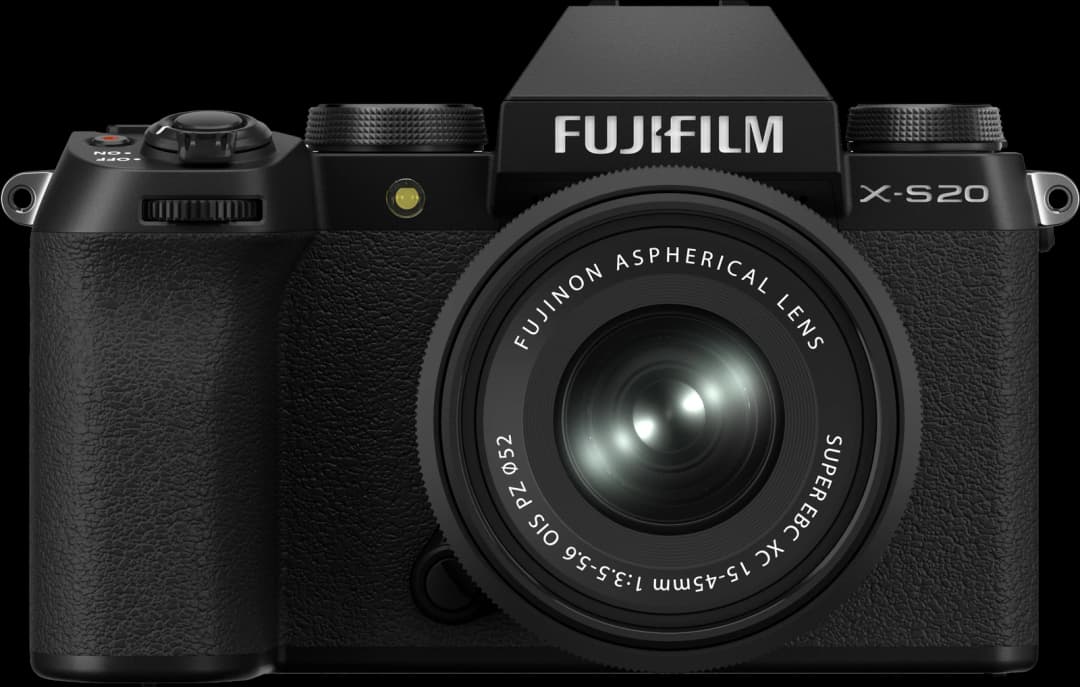
Fujifilm
X-S20
2023
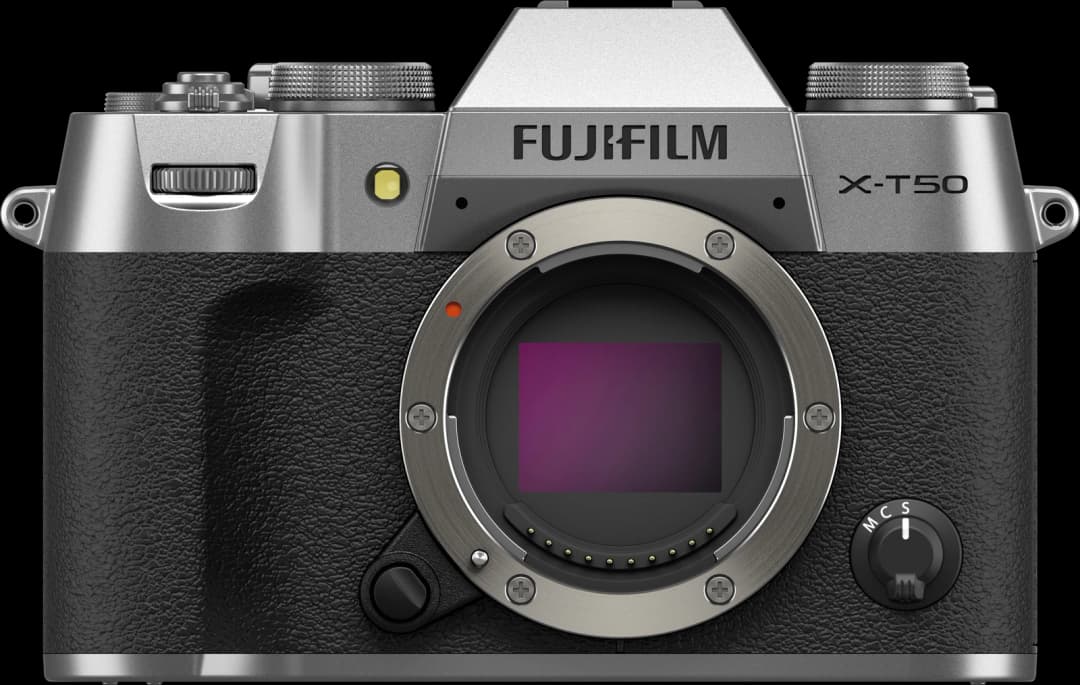
Fujifilm
X-T50
2024
Fujifilm X-S20 vs X-T50: Video Versatility vs Photo Definition
Visual summary
— Reads in 5 seconds
Fujifilm
X-S20
Fujifilm
X-T50
Where to buy
— Live merchant price comparator
Fujifilm X-S20

FUJIFILM X-S20 Mirrorless Camera - Body Only, Black
1 249,99 GBP · Scan Computers
Fujifilm X-T50
FUJIFILM X-T50 Mirrorless Camera with FUJINON XC 15-45 mm f/3.5-5.6 OIS PZ Lens - Silver, Silver/Grey
1 278,77 GBP · PcNova.co.uk


You'll find the best prices on the market here, updated daily — and by going through these partner links, you support Camera Duel without paying a cent more.
The arbitration in brief
Choose the X-S20 for video and battery life, the X-T50 for resolution and compactness, but neither suits without compromises.
Fujifilm offers two APS-C mirrorless cameras that overlap significantly in the X range. The X-S20, released in 2023 at 1 299 USD, targets the content creator and travel photographer who films as much as they shoot. The X-T50, released in 2024 at 1 399 USD, adopts the retro aesthetic of the T series with a 40.2 MP X-Trans CMOS 5 HR sensor borrowed from the X-T5. The launch price gap is 100 USD, virtually nil, which makes the choice all the more necessary.
Both bodies share the X-Mount, a 425-point AF system covering 100 % of the frame, 7-stop IBIS, unlimited 10-bit video recording with F-Log2, and a single UHS-II SD slot. On paper they appear interchangeable. In practice their differences centre on four axes: sensor resolution, electronic burst rate, advanced video capabilities, and battery life.
Neither is weather-sealed. This is a shared deal-breaker worth flagging upfront for anyone shooting in demanding conditions. On this point both sit below the X-T5 or X-H2, which offer genuine weather resistance.
This comparison settles a concrete choice: if you are hesitating between these two models in 2026, it is probably because you shoot travel or portrait with a meaningful video component. Here is what the figures say and what they imply in the field.
Standout strengths
— Where each camera shines
Fujifilm
X-S20
Top advantages
- 30 fpsElectronic burst1,5× vs Fujifilm X-T50
- OuiOpen GateAbsent sur Fujifilm X-T50
- 750 clichésBattery life (CIPA)2,5× vs Fujifilm X-T50
Fujifilm
X-T50
Top advantages
- 40.2 MPMegapixels1,5× vs Fujifilm X-S20
- 125Native ISO min+28 % vs Fujifilm X-S20
- 1/180000Max shutter speedvs 1/32000
- 438 gWeight+12 % vs Fujifilm X-S20
Detailed spec-by-spec
— Round by round, the eight categories
Sensor
Autofocus
Speed & burst
Video
Stabilisation
Build
Ergonomics & screen
Connectivity & battery
Detailed analysis analysis
— Strengths, trade-offs and ideal user
Fujifilm X-S20: what it does well, what it concedes
The X-S20 carries a 26.1 MP X-Trans CMOS 4 sensor. The fourth generation is older than the CMOS 5 HR in the X-T50, yet it remains competent in dynamic range and noise handling. Native ISO starts at 160 versus 125 on the X-T50, a marginal difference in practice. The native ceiling is identical at 12 800 ISO, and the extension reaches 51 200 ISO on both bodies. The 26.1 MP resolution is sufficient for A2 prints or moderate cropping, but it limits post-production options compared with the X-T50.
Where the X-S20 pulls ahead is video and endurance:
- 30 fps electronic burst versus 20 fps on the X-T50.
- Open Gate mode available, absent on the X-T50, useful for anamorphic work or flexible post cropping.
- Full video scopes: waveform, vectorscope, false colour, histogram, zebras. The X-T50 lacks vectorscope and false colour.
- 750 shots CIPA battery life versus 305 on the X-T50, i.e. 2.5 times more.
- All-Intra recording available, absent on the X-T50 which is limited to Long-GOP.
The 750-shot endurance is a major field advantage. On a trip, a full day without recharging is realistic. On the X-T50, 305 shots force either a spare battery or USB-C top-ups during the day.
The X-S20 weighs 491 g and measures 127.7 x 85.1 x 65.4 mm. It is thicker than the X-T50, explained by its more pronounced grip. The screen is vari-angle, which simplifies vlogging or ground-level shooting. This is an ergonomic concession the X-T50 does not make.
For whom
The X-S20 suits the photographer-videographer who travels regularly and switches between both disciplines. It targets someone who films vlogs, short films or travel videos in 6.2K and needs a body that lasts a full day. The vari-angle screen is a genuine asset for solo shooting. The 26.1 MP resolution is adequate for travel and portrait work without being sized for large-format output. This user does not need 40 MP but does need reliable video, full scopes and a battery that lasts.
Fujifilm X-T50: what it does well, what it concedes
The X-T50 uses a 40.2 MP X-Trans CMOS 5 HR sensor, the same as the X-T5. That is 54 % more pixels than the X-S20. In practice it allows aggressive cropping, A1 prints without interpolation, and a latitude in post-production composition the X-S20 cannot match. Native ISO starts at 125, slightly lower than the X-S20’s 160, which is negligible in real use.
Electronic shutter speed reaches 1/180 000 s versus 1/32 000 s on the X-S20. The difference matters in bright light with a fast lens: at f/1.4 in full sun, 1/180 000 s avoids overexposure without an ND filter. It is a concrete advantage for outdoor portraiture.
The X-T50’s concessions are real:
- 20 fps electronic burst versus 30 fps on the X-S20.
- No Open Gate mode, no All-Intra recording.
- Limited video scopes: no vectorscope or false colour.
- 305 shots CIPA battery life, i.e. 2.5 times less than the X-S20.
- Tilt screen only, less flexible than the X-S20’s vari-angle.
The X-T50 weighs 438 g and measures 123.8 x 84 x 48.8 mm. It is noticeably more compact, especially in depth (48.8 mm versus 65.4 mm). For a street or travel photographer who values discretion, the 16.6 mm depth difference is felt daily. The retro styling with dedicated exposure dials is an ergonomic plus for photographers coming from film tradition.
For whom
The X-T50 targets the photographer who places still-image quality first. It suits the portraitist who crops in post, the street photographer who appreciates compactness and physical dials, and the traveller who shoots mainly stills. The video component is present but secondary: the lack of Open Gate and All-Intra disqualifies it for professional video use. The 305-shot battery life demands disciplined power management. This user accepts that constraint in exchange for 40.2 MP and a more discreet body.
Our verdict
Which one to buy, and why
The overall stills score gives 7.5 to the X-T50 versus 7.3 to the X-S20, while the video score gives 7.0 to the X-S20 versus 6.6 to the X-T50. These gaps reflect the specs exactly.
If your dominant use is still photography, large-format portraiture or street work, the X-T50 is the right choice. Its 40.2 MP is a structural advantage the X-S20 cannot close. Its 1/180 000 s shutter speed is a real asset for outdoor portraiture with fast glass. Its 438 g weight and 48.8 mm depth make it the more discreet of the two.
If your use includes a significant video element, the X-S20 wins without ambiguity:
- Open Gate mode available, absent on the X-T50.
- All-Intra recording available, absent on the X-T50.
- Full scopes including vectorscope and false colour.
- 750 shots battery life versus 305, i.e. a full day in the field without recharging.
- 30 fps electronic burst versus 20 fps.
Battery life is the most underestimated deal-breaker in this matchup. 305 shots on the X-T50 is half a day of intense reporting. On a trip it forces a spare battery every time. The X-S20 at 750 shots removes that constraint.
On value, both bodies now sit below their launch prices on the used market. The X-S20 trades around 800 to 900 USD used, the X-T50 around 900 to 1 000 USD. The gap remains consistent with the sensor-generation difference. If you are a pure stills photographer, the used X-T50 is an excellent entry into the CMOS 5 HR. If you film regularly, the used X-S20 is the most rational purchase in the segment.
My clear verdict: pick the X-S20 if you film more than once a week or travel without a spare charger. Pick the X-T50 if stills represent 90 % of your use and the 40 MP actually serve you.
Frequently asked questions
Before you buy, the questions we get
Which to choose for everyday travel photography?
The X-T50 is more compact (438 g, 48.8 mm thick) and discreet, which matters on the road. Yet its 305-shot battery life is a real brake: a busy day drains the pack. The X-S20 at 750 shots and 491 g is slightly heavier but far more enduring. If you travel light without a spare charger, the X-S20 is more reliable. If you accept an extra battery in the bag, the X-T50 delivers better resolution for prints and cropping.
Does the 100 USD launch gap justify itself?
At launch the X-T50 costs 100 USD more for a newer-generation sensor (40.2 MP, CMOS 5 HR) and a 1/180 000 s shutter. In return it concedes battery life (305 versus 750 shots), Open Gate, All-Intra and full video scopes. The premium is justified if you are a pure stills photographer. It is not if you film regularly. On the 2026 used market both bodies sit at similar prices, which makes the usage-based choice even clearer.
Is the X-T50 usable for serious video?
For occasional use, yes. It records 6.2K, 10-bit, F-Log2 with unlimited recording. But it lacks Open Gate, All-Intra, vectorscope and false colour. These omissions do not bother a photographer who films occasionally. They become real limitations for a videographer who grades footage or works anamorphic. For regular or professional video use, the X-S20 is better equipped on every technical point that matters.
Which will age better in the Fujifilm line-up?
The X-T50 carries the 40.2 MP X-Trans CMOS 5 HR sensor, the same generation as the earlier X-T5. It is Fujifilm’s most recent APS-C sensor platform to date. The X-S20 rests on the older 26.1 MP CMOS 4. In terms of perceived longevity the X-T50 holds a structural lead in native image quality. On the other hand, Fujifilm’s firmware updates have historically benefited both lines. No data allows prediction of an immediate successor for either in 2026.
Which to choose for outdoor natural-light portraiture?
The X-T50 is better positioned for this specific use. Its 1/180 000 s shutter allows an f/1.4 lens in full sun without an ND filter, where the X-S20 is limited to 1/32 000 s. Its 40.2 MP offers greater cropping latitude for tight portraits. IBIS is identical on both (7 stops). If you add a video component to your portrait sessions, the X-S20 regains the advantage thanks to its full scopes and Open Gate mode.