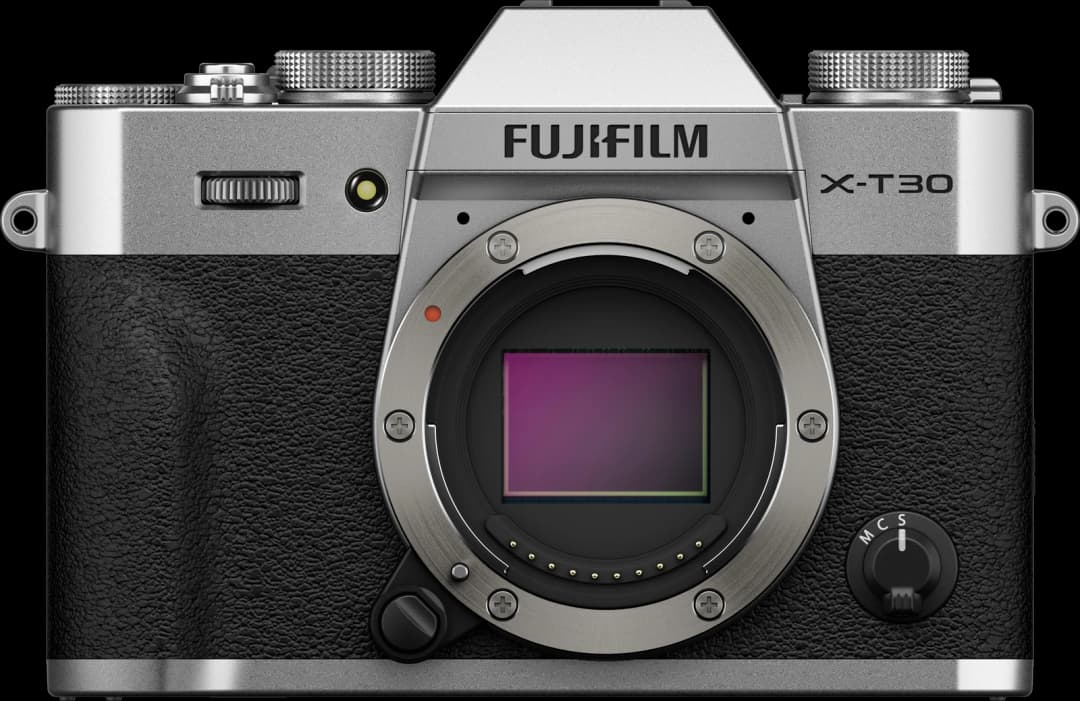
Fujifilm
X-T30 III
2024
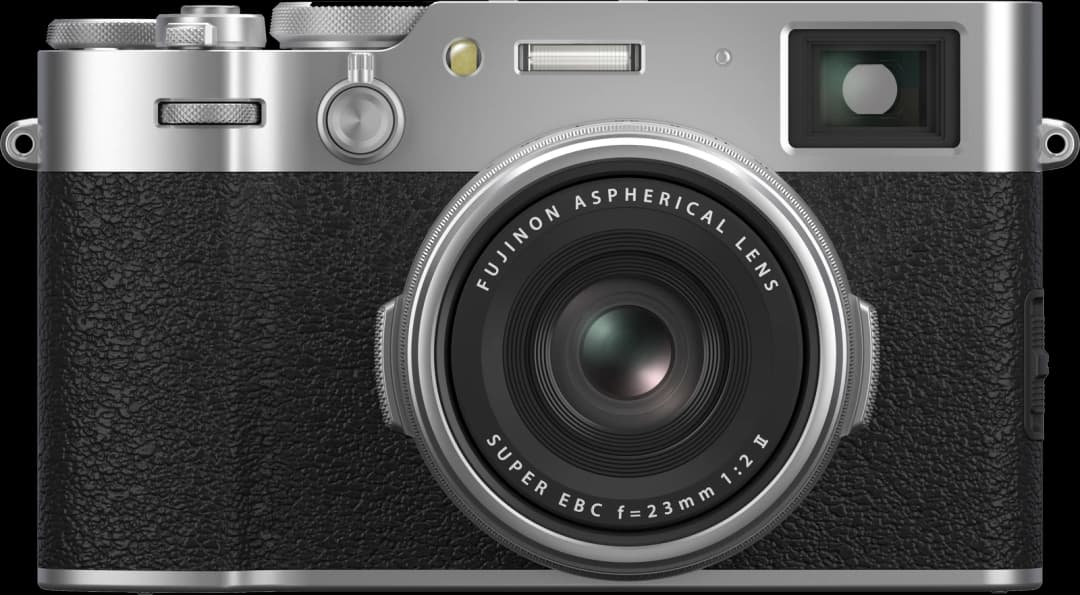
Fujifilm
X100VI
2024
Fujifilm X-T30 III vs X100VI: Which Justifies Its Price in 2026?
Visual summary
— Reads in 5 seconds
Fujifilm
X-T30 III
Fujifilm
X100VI
Where to buy
— Live merchant price comparator
Fujifilm X-T30 III

Fujifilm X-T30 III Body black
764,99 GBP · PcNova.co.uk


You'll find the best prices on the market here, updated daily — and by going through these partner links, you support Camera Duel without paying a cent more.
The arbitration in brief
The X100VI stands out for on-location versatility thanks to its 6-stop IBIS and 40.2 MP, but the X-T30 III remains the rational choice if you refuse to pay 600 USD more for a fixed lens.
Two Fujifilm APS-C bodies released the same year, two radically different philosophies. The X-T30 III is an interchangeable-lens hybrid with X mount, launched at 1 000 USD. It sits in the line of compact EVF viewfinder bodies, between the X-T20 II and the X-T5 in the range. The X100VI is a fixed-lens compact with a 23 mm f/2, priced at 1 599 USD, or 599 USD more. It carries the X-Trans CMOS 5 HR sensor, the same as the X-T5, in a body designed for discretion and mobility.
Both cameras share several fundamentals: APS-C 23.5 mm format, 425 AF points with full sensor coverage, human and animal eye detection, 6.2K 10-bit video with F-Log2, battery life around 310-315 CIPA shots, USB-C 10 Gbps and a single SD UHS-I slot. On paper, the proximity is real.
But the differences are structural. The X-T30 III shows 14.1 EV measured dynamic range against 10.4 EV for the X100VI, and reaches -7 EV in low-light AF against -5 EV. The X100VI counters with 40.2 MP against 26.1 MP, 6-stop IBIS absent on the X-T30 III, a RAW buffer of 84 frames against 33, and a hybrid OVF/EVF viewfinder that the X-T30 III does not offer.
This comparison settles a concrete question: is it better to spend 1 000 USD on an expandable body with a high-dynamic-range sensor, or 1 599 USD on a stabilised high-resolution compact with an integrated fixed lens? The answer depends on your primary use, and this text gives you the elements to decide.
Standout strengths
— Where each camera shines
Fujifilm
X-T30 III
Top advantages
- 14.1 EVDynamic range (EV)+36 % vs Fujifilm X100VI
- 30 fpsElectronic burst1,5× vs Fujifilm X100VI
- -7 EVAF low light (EV)+2 vs Fujifilm X100VI
- 378 gWeight+38 % vs Fujifilm X100VI
Fujifilm
X100VI
Top advantages
- 40.2 MPMegapixels1,5× vs Fujifilm X-T30 III
- 11 fpsMechanical burst+38 % vs Fujifilm X-T30 III
- 84RAW buffer2,5× vs Fujifilm X-T30 III
- 125Native ISO min+28 % vs Fujifilm X-T30 III
Detailed spec-by-spec
— Round by round, the eight categories
Sensor
Autofocus
Speed & burst
Video
Stabilisation
Build
Ergonomics & screen
Connectivity & battery
Detailed analysis analysis
— Strengths, trade-offs and ideal user
Fujifilm X-T30 III: what it does well, what it concedes
The X-T30 III is built around the X-Trans CMOS 4 sensor of 26.1 MP. It is not the newest sensor in the Fujifilm range, but it delivers 14.1 EV measured dynamic range, or 3.7 EV more than the X100VI. In practice, this means significantly greater latitude for recovery in post-processing in high-contrast scenes: blown skies, blocked shadows, backlighting. For landscape or reportage in difficult natural light, the gap is concrete and measurable.
Low-light AF reaches -7 EV, two stops below the X100VI. The body locks focus in conditions where the human eye struggles to discern contours. Electronic burst reaches 30 fps, ten more than the X100VI, but the RAW buffer tops out at 33 frames against 84 on the X100VI. At 30 fps, the buffer is exhausted in a little over a second. This is a real limitation on long sequences.
The X-T30 III weighs 378 g body only, or 143 g less than the X100VI. It is also more compact in width (118.4 mm against 128 mm). But it carries no IBIS. Without optical stabilisation on the lens in use, any handheld shot below 1/60 s becomes risky. The X mount opens access to more than 50 native lenses, which is the body’s structural advantage: you are not locked into a single focal length.
Two concessions to note:
- No IBIS: deal-breaker in low light without a tripod if the lens is not stabilised.
- RAW buffer of 33 frames: insufficient to fully exploit the 30 fps electronic burst on long sequences.
The EVF shows 2.36 million dots at 0.62x magnification. Adequate, but inferior to the hybrid viewfinder of the X100VI.
For whom
The X-T30 III suits the photographer who wants a versatile, expandable body without exceeding 1 000 USD. It is aimed at those who regularly change focal lengths, who work in landscape or reportage with a tripod or shutter speeds sufficient to manage without IBIS. The 14.1 EV dynamic range makes it a solid tool for high-contrast scenes. AF at -7 EV provides reassurance in degraded conditions. It is also the logical choice for anyone who already owns X-mount lenses: the body integrates into an existing kit without additional lens cost.
Fujifilm X100VI: what it does well, what it concedes
The X100VI carries the X-Trans CMOS 5 HR sensor of 40.2 MP, the same as the X-T5. That is 14.1 MP more than the X-T30 III, or 54 % higher resolution. In practice, this allows aggressive cropping in post-processing and very large prints without visible loss. Native minimum ISO drops to 125 against 160 on the X-T30 III, a marginal studio advantage but real on a high-resolution sensor for limiting base noise.
IBIS compensates 6 stops according to manufacturer measurement. Without independent contradictory data available to date, this figure should be taken with the usual caution regarding test conditions. In field use, 6 stops allow slower handheld shutter speeds, something the X-T30 III cannot do without a stabilised lens. The RAW buffer of 84 frames is 2.5 times more generous than on the X-T30 III. At 20 fps electronic, that represents more than 4 seconds of continuous burst, against a little over a second on the X-T30 III.
The hybrid OVF/EVF viewfinder is a hallmark of the X100 series. It shows 3.69 million dots in EVF mode at 0.66x magnification and switches to a true optical viewfinder for a different viewing experience. This is not a universal improvement, but it is a feature absent from every other current Fujifilm body.
Three points to watch:
- 10.4 EV dynamic range: 3.7 EV behind the X-T30 III, penalising in high-contrast scenes.
- Fixed 23 mm f/2 lens: no native option to change focal length.
- 521 g: heavier than the X-T30 III despite a compact format.
The lack of weather-sealing on both bodies is a shared deal-breaker for use in damp conditions.
For whom
The X100VI is aimed at the photographer who wants a single discreet, high-resolution, stabilised body for street, travel or portrait work. It suits those who accept the constraint of the fixed 23 mm in exchange for an integrated system without compromise on definition or stabilisation. It is also the choice of the photographer who values the hybrid OVF/EVF viewfinder as a compositional tool. The 1 599 USD price includes the lens: compared with an X-T30 III fitted with a Fujinon XF 23 mm f/2, the price gap narrows significantly.
Our verdict
Which one to buy, and why
Overall photo scores are identical: 6.9/10 for both bodies according to the camera-duel.com algorithm. This is rare, and telling: the two cameras are balanced differently, not ranked. The X100VI takes the lead in video (6.5 against 5.6) thanks to proxy recording, Open Gate mode and All-I modes absent on the X-T30 III.
The deal-breakers are clear on both sides:
- X-T30 III: no IBIS, RAW buffer of 33 frames insufficient for 30 fps, dynamic range of 14.1 EV that remains its main differentiating strength.
- X100VI: non-interchangeable fixed lens, dynamic range of 10.4 EV trailing by 3.7 EV, weight of 521 g for a compact.
On value for money, the X-T30 III is more rational at 1 000 USD. It gives access to the entire X-mount ecosystem, superior dynamic range, and low-light AF at -7 EV. The X100VI at 1 599 USD does include the lens, but locks you into a single focal length. If you already own X-mount lenses, the X-T30 III is the obvious choice.
If you are starting from scratch and the 23 mm matches your vision, the X100VI is justified: 40.2 MP, 6-stop IBIS, 84-frame buffer and hybrid viewfinder form a coherent package for street and travel. The used market is worth watching: the X100VI regularly trades above its launch price since release, complicating access to value. The X-T30 III, less speculative, is easier to find at a reasonable price.
My clear verdict: choose the X-T30 III if you shoot in varied conditions with multiple focal lengths, if dynamic range matters in your workflow, or if your budget is capped at 1 000 USD. Choose the X100VI only if the fixed 23 mm is your preferred focal length and IBIS is non-negotiable for your use. The 599 USD difference is not justified otherwise.
Frequently asked questions
Before you buy, the questions we get
Which to choose for light travel?
The X-T30 III weighs 378 g against 521 g for the X100VI, or 143 g less. But the X100VI integrates its lens: with an X-T30 III fitted with a Fujinon XF 23 mm f/2, total weight exceeds that of the X100VI. If you travel with a single focal length, the X100VI is more compact in practice. If you carry several lenses, the X-T30 III regains the advantage on flexibility. The lack of IBIS on the X-T30 III is a real concession on travel, especially indoors or in low light without a tripod.
Does the 599 USD gap between the two bodies justify itself?
Not systematically. The X100VI carries 40.2 MP against 26.1 MP, 6-stop IBIS absent on the X-T30 III, and a RAW buffer of 84 frames against 33. But it sacrifices 3.7 EV of dynamic range and locks you into a fixed lens. If you compare the X100VI to an X-T30 III equipped with a Fujinon XF 23 mm f/2 WR (around 450 USD), the real gap falls to about 150 USD. At that level, the IBIS and resolution of the X100VI start to justify themselves. Without lenses already in stock, the calculation changes.
Which is best suited to portraiture in natural indoor light?
The X100VI takes the advantage thanks to its 6-stop IBIS, which allows slow handheld shutter speeds without blur from camera shake. Indoors without flash, this is a decisive asset. Its dynamic range of 10.4 EV trails by 3.7 EV compared with the X-T30 III, reducing latitude in post-processing on high-contrast scenes. Low-light AF on the X-T30 III reaches -7 EV against -5 EV on the X100VI, a useful advantage in dark rooms. For portraiture in natural indoor light, the X100VI remains the more versatile choice thanks to IBIS.
Is the X-T30 III buffer a real problem in practice?
Yes, on long sequences. At 30 fps electronic, 33 RAW frames represent a little over a second of burst before saturation. For sport or wildlife with continuous sequences, this is limiting. The X100VI offers 84 frames at 20 fps, or more than 4 seconds of burst. If your main use is reportage or street photography with short bursts of 3 to 5 frames, the X-T30 III buffer is sufficient. For sport or wildlife in long sequences, it is a real deal-breaker.
Which body will age better in the Fujifilm range?
The X-T30 III is built on the X-Trans CMOS 4 sensor, one generation behind the X-Trans CMOS 5 HR of the X100VI. In sensor terms, the X100VI is newer and higher resolution. In ecosystem terms, the X-T30 III benefits from the X mount, compatible with all current and future Fujifilm lenses. The X100VI is tied to its integrated lens. Long term, the X mount offers more scalability. The X100VI will be difficult to surpass without replacing the entire body. The X-T30 III can evolve through lenses.