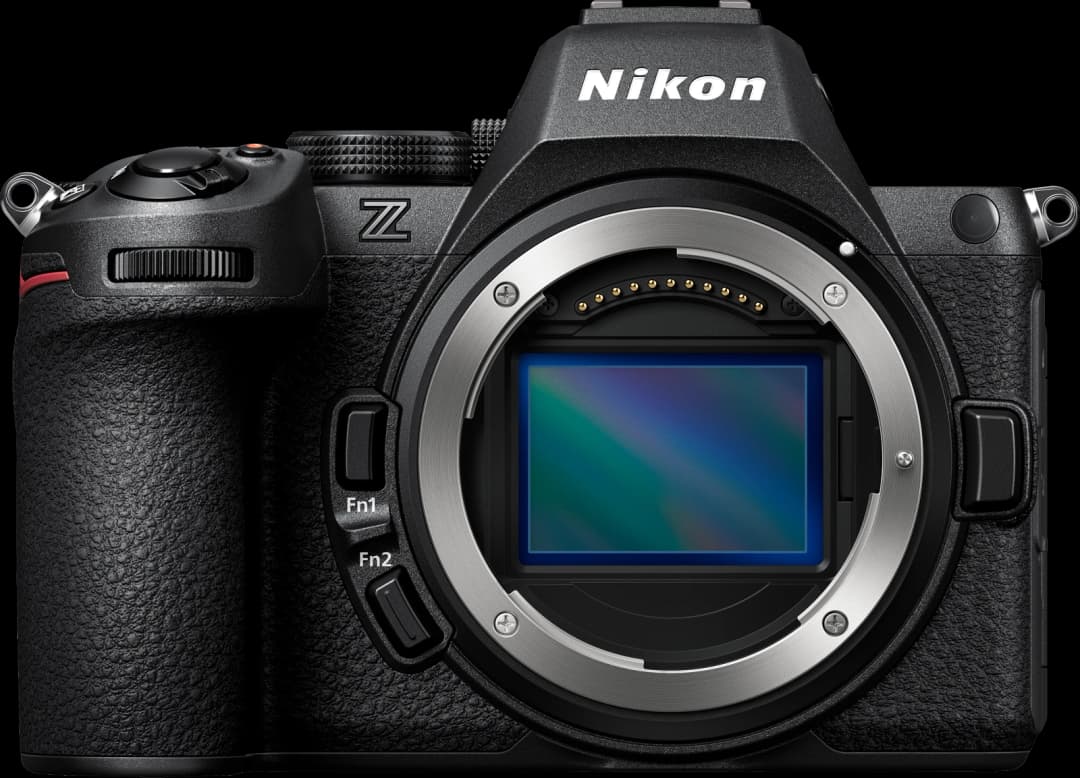
Nikon
Z5 II
2025
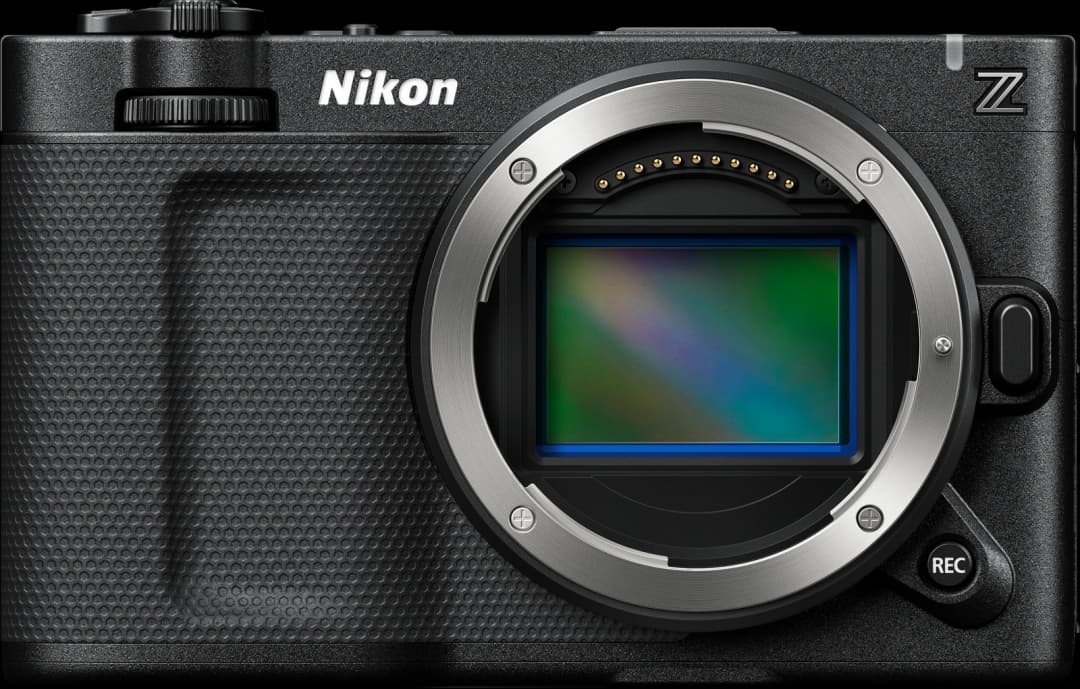
Nikon
ZR
2025
Nikon Z5 II vs Nikon ZR: Which to Choose Between Versatility and Video Specialisation?
Visual summary
— Reads in 5 seconds
Nikon
Z5 II
Nikon
ZR
The arbitration in brief
The Z5 II is the best all-round hybrid at 1 696 USD; the ZR is a video-specialised tool at 2 200 USD that sacrifices the viewfinder and IBIS for 6K ProRes.
Nikon released these two bodies the same year, on the same Z mount, with the same 24.5-megapixel Full Frame 35.9 x 23.9 mm sensor. On paper the duel looks close. In practice it is not.
The Z5 II continues the original Z5: an accessible Full Frame hybrid built for weddings, portraits and hybrid video. Its launch price of 1 696 USD positions it as the sensible entry point into the full-frame Z ecosystem. It carries a 3.69-million-dot OLED EVF, 7.5-stop IBIS and unlimited video recording.
The ZR is a different proposition. At 2 200 USD, 504 USD more, Nikon delivers a body without a viewfinder, with a very compact profile (134 x 80.5 x 49 mm versus 134 x 100.5 x 72 mm), aimed at cinema video and high-frame-rate capture. It reaches 120 fps in electronic burst, records in 6K, supports native ProRes and Dual ISO. It is a production tool, not a Swiss Army knife.
This comparison answers a concrete question: is it worth paying 504 USD extra for professional video capabilities, or does the Z5 II cover 90 % of needs at lower cost? You will see that the answer depends on a single criterion: primary use. On that criterion the two bodies address completely different photographers.
Standout strengths
— Where each camera shines
Nikon
Z5 II
Top advantages
- 64 000Native ISO max+25 % vs Nikon ZR
- 7.5 stopsIBIS rating1,5× vs Nikon ZR
- OuiUnlimited recordingAbsent sur Nikon ZR
- 7.8 fpsMechanical burstAbsent sur Nikon ZR
Nikon
ZR
Top advantages
- 120 fpsElectronic burst4× vs Nikon Z5 II
- 15 EVDynamic range (EV)+34 % vs Nikon Z5 II
- OuiDual Native ISOAbsent sur Nikon Z5 II
- OuiProxy recordingAbsent sur Nikon Z5 II
Detailed spec-by-spec
— Round by round, the eight categories
Sensor
Autofocus
Speed & burst
Video
Stabilisation
Build
Ergonomics & screen
Connectivity & battery
Detailed analysis analysis
— Strengths, trade-offs and ideal user
Nikon Z5 II: what it does well, what it concedes
The Z5 II is built around a 24.5-megapixel Full Frame CMOS sensor with a measured dynamic range of 11.2 EV. That is lower than the ZR’s 15 EV, but sufficient for weddings, portraits and landscape in controlled light. Native ISO reaches 64 000, versus 51 200 on the ZR. The difference is marginal in practice, but confirms the Z5 II is not behind on sensitivity.
The 7.5-stop IBIS is the Z5 II’s most tangible advantage. It allows very slow handheld shutter speeds, directly useful for travel or indoor work without a tripod. The ZR offers only 5 stops, i.e. 2.5 stops less. On a wide shot in low light the difference translates into one or two extra usable shutter speeds.
The Z5 II’s strengths fall into three areas:
- 7.5 stops of IBIS versus 5 stops on the ZR, a decisive edge for handheld photography.
- Unlimited video recording versus a 125-minute limit on the ZR.
- 3.69 M-dot OLED EVF at 0.8x magnification, absent on the ZR.
The compromises are real. Electronic burst tops out at 30 fps versus 120 fps on the ZR. Video stops at 4K 60p without native ProRes or Dual ISO. Cards are SD UHS-II, limiting write speed compared with the ZR’s CFexpress Type B. The video score of 7.4 out of 10 versus 9.0 summarises the gap.
For a photographer who alternates between reportage, portrait and occasional hybrid video, the Z5 II is complete. For a videographer who needs ProRes, 6K or 120 fps, it shows its limits.
For whom
The Z5 II suits the photographer seeking a versatile Full Frame body without compromising on classic ergonomics. The 3.69 M-dot EVF is indispensable for shooting in bright sun or difficult conditions. The 7.5-stop IBIS directly benefits travel and wedding photographers who often work without optical stabilisation on longer focal lengths. Unlimited video recording is a real advantage for content creators filming long interviews or continuous events. The body also appeals to photographers starting hybrid video who want a complete solution without investing in a ProRes workflow.
Nikon ZR: what it does well, what it concedes
The ZR shares the same 24.5-megapixel sensor as the Z5 II, but Nikon claims a dynamic range of 15 EV, i.e. 3.8 EV more than the Z5 II. The difference is significant for landscape and Log video: it represents roughly two extra stops of latitude in post-production. Note that this manufacturer figure has not yet been independently verified by DXOMark or Photons to Photos at the time of writing.
The 120 fps electronic burst is the ZR’s most spectacular figure. It places the body in a class of its own for action capture. Native Dual ISO and 6K ProRes RAW recording complete a clearly production-oriented video profile. The full-size HDMI port is a detail that matters in the studio: it avoids fragile adapters.
The ZR’s compromises are structural:
- No EVF, a deal-breaker for any use in bright outdoor light.
- IBIS limited to 5 stops, insufficient for long focal lengths handheld.
- Video recording capped at 125 minutes despite its pro-video positioning.
- CIPA battery life not communicated by Nikon, complicating field planning.
The compact format (630 g, 134 x 80.5 x 49 mm) is an advantage for lightweight travel and video rigs. But the lack of a viewfinder and reduced IBIS mean the body works better on a tripod or stabilised rig than shoulder-mounted. Its photo score of 6.6 out of 10 versus 8.0 for the Z5 II reflects these trade-offs.
For whom
The ZR targets the hybrid videographer or content creator who needs native ProRes, 6K and 120 fps in a compact body. It also suits the landscape photographer who exploits the extended dynamic range (15 EV claimed) in RAW and works systematically on a tripod. The absence of a viewfinder is not an issue in this context. The full-size HDMI port and built-in XLR audio inputs make it a self-contained shooting tool. It is not a body for the photographer who alternates between stills and video: it is a tool for those who have chosen video as their primary use.
Our verdict
Which one to buy, and why
The Z5 II and the ZR are not in direct competition. They answer two distinct needs, and the 504 USD gap between them reflects radically different engineering choices.
For versatile stills, weddings, portraits and occasional hybrid video, the Z5 II is the obvious choice. Its photo score of 8.0 out of 10, 7.5-stop IBIS, 3.69 M-dot OLED EVF and unlimited recording make it a complete tool. The ZR’s deal-breaker in this context is clear: the lack of a viewfinder makes the body uncomfortable to use in bright sun or during a dynamic event.
For professional video, high-dynamic-range landscape and high-frame-rate action capture, the ZR justifies its premium. 6K ProRes RAW, Dual ISO, 120 fps and the claimed 15 EV dynamic range are genuine production assets. The Z5 II’s deal-breakers in this context are equally clear:
- No native ProRes, no Dual ISO, no built-in XLR input.
- Electronic burst limited to 30 fps versus 120 fps.
- Dynamic range of 11.2 EV versus 15 EV claimed.
On value for money, the Z5 II is the better buy for most photographers. At 1 696 USD it has no direct rival in the Nikon Z ecosystem. On the used market, early examples are already appearing around 1 300 to 1 400 USD, further strengthening its appeal.
My clear verdict: if you are still hesitating between the two, take the Z5 II. The lack of a viewfinder on the ZR is too heavy a compromise for everyday stills use. The ZR is a specialist tool, reserved for those who know exactly why they need ProRes and 120 fps. For everyone else, the 504 USD saved is better spent on a Z lens.
Frequently asked questions
Before you buy, the questions we get
Which to choose for wedding photography?
The Z5 II is the appropriate choice for weddings. Its 3.69 M-dot OLED EVF allows comfortable work in bright sun. The 7.5-stop IBIS is useful during dimly lit indoor ceremonies. The 30 fps electronic burst covers decisive moments. The ZR, without a viewfinder, forces screen-only operation, which is penalising in bright outdoor light. The Z5 II’s unlimited video recording is also an advantage for continuous ceremony filming.
Can the ZR replace a dedicated sports body?
On paper, 120 fps electronic burst is a serious argument for sport. But the lack of a viewfinder is a deal-breaker for tracking fast subjects outdoors. The Z5 II, with its 30 fps and 0.8x EVF, is better suited to amateur sport or dynamic reportage. For professional high-frame-rate sport, neither body competes with a Nikon Z9 or Sony A1. Real-world buffer data for the ZR in uncompressed RAW is not yet available from independent sources.
Is the ZR’s 15 EV dynamic range verified?
The 15 EV figure is claimed by Nikon in its specifications. At the date of this article it has not yet been confirmed by DXOMark, Photons to Photos or Bill Claff. The Z5 II shows 11.2 EV measured independently. The claimed 3.8 EV gap is significant and credible for a Dual ISO sensor, but independent validation should be awaited before treating it as a decisive purchase criterion.
Does the 504 USD gap between the two bodies justify itself?
Only if your primary use is professional video. The ZR brings 6K ProRes RAW, Dual ISO, 120 fps, XLR input and Genlock. These features only have value in a structured production workflow. For a hybrid photographer who shoots video occasionally, the Z5 II at 1 696 USD covers all needs. The 504 USD difference represents the budget for a quality Z lens, which is often a better investment for photographic progress.
Which body will age better in the Nikon Z ecosystem?
Both share the Z mount and will benefit from Nikon firmware updates. The Z5 II occupies a more central position in the range: it directly succeeds the Z5 and belongs to an established product line. The ZR is a niche body with a compact, viewfinder-less profile whose longevity in the range is less certain. For a long-term investment in the Z ecosystem, the Z5 II is the more stable choice. The used market for the Z5 II will also be more liquid, easing resale or an upgrade to a Z6 III or Z8.