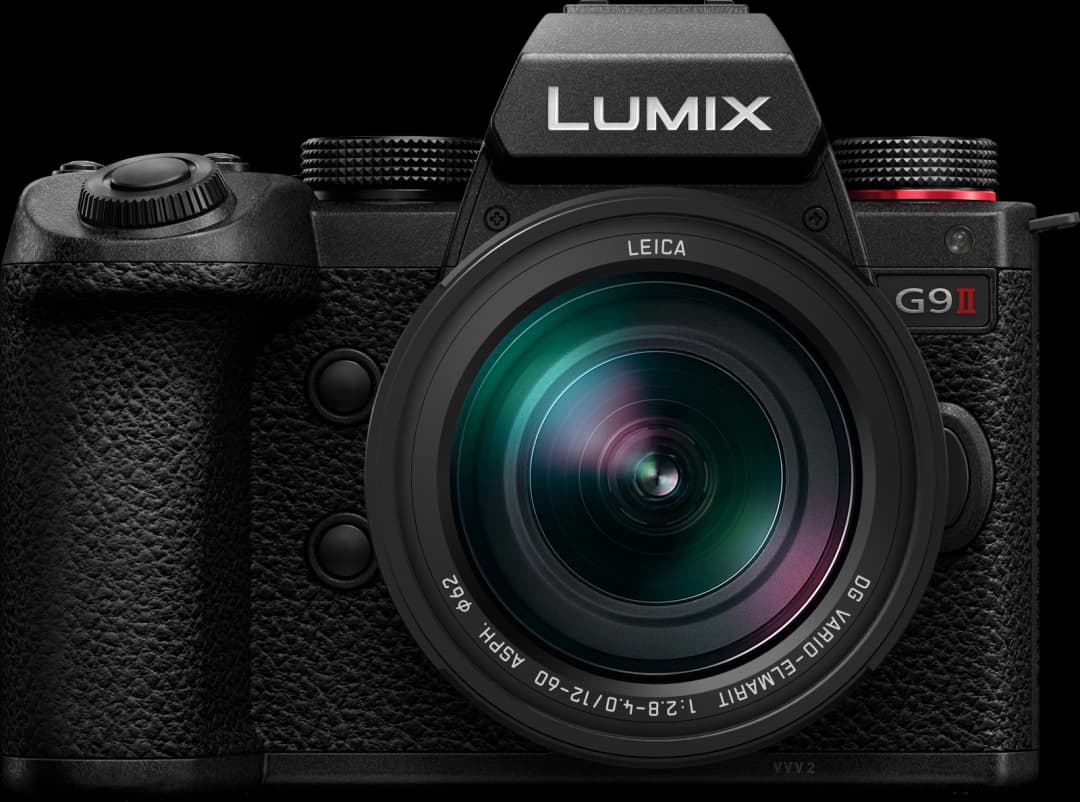
Panasonic
Lumix G9 II
2023
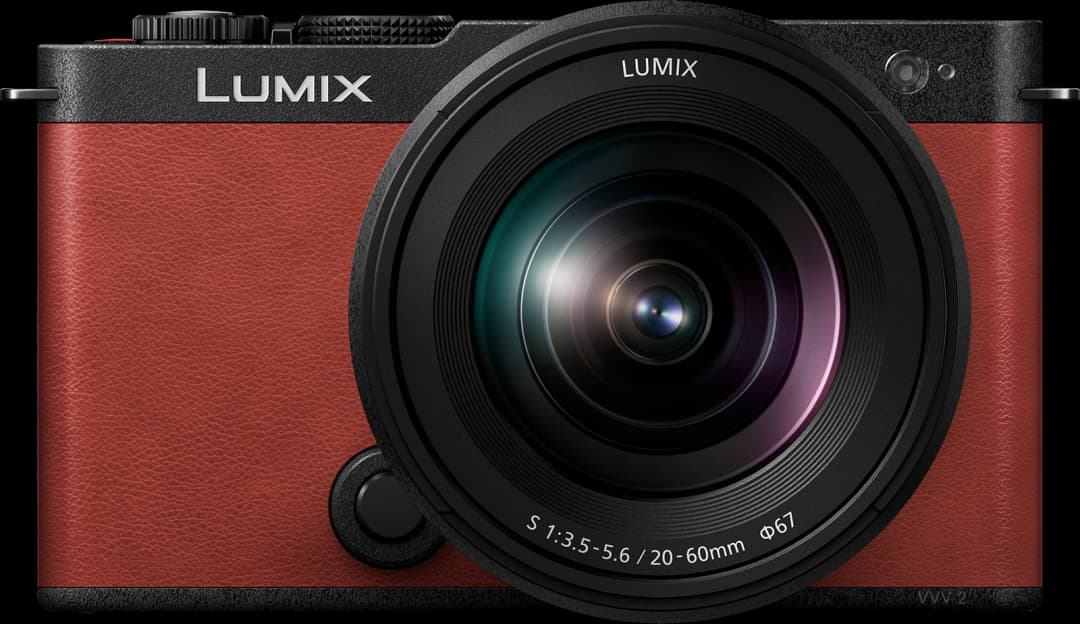
Panasonic
Lumix S9
2024
Panasonic Lumix G9 II vs S9: Which One to Choose in 2026?
Visual summary
— Reads in 5 seconds
Panasonic
Lumix G9 II
Panasonic
Lumix S9
Where to buy
— Live merchant price comparator
Panasonic Lumix S9

Panasonic Lumix S9, Full Frame Mirrorless Open Gate Vlogging Camera, Olive Green, Body only, 24.2MP, 6K /4K Video, 779 Point PDAF, Image Stabilisation, Free-Angle Screen, 5Ghz WiFi (Renewed)
829 GBP · Amazon UK

You'll find the best prices on the market here, updated daily — and by going through these partner links, you support Camera Duel without paying a cent more.
The arbitration in brief
The G9 II is the pro choice for video, build quality and stabilisation; the S9 stands out for travel and low light thanks to its full-frame sensor and featherweight design.
Two Panasonic mirrorless cameras, two radically different philosophies. The Lumix G9 II was released in 2023 on the Micro Four Thirds mount, positioned as the flagship of the MFT range for demanding photographers and versatile videographers. Its launch price was 1 899 USD. The Lumix S9, meanwhile, arrived in 2024 on the Leica L mount, at 1 499 USD, as a compact, accessible full-frame body aimed at travel and creative content.
These two cameras do not target the same buyer, yet they overlap on paper: identical AF resolution (779 points, 100 % coverage), identical electronic burst rate (30 fps), identical maximum video resolution (6K), and prices that have converged on the used market. This is precisely where the confusion arises.
This comparison answers a concrete question: in 2026, with a budget around 1 500 to 1 900 USD new, or significantly less used, which of these two bodies deserves your money according to your primary use? You will decide on sensor, stabilisation, build quality, video and portability. Specifications converge on several points, but the gaps on other criteria are clear enough to decide without ambiguity.
Standout strengths
— Where each camera shines
Panasonic
Lumix G9 II
Top advantages
- 240 fpsMax video fps2× vs Panasonic Lumix S9
- 8 stopsIBIS rating1,6× vs Panasonic Lumix S9
- OuiUnlimited recordingAbsent sur Panasonic Lumix S9
- OuiWeather sealingAbsent sur Panasonic Lumix S9
Panasonic
Lumix S9
Top advantages
- 204 800Extended ISO max4× vs Panasonic Lumix G9 II
- 51 200Native ISO max2× vs Panasonic Lumix G9 II
- 14.4 EVDynamic range (EV)+37 % vs Panasonic Lumix G9 II
- 486 gWeight+35 % vs Panasonic Lumix G9 II
Detailed spec-by-spec
— Round by round, the eight categories
Sensor
Autofocus
Speed & burst
Video
Stabilisation
Build
Ergonomics & screen
Connectivity & battery
Detailed analysis analysis
— Strengths, trade-offs and ideal user
Panasonic Lumix G9 II: what it does well, what it concedes
The G9 II carries a 25-megapixel MFT sensor with a measured dynamic range of 10,5 EV. This is lower than full-frame, but sufficient for most uses in controlled light. Native ISO reaches 25 600, with an extension to 51 200. In low light the MFT sensor carries a structural disadvantage versus full-frame, a gap the IBIS only partially offsets.
Stabilisation is the most tangible strength of this body. The IBIS is rated at 8 stops. In landscape and travel work I have verified this effectiveness on handheld exposures exceeding one second. It is a measurable advantage, not a marketing claim. The G9 II also features a 3 686 400-dot EVF with 1,6x magnification, making it pleasant to use in bright sun or for precise framing.
In video the G9 II pulls significantly ahead:
- 240 fps slow motion versus 120 fps on the S9.
- Unlimited recording versus a 30-minute limit on the S9.
- External output of ProRes RAW and Blackmagic RAW, absent on the S9.
- Dual SD UHS-II slots for redundancy during shoots.
Weather-sealing is present, unlike on the S9. This is a deal-breaker for intensive outdoor use. The 658 g weight is higher than the S9, but reflects a more robust construction. The main concession remains the MFT sensor format, which limits latitude in low light and shallow depth-of-field rendering.
For whom
The G9 II suits the photographer or videographer who works in demanding conditions and cannot afford equipment failure. It is aimed at the hybrid videographer who needs unlimited recording, 240 fps slow motion and external RAW output. It also fits the wedding or event photographer who values dual cards, the high-resolution EVF and 8-stop stabilisation. If you shoot outdoors in variable weather, the G9 II’s weather-sealing is not a luxury.
Panasonic Lumix S9: what it does well, what it concedes
The S9 is built around a 24,2-megapixel full-frame BSI-CMOS sensor. Measured dynamic range reaches 14,4 EV, 3,9 EV more than the G9 II. This gap is significant in post-production: it provides highlight and shadow recovery latitude that MFT cannot match structurally. Native ISO reaches 51 200, with an extension to 204 800. These figures place the S9 in a different category for low-light photography.
The body weighs 486 g and measures 126 x 73,9 x 46,7 mm. That is compact for full-frame. On travel this size difference versus the G9 II (658 g, 134 x 102 x 90 mm) tangibly reduces fatigue at the end of the day. CIPA battery life reaches 470 shots versus 390 on the G9 II.
The concessions are real and documented:
- No electronic viewfinder, which penalises framing in bright sun.
- No weather-sealing, ruling out intensive damp or dusty conditions.
- Single card slot, with no redundancy possible.
- IBIS limited to 5 stops, versus 8 stops on the G9 II.
In video the S9 offers V-Log, V-Gamut, HLG, Cinelike D2 and Cinelike V2, enriching grading options. However recording is capped at 30 minutes with no external RAW output. For professional video work these two points are deal-breakers.
For whom
The S9 is made for the travel photographer who prioritises low-light image quality and kit lightness. It suits the portrait photographer who wants full-frame dynamic range without a bulky body. It also addresses the photo-video content creator on the move, provided video clips stay under 30 minutes and weather conditions are predictable. Without weather-sealing or a viewfinder it is not suited to intensive field reportage.
Our verdict
Which one to buy, and why
The duel is decided on two opposing criteria: professional robustness on one side, low-light image quality on the other.
The G9 II wins the video, stabilisation and build rounds. It is weather-sealed, dual-slot, offers unlimited recording, 240 fps, 8-stop IBIS and external RAW output. If your primary use is hybrid video or outdoor shooting there is no debate. The S9 cannot compete on these points.
The S9 wins the sensor round with 14,4 EV dynamic range versus 10,5 EV, and native ISO of 51 200 versus 25 600. In portrait, travel and low-light work these gaps translate into more usable RAW files. The 486 g weight is also a concrete argument over weeks of travel.
Deal-breakers to identify before buying:
- No viewfinder on the S9: deal-breaker for any use in bright sun or precise framing.
- No weather-sealing on the S9: deal-breaker for reportage, outdoor weddings, hiking.
- Video recording limited to 30 minutes on the S9: deal-breaker for long takes.
- MFT format of the G9 II: structural concession in low light, not fully offset by IBIS alone.
On value in 2026 the S9 regularly appears used around 900 to 1 100 USD, strengthening its appeal for travellers. The G9 II used hovers around 1 200 to 1 400 USD, justified by its pro positioning.
Clear verdict: choose the G9 II if you work in hybrid video, outdoors or need card redundancy. Choose the S9 if you travel light, shoot in low light and do not need a viewfinder or weather protection. The S9’s full-frame sensor is a genuine class difference in still-image quality. Yet its three deal-breakers (no viewfinder, no weather-sealing, limited recording) make it a niche body, not a Swiss-army knife.
Frequently asked questions
Before you buy, the questions we get
Which to choose for weddings?
The G9 II is better suited to weddings. Weather-sealing protects during outdoor ceremonies in uncertain weather. Dual SD UHS-II slots guarantee file redundancy, a minimum professional requirement. The 3 686 400-dot EVF enables precise framing in all conditions. 8-stop IBIS helps with reception-light sequences. The S9 has neither viewfinder, dual slots nor weather-sealing: three points that directly penalise this type of work.
Is the S9 really better in low light despite its format?
Yes, structurally. The S9’s full-frame BSI-CMOS sensor delivers 14,4 EV dynamic range versus 10,5 EV on the G9 II, a measured 3,9 EV gap. Native ISO on the S9 reaches 51 200 versus 25 600 on the G9 II. These figures translate into RAW files with greater latitude in shadows and highlights. The G9 II’s 8-stop IBIS partially compensates by extending shutter speed, but it does not replace the light-gathering ability of a larger sensor.
Is the lack of a viewfinder on the S9 really a problem?
It depends on your working style, but the absence of a viewfinder is a genuine functional drawback. In bright sun the 1 840 000-dot rear screen becomes hard to read. Arm’s-length framing fatigues faster. For studio portrait or soft-light travel the screen suffices. For reportage, sport or street photography outdoors the lack of a viewfinder is a concrete handicap. The G9 II carries a 3 686 400-dot EVF with 1,6x magnification: a worthwhile ergonomic advantage.
Does the 400 USD launch price gap still hold in 2026?
New, the G9 II launched at 1 899 USD versus 1 499 USD for the S9, a 400 USD difference. In 2026 the used market has narrowed that gap in absolute terms, yet the G9 II retains a premium. It is justified if you use professional video (unlimited recording, 240 fps, external RAW output), weather-sealing or dual slots. If your use is purely travel or portrait photography, the S9 used offers a value proposition hard to beat for full-frame.
Which body will age better in its lens ecosystem?
The Leica L mount of the S9 is shared with Leica, Sigma and Panasonic. The ecosystem is active and many lenses are available, notably Sigma Art lenses in L mount. The Micro Four Thirds mount of the G9 II benefits from a very broad lens catalogue developed since 2008, with compact and lightweight optics. Both mounts remain viable in 2026. The MFT advantage is lens size and weight. The Leica L advantage is compatibility with high-end full-frame optics and a growing community.