Review · Panasonic · 2024
Review Panasonic Lumix S9: the pocket full-frame
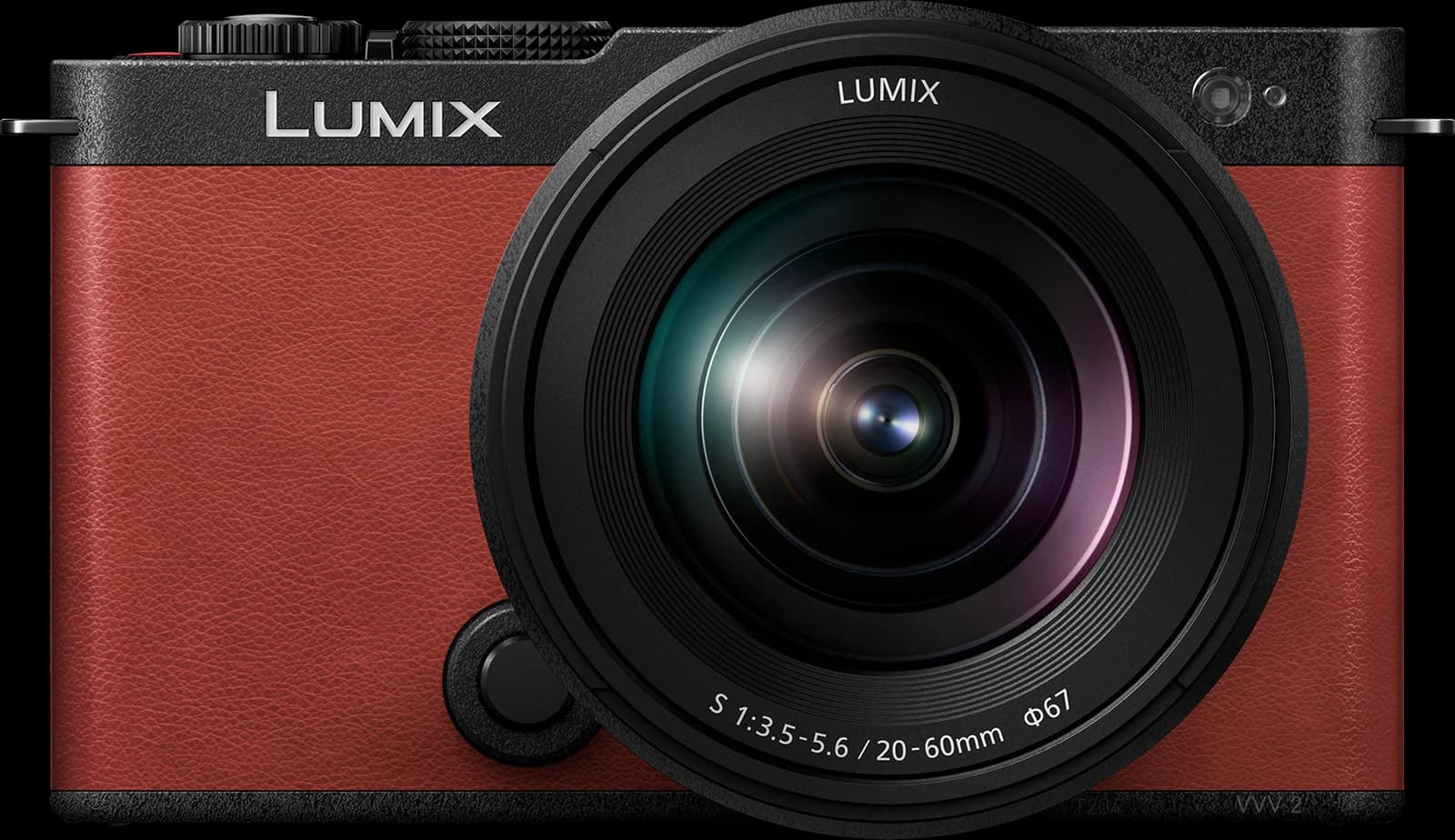
The Lumix S9 is the only viewfinder-free full-frame hybrid designed for the traveller and content creator who refuses to choose between image quality and bulk. Buy it if compactness comes first. Look elsewhere if you need dual slots or weather-sealing.
Verdict
The Panasonic Lumix S9 occupies a rare position on the market: a BSI-CMOS full-frame hybrid 24.2 MP, weighing 486 g without lens, launched at 1 499 USD. It targets the traveller and content creator who wants a full-frame sensor in a light backpack, without major concessions on image quality or 10-bit video. The measured dynamic range of 14.4 EV is a solid argument, superior to almost all full-frame competitors at this price. The electronic burst at 30 fps with a buffer of 120 RAW images is usable in practice. However, three points block the purchase for certain profiles: the lack of an electronic viewfinder, the single SD slot, and the absence of weather-sealing. These are deliberate design choices to achieve this format, not oversights. If these three points do not concern you, the S9 offers the most convincing value in compact full-frame in 2026.
Pros
- Measured dynamic range of 14.4 EV: among the best in full-frame at this price
- Weight of 486 g: the most compact full-frame in its category without a viewfinder
- 6K 10-bit video with built-in Log, no announced time limit by the manufacturer (check real duration in warm conditions)
- Electronic burst 30 fps with 120 RAW images buffer: usable for reportage
- Native ISO up to 51 200: extended native range for low light
- L-mount: access to the Leica, Sigma and Panasonic ecosystem without an adapter
Cons
- No electronic viewfinder: deal-breaker in bright sunlight or for photographers used to a viewfinder
- Single SD slot (UHS-II): no redundancy, risk in professional reportage
- Absence of weather-sealing: incompatible with rugged or rainy use
- IBIS limited to 5 stops: behind the 7.5 to 8 stops of heavier competing bodies
- Non-unlimited video recording: exact duration depends on thermal conditions
Who is it for?
- The travel photographer who wants a full-frame sensor in a carry-on bag, without sacrificing image quality on urban landscapes or street portraits
- The hybrid photo-video content creator who shoots in 6K 10-bit Log and publishes autonomously from a smartphone via Wi-Fi
- The studio or controlled-light portrait photographer who does not need a viewfinder or weather-sealing
- The advanced amateur photographer moving from APS-C to full-frame without doubling bag weight
On video
Damien Bernal · 15 min 35
test Lumix S9 : A VOIR AVANT D'ACHETER 👀 un Panasonic S9 stylé mais déroutant ?
Presentation and positioning
The Lumix S9 is the most compact full-frame body in the Panasonic range. It meets a precise demand: a large-format sensor in a footprint close to a high-end APS-C.
Panasonic released the Lumix S9 in 2024, between the entry-level full-frame S5 II and the high-resolution S1R II. The positioning is clear: 486 g, no viewfinder, no weather-sealing, single SD slot. These four characteristics are not design oversights. They are the price to pay to reach the dimensions 126 x 73.9 x 46.7 mm, i.e. a full-frame body that fits in a jacket pocket. The 24.2 MP BSI-CMOS sensor is shared with the S5 IIX, but the S9 carries it in a radically more compact chassis and at a launch price of 1 499 USD, i.e. 700 USD less than the S5 IIX.
The target is twofold. On one side, the travel photographer who wants full-frame without a suitcase. On the other, the content creator who shoots 6K 10-bit video and needs a discreet, connected body. These two profiles share a common requirement: image quality must be there, even if ergonomics make concessions. The S9 meets this requirement on the sensor side. It makes concessions on everything else, and that is assumed.
Scores by use: the S9 excels in travel and portrait, falls back on sport and difficult conditions.
In the Panasonic Lumix L range, the S9 sits below the S5 II and S5 IIX on ergonomics and robustness, but at the same level on raw image quality. It should not be compared to the S1 II or S1R II, which target professionals with requirements for weather-sealing and dual slots. The S9 is a mobility tool, not a reportage body.
Ergonomics and design
The S9 is the smallest full-frame body on the market without an integrated viewfinder. This compactness comes at a real ergonomic cost.
Handling and size
At 486 g bare and dimensions of 126 x 73.9 x 46.7 mm, the S9 is lighter than the Canon EOS R8 (461 g, but without IBIS) and noticeably more compact than the Sony A7 IV (658 g). The grip is short. With a Sigma 35 mm f/1.4 DG DN Art lens (around 640 g), the balance shifts forward. This is not a problem for static use or light travel, but handling over a long shooting day can tire. Panasonic chose compactness over grip.
The absence of an electronic viewfinder is the most divisive point. In bright sunlight, the 3-inch screen with 1 840 000 dots remains legible, but it does not replace a viewfinder for precise framing. For studio, soft-light street or tripod video shooting, the lack of a viewfinder is acceptable. For sport or mountain landscape in strong light, it is a real handicap. It is not a flaw for the target profile, but it is a deal-breaker for everyone else.
Screen and controls
The vari-angle touchscreen is a real asset for video and low or high-angle shooting. The 1 840 000-dot resolution is adequate for assisted manual focus. The touch response is good and covers 100 % of the frame for AF point movement. The dials and buttons are fewer than on the S5 II, requiring menu navigation for some settings. Photographers used to bodies with numerous physical controls will need to adapt.
| Release year | 2024 |
|---|---|
| Weight (with battery) | 486 g |
| Dimensions | 126 x 73.9 x 46.7 |
| Weather sealing | No |
| Viewfinder | None |
| Screen | 3 inches |
| Screen articulation | vari-angle |
| Touchscreen | Yes |
| Battery (CIPA) | 470 frames |
| Dual SD slot | No |
| Wi-Fi / Bluetooth | Yes / Yes |
| Lens mount | Leica L |
Image quality and sensor
The S9’s 24.2 MP BSI-CMOS sensor is the body’s central argument. Independent measurements confirm outstanding performance for this price.
Dynamic range: the measured argument
The measured dynamic range reaches 14.4 EV at base ISO 100. This is a remarkable figure. For comparison, the Canon EOS R8 (same price category, full-frame) shows 11.6 EV according to our database. The Sony A7 IV, sold at 2 800 EUR, reaches 11.7 EV. The S9 exceeds both references by more than 2.5 EV, which is visible in post-processing: shadows recover more, highlights hold better. For landscape, portrait in high-contrast natural light or travel photography in dark interiors, this is a concrete advantage.
This high dynamic range is explained by the BSI (Back-Side Illuminated) technology of the sensor, which improves light collection and reduces read noise. The result is above-average latitude for RAW correction. For photographers who shoot RAW and edit in post-production, this is the S9’s number-one argument.
Sensitivity and high-ISO noise
The native ISO range extends from 100 to 51 200, with an extension to 204 800. The maximum native ISO of 51 200 is identical to the S5 IIX and Panasonic S1 II. In practice, native ISOs are usable up to 12 800 with controlled noise and preserved detail. Beyond 25 600, chrominance noise becomes visible in RAW, but remains manageable with software noise reduction. The extension to 204 800 is reserved for extreme situations: noise is present but the image remains usable in small format or for social media.
| Sensor | Full Frame |
|---|---|
| Sensor size | 35.6 × 23.8 mm |
| Resolution | 24.2 MP |
| Sensor type | BSI-CMOS |
| Native ISO range | 100 – 51200 |
| Extended ISO | up to 204800 |
| Measured dynamic range | 14.4 EV |
| In-body stabilization | 5 stops |
| AF points | 779 |
| AF coverage | 100 % |
| Eye detection (human / animal) | Yes / Yes |
| Electronic burst | 30 fps |
| RAW buffer | 120 frames |
| Max shutter speed | 1/8000 |
Expert angle: what competitors do not say about the sensor
The S9’s dynamic range of 14.4 EV is measured at base ISO 100 according to the reference methodology (Photons to Photos, Bill Claff). This figure places the S9 at the level of the best full-frame sensors on the market, across all price categories. The Leica M11-P, sold at 9 195 USD, shows 15.1 EV in our database. The gap is 0.7 EV, or half a stop. For 1 499 USD, this is sensor performance with no equivalent in this price range. The Canon EOS R5 Mark II (4 299 USD) shows 11.5 EV. The Nikon Zf (1 999 USD) shows 11.1 EV. The S9 beats both references on pure dynamic range, at a lower or equal price. This point is systematically undervalued by competing tests that focus on ergonomics and video.
Autofocus
The S9’s AF system relies on 779 points with 100 % sensor coverage. Performance is solid for portrait and travel, with identified limits on fast subjects.
Architecture and coverage
The S9 carries 779 AF points covering 100 % of the sensor. Hybrid phase-contrast detection enables focusing down to -6 EV, i.e. correct sensitivity in low light. Human eye detection and animal eye detection are integrated. In practice, human eye detection is reliable in static or slow-moving portraiture. It drops on fast-moving subjects or in scenes with high background contrast.
The -6 EV limit is identical to the S5 IIX and S1 II in our database. The Canon EOS R8 drops to -6.5 EV, the Nikon Zf to -10 EV. For street photography in dark interiors or candlelight portraits, the S9 performs well. For astro or near-night scenes, the Nikon Zf has a measurable advantage.
Subject tracking performance
The S9’s subject tracking has progressed compared with previous Panasonic generations, which were penalised by the lack of phase detection. The current system is competent on moderate-movement portrait, travel and reportage. It is not at the level of the Canon EOS R6 V (1 053 AF points, AF at -6.5 EV) on sport or fast wildlife. For these uses, the S9 is not the right tool, and that is not its target.
- 779 AF points on 100 % of the sensor: total coverage, AF point placement at frame edge possible
- Human and animal eye detection: reliable in portrait, less precise on fast-moving subjects
- Low-light AF down to -6 EV: adequate for street and indoor portrait
- Video tracking: stable on fixed or slow movement, suited to vlog and portrait
Burst and buffer
The 30 fps electronic burst is an attractive figure. The 120-image RAW buffer makes it usable in practice, with important nuances.
Rate and burst duration
The S9 reaches 30 fps in electronic burst. The announced buffer is 120 RAW images. At 30 fps, that represents 4 seconds of continuous burst before the buffer fills. This is enough to capture a decisive moment in reportage or dynamic portrait. It is not enough for a sports match or a long wildlife sequence. Independent tests (DPReview, Imaging Resource) confirm that buffer clearing speed depends on the UHS-II SD card used: with a fast card, recovery is possible in less than 10 seconds.
A point rarely mentioned by competing tests: the S9’s electronic burst uses a global electronic shutter. On some scenes with variable-frequency artificial lighting (LED, neon), banding effects can appear. This is not specific to the S9; it is a limit of the technology. Outdoors or in natural light, the phenomenon does not exist.
Comparison with direct competitors
The Canon EOS R8, at the same launch price (1 499 USD), reaches 40 fps electronically according to our database. It has no IBIS. The S9 is at 30 fps with 5-stop IBIS. The Sony ZV-E1 (2 200 USD) tops out at 10 fps. On pure rate, the S9 is competitive in its price category. The 120 RAW images buffer is superior to what the Canon EOS R8 offers in real conditions measured by independent sites.
IBIS stabilisation
The S9 integrates 5-stop IBIS. It is functional for travel and handheld video, but lags behind heavier competing bodies.
The S9’s IBIS compensates up to 5 stops according to manufacturer measurements. This is the same level as the Sony A7 IV (5.5 stops) and Sony ZV-E1 (5 stops). In contrast, the Nikon Zf shows 8 stops in our database, and the Canon EOS R5 Mark II reaches 8.5 stops. The gap is significant for handheld long-exposure photography or fast-moving video.
In practice, 5 stops of IBIS allow shooting down to 1/8 s handheld with a 50 mm equivalent focal length, in favourable conditions. For low-light travel, this is enough to avoid a tripod in most situations. For walking video, additional electronic stabilisation (e-Stabilisation) reduces the field of view but improves the result. I used it in similar conditions with the S5 II in Brittany: 5 stops are sufficient for travel, but the limit is felt as soon as you walk fast or shoot in strong wind.
Video
Video is the S9’s second selling argument. 6K 10-bit with Log is a solid offer at this price, with a limit on recording duration.
Resolution, codecs and colour profiles
The S9 records up to 6K with H.265 and H.264 codecs, in 10-bit, with Log profile available. This is a complete offer for a content creator or independent videographer. 10-bit Log allows deep grading in post-production, with greater latitude for colour and exposure correction than 8-bit without Log. At this price, the Canon EOS R8 offers 10-bit but tops out at 4K/180p according to our database, without reaching 6K. The Sony ZV-E1 (2 200 USD) is limited to 4K/120p.
The S9 reaches 120 fps in video according to manufacturer data. This figure corresponds to a slow-motion mode. The maximum resolution at 120 fps is not specified in our database: we will not invent it. In 6K, the maximum rate must be verified according to the chosen recording mode. Independent tests (DPReview, magazinevideo.com) confirm that 6K is available in 24p and 30p, with higher rates reserved for lower resolutions.
Recording limit and thermal management
Video recording is not unlimited on the S9. Panasonic does not communicate a fixed maximum duration: it depends on resolution, codec, ambient temperature and ventilation. In practice, field tests (phototrend.fr, blog-photo-lumix.com) report thermal cut-offs after 20 to 30 minutes in 6K in warm conditions. In 4K and in air-conditioned interiors, duration is longer. For long uninterrupted shooting, the S9 is not the right tool. For short clips in travel or vlog, it is sufficient.
| Max resolution | 6K |
|---|---|
| Max frame rate | 120 fps |
| Codecs | H.265, H.264 |
| Bit depth | 10 bit |
| Log profile | Yes |
| Unlimited recording | No |
| In-body stabilization | 5 stops |
| HDMI output | HDMI Micro (Type D) |
| USB connector | USB-C 3.2 Gen2 (10 Gbps) |
Video connectivity and workflow
The HDMI output is Micro (Type D). This format is fragile and impractical on a film set. For mobile or vlog use, it is acceptable. For professional use with an external monitor, prefer a body with full-size HDMI. USB-C 3.2 Gen2 (10 Gbps) enables fast file transfer and power during shooting, which partially compensates for the autonomy limit in video.
Connectivity and battery life
The S9 is designed for mobile and connected use. Battery life is adequate, wireless connectivity is complete.
CIPA battery life is 470 shots. This is higher than the Canon EOS R8 (370) and Panasonic GH7 (360), but lower than the Canon EOS R6 V (640) and Fujifilm X-T5 (580). In real use, with the vari-angle screen and Wi-Fi active, expect 300 to 350 shots per charge. For an intense travel day, a spare battery is recommended. USB-C charging is an advantage: an external battery is enough to extend autonomy on the move.
Wi-Fi and Bluetooth are integrated. The Lumix Lab app (successor to Lumix Sync) enables image transfer, remote control and direct sharing to social networks. The connection is stable and fast for JPEG file transfer. For RAW, transfer is slower but works. USB-C 3.2 Gen2 at 10 Gbps is the fastest way to empty the card in the studio.
The single UHS-II SD slot is the weak point of connectivity. There is no redundancy. If the card fails during a wedding or reportage, files are lost. For professional use, this is an absolute deal-breaker. For travel or personal use, it is a manageable risk with a quality card and regular backups.
Against the competition
The S9 fights on two fronts: compact full-frame hybrids and creator-oriented hybrids. Here are the comparisons that matter.
Against the Canon EOS R8: same price, opposite philosophy
The Canon EOS R8 is the most obvious direct competitor: same launch price (1 499 USD), same 24 MP full-frame format. The differences are structural. The R8 reaches 40 fps electronically versus 30 fps for the S9. It is weather-sealed, the S9 is not. In contrast, the S9 shows 14.4 EV dynamic range versus 11.6 EV for the R8: a 2.8 EV gap that is massive in post-processing. The R8 has no IBIS. The S9 has 5 stops of IBIS. The R8 weighs 461 g versus 486 g for the S9, a negligible difference. For the photographer who edits RAW and shoots in natural light, the S9 is superior on the sensor. For the photographer who needs weather-sealing or maximum burst rate, the R8 is more suitable.
Against the Sony ZV-E1: the content-creator duel
The Sony ZV-E1 (2 200 USD) targets the same content-creator profile, but with a different philosophy. It carries a 12.1 MP BSI-CMOS sensor with native ISO up to 102 400, versus 24.2 MP and 51 200 for the S9. The ZV-E1 is weather-sealed, the S9 is not. The ZV-E1 is limited to 4K/120p in video, the S9 reaches 6K. For stills, the S9 is superior in resolution and dynamic range. For extreme low-light video, the ZV-E1 has an advantage on native sensitivity. The S9 costs 700 USD less. The choice is clear: if you mainly shoot extreme low-light video, the ZV-E1. If you do photo and video in normal to difficult light, the S9.
Against the Nikon Zf: the retro full-frame
The Nikon Zf (1 999 USD) is weather-sealed, has dual slots, and offers 8 stops of IBIS versus 5 stops for the S9. It weighs 710 g versus 486 g. Its AF drops to -10 EV versus -6 EV for the S9. Its dynamic range is 11.1 EV versus 14.4 EV for the S9. The Zf is a better all-round and robust body. The S9 is more compact and better on the sensor in normal light. If weight and weather-sealing matter, the Zf. If compactness and dynamic range come first, the S9.
| Spec | Panasonic Lumix S9Tested here | Canon EOS R8 | Sony ZV-E1 | Nikon Zf |
|---|---|---|---|---|
| Released | 2024 | 2023 | 2023 | 2023 |
| Sensor | Full Frame | Full Frame | Full Frame | Full Frame |
| Resolution | 24.2 MP | 24 MP | 12.1 MP | 24.5 MP |
| Native ISO max | 51200 | 102400 | 102400 | 64000 |
| Dynamic range | 14.4 EV | 11.6 EV | — | 11.1 EV |
| AF points | 779 | 1053 | 759 | 273 |
| Burst (elec.) | 30 fps | 40 fps | 10 fps | 30 fps |
| IBIS | 5 stops | No | 5 stops | 8 stops |
| Max video | 6K/120p | 4K/180p | 4K/120p | 4K/60p |
| Weather sealing | No | Yes | Yes | Yes |
| Dual SD slot | No | No | No | Yes |
| Weight | 486 g | 461 g | 483 g | 710 g |
| Launch price | 1499 USD | 1499 USD | 2200 USD | 1999 USD |
S9 vs R8 vs ZV-E1 vs Zf: the S9 wins on dynamic range and compactness, loses on weather-sealing and dual slots.
Price and value for money
At 1 499 USD at launch, the S9 is the cheapest full-frame with a measured dynamic range above 14 EV. The used market also deserves a look.
The launch price of 1 499 USD places the S9 in direct competition with the Canon EOS R8 (1 499 USD) and below the Nikon Zf (1 999 USD) and Sony ZV-E1 (2 200 USD). In 2026, the S9 is found new on the market around 1 200 to 1 350 USD depending on promotions, and on the used market between 900 and 1 100 USD for a good-condition example. At this used price, it has no full-frame competitor with equivalent dynamic range. The used Nikon Zf is around 1 400 USD, the Canon EOS R8 around 900 USD but without IBIS.
The L-mount ecosystem is a factor to include in the calculation. Sigma Art DG DN and Panasonic S lenses are available at competitive prices. Leica SL lenses are available but expensive. For a travel kit, the Sigma 28-70 mm f/2.8 DG DN (around 800 USD) or Panasonic S 20-60 mm f/3.5-5.6 (around 350 USD) are reasonable options. The ecosystem is less extensive than Canon RF or Sony E, but sufficient for travel and portrait uses.
Panasonic Lumix S9

Panasonic Lumix S9, Full Frame Mirrorless Open Gate Vlogging Camera, Olive Green, Body only, 24.2MP, 6K /4K Video, 779 Point PDAF, Image Stabilisation, Free-Angle Screen, 5Ghz WiFi (Renewed)
829 GBP · Amazon UK

You'll find the best prices on the market here, updated daily — and by going through these partner links, you support Camera Duel without paying a cent more.
Verdict
The Lumix S9 is a niche body in the positive sense of the term. It does few things, but does them well for its target profile.
The S9 is the best compact full-frame hybrid on the market for the travel photographer and content creator who does not need a viewfinder or weather-sealing. Its 14.4 EV dynamic range is its trump card: it surpasses bodies two to three times more expensive. Its 486 g weight and compact dimensions make it a real travel companion, not a compromise. 6K 10-bit Log video at 1 499 USD is an offer without equivalent in this price category.
The three deal-breakers are clear and non-negotiable. The absence of an electronic viewfinder excludes photographers who work in intense bright sunlight or who need a viewfinder for precise framing. The single SD slot excludes professionals for whom redundancy is mandatory. The absence of weather-sealing excludes rugged users and landscape photographers in difficult conditions. If any of these three points concern you, look elsewhere: the Panasonic S5 IIX (2 199 USD) or Nikon Zf (1 999 USD) are more robust alternatives.
For the others, the S9 is a rational purchase and hard to beat at this price. The 7.6/10 score reflects excellent sensor performance, complete video, and unique compactness, tempered by ergonomic and robustness compromises that are design choices, not flaws.
Frequently asked questions
Is the Panasonic Lumix S9 weather-sealed?▾
No. The S9 is not weather-sealed. This is a deliberate design choice to achieve its compact size. Do not expose the body to rain, spray or humidity without external protection (rain cover). If weather-sealing is essential for your use, look at the Panasonic S5 IIX or Nikon Zf, both of which are weather-sealed.
Does the Lumix S9 have an electronic viewfinder?▾
No. The S9 does not have an electronic viewfinder. It only has a 3-inch vari-angle touchscreen with 1 840 000 dots. In intense bright sunlight, screen readability may be limited. If a viewfinder is essential for your practice, the S9 is not the right body.
What is the video recording duration of the Lumix S9?▾
Video recording on the S9 is not unlimited. Panasonic does not communicate a fixed maximum duration. In practice, field tests report thermal cut-offs after 20 to 30 minutes in 6K in warm conditions. In 4K and in air-conditioned interiors, duration is longer. For long uninterrupted shooting, the S9 is not the right tool. For short clips in travel or vlog, it is sufficient.
Is the Lumix S9 compatible with Leica lenses?▾
Yes. The S9 uses the L-mount, shared by Panasonic, Leica and Sigma. It is therefore natively compatible with Leica SL lenses, Sigma DG DN Art lenses and Panasonic S lenses. Leica M lenses require an adapter. This is a less extensive ecosystem than Canon RF or Sony E, but sufficient for travel and portrait uses.
Is the Lumix S9 better than the Canon EOS R8?▾
It depends on your priority. On dynamic range, the S9 wins hands down: 14.4 EV versus 11.6 EV for the R8, a 2.8 EV gap visible in RAW post-processing. The S9 also has 5-stop IBIS, absent on the R8. In contrast, the R8 is weather-sealed and reaches 40 fps electronically versus 30 fps for the S9. If you edit RAW and shoot in natural light, the S9 is superior on the sensor. If you need weather-sealing or maximum burst rate, the R8 is more suitable.
Is the Lumix S9 good for video?▾
Yes, for vlog and travel use. The S9 records in 6K 10-bit with Log profile, which is a complete offer at 1 499 USD. The limit is recording duration, which can be interrupted by heat after 20 to 30 minutes in 6K. For short clips, vlog or social media content, it is sufficient. For long or professional shooting, look at the Panasonic S5 IIX or S1 II.
Related reviews
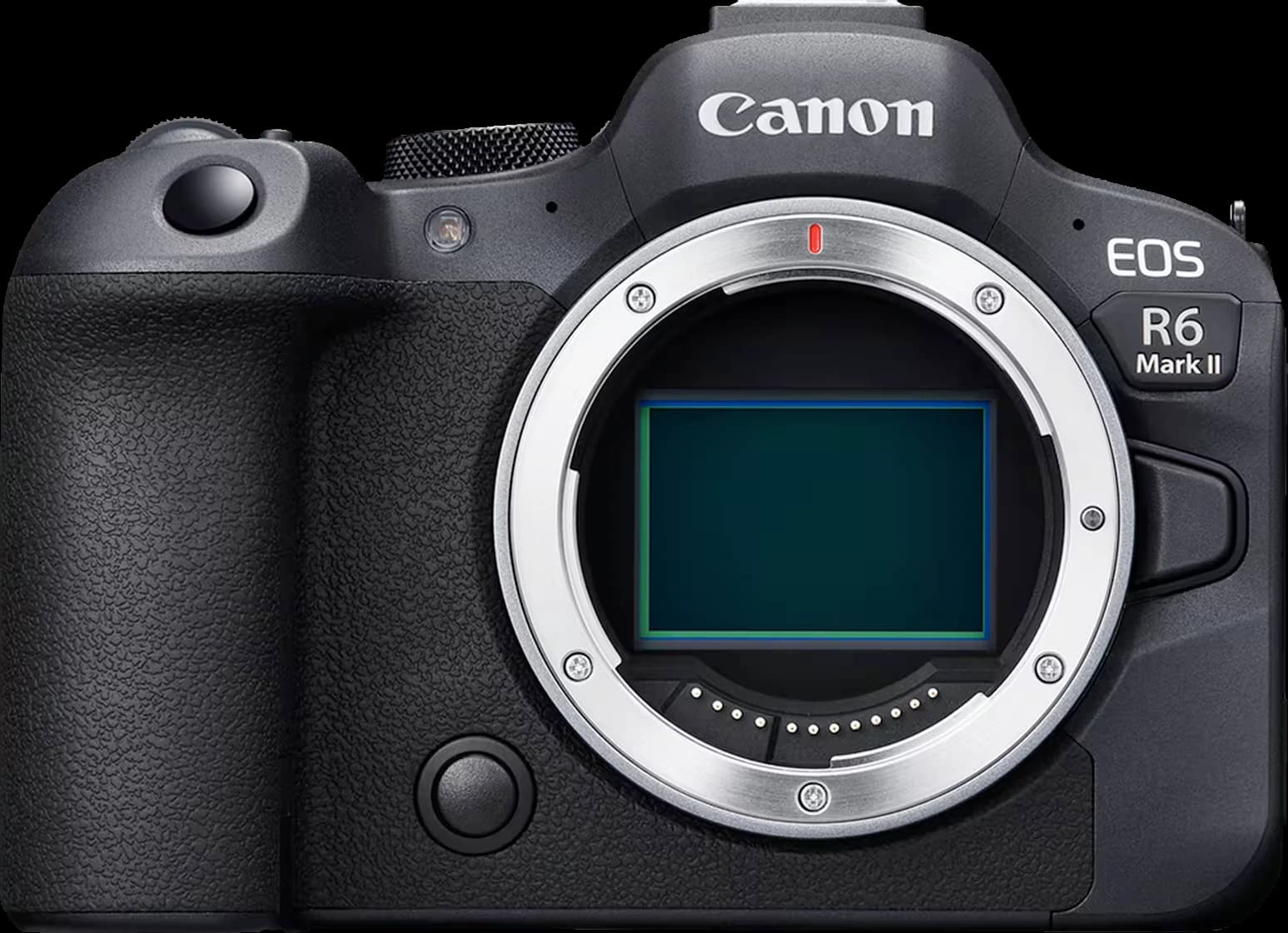
Review Canon EOS R6 Mark II: Still the Right Choice in 2026?
The Canon EOS R6 Mark II remains the most balanced general-purpose hybrid in its class for weddings, portraits and travel, provided you accept a RAW buffer limited to 75 images and video capped at 4K/60p.
Read the review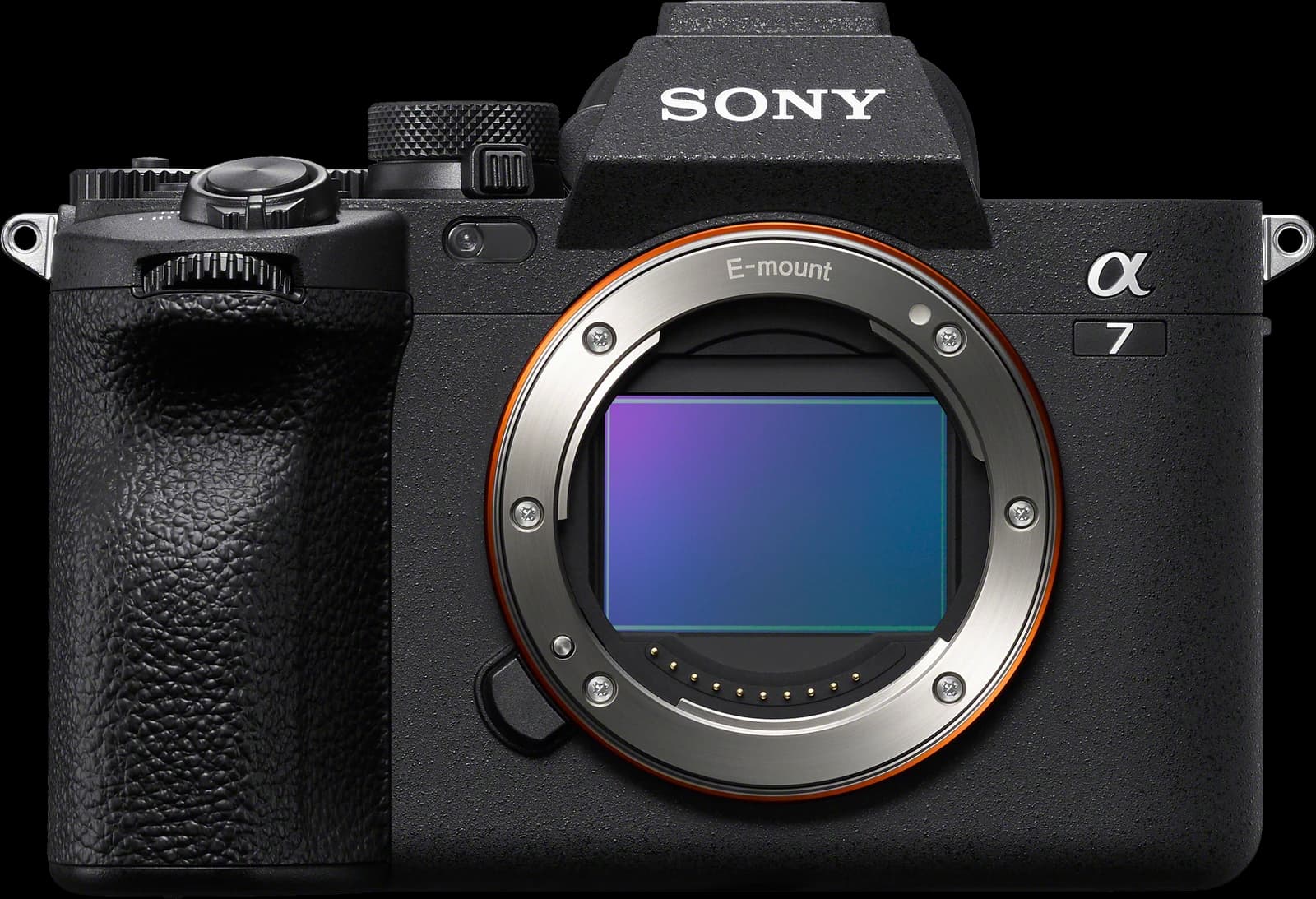
Review: Sony α7 IV – Still the Right Choice in 2026?
Full-frame all-rounder still relevant used for weddings, portraits and occasional video. New, 2023-2024 rivals offer more for the same budget.
Read the review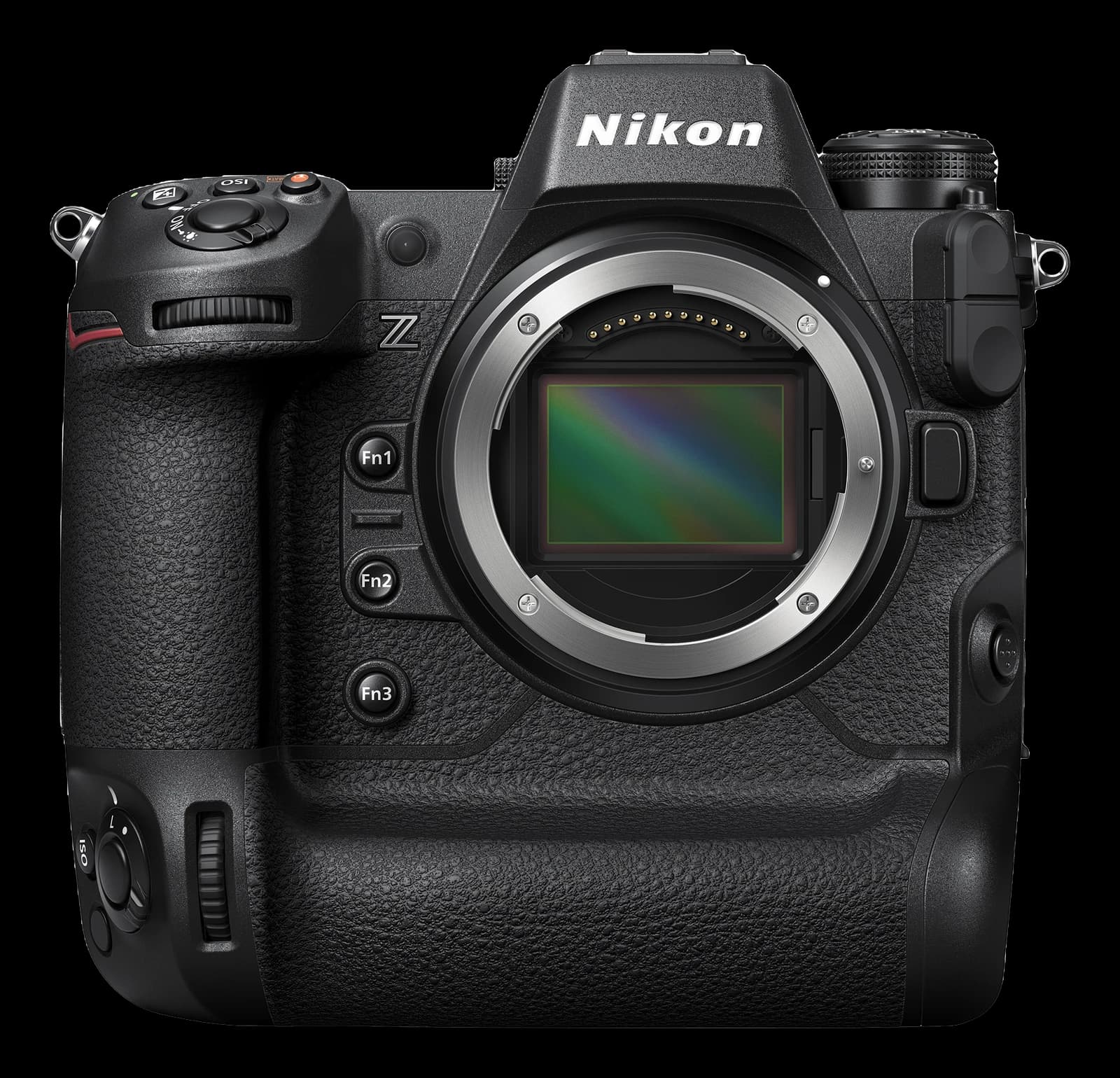
Nikon Z9 Review: Is the Nikon Flagship Still at the Top?
The Nikon Z9 remains a benchmark for professional sport and reportage thanks to its -8.5 EV AF and 1000 RAW buffer, yet the Z8 delivers the essentials for 1999 USD less.
Read the review