Panasonic
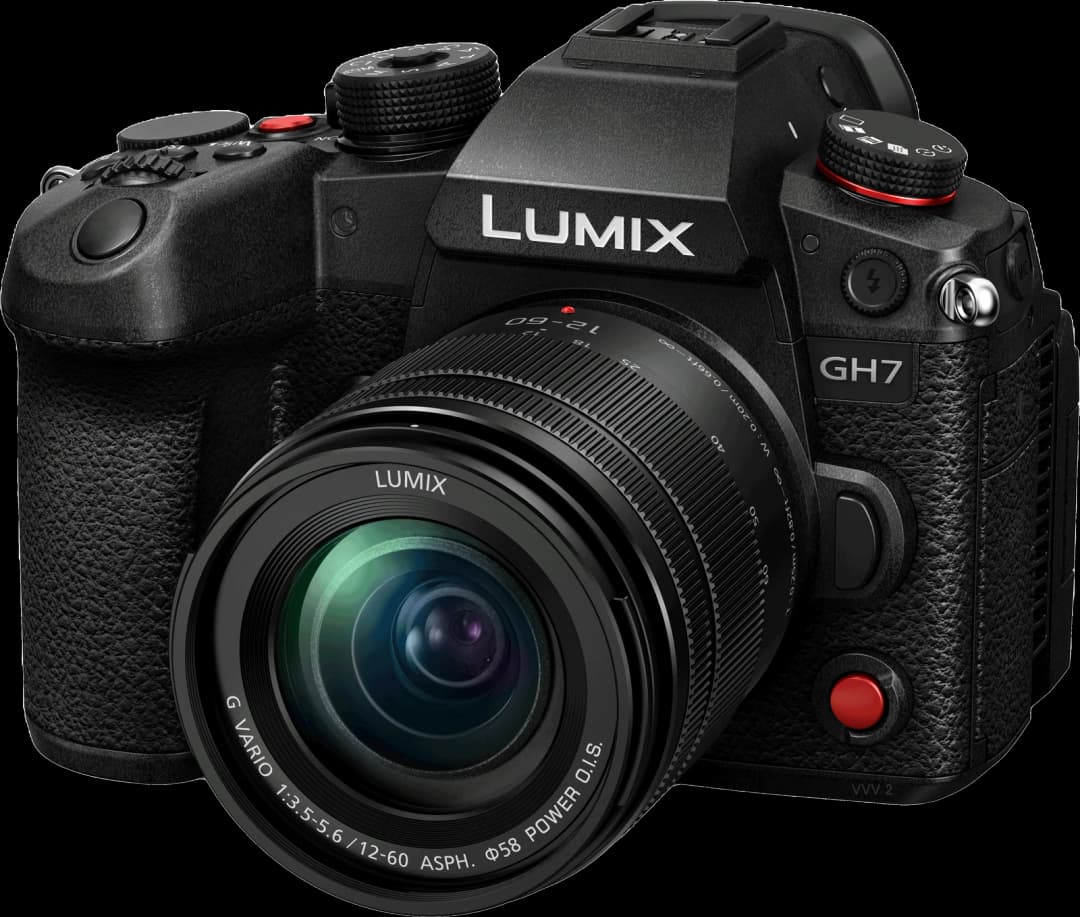
Lumix GH7
2024
Panasonic
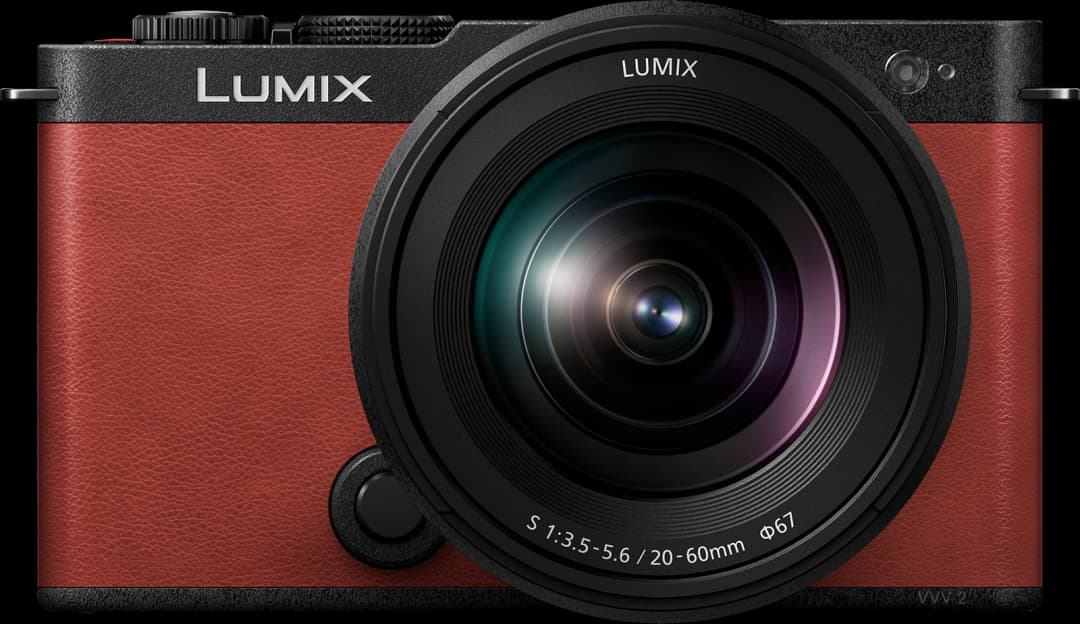
Lumix S9
2024
Panasonic Lumix GH7 vs Lumix S9: which to choose between pro versatility and full-frame compactness?
Visual summary
— Reads in 5 seconds
Panasonic
Lumix GH7
Panasonic
Lumix S9
Where to buy
— Live merchant price comparator
Panasonic Lumix S9

Panasonic Lumix S9, Full Frame Mirrorless Open Gate Vlogging Camera, Olive Green, Body only, 24.2MP, 6K /4K Video, 779 Point PDAF, Image Stabilisation, Free-Angle Screen, 5Ghz WiFi (Renewed)
829 GBP · Amazon UK

You'll find the best prices on the market here, updated daily — and by going through these partner links, you support Camera Duel without paying a cent more.
The arbitration in brief
The GH7 stands out for professional video and demanding reportage; the S9 convinces for travel and low light, but its technical concessions are numerous.
Panasonic released these two bodies the same year, in 2024, at prices and for radically different audiences. The Lumix GH7 launched at 2 199 USD: it is the brand's Micro Four Thirds flagship, designed for demanding videographers and hybrid shooters. The Lumix S9 is priced at 1 499 USD: an ultra-compact full-frame body without a viewfinder that bets on discretion and image quality in difficult light.
These two cameras do not target the same photographer, but they often end up in the same shopping basket. The GH7 appeals with its ProRes video capabilities, 75 fps burst and weather-sealing. The S9 attracts with its BSI-CMOS full-frame sensor, dynamic range measured at 14,4 EV and 486 g weight. The 700 USD price gap at launch complicates the decision: is the S9 a good deal, or too severe a compromise?
This comparison judges on four concrete axes: pure image quality (sensor, dynamic range, low light), video capabilities (codecs, burst, unlimited recording), field robustness (weather-sealing, dual slot, ergonomics) and value for money in 2026, including the used market. You will find a clear verdict at the end, without unnecessary nuance.
Standout strengths
— Where each camera shines
Panasonic
Lumix GH7
Top advantages
- 75 fpsElectronic burst2,5× vs Panasonic Lumix S9
- 300 fpsMax video fps2,5× vs Panasonic Lumix S9
- 800 Mb/sMax bitrate4× vs Panasonic Lumix S9
- 7.5 stopsIBIS rating1,5× vs Panasonic Lumix S9
Panasonic
Lumix S9
Top advantages
- 204 800Extended ISO max8× vs Panasonic Lumix GH7
- 51 200Native ISO max4× vs Panasonic Lumix GH7
- 14.4 EVDynamic range (EV)+41 % vs Panasonic Lumix GH7
- -6 EVAF low light (EV)+2 vs Panasonic Lumix GH7
Detailed spec-by-spec
— Round by round, the eight categories
Sensor
Autofocus
Speed & burst
Video
Stabilisation
Build
Ergonomics & screen
Connectivity & battery
Detailed analysis analysis
— Strengths, trade-offs and ideal user
Panasonic Lumix GH7: what it does well, what it concedes
The GH7 is built around a 25,2-megapixel Micro Four Thirds sensor with dynamic range measured at 10,2 EV. It lags behind full-frame, but remains sufficient for reportage and video where dynamic range is managed in post via V-Log. Native ISO tops out at 12 800, extended to 25 600: in extreme low light the MFT sensor shows its physical limits against full-frame. This is not a deal-breaker for controlled indoor video, but it is a real concession for night reportage.
In video the GH7 has no direct rival in its price range. It records ProRes 422 HQ, ProRes 422, ProRes RAW HQ and ProRes RAW internally, with a maximum bitrate of 800 Mb/s. Electronic burst reaches 75 fps with a 160-image RAW buffer. Electronic shutter speed goes up to 1/32 000 s, useful in bright sun with a fast lens. Recording is unlimited, rolling shutter measured at 5,7 ms remains manageable for most subjects. XLR inputs, 32-bit float audio and genlock/timecode complete a clearly production-oriented profile.
On location the GH7 weighs 805 g bare, which is substantial for MFT. It is weather-sealed, features dual CFexpress Type B and SD UHS-II slots, and carries a 3,68-million-dot EVF with 0,8x magnification. IBIS compensates 7,5 stops. These three points form a block of field reliability the S9 cannot match.
Its strengths in summary:
- 75 fps electronic, 160-image RAW buffer
- Internal ProRes RAW, 800 Mb/s bitrate, unlimited recording
- Weather-sealing, dual CFexpress + SD UHS-II slots
- IBIS 7,5 stops, 3,68 M-dot EVF
The main concession remains sensor size: in uncontrolled low light the GH7 is physically disadvantaged.
For whom
The GH7 is made for the hybrid videographer who works in real conditions: weddings, event reportage, lightweight documentary. It also suits the portrait or stage photographer who needs fast burst and deep buffer. Weather-sealing and dual slots make it a reliable field tool. It is not the body for the minimalist traveller or the urban night photographer: the 805 g weight and ISO limits penalise it in those contexts.
Panasonic Lumix S9: what it does well, what it concedes
The S9 carries a 24,2-megapixel BSI-CMOS full-frame sensor with dynamic range measured at 14,4 EV at 100 ISO. That is 4,2 EV more than the GH7: in practice it delivers markedly better highlight and shadow recovery in post-production. Native ISO reaches 51 200, extended to 204 800. Low-light AF detection goes down to -6 EV, two stops better than the GH7. For travel, natural-light portraiture or night street photography these figures make a measurable difference.
In video the S9 is clearly more limited. It records only H.265 and H.264, with no ProRes or internal RAW. Electronic burst tops out at 30 fps with a 120-image RAW buffer. Video recording is not unlimited: the exact thermal cut-off duration is not published by Panasonic, a grey area to check before purchase. Lack of XLR input, 32-bit float audio and genlock rules it out for professional production.
The S9's main argument is its size: 486 g, 126 x 73,9 x 46,7 mm, no viewfinder. It disappears into a travel bag. But this compactness comes at a cost: no weather-sealing, single SD UHS-II slot, fragile Micro HDMI (Type D) under heavy use, and IBIS limited to 5 stops. CIPA battery life is 470 shots, slightly better than the GH7.
Its strengths in summary:
- 14,4 EV dynamic range, native ISO 51 200, AF at -6 EV
- 486 g weight, ultra-compact body without viewfinder
- BSI-CMOS full-frame sensor, superior low-light rendering
- 470-shot CIPA battery life
The deal-breakers are real: no weather-sealing, single SD UHS-II slot, no ProRes, limited video recording. For pure travel photography these concessions are acceptable. For intensive hybrid use they are not.
For whom
The S9 suits the travel photographer who prioritises discretion and image quality in natural or difficult light. It fits ambient-light portraiture, night street photography and lightweight reportage where weight matters. It does not suit the professional videographer, nor the photographer who works in rain or extreme conditions. The lack of a viewfinder is a genuine friction point for anyone who regularly works in bright sunlight.
Our verdict
Which one to buy, and why
The camera-duel.com algorithmic score sums up the situation well: Photo 7,1 / Video 8,4 for the GH7 versus Photo 6,1 / Video 6,9 for the S9. The GH7 dominates on almost every technical axis. But that is not the right lens for the decision.
The S9 wins on one truly important round: the sensor. 14,4 EV dynamic range versus 10,2 EV, native ISO 51 200 versus 12 800, AF at -6 EV versus -4 EV. For pure photography in difficult light the S9's BSI-CMOS full-frame sensor produces files the GH7 cannot physically match. If your main use is travel, street or natural-light portrait photography, the S9 is the right choice despite its concessions.
But those concessions are severe:
- No weather-sealing on a travel body: deal-breaker for any humid or dusty destination.
- Single SD UHS-II slot: risk in production, no redundancy.
- Limited video recording, no ProRes, no XLR: the S9 is a poor choice for professional video.
- No viewfinder: real problem in bright outdoor conditions.
For weddings, event reportage, documentary video or any intensive hybrid use, the GH7 has no serious rival at this price. Its 75 fps, internal ProRes RAW at 800 Mb/s, unlimited recording, weather-sealing and dual slots make it a complete production tool. The 700 USD launch premium is justified line by line.
In 2026 both bodies appear on the used market at attractive prices. The GH7 trades around 1 500 to 1 700 USD used, the S9 around 900 to 1 100 USD. At these levels the S9 becomes a very competitive full-frame entry for the travel photographer who accepts its limits. Used GH7 remains the best value for the hybrid videographer under 2 000 USD.
Final verdict: choose the GH7 if you do video, weddings or reportage. Choose the S9 only if your use is mainly photography, light travel, and you accept the lack of weather-sealing and viewfinder.
Frequently asked questions
Before you buy, the questions we get
Which to choose for weddings?
The GH7 without hesitation. The 75 fps burst with a 160-image RAW buffer covers decisive moments. Unlimited ProRes 422 HQ video recording and 32-bit float audio allow uninterrupted coverage of the ceremony without monitoring audio levels. Weather-sealing protects the body during outdoor weddings. The S9, without viewfinder, weather-sealing or unlimited video recording, is not sized for this use.
Is the S9 really usable for video despite the lack of ProRes?
For personal or semi-professional use, the S9's 10-bit H.265 4K is sufficient. But the maximum bitrate of 200 Mb/s versus 800 Mb/s on the GH7 reduces grading headroom. The absence of internal ProRes RAW, XLR, 32-bit float audio and genlock/timecode rules the S9 out for any professional production. Non-unlimited recording is an additional undocumented constraint. For serious video the GH7 is the only choice between the two.
Is the lack of a viewfinder on the S9 really annoying in daily use?
Yes, in two specific situations. In bright sun the 1,84-million-dot screen becomes hard to read, making focus and exposure checks unreliable. For fast photography the lack of a viewfinder forces arm's-length shooting, which degrades stability and the 5-stop IBIS does not fully compensate. For indoor or soft-light use the missing viewfinder is acceptable. For versatile outdoor use it is a real concession.
Does the GH7's MFT format really penalise image quality against the S9's full-frame sensor?
On measured data, yes. The S9's dynamic range is 14,4 EV versus 10,2 EV for the GH7, a 4,2 EV gap. The S9's native ISO reaches 51 200 versus 12 800 for the GH7. In practice this translates to markedly better shadow and highlight recovery in RAW and lower noise at high sensitivities. For video in controlled or studio conditions the gap is less perceptible. For photography in difficult natural light the S9 produces objectively more usable files.
Is the 700 USD launch gap justified in favour of the GH7?
For professional video or hybrid use, yes. Internal ProRes RAW, unlimited recording, XLR inputs, 32-bit float audio, dual CFexpress slot and weather-sealing are functions you cannot add to the S9 with accessories. For pure travel photography, no: the S9 offers a full-frame sensor with 14,4 EV dynamic range for 700 USD less, which is hard to beat in this range. In 2026 the used market reduces the gap to roughly 600 USD, which does not fundamentally change the arbitration.