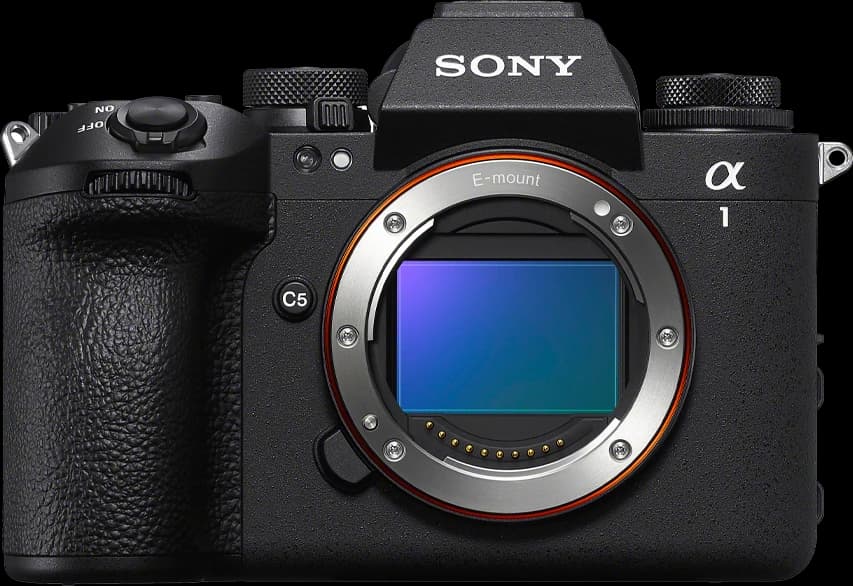
Sony
α1 II
2024
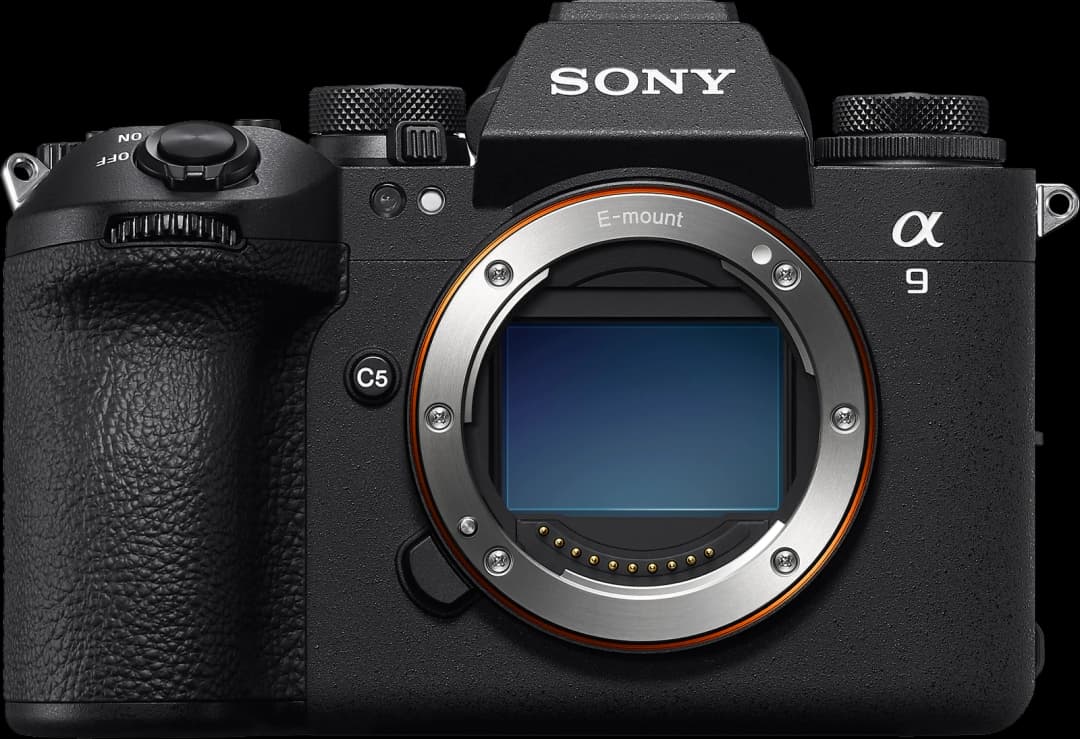
Sony
α9 III
2023
Sony α1 II vs Sony α9 III: 50 MP Versatility vs Pure 120 fps Speed
Visual summary
— Reads in 5 seconds
Sony
α1 II
Sony
α9 III
Where to buy
— Live merchant price comparator
Sony α1 II

Sony a1 II 8K Mirrorless Camera
5 699 GBP · Clifton Cameras


You'll find the best prices on the market here, updated daily — and by going through these partner links, you support Camera Duel without paying a cent more.
The arbitration in brief
The α1 II is the best choice for the majority of hybrid photographers; the α9 III only comes into its own if 120 fps burst rate is your absolute priority.
Two full-frame Sony bodies, two opposing philosophies. The α1 II, released in 2024, is the flagship of the Sony Alpha range: 50.1 MP, 8K video, 8.5-stop IBIS, all in a weather-sealed body at 6 499 USD. The α9 III, launched in 2023, is the first full-frame camera with a global shutter: 24.6 MP, electronic burst at 120 fps, shutter speeds up to 1/80 000 s, at 5 999 USD. The price gap is 500 USD. It is real, but it is not the only factor to consider.
Both cameras share the same E-mount, identical ergonomics to the millimetre (136.1 x 96.9 x 82.9 mm), the same 9.44-million-dot EVF, and dual CFexpress Type A and SD UHS-II slots. On paper they appear interchangeable. In practice, their sensors destine them to radically different uses.
The α1 II targets the hybrid photographer who refuses to choose between resolution, video and speed. The α9 III targets the ultra-fast action specialist for whom rolling shutter is an absolute deal-breaker and 120 fps is an operational necessity. This comparison weighs these two positions with the numbers, without compromise.
Standout strengths
— Where each camera shines
Sony
α1 II
Top advantages
- 50.1 MPMegapixels2× vs Sony α9 III
- 102 400Extended ISO max2× vs Sony α9 III
- 100Native ISO min2,5× vs Sony α9 III
- 32 000Native ISO max+25 % vs Sony α9 III
Sony
α9 III
Top advantages
- 120 fpsElectronic burst4× vs Sony α1 II
- -5 EVAF low light (EV)+1 vs Sony α1 II
- 1/80000Max shutter speedvs 1/32000
- 702 gWeight+6 % vs Sony α1 II
Detailed spec-by-spec
— Round by round, the eight categories
Sensor
Autofocus
Speed & burst
Video
Stabilisation
Build
Ergonomics & screen
Connectivity & battery
Detailed analysis analysis
— Strengths, trade-offs and ideal user
Sony α1 II: what it does well, what it concedes
The α1 II is built around a 50.1 MP Exmor RS CMOS sensor. That is 25.5 MP more than the α9 III. In practice this means larger RAW files, but also unmatched cropping latitude and enough resolution for prints over one metre without interpolation. Measured dynamic range reaches 11.6 EV, versus 10 EV on the α9 III. The 1.6 EV gap is noticeable in highlights under high-contrast light, landscapes or outdoor portraits.
Native ISO starts at 100 and reaches 32 000, with an extension to 102 400. The α9 III starts at 250 native. This higher floor is a real constraint in flash studio work or long exposures. The α1 II’s electronic burst tops out at 30 fps with a 165-image RAW buffer, against 120 fps and 82 images for the α9 III. The deeper buffer partially offsets the lower frame rate on extended sequences.
Its strengths are:
- 50.1 MP for large-format printing and aggressive cropping.
- 11.6 EV measured dynamic range, 1.6 EV ahead of the α9 III.
- 8K internal video with 8.5-stop IBIS and unlimited recording.
- Minimum native ISO 100, useful in flash studio or long-exposure work.
- 165-image RAW buffer, double that of the α9 III.
The main concession is the lack of global shutter. The α1 II retains a sequential-read sensor, which produces rolling shutter in fast video or electronic burst with very rapid lateral subject movement. This is not a deal-breaker for portrait, wedding or landscape work. It is for motorsport or high-speed flash stroboscopy.
For whom
The α1 II suits the professional hybrid photographer who covers varied subjects in a single working day. Studio portrait in the morning, outdoor reportage in the afternoon, corporate video in the evening. The 50.1 MP resolution satisfies clients ordering large prints. 8K video with S-Log3 and unlimited recording meets demanding production briefs. 8.5-stop IBIS secures handheld shooting in low light. This body is also relevant for the travel photographer who wants one camera to cover everything without image-quality compromise.
Sony α9 III: what it does well, what it concedes
The α9 III is the first full-frame camera with a global shutter available on the market. This architecture eliminates rolling shutter: sensor readout time is 0 ms. In practice, aeroplane propellers stay straight, studio flashes sync at 1/80 000 s without banding, and ultra-fast lateral subjects are rendered without geometric distortion. This is a genuine technological breakthrough, not a marketing claim.
Electronic burst reaches 120 fps with continuous AF and AE. That is four times the rate of the α1 II. The buffer holds 82 RAW images, less than 0.7 seconds at full speed. This limit is a deal-breaker for long sequences. Low-light AF reaches -5 EV, 1 EV better than the α1 II. In the field this translates to more reliable acquisition in near-darkness.
Its strengths are:
- 120 fps electronic burst, global shutter, zero rolling shutter.
- Shutter speeds up to 1/80 000 s, full flash sync.
- Low-light AF at -5 EV, 1 EV better than the α1 II.
- 702 g, 41 g lighter than the α1 II.
- CIPA battery life of 530 shots, slightly higher.
The concessions are significant. 24.6 MP limits cropping. 10 EV dynamic range is 1.6 EV behind the α1 II. Minimum native ISO is 250, complicating wide-aperture flash studio use. Video is capped at 4K, with no 8K option. For a 5 999 USD body, this video limitation is noticeable against the α1 II.
For whom
The α9 III is made for the movement specialist. Professional sports photographer, press photographer covering high-kinetic events, wildlife photographer working with fast-flying species. The 120 fps burst and global shutter are its two exclusive arguments. If your workflow includes high-speed studio flash or stroboscopy, this is the only full-frame Sony body that meets the need without compromise. Outside these specific uses, its concessions on resolution, dynamic range and video make it less versatile than the α1 II at 500 USD more.
Our verdict
Which one to buy, and why
The α1 II wins this duel on five of the eight categories analysed (sensor, stabilisation, and tied on speed, video and build). The α9 III prevails on low-light AF, weight and battery life, but these advantages are marginal against the gaps in resolution and dynamic range.
The deal-breakers are clear. If you need global shutter, flash sync at 1/80 000 s or 120 fps burst, the α9 III is the only possible choice. No other full-frame Sony body offers these three features simultaneously. If you do not have that specific need, the α1 II is superior on every other criterion that matters:
- 50.1 MP versus 24.6 MP, giving unmatched cropping latitude.
- 11.6 EV dynamic range versus 10 EV, noticeable in contrasty light.
- 8K video versus 4K, with 8.5-stop IBIS versus 8 stops.
- Minimum native ISO 100 versus 250, useful in studio or long-exposure work.
On value for money, the α1 II costs 500 USD more. This gap is justified by resolution, dynamic range and 8K video. The α9 III is now available used for under 4 500 USD in good condition. At that price it becomes interesting for the sports photographer who does not need high resolution and refuses to pay full price for features they will not use.
My clear verdict: choose the α1 II. It covers 90 % of professional uses with superior image quality. The α9 III is a remarkable niche tool, but its niche is precisely defined. If you are not certain you need global shutter or 120 fps, you probably do not. The α1 II is the body that will age better in versatile use, and its 50.1 MP resolution gives it commercial longevity that the 24.6 MP of the α9 III lacks.
Frequently asked questions
Before you buy, the questions we get
Which should I choose for wedding photography?
The α1 II is the logical choice for weddings. Its 50.1 MP allows aggressive cropping on fleeting moments without quality loss. Its 11.6 EV dynamic range handles mixed scenes (dark interiors, bright windows) better. 8.5-stop IBIS secures handheld shots in low reception light. The α9 III brings nothing decisive to this type of event: 120 fps is superfluous for weddings, and its 24.6 MP limits post-production cropping. The α1 II is the right tool here.
Does the α9 III catch up with the α1 II in sports thanks to 120 fps?
For motorsport (cars, cycling, aviation), the α9 III is superior thanks to global shutter and 120 fps. For human sports (athletics, football, basketball), the difference is less clear-cut. The α1 II at 30 fps with a 165-image RAW buffer covers the majority of action sequences. The α9 III’s low-light AF at -5 EV versus -4 EV on the α1 II is a real advantage in poorly lit stadiums. Overall, the α9 III is specialised, the α1 II is versatile. If sport is your only use, the α9 III wins. Otherwise, the α1 II is sufficient.
Should I be swayed by the α1 II’s 8K video if I deliver in 4K?
Yes, within reason. Shooting 8K for 4K delivery provides cropping and digital stabilisation headroom in post-production without final quality loss. It also future-proofs archives for higher-resolution deliveries. The α1 II produces 8K in 10-bit with S-Log3 and unlimited recording. The α9 III is limited to 4K. If video forms a significant part of your work, this gap alone justifies part of the 500 USD premium.
Does the 500 USD gap between the two bodies justify itself?
Yes, if you use the resolution and video. The α1 II offers 50.1 MP versus 24.6 MP, double the resolution, plus 1.6 EV extra dynamic range and 8K video. These three points have direct commercial value for a professional photographer. If you are a pure sports or press photographer who never prints large and does no video, the α9 III at 5 999 USD (or less used) is sufficient. In all other cases, the extra 500 USD for the α1 II is justified by the specifications.
Which body will age better over the next five years?
The α1 II will age better. Its 50.1 MP resolution anticipates growing client demands for large prints and cropping. Its 8K video positions it for future deliveries without re-shooting. The α9 III, despite its global shutter, remains limited to 24.6 MP and 4K. These two ceilings will become constraints as delivery standards evolve. The α9 III will stay relevant for sports and press work, but its niche positioning makes it less adaptable to changing market demands.