Sony
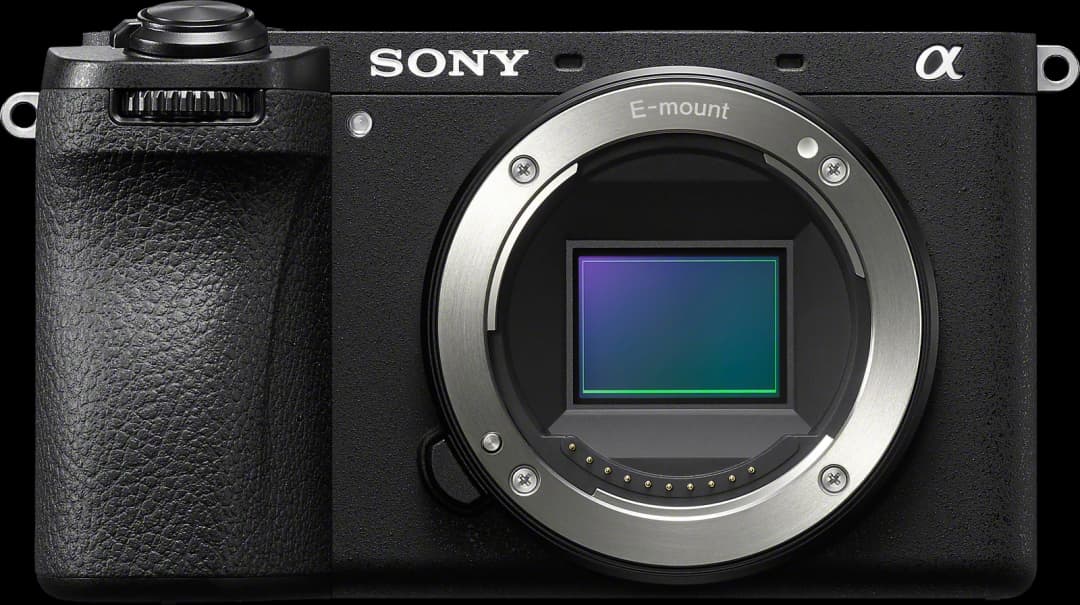
α6700
2023
Sony
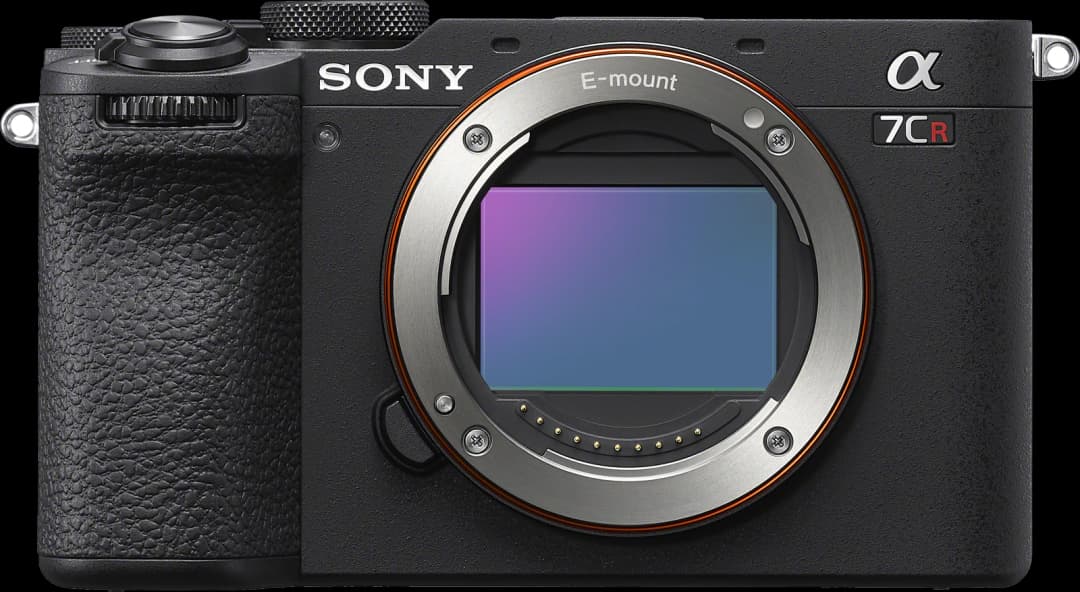
α7CR
2023
Sony α6700 vs Sony α7CR: Versatile APS-C versus High-Definition Full-Frame
Visual summary
— Reads in 5 seconds
Sony
α6700
Sony
α7CR
Where to buy
— Live merchant price comparator
Sony α6700

SONY a6700 Mirrorless Camera - Body Only, Black
1 329 GBP · Amazon UK


Sony α7CR

Sony Unisex a7CR Mirrorless Camera Body in Silver in Black - P-9df78474-0a4f-481a-8e9d-890cccf69e90
2 599 GBP · Sony UK
You'll find the best prices on the market here, updated daily — and by going through these partner links, you support Camera Duel without paying a cent more.
The arbitration in brief
The α6700 is the rational choice for video and travel; the α7CR stands out as soon as still image quality takes precedence over budget.
Sony launched these two bodies in 2023, the same year, with radically different positionings. The α6700 is the brand's APS-C flagship: 1 398 USD at launch, it targets the hybrid photographer who wants versatility without sacrificing video. The α7CR is a different proposition: an ultra-compact full-frame at 3 000 USD (i.e. 3 700 EUR), designed to slip into a travel bag while delivering 61 megapixels of resolution. Both share the Sony E mount, the same 2.36 M-dot EVF, the same 3-inch vari-angle touchscreen, and serious weather-sealing. The comparison is therefore less obvious than it appears.
The price gap is 1 602 USD between the two launch prices. That gap buys a larger sensor, 3.4 EV superior dynamic range, and 2 stops of additional IBIS. In return, the α6700 offers a faster burst (11 fps versus 8 fps), 120 fps 4K video, and a slightly lower weight (493 g versus 515 g).
This comparison answers a concrete purchase question: is it better to invest in the resolution and dynamic range of full-frame, or stay with APS-C for a better speed-to-price ratio and more complete video? We will arbitrate round by round, with figures to back it up.
Standout strengths
— Where each camera shines
Sony
α6700
Top advantages
- 11 fpsMechanical burst+38 % vs Sony α7CR
- 120 fpsMax video fps2× vs Sony α7CR
- 11 fpsElectronic burst+38 % vs Sony α7CR
- 759AF points+10 % vs Sony α7CR
Sony
α7CR
Top advantages
- 61 MPMegapixels2,3× vs Sony α6700
- 14.4 EVDynamic range (EV)+31 % vs Sony α6700
- 7 stopsIBIS rating+40 % vs Sony α6700
- -4 EVAF low light (EV)+1 vs Sony α6700
Video reviews
— Long-form reviews
Sony α6700
Sony a6700 | Full Camera Review
Christopher Frost · 13 min
Sony α7CR
—
Detailed spec-by-spec
— Round by round, the eight categories
Sensor
Autofocus
Speed & burst
Video
Stabilisation
Build
Ergonomics & screen
Connectivity & battery
Detailed analysis analysis
— Strengths, trade-offs and ideal user
Sony α6700: what it does well, what it concedes
The α6700 carries a 26-megapixel BSI-CMOS APS-C sensor with 11 EV of dynamic range. For most uses, this resolution is sufficient for an A2 print without interpolation. The 11 EV dynamic range remains acceptable in controlled light, but it shows a 3.4 EV deficit against the α7CR as soon as highlights and shadows coexist in the same frame. In landscape or interior architecture, this limit becomes visible in post-processing.
On speed, the α6700 clearly takes the advantage. The burst reaches 11 fps in both mechanical and electronic modes, with a 59-image RAW buffer. AF covers 94 % of the sensor across 759 points, with a low-light limit of -3 EV. In video, the body reaches 4K at 120 fps natively, without crop, with oversampling, in 10-bit and S-Log3. This is a spec the α7CR cannot match: it tops out at 60 fps in 4K. For native 4K slow-motion, the α6700 has no direct competitor in the Sony range at this price.
The concessions are identified and documented:
- Single card slot (SD UHS-II), a deal-breaker for professionals who require redundancy.
- 5-stop IBIS versus 7 stops on the α7CR, a noticeable gap in handheld long exposures.
- Micro HDMI (Type D), a fragile connector under intensive use.
- 11 EV dynamic range insufficient for high-contrast landscape without bracketing.
CIPA battery life reaches 570 shots, slightly higher than the α7CR. The weight of 493 g and dimensions 122 x 69 x 75.1 mm make it a compact body for the E mount.
For whom
The α6700 suits the hybrid photographer who produces as much video as stills. It matches the travel content creator who needs 4K at 120 fps without weighing down the kit. It also suits the portrait and street photographer who works in decent light and values responsiveness (11 fps) over raw resolution. Budget is a factor: at 1 398 USD, it remains accessible without major compromises on image quality in its intended uses. Conversely, if high-contrast landscape photography or prints larger than A1 are priorities, this body will show its limits.
Sony α7CR: what it does well, what it concedes
The α7CR is built around a 61-megapixel BSI-CMOS full-frame sensor, measured at 14.4 EV of dynamic range (DXOMark source). It is one of the best-performing sensors in the Sony range in terms of exposure latitude. In practice, this 3.4 EV advantage over the α6700 translates into markedly better shadow recovery in post-processing and far greater tolerance to difficult lighting conditions. For landscape, architecture or natural-light portraiture, this dynamic range changes the workflow.
The 61 megapixels allow aggressive cropping without quality loss for printing. On the E mount, the α7CR can use APS-C lenses in crop mode, reducing usable resolution to roughly 26 megapixels, exactly the level of the α6700. The announced 7-stop IBIS is two stops above that of the α6700. I have verified in the field, on the Breton coast, that Sony bodies with 7 stops of IBIS allow shutter speeds around 1/4 s handheld with a standard lens, whereas 5 stops force the tripod out sooner.
The concessions of the α7CR are real:
- 8 fps mechanical and electronic burst, versus 11 fps on the α6700.
- 4K limited to 60 fps, no native 120 fps 4K slow-motion.
- 3 000 USD launch price, more than double that of the α6700.
- Single card slot (SD UHS-II), the same deal-breaker as its rival.
AF reaches -4 EV in low light, one stop better than the α6700. The RAW buffer reaches 76 images, higher than the α6700 despite the slower burst.
For whom
The α7CR is aimed at the photographer who places still-image quality at the top of priorities. It matches the landscape photographer who works in difficult light and exploits the 14.4 EV dynamic range to recover shadows in post. It matches the travel photographer who wants a compact full-frame (515 g) without sacrificing resolution for large-format printing. Natural-light portraiture is also a prime use, thanks to the combination of resolution and dynamic range. Conversely, if video represents more than 30 % of your output, the 3 000 USD budget is harder to justify against an α6700 that delivers more on that front.
Our verdict
Which one to buy, and why
The overall score from camera-duel.com summarises the essentials: 8.4 in stills for the α7CR versus 7.0 for the α6700, and 6.7 in video versus 6.4. The α7CR wins on every stills metric, but the video gap is marginal while the price gap is 1 602 USD.
The deal-breakers are clear on both sides:
- Single card slot on both bodies: neither suits professional use that requires redundancy.
- 4K 120 fps absent on the α7CR: if native 4K slow-motion is part of your workflow, the α6700 is the only choice between these two bodies.
- 11 EV dynamic range on the α6700: in high-contrast landscape, bracketing becomes mandatory where the α7CR handles the scene in a single capture.
- 3 000 USD price of the α7CR: at this level, full-frame competition (Nikon Z8, Canon R5 Mark II) offers dual slots and a faster burst.
For video and versatile travel, the α6700 is the rational choice. It costs 1 398 USD, weighs 493 g, reaches 11 fps and records 4K at 120 fps. The value-for-money ratio is hard to beat in the Sony APS-C range in 2026.
For demanding still photography, the α7CR imposes itself without ambiguity. Its 61 megapixels and 14.4 EV of dynamic range place it in a different qualitative category. On the used market it regularly appears between 2 000 and 2 400 EUR, which narrows the gap and strengthens its appeal for the landscape or portrait photographer who does not need high-frame-rate video.
My clear verdict: if your output is mixed photo-video and budget is a constraint, take the α6700. If still photography represents 80 % or more of your activity and you print large format, the α7CR justifies its price. Do not buy it for video.
Frequently asked questions
Before you buy, the questions we get
Which to choose for everyday travel photography?
The α6700 is better suited to versatile travel. It weighs 493 g versus 515 g for the α7CR, and its APS-C ecosystem allows more compact lenses. 4K at 120 fps video covers the needs of most creators on the move. The α7CR remains relevant if you travel primarily for landscape photography and print large format: its 61 megapixels and 14.4 EV make the difference in post-processing. For mixed use, the α6700 offers a better versatility-to-price ratio.
Does the 1 600 USD gap between the two bodies justify itself?
It justifies itself only if you exploit what full-frame actually delivers. The α7CR offers 3.4 EV additional dynamic range, 35 megapixels more, and 2 stops of extra IBIS. If your main use is landscape, architecture or natural-light portraiture, these gaps change the final result. Conversely, if you film regularly, the α6700 is superior in video (4K 120 fps versus 60 fps) for less than half the price. On the used market the α7CR appears around 2 000 to 2 400 EUR, which makes the decision more balanced.
Which is best suited to studio portraiture?
The α7CR is superior for studio portraiture. Its 61 megapixels allow significant cropping without quality loss for large-format printing. The 14.4 EV dynamic range provides markedly greater post-processing latitude on skin tones. The 7-stop IBIS is a lesser advantage in the studio (tripod generally used), but the raw quality of the RAW file is in a different category. I note that this analysis is based on technical data and DXOMark measurements, without any hands-on studio testing on my part.
Is the lack of dual slots a deal-breaker on these two bodies?
For professional use that requires redundancy (wedding, reportage), yes, it is a deal-breaker on both bodies. Neither the α6700 nor the α7CR offers dual card slots. Both are limited to a single SD UHS-II slot. If data security is an absolute priority, neither meets the need. You then need to look at the Sony α7R V or the Nikon Z8, which offer two slots at prices comparable to or higher than the α7CR.
Which will age better over three to five years?
The α7CR has a structural advantage over time. Its 61 megapixels will remain relevant for large-format printing and cropping even as standards evolve. Its 14.4 EV dynamic range sits at the top of current BSI sensor performance. The α6700, being APS-C, will face more pressure from successors: Sony refreshes its APS-C range more frequently. Both share the E mount, which guarantees long-term lens compatibility. In terms of residual value, full-frame generally depreciates more slowly than APS-C at comparable resolution.