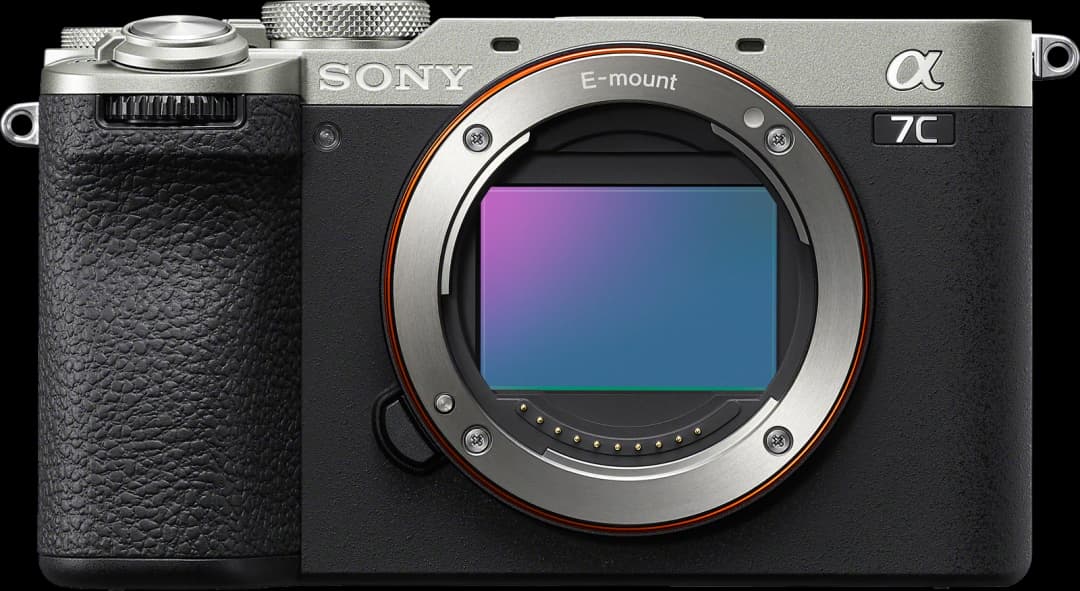
Sony
α7C II
2023
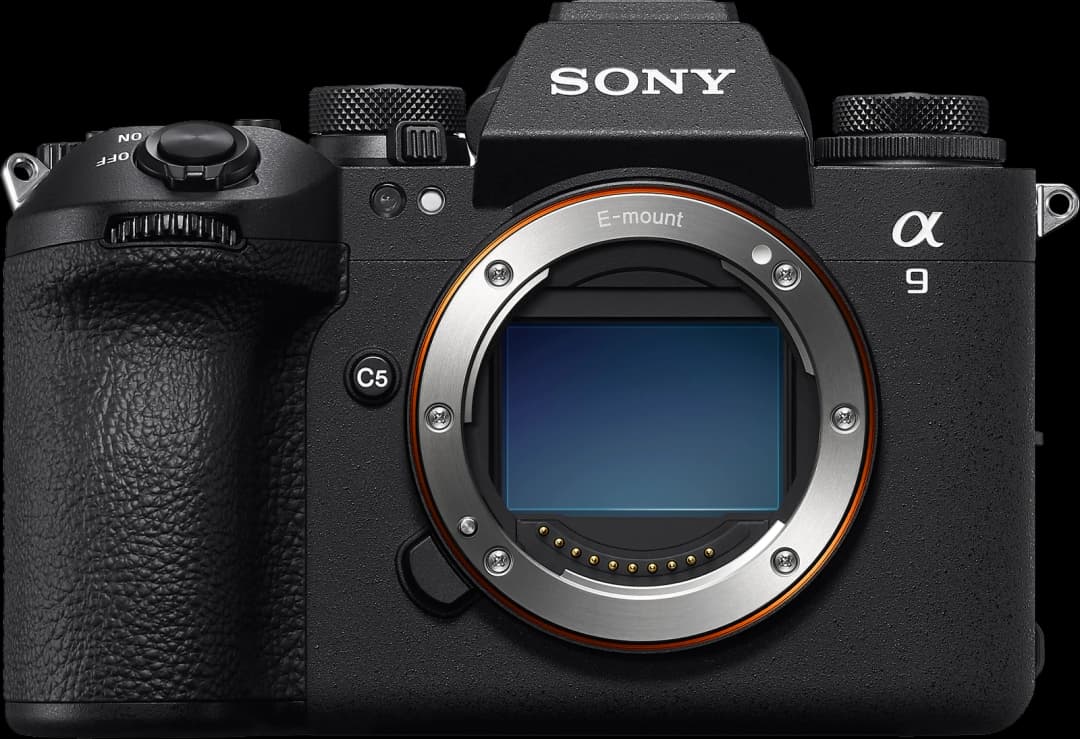
Sony
α9 III
2023
Sony α7C II vs Sony α9 III: when versatility faces pure speed
Visual summary
— Reads in 5 seconds
Sony
α7C II
Sony
α9 III
Where to buy
— Live merchant price comparator

You'll find the best prices on the market here, updated daily — and by going through these partner links, you support Camera Duel without paying a cent more.
The arbitration in brief
The α7C II is the rational choice for 80% of photographers; the α9 III is only justified if 120 fps burst and global shutter are absolute imperatives.
These two bodies share the same Sony E mount, the same release year (2023) and identical weather-sealing. The resemblance stops there. The α7C II is a compact full-frame hybrid, launched at 2 200 USD, designed for the versatile photographer who wants resolution, lightness and polished video in a travel-friendly package. The α9 III is a professional sports and reportage machine, launched at 5 999 USD, 3 799 USD more, built around a groundbreaking sensor technology: the global shutter.
The price gap is the first trade-off. It represents the cost of a second complete body, a mid-range telephoto or a year of professional cloud storage. This difference must be justified by precise photographic needs, not by the prestige of the range.
The α7C II targets the travel photographer, the independent portraitist and the versatile videographer. It bets on 33 megapixels, 11.7 EV of measured dynamic range, and a contained weight of 514 g. The α9 III targets the sports photographer, the photojournalist and the videographer who demands fluid motion. Its central argument is an electronic burst at 120 fps without rolling-shutter distortion, thanks to a stacked global-readout sensor.
This comparison settles four concrete questions: does the α7C II sensor compensate for its lower price? Does the α9 III burst justify its premium? Which performs better in hybrid video? And which will age better in everyday use in 2026?
Standout strengths
— Where each camera shines
Sony
α7C II
Top advantages
- 204 800Extended ISO max4× vs Sony α9 III
- 51 200Native ISO max2× vs Sony α9 III
- 33 MPMegapixels+34 % vs Sony α9 III
- 100Native ISO min2,5× vs Sony α9 III
Sony
α9 III
Top advantages
- 120 fpsElectronic burst12× vs Sony α7C II
- 120 fpsMax video fps2× vs Sony α7C II
- 82RAW buffer1,9× vs Sony α7C II
- -5 EVAF low light (EV)+1 vs Sony α7C II
Detailed spec-by-spec
— Round by round, the eight categories
Sensor
Autofocus
Speed & burst
Video
Stabilisation
Build
Ergonomics & screen
Connectivity & battery
Detailed analysis analysis
— Strengths, trade-offs and ideal user
Sony α7C II: what it does well, what it concedes
The BSI-CMOS 33-megapixel sensor of the α7C II is its strongest argument. Measured dynamic range reaches 11.7 EV at 100 ISO (DXOMark source), i.e. 1.7 EV more than the α9 III. In practice this means more latitude in post-processing on highlights and shadows, a direct advantage for landscape, architecture and high-contrast portraiture. Native ISO starts at 100, versus 250 on the α9 III, preserving dynamic range in the brightest conditions.
Autofocus covers 94 % of the sensor with 759 points, including human and animal eye detection. Low-light AF sensitivity reaches -4 EV, sufficient for most reportage and indoor portrait situations. IBIS stabilisation compensates 7 stops, manufacturer rating, allowing very slow handheld shutter speeds. All of this fits in a body weighing 514 g and measuring 124 x 71 x 63 mm, genuinely compact for full-frame.
The concessions are real and must be weighed:
- Single SD UHS-II slot: no redundancy, a deal-breaker for professional assignments where data loss is unacceptable.
- Electronic burst capped at 10 fps: insufficient for sport or fast wildlife.
- RAW buffer limited to 44 images: the sequence stops quickly in sustained bursts.
- 2.36 M-dot EVF: legible, but clearly behind current pro standards.
In video the α7C II records 4K/60p 10-bit with S-Log3, HLG and S-Cinetone, with no recording limit. Rolling shutter was not measured in the available data, which is a limitation of this analysis. The Micro HDMI (Type D) port is a constraint for professional video rigs.
For whom
The α7C II suits the photographer who covers several disciplines without specialising in sport or fast wildlife. The traveller who wants full-frame in a light backpack, the independent portraitist working in natural light and simple studio setups, the hybrid videographer producing content for brands or short documentaries. It is also an excellent second body for a professional whose main camera is an α9 III or an α1. Its resolution-weight-price ratio is hard to beat in the Sony range in 2026.
Sony α9 III: what it does well, what it concedes
The α9 III is built around a stacked CMOS global-readout sensor, the first of its kind on a mainstream full-frame camera at launch. The direct consequence is a maximum electronic shutter speed of 1/80 000 s and a measured rolling shutter of 0 ms. In practice this eliminates distortion on fast-moving subjects, studio flashes and variable-frequency lighting. For sport, artificial-light weddings and photojournalism it is a structural advantage.
Electronic burst reaches 120 fps with a RAW buffer of 82 images, almost double that of the α7C II. Low-light AF reaches -5 EV, one stop behind the α7C II. The EVF displays 9.44 M dots with 0.9x magnification, one of the best in its class according to DPReview. Dual CFexpress Type A and SD UHS-II slots guarantee data redundancy, essential on professional assignments.
The concessions are equally significant:
- Only 24.6 megapixels: limited cropping, constrained large-format printing.
- 10 EV dynamic range: 1.7 EV behind the α7C II, less latitude in post.
- Minimum native ISO 250: penalising in bright light when maximum dynamic range is required.
- 702 g body only: fatigue on long shooting days.
In video the α9 III reaches 4K/120p 10-bit and accepts ProRes RAW and Blackmagic RAW recording via Full HDMI (Type A), which the α7C II does not offer. The vectorscope is absent from the on-board scopes, unlike the α7C II, a notable detail for on-set grading.
For whom
The α9 III is made for the photographer whose main subject moves fast and whose images must be immediately usable. The accredited sports photographer, the daily-news photojournalist, the wedding photographer covering ceremonies under mixed lighting with studio flash. It is also a relevant tool for the videographer who produces 4K/120p slow motion or works with a DIT on set. Outside these uses, the 3 799 USD premium over the α7C II is not justifiable.
Our verdict
Which one to buy, and why
The choice boils down to one direct question: do you need 120 fps and global shutter? If the answer is no, the α7C II is the better buy. It delivers 33 MP, 11.7 EV of dynamic range, real compactness (514 g) and complete hybrid video for 2 200 USD. It covers portrait, travel, video and landscape without major compromise on any of these uses.
If the answer is yes, the α9 III is irreplaceable in its category. No other full-frame camera offers global shutter at this level of maturity in 2026. The 120 fps burst, 82-image RAW buffer, 9.44 M-dot viewfinder and dual CFexpress slots form a coherent package for the professional sports and reportage shooter. The 3 799 USD premium is high but buys sensor technology the α7C II cannot emulate in software.
Deal-breakers to remember:
- Single slot on the α7C II: disqualifying for any professional assignment where data loss is unacceptable.
- 10 EV dynamic range on the α9 III: penalising for landscape and high-dynamic-range studio work.
- Minimum native ISO 250 on the α9 III: a real constraint in full sun with fast lenses.
On the used market the α7C II trades around 1 500 to 1 700 USD in 2026, further strengthening its value proposition. Used α9 III bodies remain above 4 000 USD given the rarity of global-shutter technology.
My verdict: choose the α7C II if you shoot portrait, travel or hybrid video. Choose the α9 III only if accredited sport, daily press photojournalism or 4K/120p slow motion is your main paid activity. Buying the α9 III for portrait or travel means paying 3 799 USD for features you will never activate.
Frequently asked questions
Before you buy, the questions we get
Which one to choose for photographing a wedding?
The α9 III is better suited to mixed-light ceremonies and studio flash thanks to the global shutter, which eliminates sync banding at 1/80 000 s. Its dual CFexpress slots guarantee file redundancy, essential on a non-repeatable event. The α7C II remains relevant as a second body thanks to its 514 g weight and 33 MP for posed portraits. If you cover with only one body, the α9 III is the choice for professional weddings despite its price.
Does the 3 799 USD gap between the two bodies make sense?
Only for specific uses. The α9 III charges for its global-shutter technology, 120 fps burst and 9.44 M-dot viewfinder. For portrait, travel or hybrid video these specs bring no measurable benefit. The α7C II even surpasses the α9 III on resolution (33 MP versus 24.6 MP) and dynamic range (11.7 EV versus 10 EV). The premium is justified exclusively for accredited sport, daily press photojournalism and 4K/120p slow motion.
Is the α7C II sufficient for wildlife or amateur sport?
For amateur sport and wildlife in reasonable conditions the α7C II can suffice. Its electronic burst tops out at 10 fps with a 44-image RAW buffer, which covers short sequences. AF reaches -4 EV with animal detection. However, for very fast subjects (birds in flight, motorsport, athletics) the 10 fps ceiling becomes limiting. The α9 III at 120 fps is in another league. An α7R V or a used α7 IV would be an intermediate alternative worth exploring.
Which one will age better over the next five years?
The α9 III will age better for professional uses thanks to its global-shutter technology, which remains rare in 2026. Its dual CFexpress and SD UHS-II slots ensure compatibility with future fast media. The α7C II will age well for versatile uses: 33 MP remains sufficient for the vast majority of prints and digital uses. Its single SD UHS-II slot is its main structural weakness in the long term. Both bodies benefit from Sony firmware updates, which have historically improved AF and video across several generations.
Is the α7C II a good choice for hybrid video in 2026?
Yes, for non-cinematic hybrid production. The α7C II records 4K/60p 10-bit with S-Log3, HLG and S-Cinetone, with no recording limit. It includes a vectorscope, absent on the α9 III, useful for on-set grading. The main limitation is the Micro HDMI (Type D) port, impractical on a video rig. The α9 III reaches 4K/120p and accepts ProRes RAW via Full HDMI (Type A), placing it above for professional video production. For web content, short documentaries or branded video, the α7C II is more than sufficient.