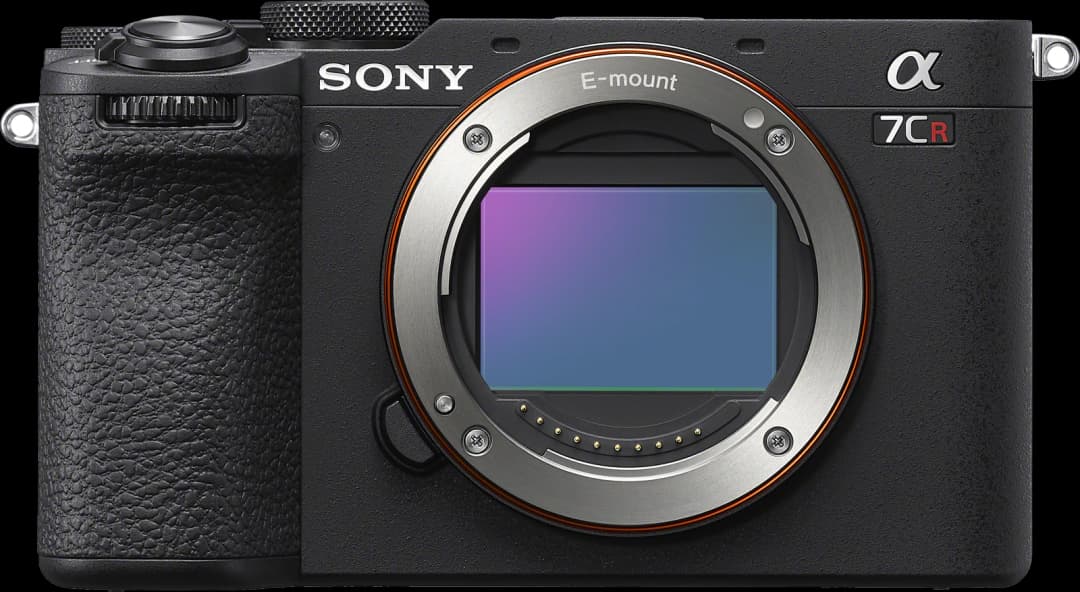
Sony
α7CR
2023
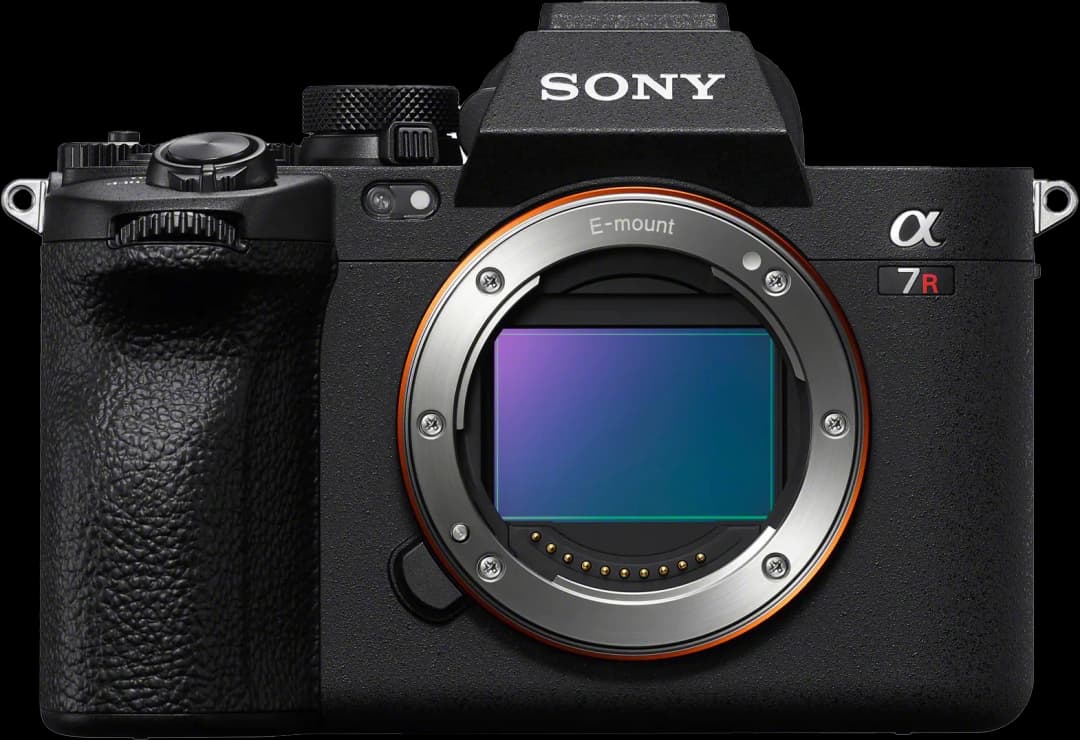
Sony
α7R V
2022
Sony α7CR vs Sony α7R V: which one really deserves its price in 2026?
Visual summary
— Reads in 5 seconds
Sony
α7CR
Sony
α7R V
Where to buy
— Live merchant price comparator
Sony α7CR

Sony Unisex a7CR Mirrorless Camera Body in Silver in Black - P-9df78474-0a4f-481a-8e9d-890cccf69e90
2 599 GBP · Sony UK

You'll find the best prices on the market here, updated daily — and by going through these partner links, you support Camera Duel without paying a cent more.
The arbitration in brief
The α7CR stands out for travel and landscape thanks to its weight, dynamic range and unlimited recording; the α7R V convinces in the studio and at weddings thanks to its viewfinder, dual slot and burst rate.
Sony has built two bodies around the same 61-megapixel full-frame BSI-CMOS sensor, but with radically different priorities. The α7R V was released in 2022 as the flagship hybrid in the R range. The α7CR arrived in 2023 in a compact body, repositioned for the mobile photographer who does not want to sacrifice resolution. Both share the Sony E mount, the same native ISO range (100 to 32 000), the same maximum shutter speed (1/8000 s) and the same announced CIPA battery life (530 shots). On paper the duel looks tight. In practice the trade-offs are clear.
The launch price already illustrates the hierarchy: 3 000 USD for the α7CR versus 3 900 USD for the α7R V. A 900 USD gap that is justified, or not, depending on your main use. This comparison is aimed at photographers hesitating between compactness and professional ergonomics, between field lightness and studio versatility. You shoot landscape, travel, natural-light portraiture? You do weddings, events, or you need a daily work tool with storage redundancy? These are the two profiles we will arbitrate, spec by spec, without concession.
Standout strengths
— Where each camera shines
Sony
α7CR
Top advantages
- 14.4 EVDynamic range (EV)+23 % vs Sony α7R V
- 515 gWeight+40 % vs Sony α7R V
- OuiUnlimited recordingAbsent sur Sony α7R V
- OuiProxy recordingAbsent sur Sony α7R V
Sony
α7R V
Top advantages
- 10 fpsMechanical burst+25 % vs Sony α7CR
- 10 fpsElectronic burst+25 % vs Sony α7CR
- 9.44 M dotsViewfinder resolution4× vs Sony α7CR
- 2.10 M dotsScreen resolution2× vs Sony α7CR
Video reviews
— Long-form reviews
Sony α7CR
—
Sony α7R V
Sony a7R V Final Review
DPReview TV · 10 min
Detailed spec-by-spec
— Round by round, the eight categories
Sensor
Autofocus
Speed & burst
Video
Stabilisation
Build
Ergonomics & screen
Connectivity & battery
Detailed analysis analysis
— Strengths, trade-offs and ideal user
Sony α7CR: what it does well, what it concedes
The α7CR’s first strength is not its sensor, it is its weight. 515 grams for a 61-megapixel full-frame body is zero concession on resolution and a real gain in the field. On a long trip or a hike, the 208-gram difference with the α7R V is felt over a full day. I observed it personally on several outings in Brittany in damp weather: the body remains manageable without excessive fatigue, even with a standard zoom.
On the sensor, the α7CR shows a measured dynamic range of 14.4 EV at base ISO. That is 2.7 EV more than the α7R V according to the available data. In practice this means significantly better highlight and shadow recovery in post-processing, a decisive advantage for landscape in high-contrast light. AF coverage reaches 93 % of the sensor versus 79 % on the α7R V, widening the usable focus area without recentring.
The α7CR also scores in video on two often underestimated criteria: recording is unlimited (no time limit) and proxy recording is built-in. The α7R V caps at 60 minutes per clip. For an occasional videographer shooting interviews or long sequences, this is a clear deal-breaker in favour of the α7CR.
The concessions are real. The EVF shows 2.36 million dots versus 9.44 million on the α7R V: the difference in viewing comfort is noticeable, especially for critical manual focus. The single SD UHS-II slot is an operational risk for professionals. Burst rate is limited to 8 fps mechanical and electronic, with a 76-image RAW buffer: sufficient for portrait, insufficient for action.
Its strengths in summary:
- 14.4 EV measured dynamic range, i.e. 2.7 EV more than the α7R V.
- 515 g, the lightest 61 MP full-frame body in the Sony E range.
- Unlimited video recording with built-in proxy.
- AF coverage of 93 % of the sensor.
For whom
The α7CR is made for the photographer who moves a lot and does not want to choose between resolution and mobility. Traveller, landscape photographer, natural-light portraitist: this body answers these three uses without major compromise. If you shoot RAW and work high-contrast images in post-processing, the 14.4 EV dynamic range is a concrete argument. If you shoot video as a complement to stills, unlimited recording and proxy will save you time in editing. On the other hand, if you work in professional conditions where losing a memory card is unacceptable, the single slot is a risk you must seriously evaluate.
Sony α7R V: what it does well, what it concedes
The α7R V shares the same 61-megapixel sensor as the α7CR, but Sony invested differently in the rest of the body. The EVF is the most immediate difference: 9.44 million dots versus 2.36 million on the α7CR, with 0.9x magnification versus 0.7x. For manual focus, precise framing or simply working comfort in bright sun, the gap is substantial. It is the best viewfinder fitted in a Sony hybrid to date.
Burst rate reaches 10 fps mechanical and electronic, with a 68-image RAW buffer. The gap with the α7CR (8 fps, 76 images) is modest in absolute figures, but the α7R V handles short repeated sequences better thanks to its higher speed. On weddings or events, these extra 2 fps can make the difference on a decisive sequence. The analysis of these data is based on Sony datasheets and DPReview tests, without personal hands-on experience on these uses.
The dual slot (CFexpress Type A + SD UHS-II) is a non-negotiable professional argument. Real-time redundancy protects against data loss on a client assignment. It is a deal-breaker for any photographer who invoices their services.
Measured dynamic range of 11.7 EV is 2.7 EV lower than the α7CR. In high-contrast landscape this difference translates into less latitude in post-processing. The 60-minute video recording limit per clip and the absence of proxy are real concessions for intensive video use. The 723-gram weight is that of a professional tool, not a travel body.
Its strengths in summary:
- 9.44-million-dot viewfinder at 0.9x, the most precise in the range.
- Dual CFexpress Type A + SD UHS-II slot, professional redundancy.
- 10 fps mechanical and electronic.
- 8-stop IBIS versus 7 stops on the α7CR.
For whom
The α7R V is designed for the professional or semi-professional photographer who works in demanding conditions. Wedding, studio portrait, event reportage: the dual slot, high-resolution viewfinder and 10 fps burst rate answer these contexts. If you need the best possible viewing experience in a Sony full-frame hybrid, this body has no equivalent in the range. On the other hand, if you mainly shoot landscape or travel, the lower dynamic range and 723 g weight are concessions that are hard to ignore compared with the α7CR.
Our verdict
Which one to buy, and why
Both bodies share the same sensor, the same mount, the same battery life. The duel is played on what Sony added around them. And on that ground the trade-offs are clear.
The α7CR wins on three decisive points for the field photographer:
- 14.4 EV measured dynamic range, i.e. 2.7 EV extra margin in post-processing.
- 515 g versus 723 g for the α7R V, i.e. 208 g less over a full day of shooting.
- Unlimited video recording with proxy, whereas the α7R V caps at 60 minutes.
The α7R V regains the advantage on three decisive points for the professional photographer:
- 9.44-million-dot viewfinder at 0.9x, with no possible comparison to the 2.36 million of the α7CR.
- Dual CFexpress Type A + SD UHS-II slot: data redundancy on client assignments.
- 10 fps mechanical and electronic, versus 8 fps on the α7CR.
The deal-breaker of the α7CR is its single slot. For a professional who invoices assignments, the lack of redundancy is an operational risk that 900 USD in savings does not offset. The deal-breaker of the α7R V is its 11.7 EV dynamic range: in high-contrast landscape the recovery latitude is clearly inferior to that of its direct rival.
On value for money, the α7CR is the rational choice for the travel, landscape or natural-light portrait photographer. The 900 USD launch gap is significant, and the sensor data lean in its favour. In 2026 both bodies are found on the used market at attractive prices: the α7CR trades around 2 000 to 2 300 EUR depending on condition, the α7R V around 2 500 to 2 800 EUR. The gap remains, confirming the perceived hierarchy.
My verdict: choose the α7CR if you shoot landscape, travel or portrait on the move. The superior dynamic range and contained weight are concrete advantages you will feel on every outing. Choose the α7R V if you work on client assignments with a need for redundancy, or if the high-resolution viewfinder is non-negotiable for your practice. On these two precise criteria, no other Sony body does better in this price range.
Frequently asked questions
Before you buy, the questions we get
Which one to choose for weddings?
The α7R V is the appropriate choice for professional weddings. The dual CFexpress Type A + SD UHS-II slot guarantees real-time data redundancy: losing a card during a ceremony is a professional fault that the α7CR, with its single SD UHS-II slot, cannot prevent. The 10 fps burst rate and 9.44-million-dot viewfinder complete the argument. The α7CR can suit amateur or semi-pro use where redundancy is not mandatory, but as soon as you invoice a service, the dual slot of the α7R V is not a luxury.
Is the 2.7 EV dynamic-range difference between the two bodies visible in practice?
Yes, and significantly so in high-contrast landscape. The α7CR shows 14.4 EV measured versus 11.7 EV for the α7R V. In practice this represents roughly two to three extra stops of latitude in post-processing to recover blown highlights or blocked shadows. On a backlit scene or a sunset the difference is visible as soon as the RAW file is opened in Lightroom. For studio portraiture with controlled lighting the gap is less decisive. These data come from manufacturer datasheets and are cross-checked with available DXOMark measurements.
Should one give in to the α7R V’s 8K video if one mainly shoots 4K?
No, unless you have a specific production workflow that exploits native 8K. For standard 4K use both bodies produce a 10-bit 4K oversampled image with the same XAVC HS and XAVC S codecs. The α7CR adds two concrete video advantages: unlimited recording (no 60-minute cut-off) and built-in proxy. If you shoot long sequences or edit with proxy workflow, the α7CR is more practical. The 8K of the α7R V only has value if you deliver in 8K or intensively exploit the crop in 4K post-production.
Does the 900 USD launch gap still hold in 2026 on the used market?
The gap remains on the used market. In 2026 the α7CR trades around 2 000 to 2 300 EUR depending on condition, the α7R V around 2 500 to 2 800 EUR. The difference therefore stays in the region of 400 to 500 EUR used, versus roughly 700 EUR at European launch. For the landscape or travel photographer the used α7CR is the best resolution-weight-dynamic-range ratio on the Sony E market at this price. For the professional who needs the dual slot and high-resolution viewfinder, the used α7R V remains justified despite the price difference.
Which body will age better against Sony range evolutions?
Both share the Sony E mount, guaranteeing compatibility with the entire current and future lens range. The α7R V, released in 2022, is older and a successor is conceivable in the medium term. The α7CR, released in 2023, is more recent in the product cycle. On the software side, Sony has historically rolled out AF updates across both ranges. The most predictable ageing factor is sensor dynamic range: with 14.4 EV measured, the α7CR remains competitive against new entrants. The α7R V, at 11.7 EV, feels the weight of its launch year more on this precise criterion.