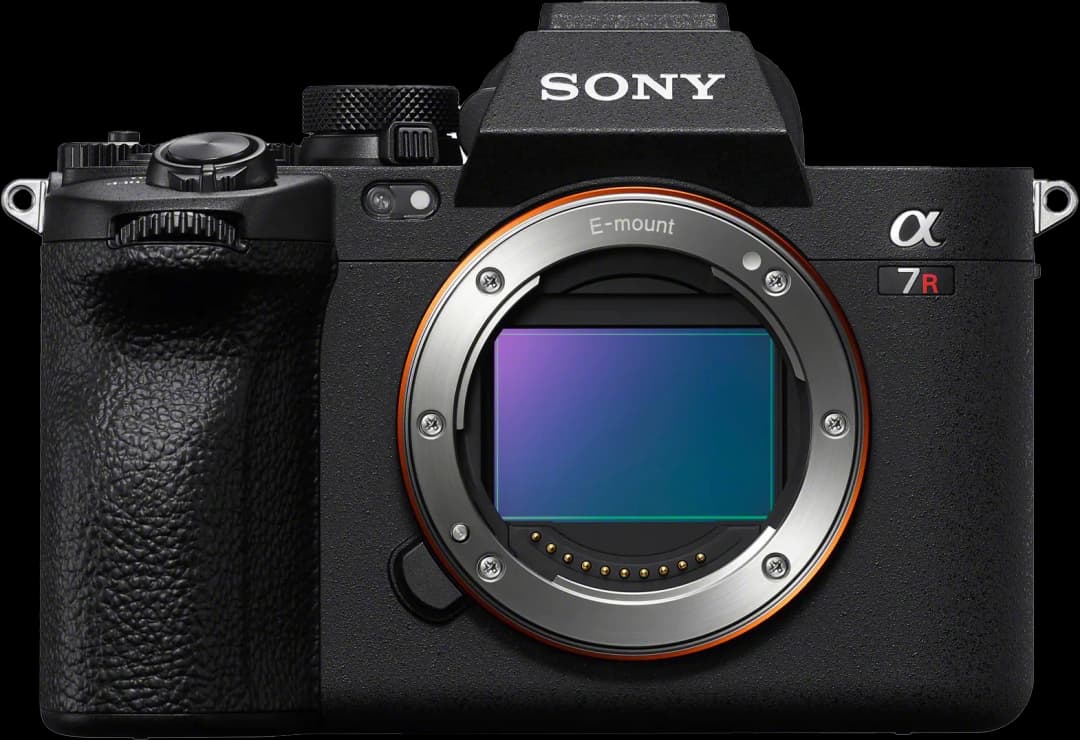
Sony
α7R V
2022
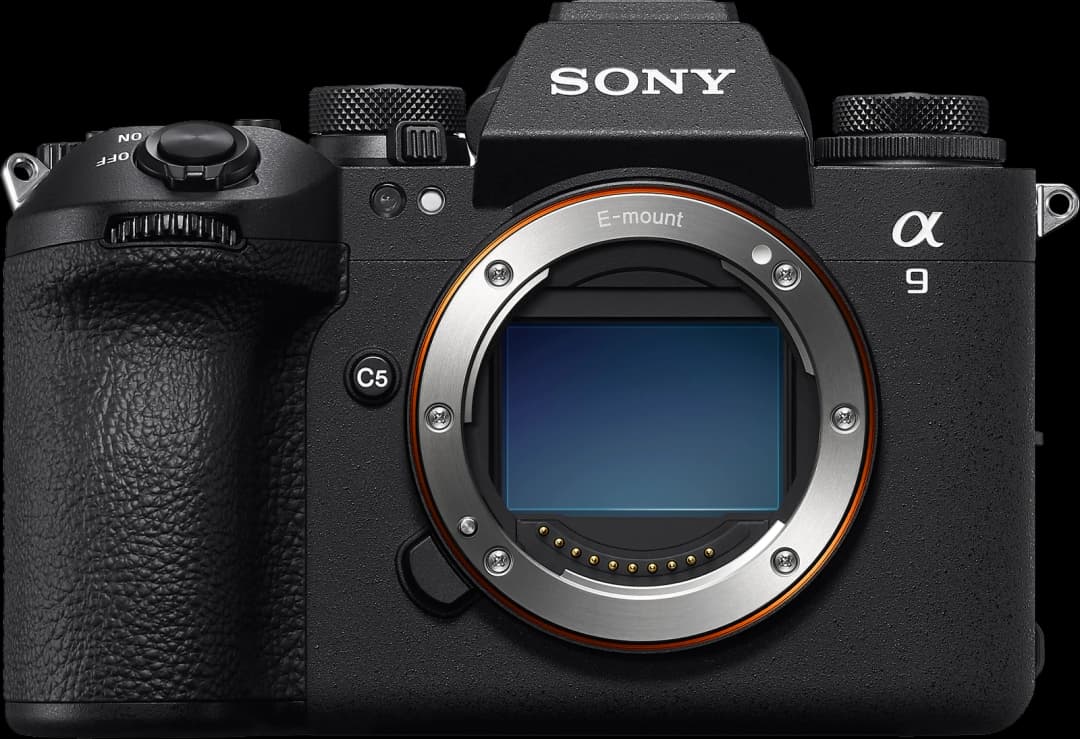
Sony
α9 III
2023
Sony α7R V vs Sony α9 III: 61 MP and Dynamic Range versus 120 fps and Global Shutter
Visual summary
— Reads in 5 seconds
Sony
α7R V
Sony
α9 III
Where to buy
— Live merchant price comparator


You'll find the best prices on the market here, updated daily — and by going through these partner links, you support Camera Duel without paying a cent more.
The arbitration in brief
Choose the α7R V for resolution and landscape work, the α9 III for sport and professional video without any compromise on frame rate.
Two full-frame Sony bodies, two opposing philosophies. The α7R V was released in 2022 at a launch price of 3 900 USD. It embodies the R lineage: maximum resolution, extended dynamic range, advanced IBIS. The α9 III arrived in 2023 at 5 999 USD, 2 099 USD more. It introduces the first full-frame global shutter sensor aimed at the general public, a technological breakthrough that eliminates rolling shutter and opens the door to 120 fps in electronic mode.
Both bodies share the same Sony E mount, the same dual CFexpress Type A and SD UHS-II slots, the same CIPA battery life of 530 shots, the same 9.44 M-dot EVF and the same weather sealing. On paper they appear close. In practice, their sensors direct them toward radically different uses.
The α7R V is aimed at photographers who print large, crop aggressively or need extra dynamic range headroom. The α9 III targets sports, wildlife or professional video shooters who cannot tolerate a single rolling-shutter artefact or miss action at 1/80 000 s.
This comparison runs through the eight spec rounds, identifies the deal-breakers for each side and answers the central question: does the 2 099 USD price gap make sense, and for whom?
Standout strengths
— Where each camera shines
Sony
α7R V
Top advantages
- 61 MPMegapixels2,5× vs Sony α9 III
- 102 400Extended ISO max2× vs Sony α9 III
- 100Native ISO min2,5× vs Sony α9 III
- 32 000Native ISO max+25 % vs Sony α9 III
Sony
α9 III
Top advantages
- 120 fpsElectronic burst12× vs Sony α7R V
- 120 fpsMax video fps2× vs Sony α7R V
- -5 EVAF low light (EV)+1 vs Sony α7R V
- OuiUnlimited recordingAbsent sur Sony α7R V
Video reviews
— Long-form reviews
Sony α7R V
Sony a7R V Final Review
DPReview TV · 10 min
Sony α9 III
—
Detailed spec-by-spec
— Round by round, the eight categories
Sensor
Autofocus
Speed & burst
Video
Stabilisation
Build
Ergonomics & screen
Connectivity & battery
Detailed analysis analysis
— Strengths, trade-offs and ideal user
Sony α7R V: what it does well, what it concedes
The 61 MP BSI-CMOS sensor of the α7R V is its raison d’être. At base 100 ISO it delivers a measured 11.7 EV dynamic range, versus 10 EV on the α9 III. That 1.7 EV difference translates directly into extra recoverable highlight and shadow detail in post-production. For landscape in high-contrast light or backlit portraiture, it is a margin you use on every shoot.
High-ISO performance also favours the α7R V. Minimum native ISO is 100, versus 250 on the α9 III. The lower floor allows long exposures in daylight without ND filters, a direct advantage in landscape and architecture. Maximum native ISO reaches 32 000 (versus 25 600) and extended ISO climbs to 102 400 (versus 51 200). These figures remain theoretical without comparative DXOMark high-ISO noise data, but the structural advantage of BSI-CMOS over Stacked CMOS in low light is documented by Photons to Photos.
The compromises are real. Electronic burst tops out at 10 fps, versus 120 fps on the α9 III. RAW buffer stops at 68 frames, versus 82. Maximum shutter speed is 1/8 000 s, leaving it exposed to rolling-shutter risk on fast subjects in electronic mode. AF coverage of 79 % lags behind the 92 % of the α9 III.
α7R V strengths in brief:
- 61 MP for large prints and cropping without loss of detail.
- 11.7 EV dynamic range at base ISO, 1.7 EV more than the α9 III.
- Minimum native ISO of 100, useful for long exposures without filters.
- Internal 8K video with comfortable 4K downsampling in post.
- Launch price 2 099 USD lower than the α9 III.
8K video is an asset on paper. It enables 4K crops without resolution loss and visible oversampling in fine detail. Recording is however limited to 60 minutes, and the lack of unlimited recording is a deal-breaker for long-form work.
For whom
The α7R V suits photographers who work mainly in studio, landscape or portraiture. They output 61 MP files for large prints or tight crops. They exploit the 11.7 EV of dynamic range in high-contrast natural light. They value the minimum ISO of 100 for long exposures. They do not need more than 10 fps burst. They can accept 79 % AF coverage because their subjects move little or predictably. In video they use the 8K output for editorial or institutional projects whose clips stay under 60 minutes. Their budget is below 4 000 USD at launch, and they now find the body even more accessible on the used market.
Sony α9 III: what it does well, what it concedes
The α9 III is built around a Stacked CMOS sensor with global shutter, a first for a full-frame consumer camera. The direct consequence is a maximum shutter speed of 1/80 000 s, ten times faster than the 1/8 000 s of the α7R V. Rolling shutter is measured at 0 ms. On fast-moving subjects—a tennis ball, a bird in flight, a running athlete—the image shows no geometric distortion. It is a structural advantage the α7R V cannot match.
The 120 fps electronic burst is the most visible specification. It allows 82 RAW frames in the buffer before slowdown. At 120 fps that equates to less than a second of continuous shooting before the rate drops, demanding precise timing. On short, anticipated sequences it is sufficient for sport and wildlife. AF covers 92 % of the sensor with 759 points, versus 79 % and 693 points on the α7R V. Low-light detection reaches -5 EV, versus -4 EV.
The compromises are significant. The Stacked CMOS sensor offers 24.6 MP and 10 EV dynamic range. Minimum native ISO is 250, penalising long exposures in daylight. Extended ISO tops out at 51 200, versus 102 400. For landscape or portraiture in high-contrast natural light these limits translate into less latitude in post-production.
α9 III strengths in brief:
- 120 fps electronic, 0 ms rolling shutter, shutter speed to 1/80 000 s.
- 92 % AF coverage with 759 points and -5 EV detection.
- Unlimited video recording, built-in proxy recording, external ProRes RAW and Blackmagic RAW output.
- RAW buffer of 82 frames, slightly ahead of the α7R V.
- Weight of 702 g, 21 g lighter than the α7R V.
In video the α9 III compensates for its 4K maximum resolution with unlimited recording, native proxy, ProRes RAW and Blackmagic RAW external output, and 120 fps 4K for slow motion. For a professional videographer these functions outweigh the 8K resolution of the α7R V.
For whom
The α9 III is made for sports, wildlife or reportage photographers who cannot afford to miss the action. They exploit 120 fps on short, anticipated sequences. They work with fast subjects where the α7R V’s rolling shutter would produce visible artefacts. In video they shoot in professional conditions where unlimited recording, proxy and external ProRes RAW output are prerequisites. They accept the resolution concession (24.6 MP versus 61 MP) and the dynamic-range concession (10 EV versus 11.7 EV) because frame rate and AF reliability come first. Their budget exceeds 5 999 USD at launch, or they weigh the used market while factoring in the residual value of a body with unique global-shutter technology.
Our verdict
Which one to buy, and why
The verdict is clear. The α7R V wins the sensor round with 61 MP, 11.7 EV dynamic range and a minimum native ISO of 100. The α9 III wins the AF, speed and video rounds with 120 fps, 0 ms rolling shutter, 92 % AF coverage and unlimited recording. The two bodies do not really compete: they answer opposite needs.
The deal-breakers are straightforward:
- If you shoot sport or wildlife, the rolling shutter of the α7R V in electronic mode is unacceptable. The α9 III is the only choice.
- If you print large or crop aggressively, 24.6 MP on the α9 III is insufficient. The α7R V is the only choice.
- If you shoot long-form professional video, the 60-minute limit of the α7R V is a deal-breaker. The α9 III wins.
- If your budget is below 5 000 USD, the α7R V is the only accessible body of the two.
On value for money, the 2 099 USD launch gap is hard to justify for a generalist photographer. The α7R V offers more everyday versatility: better dynamic range, higher resolution, lower base ISO. The α9 III justifies its price only if 120 fps and global shutter are non-negotiable requirements.
In 2026 both bodies are available used. The α7R V trades around 2 800 to 3 200 USD in recent condition, reinforcing its value proposition. The α9 III remains more expensive used because of the scarcity of full-frame global-shutter technology. My recommendation: choose the α7R V if you have no specific need for sport or wildlife. The 61 MP resolution, 11.7 EV dynamic range and lower price make it the most useful body for the majority of users. Reserve the α9 III for applications where 120 fps and 0 ms rolling shutter are non-negotiable conditions.
Frequently asked questions
Before you buy, the questions we get
Which one for wedding photography?
The α7R V is the dominant choice for weddings. Its 61 MP allows tight crops on group scenes without loss of detail. Its 11.7 EV dynamic range handles the brightness difference between dark interiors and blown-out windows better. Its 10 fps burst is sufficient for key moments. The α9 III brings 120 fps and wider AF coverage (92 %), useful for moving ceremony moments, but its 250 base ISO and 24.6 MP are real concessions for large prints and premium albums.
Does the AF of the α7R V catch up with the α9 III in sport?
No. The gap is structural. The α9 III covers 92 % of the sensor with 759 points versus 79 % and 693 points on the α7R V. Low-light detection reaches -5 EV versus -4 EV. The decisive difference, however, is not AF point count: it is frame rate. At 10 fps the α7R V cannot compensate for the 120 fps of the α9 III on unpredictable subjects. For fast sport, birds in flight or dynamic reportage, the α7R V is simply not the right tool, regardless of its AF quality.
Should you choose the 8K video of the α7R V if you edit in 4K?
The 8K video of the α7R V provides comfortable 4K cropping and visible oversampling on fine detail. It is limited to 60 minutes of continuous recording, however. If you edit exclusively in 4K and your clips exceed that duration, the α9 III is better suited: unlimited recording, 120 fps 4K for slow motion, native proxy and external ProRes RAW output. For short or editorial projects the 8K of the α7R V is a genuine asset. For long shoots or live events it is a deal-breaker.
Does the 2 099 USD gap between the two bodies make sense?
Only if you have a specific need for frame rate or global shutter. The α9 III at 5 999 USD delivers 120 fps, 0 ms rolling shutter, 1/80 000 s shutter speed and unlimited video recording. These specifications are unavailable elsewhere in full frame. For a portrait, landscape or travel photographer, however, the α7R V at 3 900 USD offers more everyday value with 61 MP and 11.7 EV dynamic range. In 2026 the used market allows the α7R V to be acquired around 2 800 USD, widening the value gap further.
Which body will age better over the next five years?
The α9 III rests on global-shutter sensor technology that remains rare in full frame. This technological lead gives it stronger commercial longevity in the sport and wildlife segment. The α7R V, released in 2022, is already mid-cycle and a successor is likely by 2026-2027. Its 61 MP files and Sony E ecosystem remain relevant, but resolution alone no longer differentiates a body long-term. If you are investing for five years in sport or professional video, the α9 III ages better. For landscape and portrait work the α7R V stays competitive until its successor arrives.