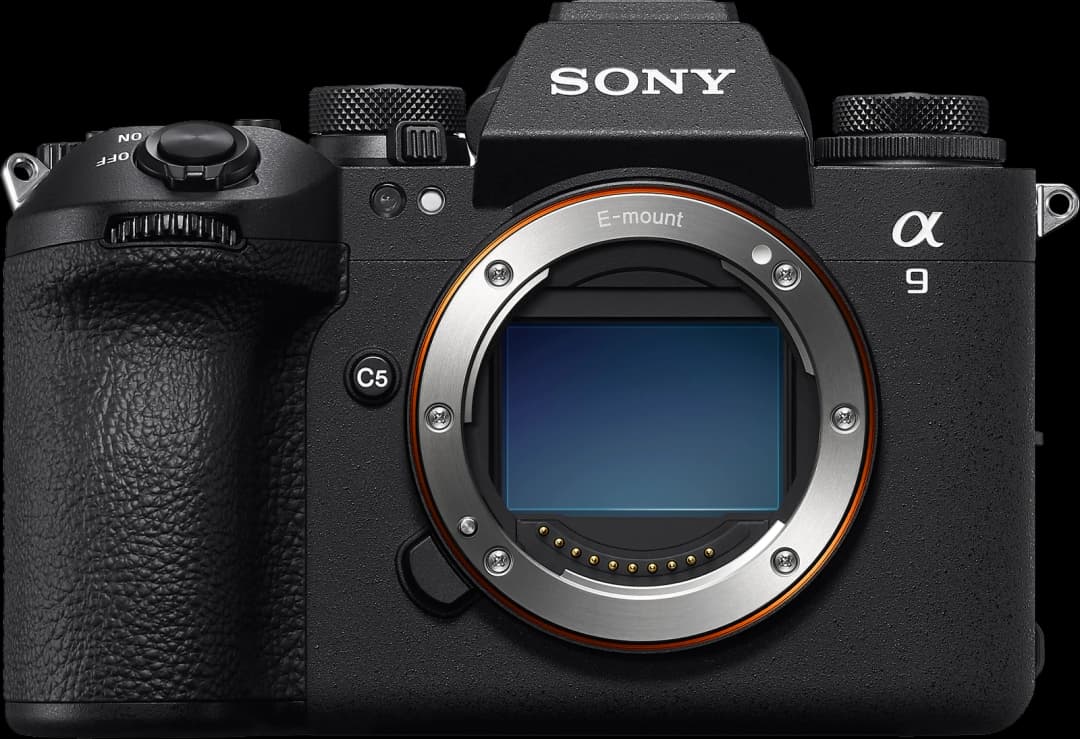
Sony
α9 III
2023
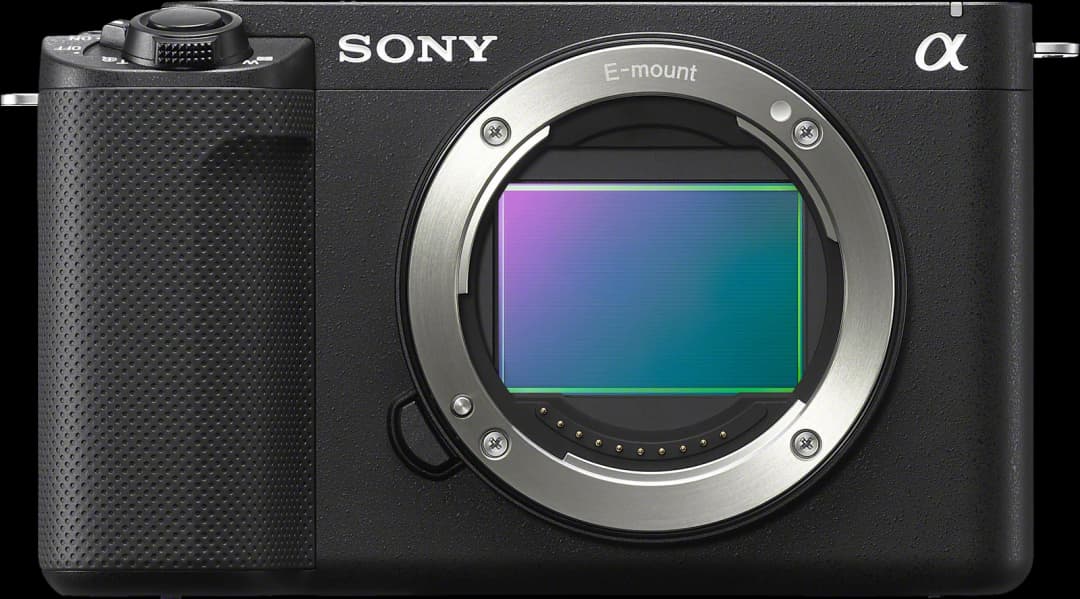
Sony
ZV-E1
2023
Sony α9 III vs Sony ZV-E1: Professional Speed versus Compact Versatility
Visual summary
— Reads in 5 seconds
Sony
α9 III
Sony
ZV-E1
Where to buy
— Live merchant price comparator

Sony ZV-E1

SONY ZV-E1 Mirrorless Vlogging Camera - Body Only, Black
1 331 GBP · Wowcher


You'll find the best prices on the market here, updated daily — and by going through these partner links, you support Camera Duel without paying a cent more.
The arbitration in brief
The α9 III is the only choice for demanding sport and reportage; the ZV-E1 suits video creators and travellers seeking lightweight full-frame at a contained price.
These two bodies share the E mount, full-frame format and 2023 release year. Everything else sets them apart.
The Sony α9 III sits at the top of Sony’s hybrid range. Its launch price of 6 789 EUR places it in the professional tool category. It carries the first stacked global-shutter CMOS sensor available to the public, delivering electronic burst at 120 fps with zero rolling-shutter distortion. It targets sport, wedding and reportage photographers who cannot afford to miss a frame.
The Sony ZV-E1 is a radically different proposition. Launched at 2 200 USD, it targets content creators and videographers who want full-frame quality in a 483 g body. Its 12,1-megapixel BSI-CMOS sensor reaches ISO 102 400 native and ISO 409 600 extended. It has no electronic viewfinder and only a single SD card slot.
The decision rests on three concrete questions. First, does the roughly 4 600 EUR price gap make sense for your use? Second, can the ZV-E1 replace a traditional stills body, or is it primarily a video tool? Third, does the global shutter of the α9 III actually change anything outside elite sport?
This comparison answers those three questions with the data available, without vague qualifiers.
Standout strengths
— Where each camera shines
Sony
α9 III
Top advantages
- 24.6 MPMegapixels2× vs Sony ZV-E1
- 120 fpsElectronic burst12× vs Sony ZV-E1
- 8 stopsIBIS rating1,6× vs Sony ZV-E1
- 2.10 M dotsScreen resolution2× vs Sony ZV-E1
Sony
ZV-E1
Top advantages
- 409 600Extended ISO max8× vs Sony α9 III
- 102 400Native ISO max4× vs Sony α9 III
- 1000RAW buffer12,2× vs Sony α9 III
- 80Native ISO min3,1× vs Sony α9 III
Detailed spec-by-spec
— Round by round, the eight categories
Sensor
Autofocus
Speed & burst
Video
Stabilisation
Build
Ergonomics & screen
Connectivity & battery
Detailed analysis analysis
— Strengths, trade-offs and ideal user
Sony α9 III: what it does well, what it concedes
The α9 III is built around a 24,6-megapixel stacked global-shutter CMOS sensor. The global shutter eliminates rolling shutter: electronic shutter speed reaches 1/80 000 s without distorting fast subjects. In practice you can photograph a sprinter, a racing car or a bird in flight at full burst rate with no distortion artefacts. No other full-frame body offers this today. It is the absolute differentiator of this camera.
Burst reaches 120 fps electronically with an 82-image RAW buffer. That buffer figure may look limited next to the 1 000 images of the ZV-E1, yet it equals roughly 0,68 seconds of continuous shooting at full speed. In sport, an 82-frame sequence at 120 fps covers the decisive action. IBIS compensates 8 stops, among the best measured results on full-frame. Dynamic range reaches 10 EV according to Sony’s datasheet, a figure not available for the ZV-E1.
The compromises are real. Minimum native ISO is 250, versus 80 on the ZV-E1. In studio with flash or in bright sun with a fast lens, this forces the use of an ND filter or a smaller aperture. Maximum native ISO is 25 600 (extended to 51 200), two stops below the ZV-E1 in native range. The body weighs 702 g bare. The 6 789 EUR launch price reserves it for justified professional or semi-professional use.
Key points:
- 120 fps electronic, global shutter, zero rolling shutter.
- 8 stops IBIS, dual CFexpress Type A and SD UHS-II slots.
- Minimum native ISO 250, limiting in flash studio work.
- 702 g bare, noticeable bulk for travel.
For whom
The α9 III is made for the photographer whose subject moves fast and whose image must be sharp. Sport, dynamic wedding reportage, wildlife or live performance photographers: these profiles use the 120 fps and global shutter every day. It also suits the professional who invoices assignments and cannot afford to miss a decisive sequence. The dual card slots provide essential redundancy on paid jobs. The 9,44-million-dot, 0,9x EVF aids manual focus and work in bright sun. This body is not intended for the lightweight traveller or the solo content creator who films themselves.
Sony ZV-E1: what it does well, what it concedes
The ZV-E1 carries a 12,1-megapixel full-frame BSI-CMOS sensor. Resolution is deliberately kept low to maximise photosite size and sensitivity. Native ISO reaches 102 400, two stops above the α9 III. Extended ISO hits 409 600. These figures place the ZV-E1 among the most sensitive full-frame bodies on the market. In practice it means the ability to film or photograph in very low light without artificial lighting. Low-light AF reaches -6 EV, versus -5 EV on the α9 III.
Electronic burst is limited to 10 fps, yet the buffer accepts 1 000 RAW images. This body is not designed for action photography. It is designed never to fill up in everyday use. IBIS compensates 5 stops, adequate for handheld video and static stills but 3 stops behind the α9 III. The 483 g bare weight is remarkable for full-frame. Dimensions of 121,0 x 71,9 x 54,3 mm bring it close to a compact APS-C body.
The compromises are structural. The lack of an electronic viewfinder is a deal-breaker for bright-sun or precision work. The single SD UHS-II slot rules out redundancy on paid assignments. The 12,1-megapixel resolution limits cropping and prints larger than 60 cm. Maximum shutter speed is 1/8 000 s, insufficient to freeze some fast subjects.
Key points:
- Native ISO up to 102 400, extended to 409 600.
- 483 g bare, compact form for a 24x36 sensor.
- No electronic viewfinder, deal-breaker in bright sun.
- Single card slot, no redundancy possible.
For whom
The ZV-E1 suits the video content creator who wants full-frame image quality without the weight of a professional body. It also suits the travelling photographer who values discretion and lightness over burst performance. Its high native ISO makes it relevant for night street, concert or any low-ambient-light environment. It is not suitable for professional paid work: the single slot and lack of viewfinder are concrete obstacles. It is equally unsuitable for the photographer who crops heavily or prints large.
Our verdict
Which one to buy, and why
The price gap between the two bodies is roughly 4 600 EUR at launch. That gap is justified only if your main use matches the α9 III’s strengths: 120 fps burst, global shutter, 8-stop IBIS and dual card slots. If you shoot sport, wildlife or dynamic wedding reportage, the α9 III is the only rational choice in the Sony line-up. The ZV-E1 cannot compete on these uses: 10 fps burst and the missing viewfinder disqualify it immediately.
For video and travel the balance reverses. The ZV-E1 offers the same codecs, the same 10-bit depth, the same S-Log3 and the same unlimited recording as the α9 III. Its native ISO of 102 400 is a concrete advantage in night video. Its 483 g weight changes the solo-shooting experience. For a content creator or independent videographer, paying 4 600 EUR more for the α9 III is not justified on video specifications alone.
Deal-breakers to remember:
- ZV-E1: single card slot, no viewfinder, 10 fps maximum. These three points disqualify it for any professional assignment.
- α9 III: minimum native ISO 250, 702 g weight, 6 789 EUR price. These three points make it unsuitable for lightweight travel or tight budgets.
On the used market the ZV-E1 regularly appears between 1 400 and 1 700 EUR in 2026, strengthening its value for video or travel use. Used α9 III bodies stabilise around 4 500 to 5 000 EUR, still a professional investment.
The verdict is clear: choose the α9 III if you photograph fast-moving subjects and invoice assignments. Choose the ZV-E1 if your priority is low-light video or lightweight travel and you accept the missing viewfinder and single slot as operational constraints.
Frequently asked questions
Before you buy, the questions we get
Which to choose for photographing a wedding?
The α9 III is the appropriate choice for a professional wedding photographer. The 120 fps burst with global shutter guarantees sharp frames on dynamic sequences (first kiss, bouquet toss, dancing). The dual card slots provide essential redundancy on paid jobs. The 8-stop IBIS helps in dark indoor ceremonies. The ZV-E1 may suit an assistant or secondary role, but its single slot and lack of viewfinder make it a risk as the primary body.
Can the ZV-E1 replace a classic stills body for travel?
Yes, with clear caveats. The ZV-E1 weighs 483 g bare and delivers full-frame image quality. Its native ISO of 102 400 covers most travel situations, including dark interiors and night scenes. The main limitation is the missing viewfinder: in bright sun, composing on a 3-inch, 1,04-million-dot screen is uncomfortable. If you travel mainly in diffuse light or indoors, the ZV-E1 is an excellent companion. If you often shoot in bright sun, the lack of a viewfinder becomes a daily constraint.
Does the 4 600 EUR gap between the two bodies make sense?
Only if your main use exploits the differentiators of the α9 III. Global shutter and 120 fps have value only for sport, wildlife and dynamic reportage. The 8-stop versus 5-stop IBIS represents a measurable 3-stop difference on slow shutter speeds. The dual card slots are a professional safety net. If your use is mainly video, studio portraiture or travel, the shared specifications (codecs, 10-bit, S-Log3, unlimited recording) make the price gap difficult to justify.
Which body will age better in the Sony E ecosystem?
The α9 III benefits from a high-end positioning that generally guarantees longer firmware support and more stable resale value. Its global-shutter sensor remains a rare technology in full-frame in 2026. The ZV-E1 sits in a more competitive segment where renewal cycles are faster. Its 12,1-megapixel resolution may become a limit if delivery standards move toward larger files. Both bodies share the E mount, protecting your lens investment regardless of your choice.
Is the ZV-E1 usable for amateur sport photography?
No, not satisfactorily. Burst is limited to 10 fps electronically, versus 120 fps on the α9 III. Maximum shutter speed is 1/8 000 s, enough to freeze most subjects, yet the frame rate remains the limiting factor. For occasional amateur sport (children, weekend football matches) the ZV-E1 can cope. For any use where sequence and timing precision matter, the 110 fps difference in rate is prohibitive.