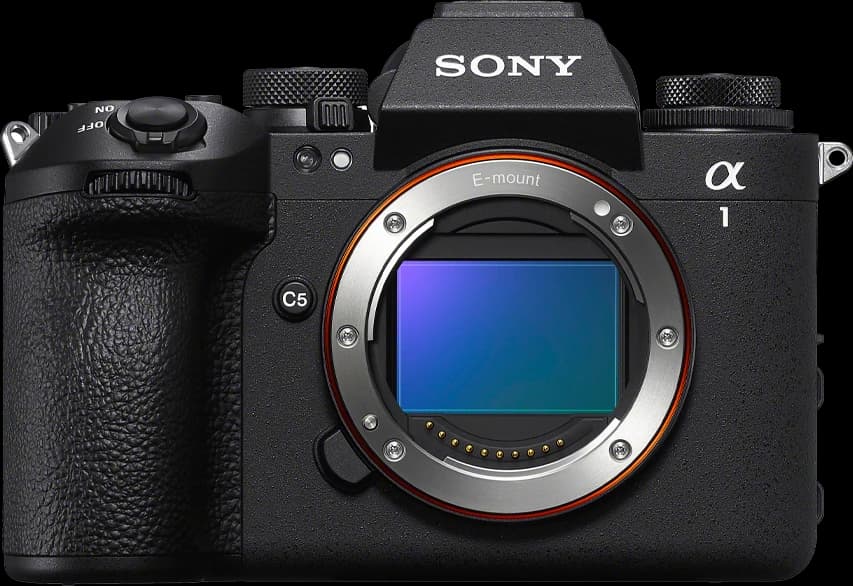
Sony
α1 II
2024
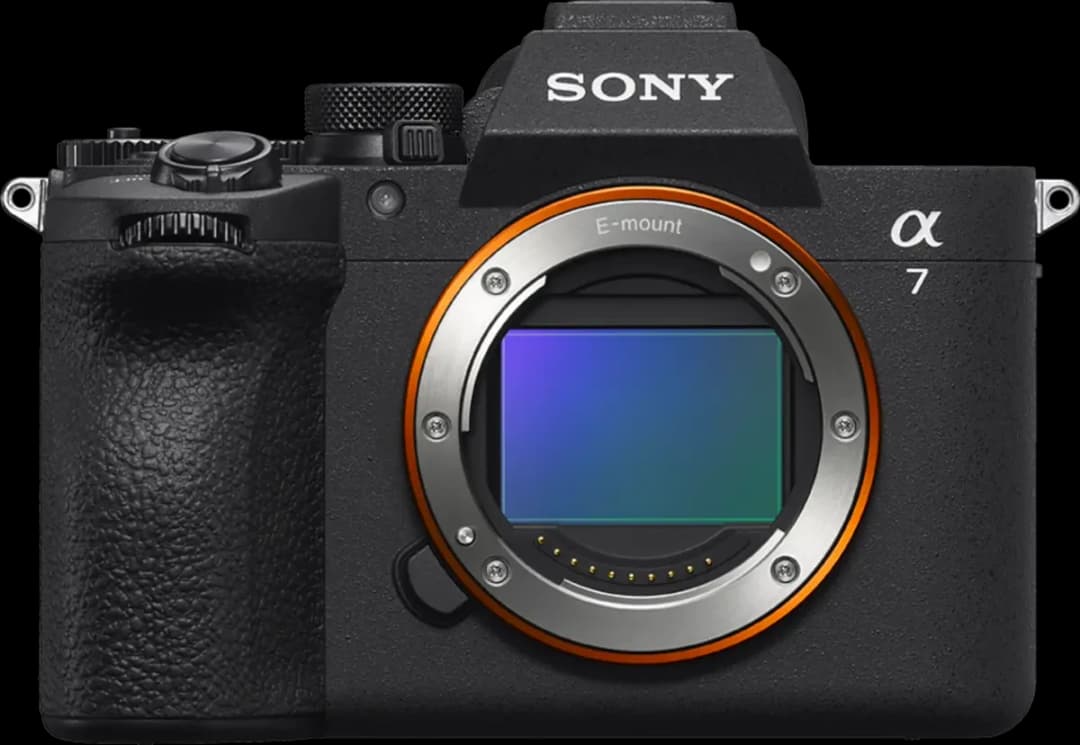
Sony
α7 V
2024
Sony α1 II vs Sony α7 V: Which One Is Really Worth Its Price in 2026?
Visual summary
— Reads in 5 seconds
Sony
α1 II
Sony
α7 V
Where to buy
— Live merchant price comparator
Sony α1 II

Sony a1 II 8K Mirrorless Camera
5 699 GBP · Clifton Cameras


You'll find the best prices on the market here, updated daily — and by going through these partner links, you support Camera Duel without paying a cent more.
The arbitration in brief
The α7 V is the better buy for the vast majority of hybrid photographers; the α1 II only makes sense if you need the 9.44 M-dot viewfinder, 8K video or an unlimited buffer for intensive burst shooting.
These two bodies share the same E-mount, the same launch year (2024) and a clear hybrid photo-video remit. Yet their positioning is radically different. The α1 II launched at 6 499 USD. The α7 V starts at 2 899 USD. The gap is 3 600 USD, more than the price of a mid-range full-frame competitor.
The α1 II sits at the top of Sony’s range. It succeeds the α1 released in 2021 and targets professionals who refuse to choose between resolution, speed and video. Its stacked 50.1 MP Exmor RS sensor lets it reach 30 fps electronically with no loss of definition. It is the body for those delivering to agencies, printing large or producing 8K video.
The α7 V follows the α7 line, Sony’s best-selling series. It succeeds the α7 IV and targets demanding hybrid photographers without an unlimited professional budget. Its 33 MP BSI-CMOS sensor is more modest on paper, but native ISO reaches 51 200 versus 32 000 on the α1 II. Its RAW buffer holds 1 000 frames versus 165 on the α1 II. These two figures change everyday shooting.
This comparison settles a real purchase dilemma: do the spec differences justify the 3 600 USD premium? Which uses tip the balance toward the α1 II? And when is the α7 V objectively the better choice, even for professionals?
Standout strengths
— Where each camera shines
Sony
α1 II
Top advantages
- 50.1 MPMegapixels1,5× vs Sony α7 V
- 9.44 M dotsViewfinder resolution2,6× vs Sony α7 V
- 8KMax video resolutionvs 4K
- 8.5 stopsIBIS rating+13 % vs Sony α7 V
Sony
α7 V
Top advantages
- 204 800Extended ISO max2× vs Sony α1 II
- 1000RAW buffer6,1× vs Sony α1 II
- 51 200Native ISO max1,6× vs Sony α1 II
- OuiXLR inputAbsent sur Sony α1 II
Detailed spec-by-spec
— Round by round, the eight categories
Sensor
Autofocus
Speed & burst
Video
Stabilisation
Build
Ergonomics & screen
Connectivity & battery
Detailed analysis analysis
— Strengths, trade-offs and ideal user
Sony α1 II: what it does well, what it concedes
The stacked Exmor RS sensor in the α1 II delivers 50.1 MP with a measured dynamic range of 11.6 EV. In practice this opens the door to large-format printing without cropping and gives above-average recovery latitude in post-production. Pixel density also allows aggressive cropping in wildlife or sport without losing final resolution.
Electronic burst reaches 30 fps with a buffer of 165 RAW frames. That figure deserves careful reading. At 30 fps the buffer empties in under 6 seconds. For a sports or reportage photographer shooting long bursts, this is a real constraint. Sony quotes a maximum electronic shutter speed of 1/32 000 s, allowing work in bright light at wide apertures without ND filters. IBIS is rated at 8.5 stops, the best figure in this comparison.
The EVF is a reference: 9.44 M dots and 0.9x magnification. For a photographer used to precise framing of fast subjects or in low light, the difference from the α7 V’s 3.69 M dots is immediately noticeable. Video reaches 8K with unlimited recording, S-Log3, HLG and ProRes RAW / Blackmagic RAW compatibility over HDMI. The α1 II is the only one of the two to offer this external RAW output.
The compromises are real:
- RAW buffer limited to 165 frames versus 1 000 on the α7 V.
- Native ISO capped at 32 000 versus 51 200 on the α7 V.
- Weight of 743 g versus 695 g; a modest but noticeable difference over a full shooting day.
- Price of 6 499 USD, an investment hard to justify outside intensive professional use.
For whom
The α1 II is built for the professional photographer or hybrid videographer who cannot afford to choose between resolution and speed. It suits the wedding photographer who delivers large prints and wants a precision viewfinder for portraits in difficult light. It also suits the videographer who needs 8K for post-production cropping or premium-format delivery. In landscape work the 50.1 MP and 11.6 EV of dynamic range enable panoramic stitches with post-production latitude the α7 V cannot match. Conversely, if your main use is long-burst reportage or low-light street photography, the α7 V meets both needs for far less money.
Sony α7 V: what it does well, what it concedes
The BSI-CMOS sensor in the α7 V offers 33 MP. That is 17 MP fewer than the α1 II, yet the number does not reflect overall inferiority. The dynamic range of the α7 V has not been published in verified data available so far, preventing a direct comparison on this point. However, maximum native ISO reaches 51 200 versus 32 000 on the α1 II. In low light the α7 V therefore has a wider native margin before entering extended mode.
The most distinctive point of the α7 V is its RAW buffer: 1 000 frames. At 30 fps electronically that represents more than 33 seconds of continuous burst. For a wedding, reportage or amateur sports photographer this buffer is practically unlimited in real conditions. It is a concrete operational advantage the α1 II’s figure (165 frames) cannot contest. CIPA battery life reaches 750 shots versus 520 on the α1 II, i.e. 44 % more per charge.
The α7 V includes a native XLR input, absent on the α1 II. For a videographer recording professional sound without an adapter, this is a direct benefit. Video is limited to 4K, but with unlimited recording, S-Log3, HLG and the same XAVC codecs as the α1 II.
The compromises of the α7 V are clear:
- EVF at 3.69 M dots and 0.78x magnification, clearly behind the 9.44 M dots of the α1 II.
- Video capped at 4K, with no documented external RAW output.
- IBIS at 7.5 stops versus 8.5 stops, a one-stop difference in stabilisation.
For whom
The α7 V is built for the demanding hybrid photographer who works in varied conditions without an unlimited professional budget. It suits the wedding photographer who shoots bursts and does not want to manage buffer limits during the ceremony. It suits the hybrid videographer who records professional sound on location thanks to the native XLR input. On travel and reportage assignments the combination of native ISO 51 200, 750-shot battery life and 695 g weight makes it a more versatile daily companion. For a portrait or studio photographer who does not need 8K or the high-resolution viewfinder of the α1 II, the α7 V covers the essentials for 3 600 USD less.
Our verdict
Which one to buy, and why
The 3 600 USD gap between the two bodies is the starting point for any decision. At this price level every dollar must be justified by concrete, regular use.
The α1 II wins in three specific cases:
- You deliver in 8K or need external RAW output (ProRes RAW, Blackmagic RAW) for a professional post-production pipeline.
- You frame permanently through the EVF and the difference between 9.44 M dots at 0.9x and 3.69 M dots at 0.78x changes your focusing precision.
- You photograph subjects that require an electronic shutter speed of 1/32 000 s in bright light at wide apertures.
The α7 V wins in every other case. Its 1 000-frame buffer is an operational advantage the α1 II cannot offset. Its native ISO of 51 200 gives a low-light margin the α1 II does not possess natively. Its 750-shot battery life represents 44 % more per charge. And its native XLR input is a direct asset for hybrid video without extra accessories.
On the used market the α7 V already trades around 2 200 to 2 400 USD in excellent condition. The α1 II remains rare and expensive second-hand. For a photographer entering the Sony E ecosystem in 2026, the α7 V offers the best balance between available specs and budget invested.
My verdict: choose the α7 V. It covers wedding, portrait, reportage and hybrid video use with specs that surpass the α1 II on two daily-critical points (buffer and battery life). The α1 II is a legitimate professional tool, but its 3 600 USD premium is justified only for regular 8K video work or an absolute need for the high-resolution viewfinder. For everything else the α7 V does the job better, longer and for less money.
Frequently asked questions
Before you buy, the questions we get
Which one to choose for wedding photography?
The α7 V is the better choice for weddings. Its RAW buffer of 1 000 frames at 30 fps removes any risk of buffer lock-up during the ceremony or group shots. Its 750-shot battery life reduces mid-day battery changes. The α1 II offers 50.1 MP and a superior viewfinder, but its 165-frame buffer can become a constraint during long sequences. For the vast majority of wedding photographers the α7 V covers the essentials with 3 600 USD saved.
Does the 3 600 USD gap between the two bodies justify itself?
Rarely, and only in specific cases. The α1 II justifies its premium if you use 8K video regularly, if you need external RAW output (ProRes RAW or Blackmagic RAW), or if the 9.44 M-dot viewfinder at 0.9x is a non-negotiable requirement. On pure photo specs the α7 V surpasses the α1 II on buffer (1 000 vs 165 frames), native ISO (51 200 vs 32 000) and battery life (750 vs 520 shots). The premium is not justified for a photo-dominant workflow.
Should I be swayed by the α1 II’s 8K video if I mainly shoot 4K?
No. If your final delivery is in 4K, the 8K of the α1 II brings no direct value. It can be useful for post-production cropping or premium-format delivery, but those cases remain minority uses. The α7 V records in 4K with the same XAVC codecs, the same unlimited recording, the same 10-bit depth and the same log profiles (S-Log3, HLG). It adds a native XLR input absent on the α1 II. For standard hybrid video use in 2026 the α7 V is sufficient.
Which body will age better over three to five years?
Both bodies share the same E-mount, the same dual CFexpress Type A / SD UHS-II slots and the same USB-C 3.2 Gen2 connectivity. Neither is threatened by short-term hardware obsolescence. The α1 II has a resolution margin (50.1 MP) that preserves its value for large-format printing. The α7 V has a buffer (1 000 frames) and battery life (750 shots) that will remain durable operational assets. In terms of perceived longevity the α1 II will hold resale value better second-hand because of its flagship positioning.
Is the α1 II’s buffer really a problem in practice?
Yes, under intensive burst conditions. At 30 fps electronically the 165-frame RAW buffer fills in under 6 seconds. For a sports or reportage photographer running long sequences this limit is concrete. The α7 V with 1 000 frames offers more than 33 seconds of continuous burst in the same conditions. Note that Sony does not always specify the exact buffer test conditions (compressed RAW, uncompressed, lossy), which can affect real-world figures. Independent tests (DPReview, Imaging Resource) nevertheless confirm the significant gap between the two bodies on this point.