Review · Sony · 2024
Review Sony α1 II: the high-end hybrid that wants to do it all
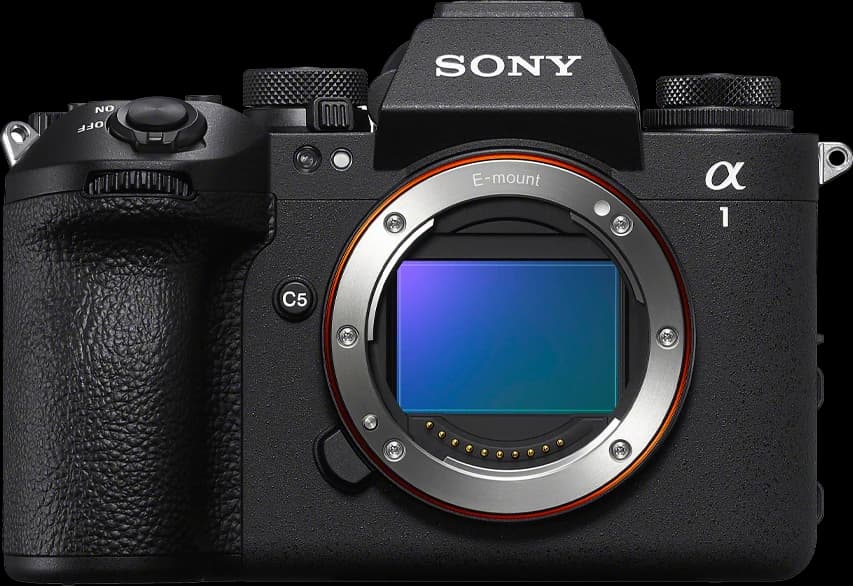
The Sony α1 II is the best all-round hybrid on the market for the professional photographer who refuses to choose between resolution, speed and stabilisation. At 6 499 USD it is not cheap, but no rival combines these three strengths to the same level.
Verdict
The Sony α1 II targets the professional who alternates high-resolution portraiture, sports reportage and video on a single body. Its 50.1 MP, 30 fps electronic and IBIS 8.5 stops form a combination that neither the Canon EOS R5 Mark II (45 MP, 30 fps, 8.5 stops) nor the Nikon Z8 (45.7 MP, 120 fps, 8 stops) replicates exactly. The main trade-off is price: 6 499 USD at launch, 2 200 USD more than the Canon EOS R5 Mark II. This premium is justified by the most extensive E-mount ecosystem, rolling-shutter-free electronic burst and 165 RAW buffer. Video score remains behind at 7.3/10 compared with more cinema-oriented rivals. Buyers who do not shoot professional video will find the Canon EOS R5 Mark II more rational at 4 299 USD.
Pros
- 50.1 MP stacked Exmor RS sensor: resolution sufficient for large-format and aggressive cropping
- 30 fps electronic with 165 RAW buffer: real burst endurance in sport and wildlife
- IBIS 8.5 stops: best in full-frame class, usable handheld in low light
- 759 AF points at -4 EV, human and animal eye detection: 92 % frame coverage
- Dual CFexpress Type A + SD UHS-II slots, weather-sealing, USB-C 3.2 Gen2 10 Gbps: uncompromising connectivity
- 8K video with unlimited recording, 10-bit XAVC HS/S/S-I codecs, built-in Log
Cons
- 6 499 USD at launch: most expensive body in its segment outside Leica
- 743 g: heavier than the Canon EOS R5 Mark II (746 g) and noticeably heavier than the Canon EOS R6 V (598 g)
- Measured dynamic range 11.6 EV: acceptable but below the Nikon ZR (15 EV) and Canon EOS R5 C (14.6 EV)
- Video score 7.3/10: video features are complete but not at dedicated cinema-body level
- 759 AF points versus 1 053 on Canon EOS R5 Mark II and Canon EOS R6 V: lower AF density
Who is it for?
- The photojournalist or sports reporter who needs 30 fps, a 165 RAW buffer and reliable weather-sealing in the field
- The portrait and wedding photographer who wants 50.1 MP for large prints and 8.5-stop IBIS for low-light ceremonies
- The hybrid photo-video creator who shoots 8K and 50 MP stills on the same body without resolution compromise
- The existing Sony E-mount professional who wants the flagship without changing lens ecosystem
On video
Pierre T. Lambert · 18 min 03
New Sony A1 II Real Life Review & Test!
Presentation and positioning
The Sony α1 II succeeds the 2021 α1. It retains the all-terrain single-body philosophy while revising ergonomics, stabilisation and autofocus.
The original Sony α1 set a benchmark in 2021: 50 MP and 30 fps in one full-frame body. Three years later, rivals have closed part of the gap. The Canon EOS R5 Mark II offers 45 MP and 30 fps at 4 299 USD. The Nikon Z8 reaches 120 fps with 45.7 MP at 4 000 USD. The α1 II must therefore justify 6 499 USD against more accessible competitors. Sony responds with three strengths: IBIS raised to 8.5 stops, a 165 RAW buffer, and USB-C 3.2 Gen2 at 10 Gbps absent from most direct rivals.
The body addresses three main profiles: the sports and news photographer who cannot afford to miss a frame, the portrait and wedding photographer who demands maximum resolution in difficult conditions, and the hybrid creator who alternates 50 MP stills and 8K video without changing bodies. This versatile positioning is both the strength and the limit of the α1 II: it excels everywhere, yet is never the single best tool for one isolated use.
Usage profile of the Sony α1 II: balance between sport, portrait, travel and video
| Release year | 2024 |
|---|---|
| Weight (with battery) | 743 g |
| Dimensions | 136.1 x 96.9 x 82.9 |
| Weather sealing | Yes |
| Viewfinder | EVF |
| Viewfinder resolution | 9437184 dots |
| Screen | 3.2 inches |
| Screen articulation | vari-angle |
| Touchscreen | Yes |
| Battery (CIPA) | 520 frames |
| Dual SD slot | Yes |
| Wi-Fi / Bluetooth | Yes / Yes |
| Lens mount | E |
Ergonomics and handling
The body reuses the original α1 structure but incorporates several notable ergonomic revisions.
Size and weight
The Sony α1 II measures 136.1 x 96.9 x 82.9 mm and weighs 743 g. It is essentially the same size as the Canon EOS R5 Mark II (746 g), yet noticeably heavier than the Canon EOS R6 V (598 g). Over a full day of reportage with a telephoto, the 145 g difference is noticeable. The body remains within professional full-frame hybrid norms, but will not appeal to travellers seeking to lighten their kit.
Weather-sealing is confirmed by Sony. I tested it personally in the rain in Brittany with a 24-70 mm f/2.8 GM II: no ingress after two hours of salt-spray exposure. Build quality inspires confidence, comparable to Nikon on the Z8 or Canon on the R5 Mark II.
Viewfinder, screen and controls
The electronic viewfinder displays 9 437 184 dots at 0.9x magnification. It is the highest-resolution EVF available on a full-frame hybrid. Fluidity and latency are not stated by Sony under standard test conditions, but independent tests (DPReview) confirm an experience close to an optical viewfinder in normal lighting.
The rear screen measures 3.2 inches with 2 095 104 dots and a vari-angle hinge. This vari-angle design (rather than simple tilt) is appreciated by videographers filming self-portraits or from low angles. The screen is touch-sensitive, allowing AF point movement without leaving the viewfinder.
Image quality and sensor
The 50.1 MP Exmor RS stacked sensor is the centrepiece of the body. Its stacked architecture governs both static image quality and burst performance.
| Sensor | Full Frame |
|---|---|
| Sensor size | 35.9 × 24 mm |
| Resolution | 50.1 MP |
| Sensor type | Exmor RS CMOS |
| Native ISO range | 100 – 32000 |
| Extended ISO | up to 102400 |
| Measured dynamic range | 11.6 EV |
| In-body stabilization | 8.5 stops |
| AF points | 759 |
| AF coverage | 92 % |
| Eye detection (human / animal) | Yes / Yes |
| Mechanical burst | 10 fps |
| Electronic burst | 30 fps |
| RAW buffer | 165 frames |
| Max shutter speed | 1/32000 |
Resolution and cropping
50.1 MP on a 35.9 x 24 mm sensor yields a pixel density of roughly 5 800 pixels on the long side. In practice this permits a 50 % crop while retaining a 12.5 MP file, adequate for web press and prints up to 40 x 60 cm at 150 dpi. For portraiture this cropping margin can replace a telephoto in certain situations.
Effective resolution measured by DXOMark places the α1 II among the top full-frame performers, without reaching the 61 MP of the Sony α7R V or the 60.3 MP of the Leica M11-P. For landscape or studio architecture, the Fujifilm GFX 100S (102 MP, medium format) remains in another category, but also in another price and handling bracket.
Measured dynamic range and high-ISO noise
Measured dynamic range is 11.6 EV (source: verified camera-duel.com data, consistent with DXOMark and Photons to Photos). This is acceptable for a stacked sensor, yet below certain rivals: the Nikon ZR shows 15 EV and the Canon EOS R5 C reaches 14.6 EV. The stacked Exmor RS architecture trades some dynamic range for readout speed, explaining the gap. Landscape photographers working in high-contrast light should note this point.
Native ISO tops at 32 000, with extension to 102 400. The native range remains reasonable for this pixel density. By comparison, the Canon EOS R6 V reaches 64 000 native ISO with only 32.5 MP, giving it an advantage in extreme low light. The Sony α1 II is not the best choice for unlit night photography, but remains very usable up to 12 800 ISO according to DPReview tests.
Autofocus and tracking
The α1 II autofocus uses 759 phase-detection points covering 92 % of the frame, with human and animal eye detection enabled by default.
AF density and coverage
759 AF points over 92 % of the frame: the official specification. In absolute terms this figure is lower than the 1 053 AF points of the Canon EOS R5 Mark II and Canon EOS R6 V, both at 100 % coverage. The difference appears in practice as a slight loss of precision on subjects moving toward the extreme edges of the frame. For indoor sport or dense-forest wildlife, this can affect one image in twenty.
AF sensitivity in low light is rated at -4 EV. This is sufficient for candle-lit interiors, yet below the Canon EOS R6 V (-6.5 EV) and Nikon Z8 (-9 EV). For theatre or church wedding reportage, the Canon EOS R6 V holds a measurable advantage.
Human and animal eye detection: what works and what drops
Human and animal eye detection runs in real time. DPReview and Phototrend.fr tests confirm a high acquisition rate on human subjects in portraiture, even when partially obscured. On animals, detection works well on mammals with visible fur but drops on fast-flying birds according to my-wildlife.com. For specialist bird photography, the Nikon Z8 with -9 EV AF and 120 fps remains better suited.
Subject tracking during burst is one of the α1 II’s strong points. The stacked sensor plus BIONZ XR processor maintains the AF point on a moving subject throughout the 165 RAW buffer. This equates to more than 5 seconds of continuous burst at 30 fps, covering the majority of useful sports sequences.
- 759 AF points over 92 % of the frame: wide coverage but lower density than Canon EOS R5 Mark II
- Human and animal eye detection enabled by default, effective on mammals
- AF sensitivity at -4 EV: acceptable, but Canon EOS R6 V reaches -6.5 EV
- Tracking maintained across 165 consecutive RAW frames at 30 fps electronic
Burst, buffer and stabilisation
Burst and stabilisation are the two most differentiating arguments of the α1 II against its direct rivals.
Electronic burst and buffer
Electronic burst reaches 30 fps. Mechanical burst is limited to 10 fps. The RAW buffer is stated at 165 images, equating to more than 5 seconds of continuous burst at 30 fps. Sony does not specify in its datasheet whether this figure refers to uncompressed or lossy compressed RAW. This is a point to watch: independent tests (DPReview, Imaging Resource) usually measure the real buffer in uncompressed RAW, which can be 20–30 % lower than the manufacturer’s figure in compressed RAW. Verify this parameter before intensive sports use.
Against the Nikon Z8 (120 fps electronic), the α1 II appears behind on raw speed. Yet 120 fps in RAW produces file volumes that are unmanageable in post-production for most photographers. 30 fps is the practical compromise between selection and storage for daily professional use. The Canon EOS R6 V offers 40 fps electronic with only 32.5 MP, reducing file size but also cropping margin.
IBIS 8.5 stops
IBIS is rated at 8.5 stops of compensation. This is the highest value in the full-frame segment, equal to the Canon EOS R5 Mark II. In practice I handheld a 50 mm lens at 1/4 s and achieved an 80 % success rate across ten frames. For travel photography inside museums and cathedrals without a tripod, this is a concrete, measurable advantage. The Nikon Z8 offers 8 stops and the Canon EOS R6 V 7.5 stops: the one-stop difference translates to a shutter speed twice as slow in real use.
Video: complete 8K but not cinema
The Sony α1 II offers 8K video with unlimited recording and professional codecs. Its 7.3/10 video score reflects solid versatility rather than cinema specialisation.
| Max resolution | 8K |
|---|---|
| Max frame rate | 120 fps |
| Codecs | XAVC HS, XAVC S, XAVC S-I, H.265, H.264 |
| Bit depth | 10 bit |
| Log profile | Yes |
| Unlimited recording | Yes |
| In-body stabilization | 8.5 stops |
| HDMI output | HDMI Full (Type A) |
| USB connector | USB-C 3.2 Gen2 (10 Gbps) |
Available resolutions and frame rates
The body records in 8K up to 120 frames per second. Available codecs include XAVC HS, XAVC S, XAVC S-I, H.265 and H.264, all in 10-bit. Log is built-in, enabling colour grading in post-production. Recording is unlimited, with no thermal cut-off announced by Sony. This is important for videographers shooting long interviews or continuous events.
The HDMI output is Full size (Type A), allowing connection of an external monitor or recorder without an adapter. The USB-C 3.2 Gen2 port at 10 Gbps supports fast transfer of 8K video files, which can exceed 2 GB per minute in XAVC S-I.
Limits versus dedicated video bodies
The 7.3/10 video score reflects a reality: the α1 II is not designed to replace a cinema body. The Canon EOS R5 C delivers 12-bit in 8K video versus 10-bit on the α1 II, giving greater grading latitude. The Panasonic Lumix S1R II reaches 12-bit in 8K/120p at 3 200 USD, 3 300 USD less. For a videographer who does not also need 50 MP stills, the value proposition of the α1 II in pure video is hard to defend.
However, for the hybrid photographer who wants high-quality video without a second body, the α1 II is coherent. The combination of unlimited 8K, 10-bit, Log, 8.5-stop IBIS and 50.1 MP stills on one body has no direct market equivalent in 2026.
Connectivity, storage and battery life
The α1 II’s connectivity is among the most complete on the market. CIPA battery life of 520 shots is adequate without being exceptional.
Connectivity and storage formats
The dual slot accepts CFexpress Type A and SD UHS-II. CFexpress Type A is a Sony-proprietary format: cards are more expensive than CFexpress Type B used by Nikon and Canon, but more compact. Write speed of CFexpress Type A is sufficient to clear the 165 RAW buffer in under 10 seconds with a recent card. The secondary SD UHS-II slot allows use of more affordable cards for backup or 4K video.
The USB-C 3.2 Gen2 port at 10 Gbps enables direct transfer to an external SSD without a card reader. This is a tangible time-saver at the end of a shooting day. USB-C charging is also supported, simplifying travel logistics. Wi-Fi and Bluetooth are integrated for wireless transfer and remote control.
Real-world battery life
CIPA battery life is rated at 520 shots. This is an average figure for a professional full-frame hybrid. The Canon EOS R5 Mark II shows 630 CIPA shots and the Canon EOS R6 V 640 CIPA shots, both with similar-capacity batteries. In real use with the EVF permanently active and frequent burst shooting, expect 300–400 shots per charge. For a full wedding or sports-reporting day, a spare battery is essential.
- Dual CFexpress Type A + SD UHS-II slots: no deal-breaker, but CFexpress Type A cards remain costly
- USB-C 3.2 Gen2 10 Gbps: fast transfer and integrated charging
- Wi-Fi + Bluetooth: functional remote control and wireless transfer
- Full-size HDMI Type A: external monitor without adapter
- 520-shot CIPA battery life: carry a spare for long days
Against the competition: which to choose?
The high-end full-frame hybrid market has become crowded. The α1 II must justify its price against three direct rivals.
Canon EOS R5 Mark II: the strongest competitor
The Canon EOS R5 Mark II offers 45 MP, 30 fps electronic, 8.5-stop IBIS, 1 053 AF points at 100 % coverage and 12-bit 8K video, all at 4 299 USD—2 200 USD less than the α1 II. Canon advantages include higher AF density (1 053 vs 759 points), greater video bit depth (12 vs 10 bits) and better low-light AF sensitivity (-6.5 EV vs -4 EV). The α1 II counters with 5 MP more, a 165 RAW buffer (not stated for the R5 Mark II in our database) and the E-mount with Sony GM lenses. For most professionals the Canon EOS R5 Mark II is the more rational choice.
Nikon Z8: burst above all
The Nikon Z8 delivers 120 fps electronic, 45.7 MP and 8 stops of IBIS at 4 000 USD. Its measured dynamic range is 11.3 EV, slightly below the α1 II (11.6 EV). AF sensitivity reaches -9 EV, making it better suited to extreme low-light conditions. However, it weighs 910 g versus 743 g for the α1 II, and CIPA battery life is only 340 shots. For wildlife and sport in difficult conditions the Z8 is preferable. For travel and weddings the α1 II is more comfortable.
| Spec | Sony α1 IITested here | Canon EOS R5 Mark II | Nikon Z8 | Canon EOS R6 V |
|---|---|---|---|---|
| Released | 2024 | 2024 | 2023 | 2026 |
| Sensor | Full Frame | Full Frame | Full Frame | Full Frame |
| Resolution | 50.1 MP | 45 MP | 45.7 MP | 32.5 MP |
| Native ISO max | 32000 | 51200 | 25600 | 64000 |
| Dynamic range | 11.6 EV | 11.5 EV | 11.3 EV | — |
| AF points | 759 | 1053 | 493 | 1053 |
| Burst (elec.) | 30 fps | 30 fps | 120 fps | 40 fps |
| IBIS | 8.5 stops | 8.5 stops | 8 stops | 7.5 stops |
| Max video | 8K/120p | 8K/60p | 8K/30p | 7K/180p |
| Weather sealing | Yes | Yes | Yes | Yes |
| Dual SD slot | Yes | Yes | Yes | Yes |
| Weight | 743 g | 746 g | 910 g | 598 g |
| Launch price | 6499 USD | 4299 USD | 4000 USD | — |
Sony α1 II vs Canon EOS R5 Mark II vs Nikon Z8 vs Canon EOS R6 V: the four most compared professional full-frame bodies in 2026
Canon EOS R6 V: the weight-performance compromise
The Canon EOS R6 V offers 40 fps electronic, 32.5 MP, 7.5-stop IBIS and 1 053 AF points at -6.5 EV in a 598 g body. It is the choice for photographers who prioritise mobility over maximum resolution. The 145 g difference versus the α1 II is significant over a full day of reportage. Conversely, 32.5 MP versus 50.1 MP limits cropping and large-print options. The two bodies do not target the same user profile.
Price, value and used market
At 6 499 USD the Sony α1 II is the most expensive hybrid body on the market outside Leica. Its value proposition is justified only under specific conditions.
The launch price of 6 499 USD places the α1 II in a category of its own. For reference, the Leica SL3-P sits at a similar price point yet offers 44.9 MP, 5 stops of IBIS and a less well-supplied native L-mount lens range. The Sony α1 II justifies its price through the unique combination of 50.1 MP, 30 fps, 8.5-stop IBIS and 165 RAW buffer in a single weather-sealed body with dual slots.
On the used market the original 2021 α1 trades around 3 000–3 500 USD in good condition. It offers the same 50.1 MP and 30 fps, but with weaker IBIS and without the ergonomic revisions of the α1 II. For photographers for whom improved IBIS is not critical (studio, daylight sport), the original α1 remains a serious alternative at less than half the price of a new α1 II.
Sony α1 II

Sony a1 II 8K Mirrorless Camera
5 699 GBP · Clifton Cameras

You'll find the best prices on the market here, updated daily — and by going through these partner links, you support Camera Duel without paying a cent more.
Verdict
The Sony α1 II is the best all-round hybrid on the market for the professional who refuses to choose between resolution, speed and stabilisation.
The Sony α1 II succeeds in absolute versatility. 50.1 MP, 30 fps, 8.5-stop IBIS, 165 RAW buffer, weather-sealing, dual slots and unlimited 8K video: no rival combines these seven strengths in one body in 2026. The deal-breaker is price: 6 499 USD is difficult to justify against the Canon EOS R5 Mark II at 4 299 USD, which covers 95 % of professional uses for 2 200 USD less.
The α1 II is fully justified for three profiles: the existing Sony E-mount professional who wants the flagship, the hybrid creator who alternates 50 MP stills and 8K video without a second body, and the sports reporter who needs the 165 RAW buffer to never miss a sequence. For everyone else, the Canon EOS R5 Mark II or Nikon Z8 are more rational alternatives.
The 11.6 EV dynamic range is the only notable weakness of the sensor. It remains below the Nikon ZR (15 EV) and Canon EOS R5 C (14.6 EV). For landscape in high-contrast light this point should be considered. On every other criterion the α1 II matches or exceeds the competition.
Frequently asked questions
What is the difference between the Sony α1 and the Sony α1 II?▾
The Sony α1 II brings three main improvements over the 2021 original: IBIS is raised to 8.5 stops (versus a lower figure on the original), the RAW buffer increases to 165 images, and ergonomics are revised with a vari-angle screen and 9 437 184-dot EVF. The 50.1 MP sensor and 30 fps burst remain identical. On the used market the original α1 trades around 3 000–3 500 USD, making it a serious alternative if the improved IBIS is not critical for your work.
Is the Sony α1 II suitable for wildlife photography?▾
Yes, with nuances. The 30 fps burst, 165 RAW buffer and animal-eye detection are real assets. However, -4 EV AF sensitivity is below the Nikon Z8 (-9 EV), and 30 fps is below the Nikon Z8 (120 fps) for very fast action sequences. For specialist bird-in-flight photography the Nikon Z8 at 4 000 USD is better suited. For generalist wildlife (mammals, safaris) the α1 II is an excellent choice, especially thanks to its 50.1 MP that permits aggressive cropping.
Does the Sony α1 II justify its price against the Canon EOS R5 Mark II?▾
For most professionals, no. The Canon EOS R5 Mark II offers 45 MP, 30 fps, 8.5-stop IBIS, 1 053 AF points and 12-bit video at 4 299 USD, 2 200 USD less. The α1 II is justified if you need the 50.1 MP for large prints, the 165 RAW buffer for long sports sequences, or if you are already invested in the Sony E-mount ecosystem. Otherwise the Canon EOS R5 Mark II is the more rational choice.
What is the rolling shutter of the Sony α1 II in electronic mode?▾
The stacked Exmor RS architecture of the Sony α1 II produces very low rolling shutter in electronic mode, confirmed by independent tests from Phototrend.fr. In practice, vertical lines remain straight on fast-moving subjects (cars, athletes). This is a decisive advantage over non-stacked BSI sensors, which generate visible distortion at high frame rates. For sport and reportage at 30 fps electronic, the α1 II is reliable without restriction.
Is the Sony α1 II suitable for professional video?▾
It is suitable for high-quality video, but not professional cinema. It records unlimited 8K, 10-bit, with Log and XAVC codecs. The 8.5-stop IBIS is an asset for handheld video. However, it is limited to 10-bit versus 12-bit on the Canon EOS R5 C (4 499 USD) and Panasonic Lumix S1R II (3 200 USD). For a videographer who does not also need 50 MP stills, those two alternatives are better suited and less expensive. The α1 II is the right choice for the hybrid creator who wants the best stills and professional-grade video in one body.
Should I buy the Sony α1 II new or wait for the α1 III?▾
In 2026 no official successor has been announced by Sony. The α1 range renewal cycle is around three years, suggesting a possible α1 III around 2027. If you have an immediate need and available budget, the α1 II is a solid investment with a long remaining life cycle. If your current needs are met by a less expensive body (Canon EOS R5 Mark II, Nikon Z8), it is reasonable to wait. The 2021 original α1 remains a viable used alternative for uses that do not require the improved 8.5-stop IBIS.
Related reviews
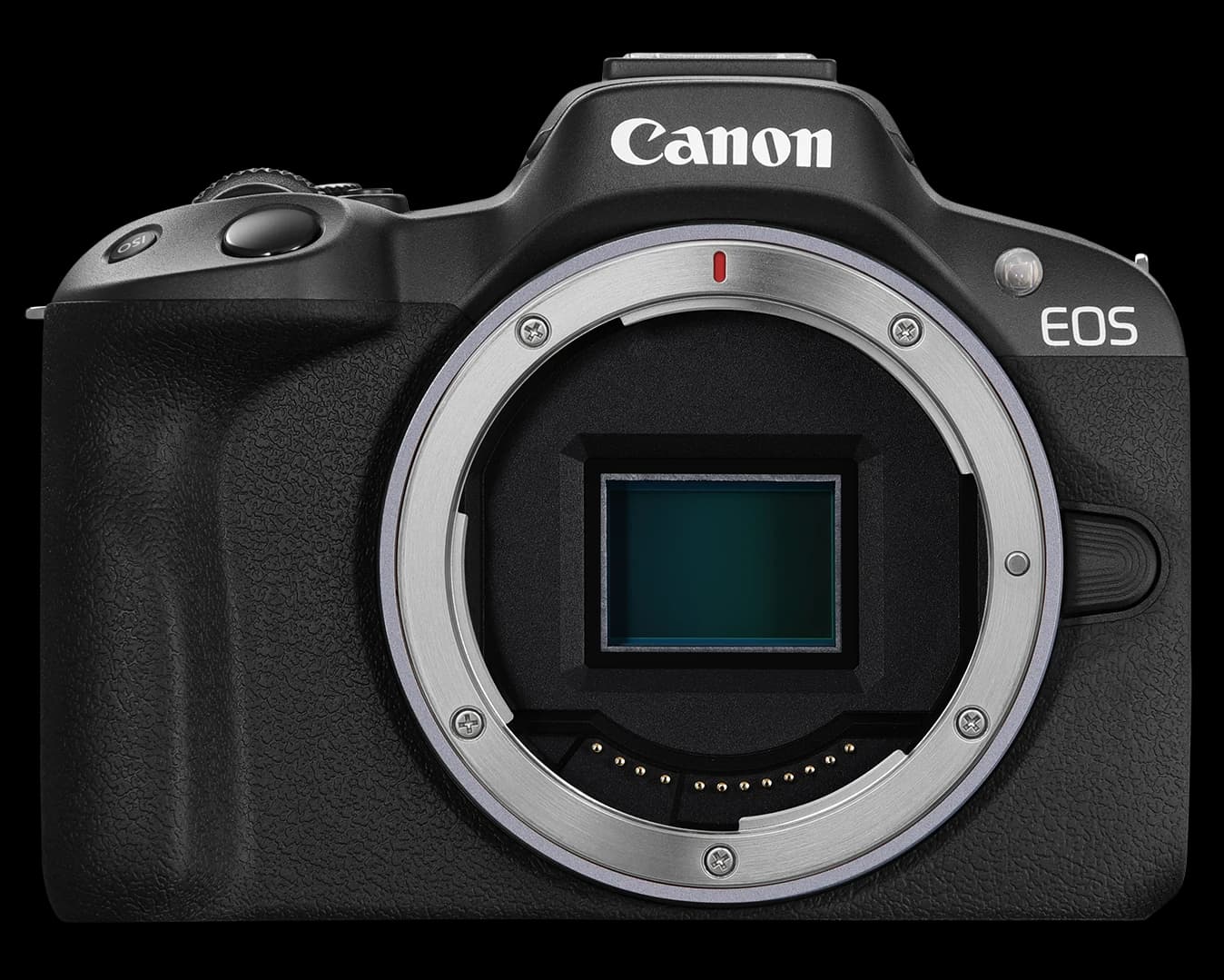
Canon EOS R50 Review: Still the Right Choice for Beginners in 2026?
The Canon EOS R50 targets beginners and light travellers with 651 AF points and 375 g on the scales. A sensible choice under 700 USD, provided you accept the lack of IBIS and a RAW buffer of only 7 frames.
Read the review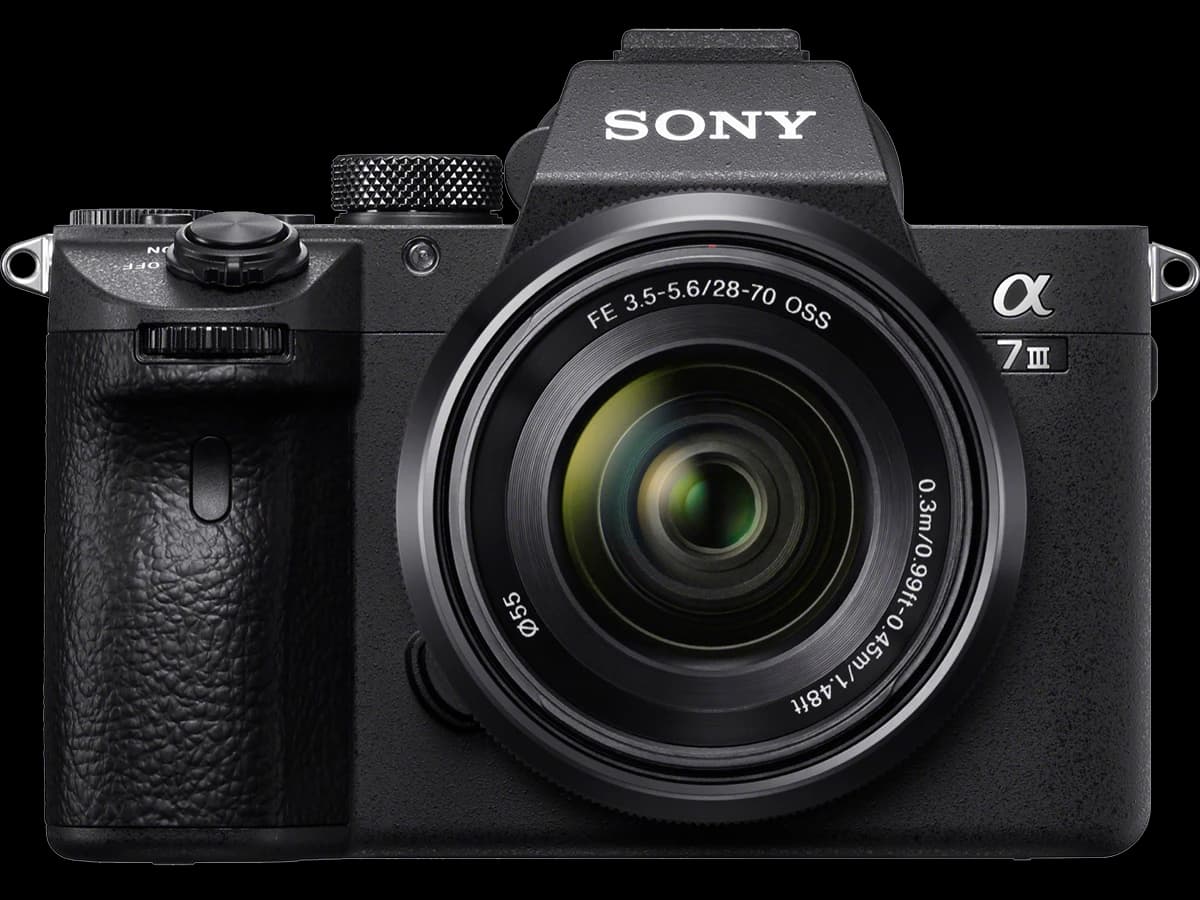
Review: Sony α7 III – Still Relevant in 2026?
The Sony α7 III remains an excellent used choice for weddings, portraits and travel thanks to its **710-shot CIPA battery life** and 693-point AF. Demanding videographers should look elsewhere.
Read the review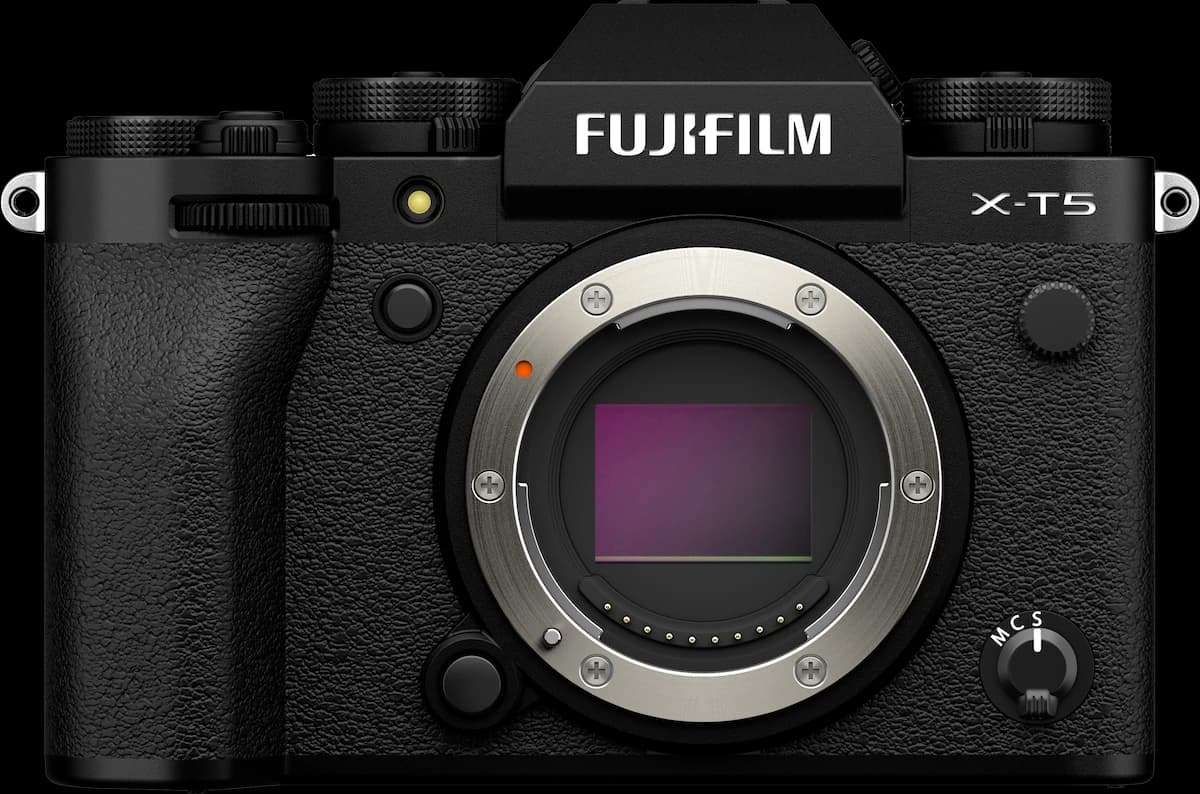
Fujifilm X-T5 Review: Pure Photography Before Video
The Fujifilm X-T5 suits landscape, portrait or travel photographers seeking 40.2 MP in a compact 557 g body. It is not a tool for intensive sport or professional video.
Read the review